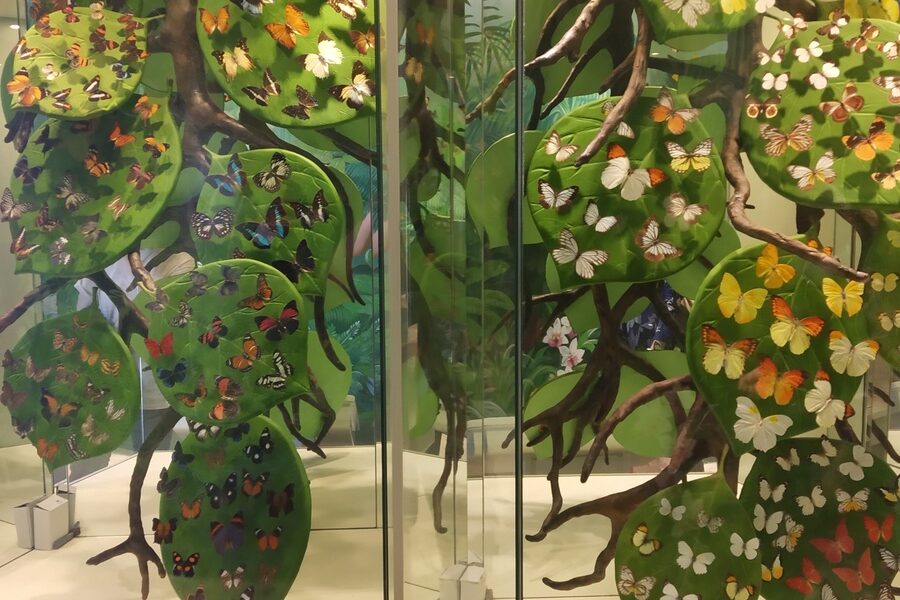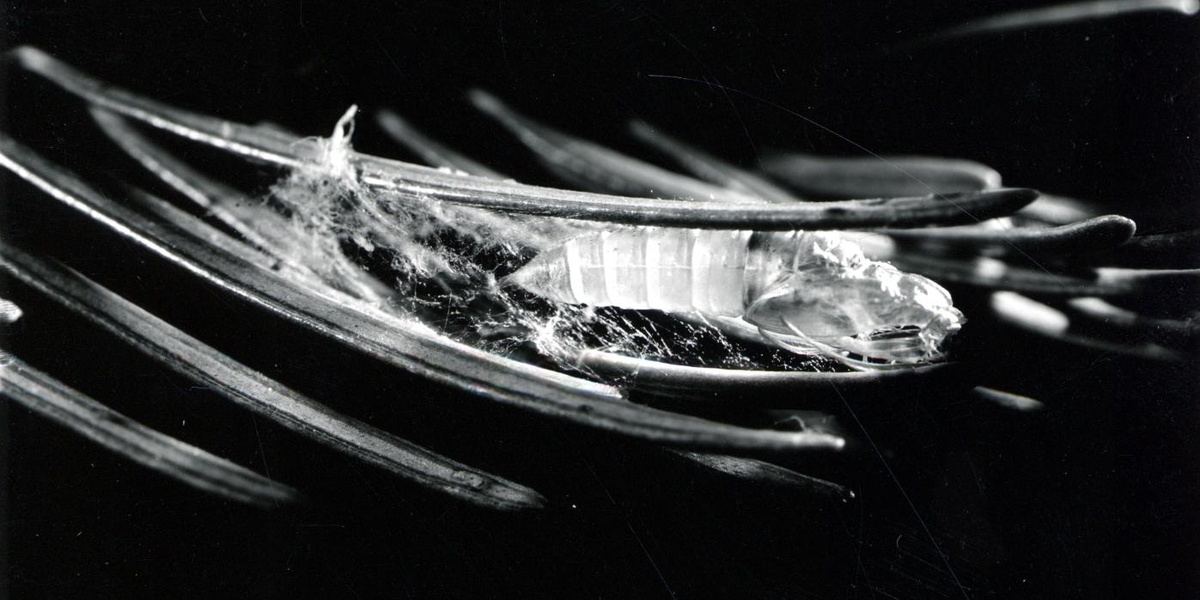
The boreal zone stretches across northern North America and Eurasia, a mosaic of conifers, wetlands and short summers that shapes a unique set of insect communities. Many species are small and seasonal, but they play big roles in nutrient cycling, food webs and forest health.
There are 35 boreal forest insects, ranging from American Carrion Beetle to White-spotted Sawyer. For each species, entries are organized as Scientific name,Size (mm),Range / habitat — you’ll find below.
How can I tell common species apart in the field?
Start by noting size, body shape and antennae, then match those observations to habitat and season. A hand lens helps with markings; behavior (e.g., flying at night vs. crawling under bark) and the Range / habitat column will quickly narrow possibilities for the list below.
When are these insects most active and how should I observe them?
Most are active in late spring through summer; some emerge briefly during warm spells. Use daytime searches for foliage-dwellers, night lights or bait for nocturnal species, and inspect under logs or bark for decomposers like carrion beetles.
Boreal Forest Insects
| Name | Scientific name | Size (mm) | Range / habitat |
|---|---|---|---|
| Spruce Bark Beetle | Dendroctonus rufipennis | 4-7 | North American boreal; mature spruce forests, logs, and stumps |
| White-spotted Sawyer | Monochamus scutellatus | 15-25 | North American boreal; conifer forests, recently dead or burned trees |
| Canadian Tiger Swallowtail | Papilio canadensis | 50-90 | North American boreal and mixedwood forests; forest edges, clearings, and streamsides |
| Mourning Cloak | Nymphalis antiopa | 70-100 | Holarctic boreal and temperate forests; woodlands, parks, and river valleys |
| Spruce Budworm | Choristoneura fumiferana | 20-30 | North American boreal; spruce and fir forests |
| Common Northern Bumble Bee | Bombus borealis | 15-25 | North American boreal and tundra edge; meadows, bogs, and open woodlands |
| Boreal Carpenter Ant | Camponotus herculeanus | 6-14 | Holarctic boreal; dead logs, stumps, and wooden structures |
| Giant Ichneumon Wasp | Megarhyssa macrurus | 25-50 | North American boreal and temperate forests; near dead or dying deciduous trees |
| Chalk-fronted Corporal | Ladona julia | 35-45 | North American boreal; ponds, slow streams, and boggy lakeshores |
| Boreal Bluet | Enallagma boreale | 28-36 | North American boreal; still waters of ponds, marshes, and boggy lakes |
| Black Fly | Simulium sp. | 2-5 | Holarctic boreal; near clean, flowing streams and rivers |
| Boreal Mosquito | Aedes sp. | 3-6 | Holarctic boreal; wetlands, ponds, and temporary pools |
| Transverse-banded Flower Fly | Eristalis transversa | 8-12 | North American boreal and temperate zones; meadows, gardens, and forest edges |
| Boreal Horntail | Urocerus gigas | 12-40 | Holarctic boreal; coniferous forests, especially with dead or dying trees |
| Forest Tent Caterpillar | Malacosoma disstria | 30-50 | North American boreal and temperate forests; deciduous trees like aspen and birch |
| Pine Spittlebug | Aphrophora parallela | 8-11 | North American boreal; pine and spruce trees |
| Lake Darner | Aeshna eremita | 65-75 | North American boreal; marshy lakes, ponds, and slow streams |
| Hudsonian Whiteface | Leucorrhinia hudsonica | 28-32 | North American boreal; boggy ponds and fens with sphagnum moss |
| Birch Catkin Bug | Kleidocerys resedae | 4-5 | Holarctic boreal; near birch and alder trees |
| Boreal Rove Beetle | Staphylinus borealis | 12-18 | North American boreal; forest floor, under logs and leaf litter |
| American Carrion Beetle | Necrophila americana | 14-22 | North American boreal and temperate forests; anywhere with animal carcasses |
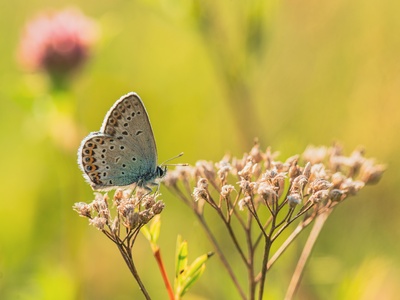
| Northern Blue | Plebejus idas | 20-28 | Holarctic boreal and montane regions; open woodlands, heaths, and clearings |
| Bog Fritillary | Boloria eunomia | 34-44 | Holarctic boreal and subarctic regions; peat bogs, fens, and wet meadows |
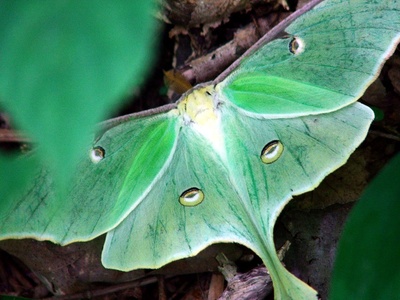
| Luna Moth | Actias luna | 80-115 | North American temperate and southern boreal; mixedwood forests with birch and alder |
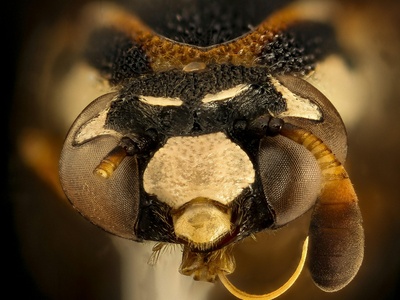
| Bald-faced Hornet | Dolichovespula maculata | 12-20 | North American boreal and temperate forests; open woods, meadows |
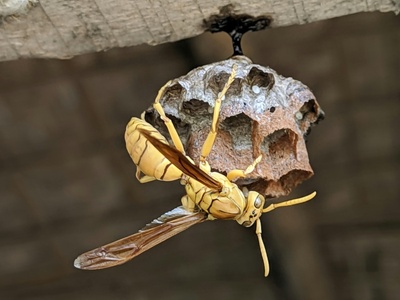
| Northern Paper Wasp | Polistes fuscatus | 15-20 | North American boreal and temperate zones; forest edges, fields |
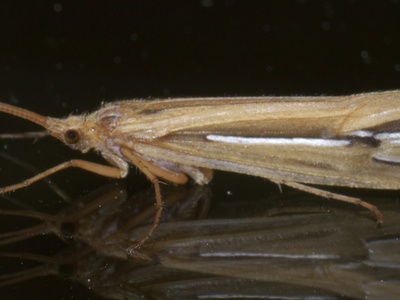
| Northern Caddisfly | Limnephilus sp. | 10-25 | Holarctic boreal; ponds, lakes, streams, and wetlands |
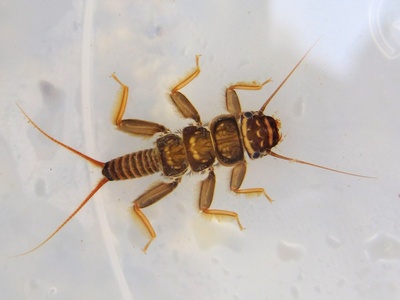
| Boreal Stonefly | Taeniopteryx sp. | 8-15 | Holarctic boreal; clean, cool, and well-oxygenated streams |
| Boreal Lacewing | Chrysoperla sp. | 12-20 | Holarctic boreal; forests, meadows, and gardens |
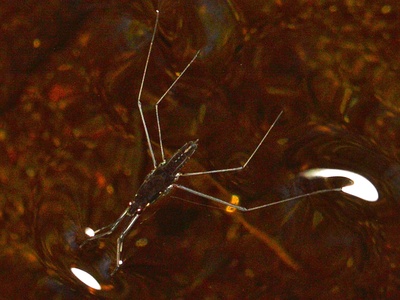
| Water Strider | Gerris sp. | 10-15 | Holarctic boreal; surfaces of ponds, lakes, and slow streams |
| Snow Flea | Boreus hyemalis | 2-4 | Holarctic boreal; mossy areas in coniferous forests |
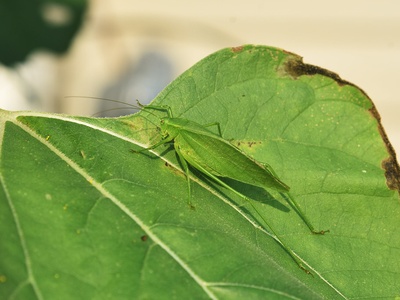
| Northern Bush Katydid | Scudderia septentrionalis | 30-40 | North American boreal and temperate regions; shrubs and trees in open areas |
| Three-lined Click Beetle | Agriotes lineatus | 7-10 | Holarctic boreal; grasslands, clearings, and agricultural areas |
| Transverse Lady Beetle | Coccinella transversoguttata | 5-8 | North American boreal and montane regions; various habitats with aphids |
| Northern Blow Fly | Calliphora vomitoria | 10-14 | Holarctic; widespread, common in forests and near human activity |
Images and Descriptions

Spruce Bark Beetle
A tiny, cylindrical, dark brown beetle that is a major force in boreal ecosystems. Larvae burrow under spruce bark, and populations can erupt, killing vast stands of trees, which reshapes the forest landscape and creates habitat for other species.
White-spotted Sawyer
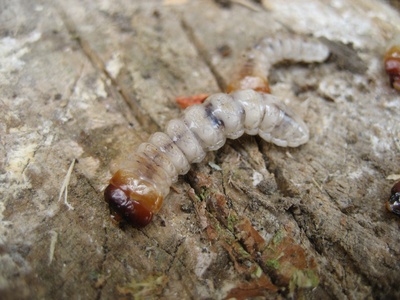
A large, black long-horned beetle with very long antennae and a distinct white spot between its wing bases. Its larvae are important decomposers, chewing through the wood of dead conifers and helping to recycle nutrients back into the forest floor.
Canadian Tiger Swallowtail
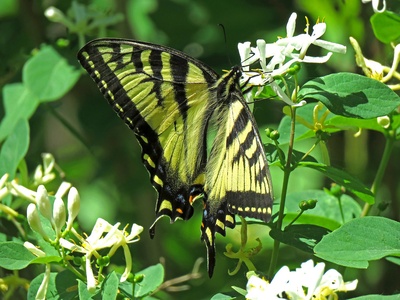
A large, iconic yellow butterfly with black “tiger stripes.” It is one of the most recognizable insects of the northern forest. Caterpillars feed on trees like aspen and birch, while adults are important pollinators of a wide variety of wildflowers.
Mourning Cloak
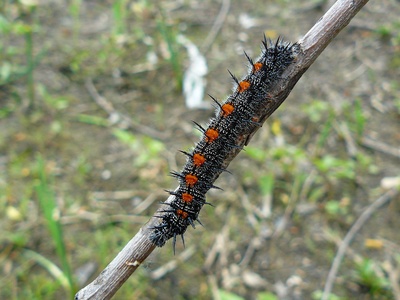
A large, dark maroon butterfly with a bright yellow border and blue spots. It’s one of the first butterflies seen in spring, as it overwinters as an adult in log piles or tree cavities, emerging on the first warm days.
Spruce Budworm
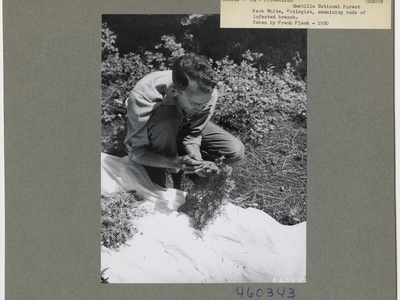
A small, mottled brown moth whose caterpillar stage is a major forest defoliator. During outbreaks, these caterpillars consume needles from spruce and fir trees, impacting millions of hectares. This is a natural cycle that influences forest succession.
Common Northern Bumble Bee
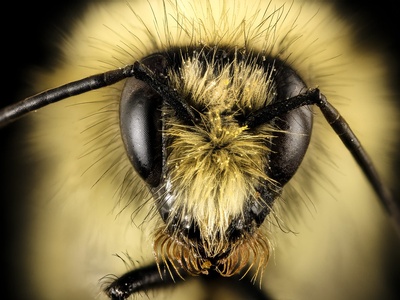
A large, fuzzy bee with yellow and black bands, crucial for pollinating northern plants. It is well-adapted to the cold, able to fly in cooler temperatures than many other bees. Queens are often seen searching for nest sites in early spring.

Boreal Carpenter Ant
A large black and reddish-brown ant that is a key decomposer in the forest. Unlike termites, they don’t eat wood but excavate galleries within it to create their nests, accelerating the decay of dead trees and returning nutrients to the soil.

Giant Ichneumon Wasp
A striking, slender wasp with an incredibly long ovipositor (egg-laying tube). The female uses this to drill deep into wood and lay eggs on the larvae of horntail wasps. Despite its intimidating appearance, it is completely harmless to humans.
Chalk-fronted Corporal
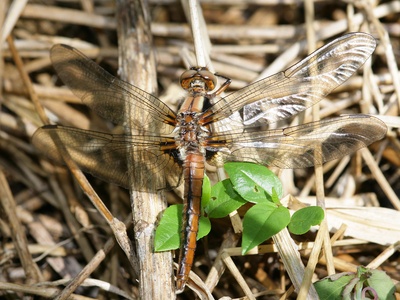
A medium-sized, dark dragonfly with a distinctive chalky-white marking on its thorax. It’s an ambush predator, often seen perching on rocks or logs near the water’s edge, darting out to catch mosquitoes and other flying insects.
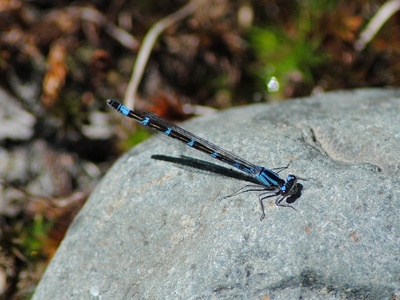
Boreal Bluet
A small, slender damselfly with a bright blue and black-ringed abdomen. They are delicate fliers, often found in large numbers among emergent vegetation at the water’s edge. Their aquatic larvae are important predators in pond ecosystems.
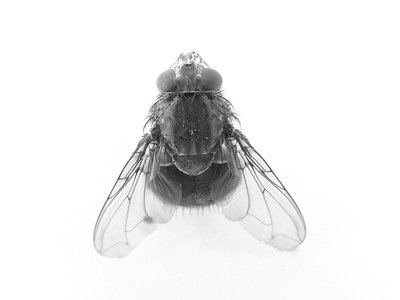
Black Fly
A small, dark, hump-backed fly infamous for its painful bites. While a nuisance to humans and animals, their aquatic larvae are vital filter-feeders in streams, cleaning the water and serving as a key food source for fish like trout and grayling.

Boreal Mosquito
The quintessential insect of the northern summer, known for its whining flight and itchy bites. Only females bite to get protein for their eggs. They are a critical food source for birds, bats, dragonflies, and fish, playing a huge role in the food web.
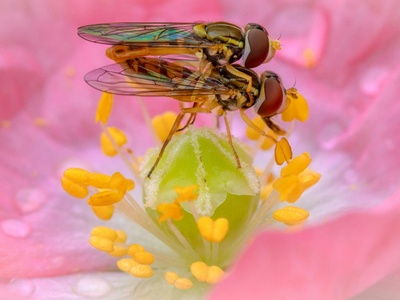
Transverse-banded Flower Fly
A common hoverfly that masterfully mimics a bee with its yellow and black markings. It cannot sting and is an excellent pollinator, visiting a wide range of flowers. Its aquatic larvae, called “rat-tailed maggots,” live in stagnant water.

Boreal Horntail
A large, thick-waisted wasp-like insect, often yellow and black. The female has a prominent “horn” (ovipositor) used to drill into wood and lay eggs. Its larvae help begin the decomposition process in dead conifers. It does not sting.
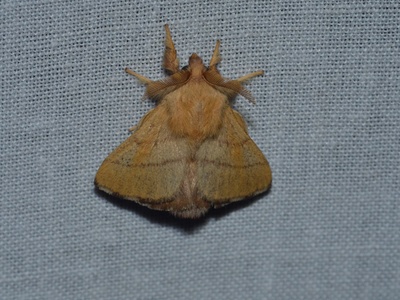
Forest Tent Caterpillar
A moth whose hairy, blue-and-black caterpillars are known for causing widespread defoliation. Unlike other tent caterpillars, they don’t build a single large tent but spin silken mats on tree trunks where they gather to rest.
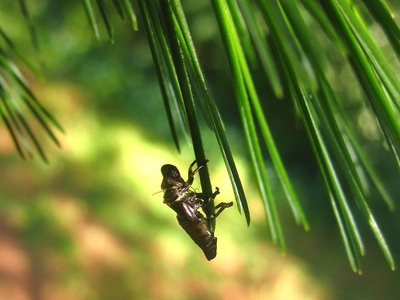
Pine Spittlebug
A brown, wedge-shaped true bug whose nymphs are famous for creating protective shelters of “spit.” These foamy masses hide them from predators and prevent them from drying out as they feed on sap from coniferous trees.
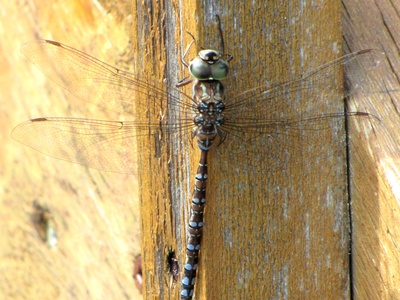
Lake Darner
One of the largest and most powerful dragonflies in the north. It has a brown body with blue or green spots and clear wings. It is a formidable aerial predator, often seen patrolling shorelines for mosquitoes, flies, and other insects.

Hudsonian Whiteface
A small, dark dragonfly easily identified by its bright white face. Males have red spots on their abdomen. It is a classic bog specialist, adapted to the acidic, low-nutrient waters of northern peatlands and a true emblem of boreal wetlands.
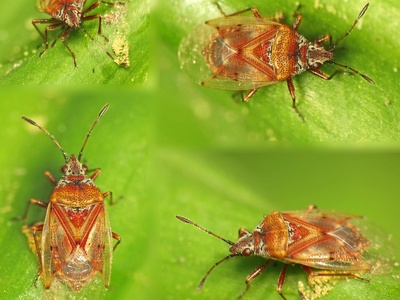
Birch Catkin Bug
A small, reddish-brown and transparent true bug that feeds on the seeds of birch and alder. They can sometimes be found in huge numbers on their host trees in late summer, becoming a minor nuisance when they enter homes seeking shelter.
Boreal Rove Beetle
A slender, fast-moving black beetle with short wing covers that leave most of its abdomen exposed. It is a voracious predator of other small invertebrates in the soil and leaf litter, playing an important role in controlling their populations.
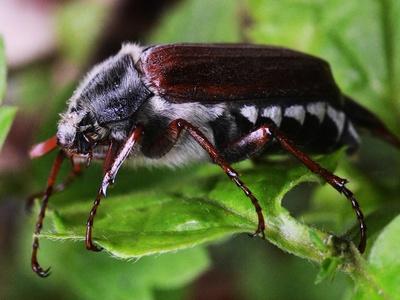
American Carrion Beetle
A large, flattened beetle with a distinctive yellow-and-black pronotum (neck shield). It is a crucial decomposer, feeding on carrion and laying its eggs there. The larvae help to quickly and efficiently recycle nutrients from dead animals.
Northern Blue
A small, delicate butterfly. Males have brilliant violet-blue upper wings, while females are brown. They are often found in colonies where their host plants, such as bilberry, grow. Their presence indicates healthy, undisturbed habitat.

Bog Fritillary
A medium-sized orange butterfly with black spots, specifically adapted to northern wetlands. Its caterpillars feed on plants like bog cranberry and violet. It is a strong indicator species for the health of boreal peatland ecosystems.
Luna Moth
A spectacular, large, pale green moth with long, curving tails on its hindwings. It is nocturnal and flies for only about a week as an adult, as it has no mouthparts and its sole purpose is to reproduce. A truly magical forest sight.
Bald-faced Hornet
Despite its name, this is a large black-and-white yellowjacket, not a true hornet. They build large, gray, paper nests in trees or on buildings and are aggressive defenders. They are beneficial predators, hunting other insects to feed their young.
Northern Paper Wasp
A slender, brownish wasp with yellow markings that builds open, umbrella-shaped paper nests. Less aggressive than hornets, they are important predators of caterpillars and other garden pests, helping to maintain a balance in the ecosystem.
Northern Caddisfly
A drab, moth-like insect often found near water. Its aquatic larvae are famous for building intricate protective cases from materials like sand, twigs, or snail shells. They are a fundamental part of the aquatic food web, eaten by fish and birds.
Boreal Stonefly
A dark-colored, flattened insect often seen on rocks or snow near streams in early spring. Their aquatic nymphs require very clean water to survive, making them excellent bio-indicators of stream health. They are a vital food source for trout.
Boreal Lacewing
A delicate, green insect with large, intricately veined, transparent wings and golden eyes. Its larvae, known as “aphid lions,” are incredibly voracious predators of aphids and other small, soft-bodied insects, making them a gardener’s and forester’s friend.
Water Strider
A slender bug that uses water-repellent legs to skate across the water’s surface. They are predators, detecting ripples from struggling insects that fall into the water and quickly moving in to feed. They are a common sight on almost any northern waterbody.

Snow Flea
A tiny, bizarre-looking, flightless insect that is a type of scorpionfly, not a flea. They are most famous for being active in winter, often seen hopping across the surface of the snow on mild days, where they feed on mosses.
Northern Bush Katydid
A large, green, leaf-shaped insect with long antennae. It is more often heard than seen, producing a characteristic series of “zits” or lispy buzzes on warm summer evenings. They are herbivores, feeding on the leaves of deciduous trees and shrubs.
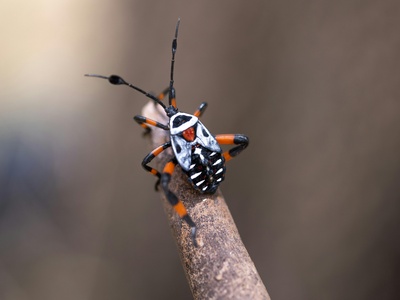
Three-lined Click Beetle
A slender, brownish beetle known for its ability to “click” and flip itself into the air to escape predators. Its larvae, called wireworms, live in the soil and feed on plant roots, sometimes becoming pests in gardens or farms.
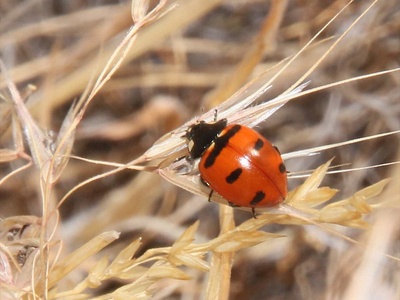
Transverse Lady Beetle
A classic red or orange ladybug with black spots, often including a transverse band across the top of the wings. Both adults and larvae are voracious predators of aphids, helping to control pest populations on trees and plants.
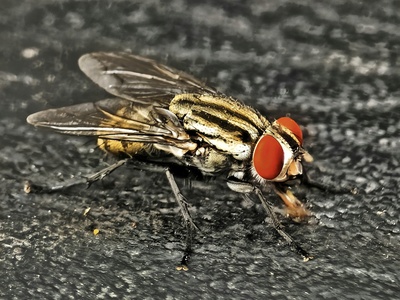
Northern Blow Fly
A large, metallic blue fly with a loud buzzing flight. It is one of the first insects to arrive at a dead animal. Its larvae (maggots) are crucial decomposers, rapidly consuming carrion and playing a key role in nutrient cycling.