On the Galápagos Islands in the 19th century, sailors and naturalists first drew Western attention to giant tortoises whose distinctive shells and slow movements became icons of evolutionary study.
Understanding tortoises matters because their bodies and behaviors shape ecosystems, determine conservation priorities, and guide responsible pet care. Habitat loss, invasive species, and illegal trade threaten many populations worldwide.
Tortoises are defined by a suite of physical traits, behaviors, and life-history strategies that together explain their ecological roles and remarkable longevity.
Below are 10 defining traits, grouped into three categories—Physical Traits; Behavior & Ecology; Life History & Survival—to explain how form, function, and time let tortoises persist. Next: Physical Characteristics.
Physical Characteristics
Physical traits—an armored shell, scaly skin, stout limbs, and a toothless beak—are the tools tortoises use to feed, move, dig, and defend themselves. These anatomical features reflect habitat pressures and diet, so comparing species reveals how form fits function.
1. Shell structure and shape
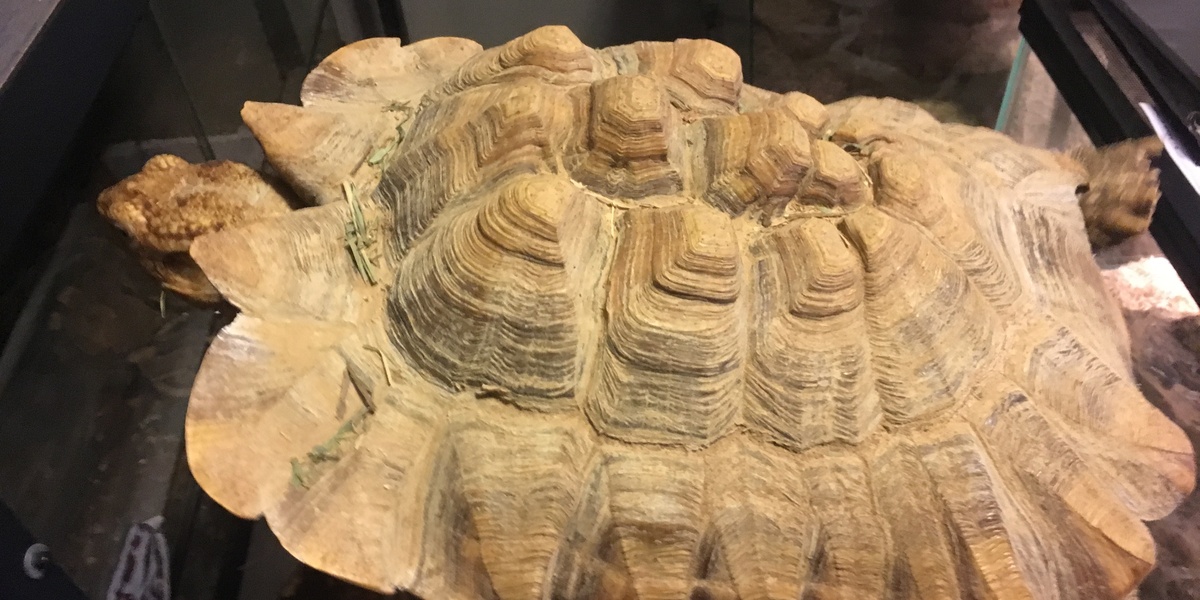
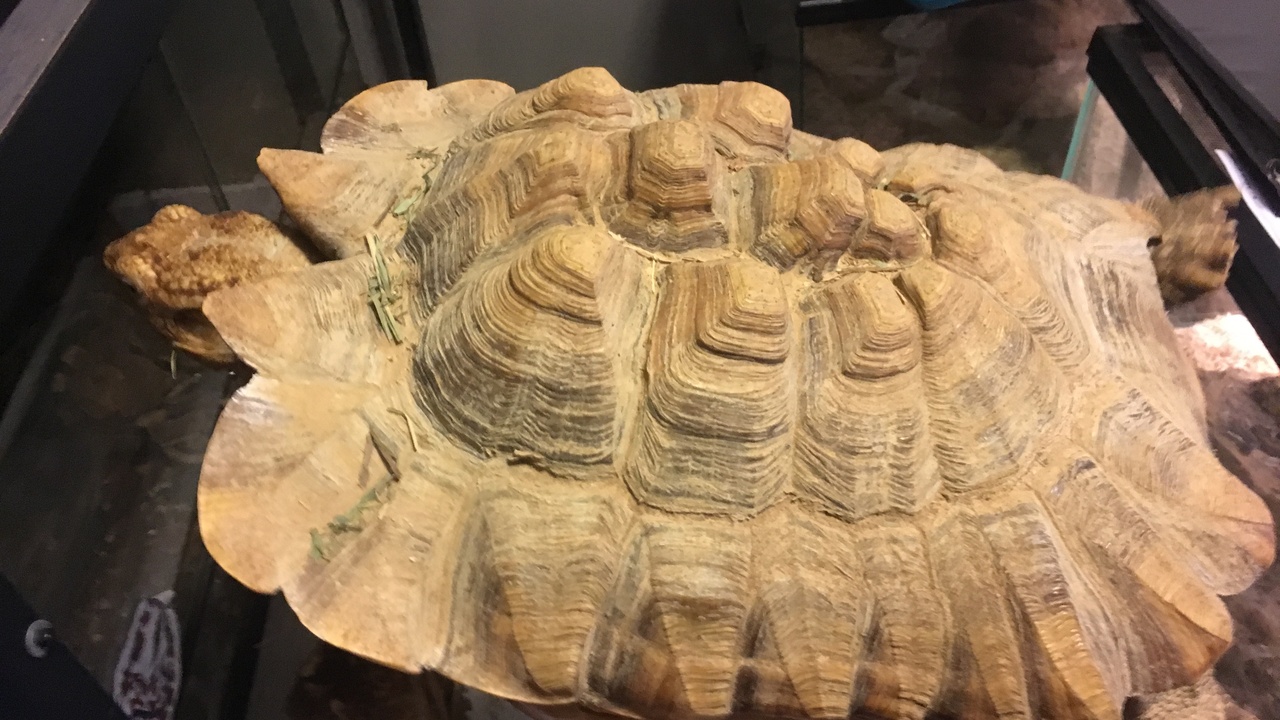
The shell — made of carapace (top) and plastron (bottom) with overlapping scutes — is a tortoise’s defining feature and actually consists of fused ribs and vertebrae.
Shell thickness and overall form vary with ecology: domed shells suit low, ground-level grazing while saddle-backed shells enable individuals to stretch up and browse higher vegetation. In many island taxa, shell shape is a classic example of adaptive morphology tied to diet and microhabitat.
Shells can be heavy: large species like the Aldabra giant may carry carapaces that contribute to total body mass of up to ~250 kg, and shell growth continues slowly over decades (measurable annual growth rings are often visible in juveniles).
2. Thick, scaly skin and stout limbs
Tortoises have robust, keratinized skin and columnar, elephantine legs that support their heavy shells and resist abrasion on rocky or sandy ground.
Limbs are adapted for weight-bearing and, in many species, for digging. Desert tortoises (Gopherus spp.) have strong forelimbs and claws for burrow construction, while island giants like Aldabra possess pillar-like limbs for steady locomotion across compact ground.
Skin also reduces water loss and protects from sun and scrapes—important traits when a tortoise may weigh tens to hundreds of kilograms and needs stable support rather than speed.
3. Strong beak and jaw adaptations
Tortoises lack teeth and instead use a horny beak to shear and chew plant material; powerful jaw muscles help process fibrous food.
Beak shape correlates with diet: broad, blunted beaks suit grazing on grasses and low vegetation (as in Aldabra), while more pointed beaks help species browse tougher or higher-growing plants. This link informs captive diet choices and habitat planting in reserves.
Knowing jaw function matters for husbandry: captive feeding programs emphasize high-fiber greens and controlled calcium for shell and beak health rather than high-protein feeds that tortoise jaws are not designed to process efficiently.
4. Size variation and sexual dimorphism
Tortoise species range from tiny Mediterranean forms to island giants; adult mass spans from under 1 kg in some small tortoises to well over 200 kg in giants (Aldabra individuals may reach ~250 kg).
Sexual dimorphism is common: males often have longer tails, concave plastrons for mounting, or different overall size depending on species. For example, Hermann’s tortoise typically weighs 1–3 kg as an adult, while island giants are vastly heavier.
Size differences affect transport, enclosure design, and breeding management—factors critical for both pet keepers and conservation teams planning translocations or captive breeding.
Behavior and Ecology
Behavior links anatomy to ecosystem effects: feeding and movement patterns influence plant communities, and reproductive strategies shape population dynamics. Tortoises act as seed dispersers, grazers, and engineers of microhabitats, with implications for people who share or manage their landscapes.
5. Slow movement and energy conservation
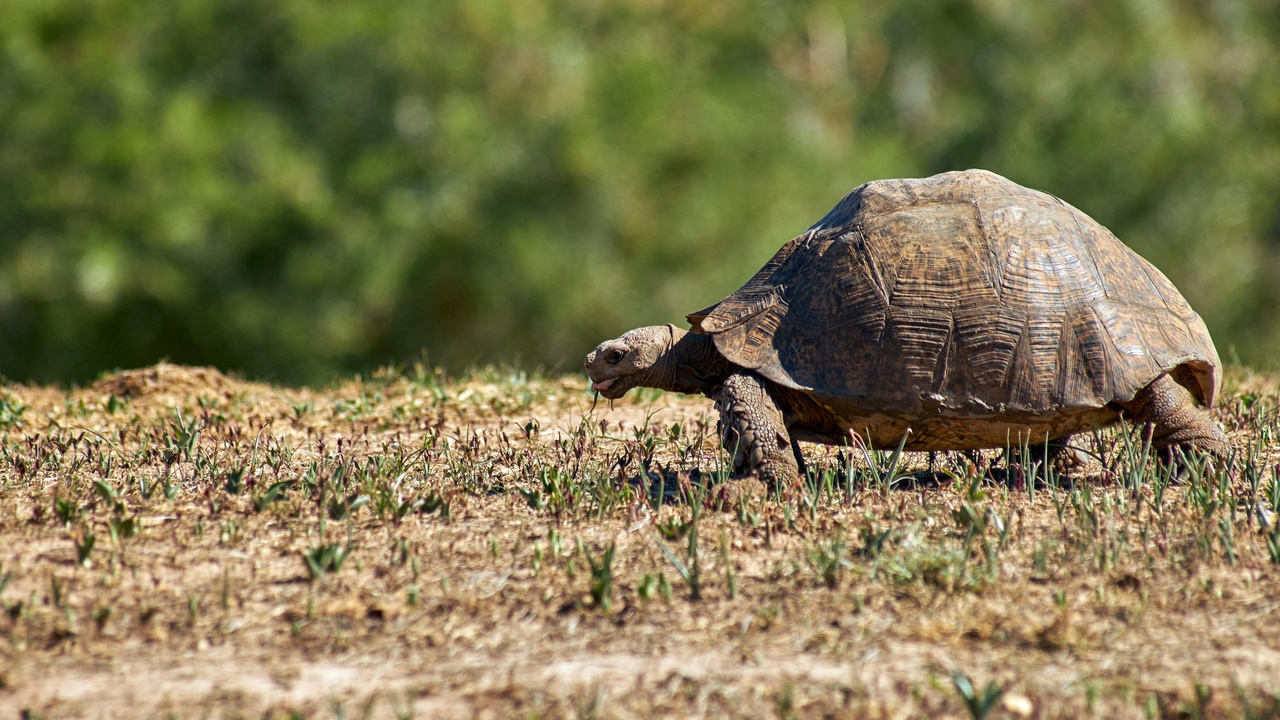
Tortoises move slowly—typically around 0.2–0.5 km/h—a pace matched to a low metabolic rate and an energy-conservative lifestyle.
Low metabolism reduces daily food needs and suits life on sparse or seasonal resources, enabling individuals to survive lean periods. The slow pace also shapes interactions with predators and allows long-term foraging strategies in places like the Galápagos, where grazing patterns alter vegetation over months and years.
6. Herbivorous diet and feeding strategies
Most tortoises are primarily herbivores, eating grasses, succulents, leaves, and fruit. Digestive tracts are adapted to process fiber, with relatively long gut-retention times compared with small reptiles.
Species-level diets vary: Galápagos tortoises eat cactus pads and grasses, Aldabra tortoises graze broadly, and some Mediterranean species favor leafy plants and flowers. Because seeds often pass intact, tortoises are important seed dispersers—especially on islands where they shape plant distributions.
These dietary traits guide restoration work: reintroducing tortoises can help restore seed dispersal of native plants and control invasive species in certain ecosystems.
7. Nesting behavior and reproductive traits
Tortoises lay eggs in shallow nests, with clutch sizes commonly ranging from 2 to 20 eggs depending on species and body size.
Incubation periods vary with temperature—commonly about 60–160 days (many species fall in a ~90–120 day range). Parental care is minimal; hatchlings face high mortality, which is why conservation programs often use head-starting to raise juveniles for their first 1–5 years.
Understanding these reproductive traits informs timing of protection measures—for example, seasonal nest-site protection and monitoring to boost recruitment in threatened populations.
Life History and Survival Adaptations
Life-history strategies—extreme longevity, water-saving physiology, dormancy behaviors, and precise site fidelity—are key to tortoise survival across decades and changing climates.
8. Long lifespan and slow aging
Tortoises rank among the longest-lived vertebrates: many species commonly reach 50–100 years, and some island giants have documented ages exceeding 100–150 years.
Slow metabolism, late maturity, and low annual reproductive rates mean populations recover slowly after declines. Famous examples—like long-lived Galápagos individuals such as Lonesome George—underscore both the wonder and the conservation challenge posed by long generation times.
Because of these life spans, conservation planning must adopt multi-decadal perspectives: population increases may take decades rather than years.
9. Ability to endure drought and temperature extremes
Tortoises use physiological and behavioral tricks to survive aridity—water storage in the bladder, reduced activity, and refuge-seeking like burrowing or shaded crevices.
Some species can endure months without direct drinking by reabsorbing water and relying on moisture from succulents. Desert tortoises enter estivation during extreme heat or drought, while island tortoises time activity to seasonal rains.
These traits inform captive care during heatwaves and conservation measures such as protecting key drought refuges and watering sites in reserves.
10. Navigation, homing, and site fidelity
Many tortoises demonstrate strong site fidelity and homing abilities, returning to preferred feeding areas, nesting zones, or seasonal refuges.
Telemetry and mark–recapture studies document regular short-distance migrations and precise nesting-site returns. Because individuals rely on familiar terrain, translocation without careful planning can disrupt feeding and breeding and reduce survival.
Conservation programs therefore map movement ranges before relocation and design reserves that include core home areas for resident tortoises.
Summary
- Tortoise anatomy—armored shells, scaly skin, stout limbs, and horny beaks—matches ecological roles from grazing to digging.
- Behavioral traits (slow movement, herbivory, nesting patterns, and site fidelity) drive ecosystem effects like seed dispersal and shape management needs.
- Life-history features—lifespans commonly 50–100+ years, clutch sizes of ~2–20 eggs, incubation around 60–160 days—mean populations recover slowly and benefit from measures such as head-starting and habitat protection.
- Physiological adaptations (water storage, estivation) let tortoises survive droughts, while movement studies show translocation risks that demand careful reserve planning.
- Learn the characteristics of a tortoise and support reputable conservation groups working on habitat management, head-starting programs, and species recovery efforts.