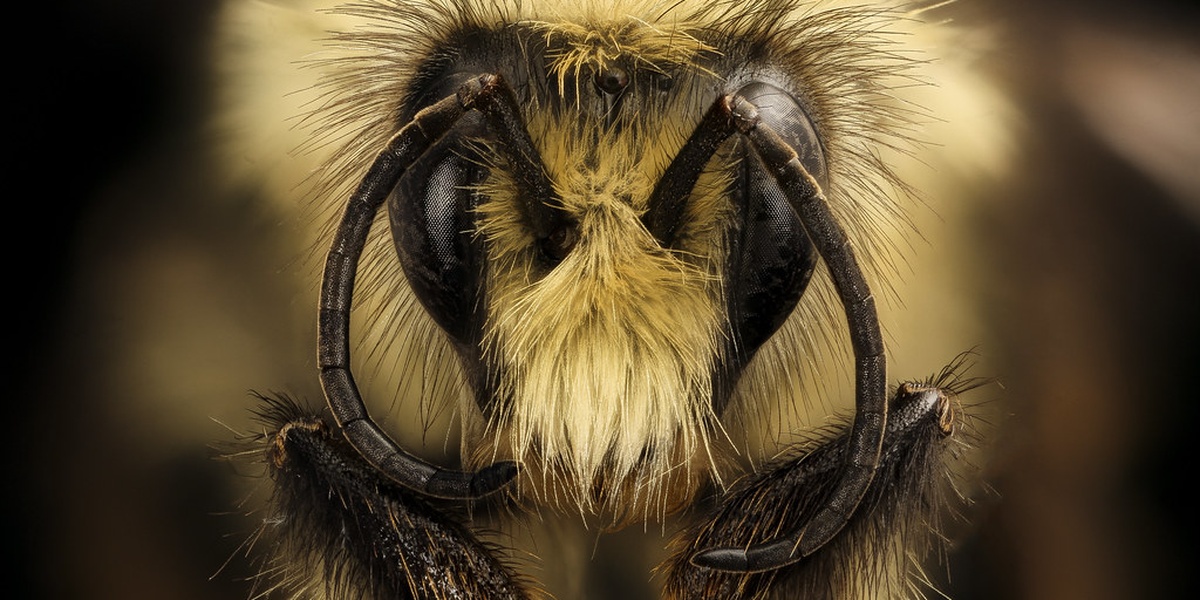
The Arctic is a surprising place for insect life: short summers, warm microclimates among stones and moss, and bursts of flowering plants create niches where small, hardy species persist. Observing them adds detail to how tundra ecosystems function and respond to seasonal change.
There are 17 arctic insects, ranging from Alpine seed beetle to Tundra mining bee. For each species, you’ll find below entries organized as Scientific name,Arctic range,Adult size (mm),Description (30-50 words), with concise notes on distribution and appearance you’ll find below.
How do Arctic insects survive extreme cold?
Many use physiological tricks like supercooling or antifreeze proteins to avoid internal ice formation, and some overwinter as eggs or larvae in insulated microhabitats (soil, moss, under stones). Behavioral choices—timing activity to warm hours and using sun-warmed surfaces—also reduce exposure to lethal temperatures.
When is the best time to observe Arctic insects?
Late June through August, when snow is mostly gone and flowers are blooming, offers the greatest activity: mid-day warmth, calm weather, and sunny slopes concentrate insects. Look near moist tundra, seepages, and low shrubs for the highest encounter rate.
Arctic Insects
| Common name | Scientific name | Arctic range | Adult size (mm) | Description (30-50 words) |
|---|---|---|---|---|
| Arctic bumblebee | Bombus polaris | Greenland, Svalbard, Arctic Canada, Alaska, northern Russia | 18 | Large, fuzzy bumblebee found on tundra flowers. Queens and workers shiver their flight muscles to warm up, enabling activity in cold. Nests underground or in tussocks; important pollinator with rapid thermoregulation and short, intense summer activity. |
| Arctic cuckoo bumblebee | Bombus hyperboreus | High Arctic islands, northern Greenland, northern Eurasia | 18 | Socially parasitic bumblebee that invades other bumblebee nests. Found in extreme Arctic sites, it reproduces without workers. Cold-adapted physiology and a late-season life cycle let it exploit scarce hosts and brief flowering periods. |
| Greenland woolly bear moth | Gynaephora groenlandica | Greenland, Canadian Arctic islands, Ellesmere Island | 12 | Small moth whose caterpillar spends many years (often 7–14) growing between freezes, surviving subzero temperatures by supercooling and cell antifreeze. Adults are short-lived; larvae graze tundra plants and bask to raise body temperature. |
| Hecla sulphur | Colias hecla | Arctic North America, Greenland, Siberia, Svalbard | 12 | Yellow-orange butterfly common across tundra and rocky slopes. Dark wing margins and melanin help absorb heat in cold conditions; adults feed and oviposit during short summers, with larvae feeding on leguminous tundra plants. |
| Arctic fritillary | Boloria chariclea | Circumpolar tundra across North America and Eurasia | 11 | Small, orange-brown fritillary flying low over tundra. Larvae feed on dwarf willows and violets; dark wing patterns aid thermoregulation. Species completes rapid summer development and tolerates chilling during larval stages. |
| Polixenes Arctic | Oeneis polixenes | Arctic and subarctic North America, Greenland, Siberia | 13 | Drab, slow-flying butterfly on rocky tundra and gravel bars. Dark wings warm quickly in sun; adults emerge in mid-summer, often with multi-year life cycles in cold sites. Larvae feed on grasses and sedges. |
| Cold-stream midge | Diamesa arctica | Cold streams and springs across Arctic tundra | 4 | Non-biting midge whose larvae live in cold, oxygen-rich streams under ice. Larvae resist freezing and develop slowly in cold water. Adults swarm briefly near streams in summer and are a key food source for aquatic predators. |
| Snow mosquito | Aedes impiger | Wetlands and tundra pools in Alaska, Yukon, Arctic Canada | 5 | Small mosquito that breeds in meltwater pools. Eggs and larvae tolerate freezing and rapid temperature swings; adults emerge en masse in summer, biting birds and mammals and providing prey for Arctic insectivores. |
| Snow fly | Chionea arctica | Snowfields and tundra across northern Eurasia and North America | 6 | Wingless crane-fly relative active on snow and near snowmelt. Adults walk across snow surfaces in cold weather, avoiding predators and finding mates. Low water loss and cold-tolerant physiology let them exploit snowy habitats year-round. |
| Tundra ground beetle | Pterostichus brevicornis | Circumpolar tundra and Arctic islands | 12 | Predatory ground beetle living under stones, moss and plant litter. Cold-adapted metabolism and antifreeze-like compounds permit activity in cool soils. Feeds on other invertebrates and contributes to nutrient cycling in sparse tundra ecosystems. |
| Snow ground beetle | Nebria nivalis | Arctic and alpine zones across Eurasia and parts of North America | 8 | Small, dark ground beetle often found near snowline and talus. Active at low temperatures, it hunts springtails and other small prey. Morphology and behaviour reduce heat loss and permit brief activity windows in cold habitats. |
| Alpine seed beetle | Amara alpina | Arctic tundra across Eurasia and North America | 8 | Ground beetle that feeds on seeds and detritus in open tundra. Adapted to short seasons with rapid maturation and low-temperature activity. Often found in gravelly soils and grazed habitats, helping disperse seeds and recycle nutrients. |
| Snow scorpionfly | Boreus hiemalis | Snow and tundra of northern Eurasia and North America | 6 | Tiny, wing-reduced mecopteran active on snow in winter and early spring. Adults walk on snow, mating and laying eggs at edges of melt patches. Their lifecycle and cold-tolerant enzymes let them exploit winter niches. |
| Tundra mining bee | Colletes cunicularius | Tundra and coastal Arctic sites across Eurasia and North America | 9 | Solitary, ground-nesting bee that forages on early tundra flowers. Dark bodies and basking behaviour raise thoracic temperature for flight. Nests in sandy soils; females provision cells with pollen and nectar for larvae. |
| Greenland seed bug | Nysius groenlandicus | Svalbard, Greenland, northern Canadian coasts | 5 | Small seed-feeding bug inhabiting rocky coastal tundra and bird-cliff vegetation. Feeds on seeds of hardy Arctic plants; tolerates salt spray and cold by sheltering in crevices. Locally abundant on sparsely vegetated coasts. |
| Arctic mining bee | Andrena lapponica | Arctic tundra of Eurasia, Scandinavia and Alaska | 9 | Ground-nesting solitary bee active during short Arctic summers. Fast foragers on low-growing flowers, using basking and dark integument to warm up. Females dig nests in sparsely vegetated soils and provision brood cells quickly. |
| Arctic diving beetle | Agabus arcticus | Ponds and pools across Arctic Eurasia and North America | 12 | Predatory diving beetle in cold, shallow waters. Adults and larvae tolerate low temperatures and overwinter in pond sediments. Strong swimmers that hunt aquatic invertebrates; hemolymph adaptations reduce freezing risk in icy ponds. |
Images and Descriptions
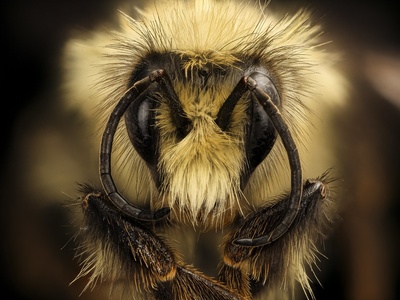
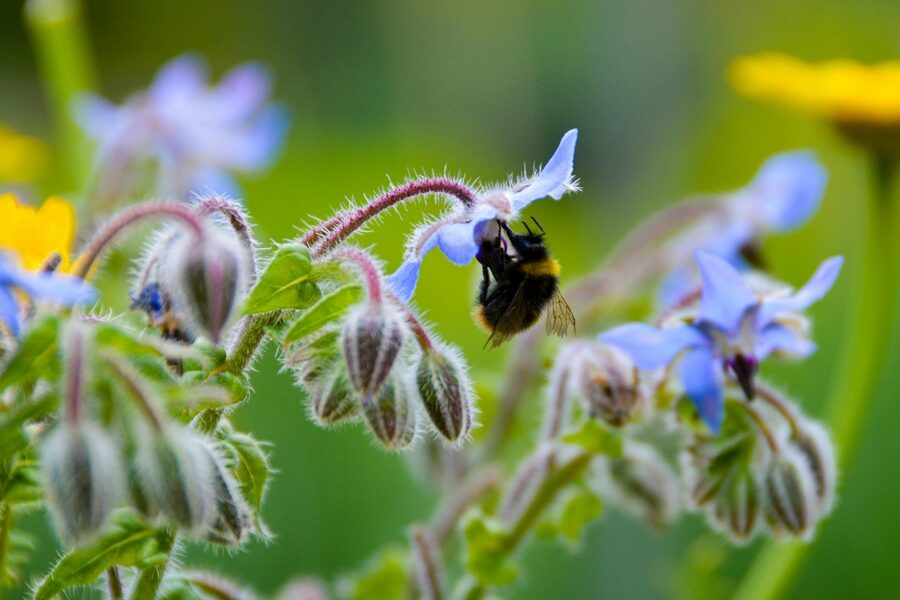
Arctic bumblebee
Large, fuzzy bumblebee found on tundra flowers. Queens and workers shiver their flight muscles to warm up, enabling activity in cold. Nests underground or in tussocks; important pollinator with rapid thermoregulation and short, intense summer activity.

Arctic cuckoo bumblebee
Socially parasitic bumblebee that invades other bumblebee nests. Found in extreme Arctic sites, it reproduces without workers. Cold-adapted physiology and a late-season life cycle let it exploit scarce hosts and brief flowering periods.
Greenland woolly bear moth
Small moth whose caterpillar spends many years (often 7–14) growing between freezes, surviving subzero temperatures by supercooling and cell antifreeze. Adults are short-lived; larvae graze tundra plants and bask to raise body temperature.
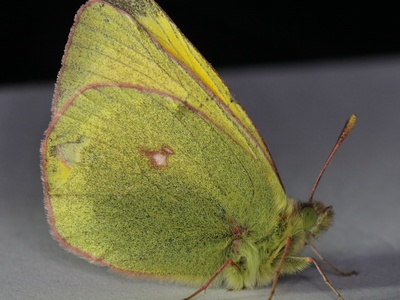
Hecla sulphur
Yellow-orange butterfly common across tundra and rocky slopes. Dark wing margins and melanin help absorb heat in cold conditions; adults feed and oviposit during short summers, with larvae feeding on leguminous tundra plants.
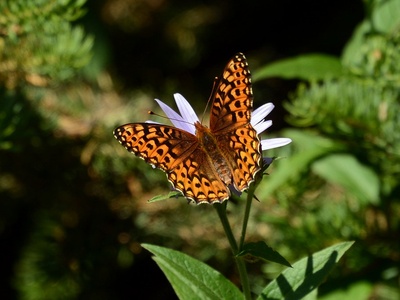
Arctic fritillary
Small, orange-brown fritillary flying low over tundra. Larvae feed on dwarf willows and violets; dark wing patterns aid thermoregulation. Species completes rapid summer development and tolerates chilling during larval stages.
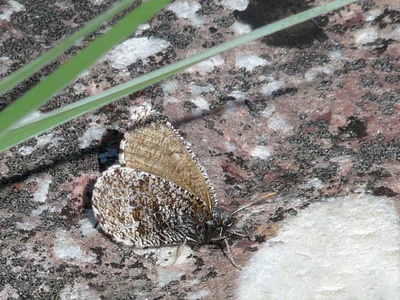
Polixenes Arctic
Drab, slow-flying butterfly on rocky tundra and gravel bars. Dark wings warm quickly in sun; adults emerge in mid-summer, often with multi-year life cycles in cold sites. Larvae feed on grasses and sedges.
Cold-stream midge
Non-biting midge whose larvae live in cold, oxygen-rich streams under ice. Larvae resist freezing and develop slowly in cold water. Adults swarm briefly near streams in summer and are a key food source for aquatic predators.
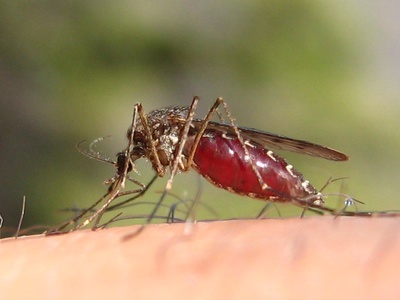
Snow mosquito
Small mosquito that breeds in meltwater pools. Eggs and larvae tolerate freezing and rapid temperature swings; adults emerge en masse in summer, biting birds and mammals and providing prey for Arctic insectivores.
Snow fly
Wingless crane-fly relative active on snow and near snowmelt. Adults walk across snow surfaces in cold weather, avoiding predators and finding mates. Low water loss and cold-tolerant physiology let them exploit snowy habitats year-round.
Tundra ground beetle
Predatory ground beetle living under stones, moss and plant litter. Cold-adapted metabolism and antifreeze-like compounds permit activity in cool soils. Feeds on other invertebrates and contributes to nutrient cycling in sparse tundra ecosystems.
Snow ground beetle
Small, dark ground beetle often found near snowline and talus. Active at low temperatures, it hunts springtails and other small prey. Morphology and behaviour reduce heat loss and permit brief activity windows in cold habitats.
Alpine seed beetle
Ground beetle that feeds on seeds and detritus in open tundra. Adapted to short seasons with rapid maturation and low-temperature activity. Often found in gravelly soils and grazed habitats, helping disperse seeds and recycle nutrients.
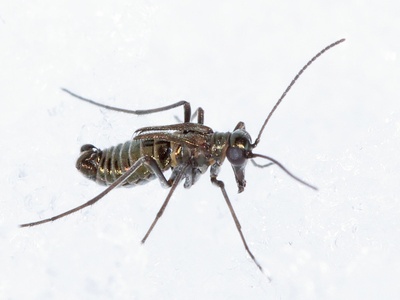
Snow scorpionfly
Tiny, wing-reduced mecopteran active on snow in winter and early spring. Adults walk on snow, mating and laying eggs at edges of melt patches. Their lifecycle and cold-tolerant enzymes let them exploit winter niches.
Tundra mining bee
Solitary, ground-nesting bee that forages on early tundra flowers. Dark bodies and basking behaviour raise thoracic temperature for flight. Nests in sandy soils; females provision cells with pollen and nectar for larvae.
Greenland seed bug
Small seed-feeding bug inhabiting rocky coastal tundra and bird-cliff vegetation. Feeds on seeds of hardy Arctic plants; tolerates salt spray and cold by sheltering in crevices. Locally abundant on sparsely vegetated coasts.
Arctic mining bee
Ground-nesting solitary bee active during short Arctic summers. Fast foragers on low-growing flowers, using basking and dark integument to warm up. Females dig nests in sparsely vegetated soils and provision brood cells quickly.
Arctic diving beetle
Predatory diving beetle in cold, shallow waters. Adults and larvae tolerate low temperatures and overwinter in pond sediments. Strong swimmers that hunt aquatic invertebrates; hemolymph adaptations reduce freezing risk in icy ponds.