If you’ve ever noticed a cool, bluish cast on foliage—along coastal bluffs, mountain slopes, or in cultivated gardens—it often signals a mix of species traits and environmental effects rather than a single cause. Those blue tones can make a landscape distinct and are worth identifying when planning plantings or a visit.
There are 17 blue trees, ranging from Atlas Blue Cedar to Tree Ceanothus. For each species the Scientific name, Native range and Cause of blueness are detailed so you can compare why a tree appears blue and where it’s found—you’ll find below.
Why do some trees look blue?
Blue appearance usually comes from surface features or pigments: waxy or glaucous coatings on needles and leaves scatter light, fine hairs or cuticle structure change color perception, and in a few cases pigments or fungal films add bluish tints. Climate and sunlight also influence how pronounced the blue looks.
Can blue trees be used in gardens and landscapes?
Yes—many blue-tinted species are garden-worthy (for example Atlas Blue Cedar and some Ceanothus), but success depends on matching their soil, drainage and climate needs. Sun exposure and slight drought stress often enhance blue tones, so check each species’ Native range and care notes listed below before planting.
Blue Trees
| Name | Scientific name | Native range | Cause of blueness |
|---|---|---|---|
| Colorado Blue Spruce | Picea pungens | Rocky Mountains, USA | Waxy glaucous coating on needles |
| Blue Spruce ‘Hoopsii’ | Picea pungens ‘Hoopsii’ | Selection from Rocky Mountain populations | Intense glaucous bloom from cultivar trait |
| Atlas Blue Cedar | Cedrus atlantica ‘Glauca’ | Atlas Mountains, N. Africa (species) | Glaucous-coated needles from cultivar trait |
| Blue Deodar Cedar | Cedrus deodara ‘Glauca’ | Himalaya origin (species), cultivar | Glaucous needle coating in cultivar |
| Japanese White Pine ‘Glauca’ | Pinus parviflora ‘Glauca’ | Japan | Waxy bloom on needles, cultivar trait |
| Himalayan Pine | Pinus wallichiana | Himalayan region | Blue-green long needles with waxy bloom |
| Rocky Mountain Juniper ‘Skyrocket’ | Juniperus scopulorum ‘Skyrocket’ | Rocky Mountains, USA (species) | Glaucous, powdery bloom on juvenile foliage |
| Blue Eastern Redcedar ‘Glauca’ | Juniperus virginiana ‘Glauca’ | Eastern North America (species) | Powdery glaucous foliage on cultivar |
| Cider Gum ‘Azura’ | Eucalyptus gunnii ‘Azura’ | Tasmania, Australia (species origin) | Powdery blue juvenile leaves, cultivar selection |
| Blue Gum Eucalyptus | Eucalyptus globulus | Southeastern Australia | Glaucous juvenile leaves with waxy bloom |
| Silver-leaved Eucalyptus | Eucalyptus pulverulenta | Australia | Powdery, silver-blue juvenile foliage coating |
| Jacaranda | Jacaranda mimosifolia | South America (Argentina, Brazil, Bolivia) | Violet-blue flowers in large terminal clusters |
| Tree Ceanothus | Ceanothus arboreus | Coastal California islands, USA | Masses of vivid royal-blue flowers |
| Blue Oak | Quercus douglasii | Interior California, USA | Gray-blue foliage from waxy surfaces and hairs |
| Blue Cypress (white cypress‑pine) | Callitris glaucophylla | Australia | Glaucous foliage giving a blue cast |
| The Blue Trees (art project) | Konstantin Dimopoulos — public art project | International public art installations | Temporary biodegradable pigment paint applied to living trees |
| Pandora bioluminescent trees (fictional) | Fictional flora of Pandora (Avatar) | Fictional moon “Pandora” | Fictional bioluminescence depicted in film |
Images and Descriptions
Colorado Blue Spruce
Iconic conifer with silvery-blue needles native to the Rocky Mountains. The waxy glaucous coating produces a strong blue cast. Common in landscapes and Christmas tree farms, widely available in nurseries; drought-tolerant and slow-growing into large specimen trees.
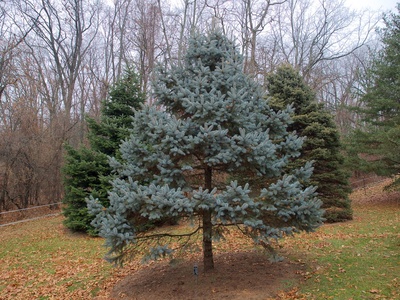
Blue Spruce ‘Hoopsii’
A highly prized cultivar of Colorado blue spruce with striking silvery-blue needles. Slower-growing and rarer in nurseries, often used as specimen trees or premium Christmas trees. Requires full sun and well-drained soil; more expensive than common selections.
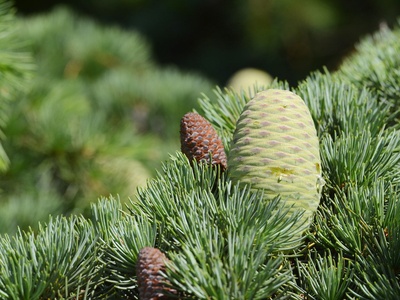
Atlas Blue Cedar
Atlas cedar cultivar with steel-blue, short needles forming broad, conical crowns. Though native to the Atlas, this selection is grown worldwide as an ornamental. Tolerant of heat and alkaline soils; available at specialty nurseries for dramatic blue foliage.

Blue Deodar Cedar
Deodar cedar cultivar showing bluish needles on graceful, pendulous branches. Originates from the Himalayan species and is grown for its soft form and blue tone. Prefers deep, well-drained soil and full sun; medium growth and widely cultivated.
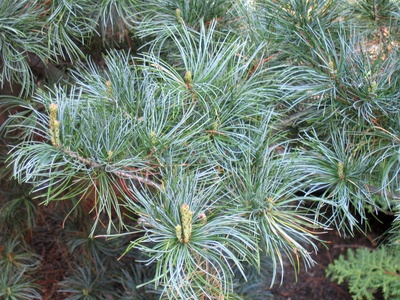
Japanese White Pine ‘Glauca’
Japanese white pine cultivar with short, silvery-blue needles giving a refined, sculptural habit. Popular in bonsai and specimen plantings and hardy in temperate gardens. Needs well-drained soil and careful pruning; specialist nurseries supply named cultivars.
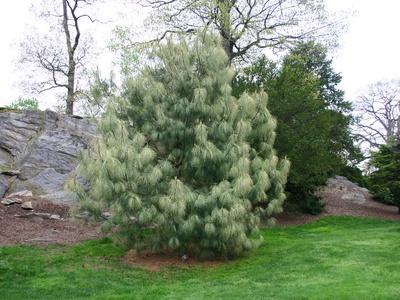
Himalayan Pine
Himalayan pine with long, soft blue-green needles and a loosely pendulous habit. A powdery bloom gives a cool blue cast across the tree. Suited to large parks and estates, tolerant of cold; available through tree nurseries in temperate regions.
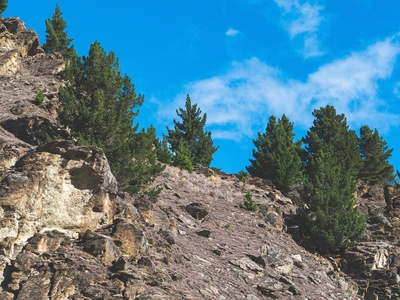
Rocky Mountain Juniper ‘Skyrocket’
Columnar Rocky Mountain juniper cultivar with steely-blue foliage and a narrow upright habit. Suits tight spaces and screening. Drought-tolerant and low-maintenance once established; commonly sold in garden centers and used in urban plantings.
Blue Eastern Redcedar ‘Glauca’
Blue eastern redcedar cultivar with compact form and powdery blue foliage. Native to eastern North America and used for windbreaks, hedges, and ornamental planting. Tough, drought-tolerant, and readily available from nurseries.
Cider Gum ‘Azura’
Cider gum cultivar prized for striking round, powder-blue juvenile leaves that persist on young branches. Origin Tasmania, grown as ornamental and for cut foliage. Cold-hardy selection popular in temperate gardens and the floral trade.
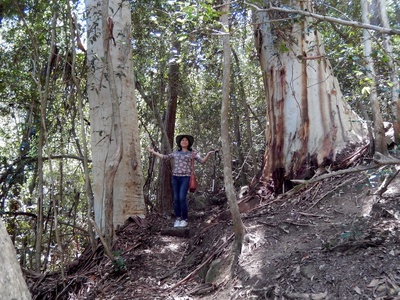
Blue Gum Eucalyptus
Blue gum eucalyptus with glaucous juvenile leaves that appear silvery-blue on young growth. Native to southeastern Australia and widely planted worldwide for timber and ornament. Fast-growing and widely available, but can be invasive in some regions.
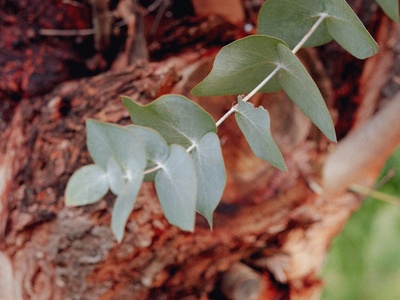
Silver-leaved Eucalyptus
Silver-leaved eucalyptus with small round, powder-blue juvenile foliage used heavily in floristry. Native to Australia and grown as a small tree or large shrub. Loved for its consistent cool-blue leaves; available from specialty nurseries and florists.
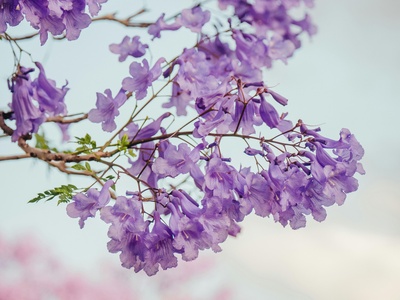
Jacaranda
Famous tropical–subtropical tree bearing showy clusters of lavender‑blue flowers in spring. Native to South America and widely planted in warm climates for streets and gardens. Produces striking seasonal color; seedlings and grafted trees are commonly available.
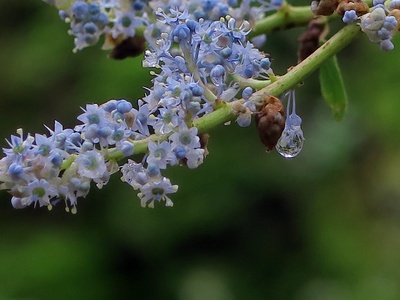
Tree Ceanothus
Tree ceanothus produces dense clusters of vivid royal-blue flowers in spring. Native to the Channel Islands of California and used as a small specimen tree or large shrub in Mediterranean climates. Prefers well-drained soil and is drought-tolerant once established.
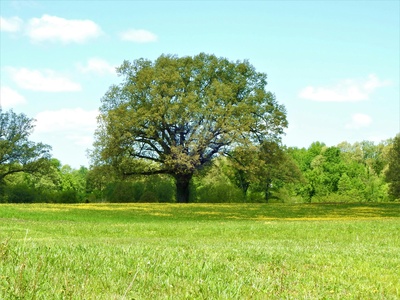
Blue Oak
California blue oak with gray‑blue foliage giving a subtle bluish cast across woodlands. Native to interior California hills, drought‑tolerant and long-lived. Not commonly sold as ornamental outside its range but ecologically and culturally important locally.
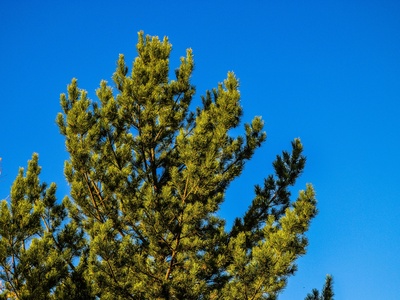
Blue Cypress (white cypress‑pine)
White cypress‑pine, often called blue cypress, with glaucous bluish foliage. Native to Australia, used for timber and windbreaks and tolerant of dry soils. Tree-form varieties are available from Australian native plant nurseries.
The Blue Trees (art project)
Public art installation dyeing living trees electric blue to raise awareness about deforestation. Artist Konstantin Dimopoulos temporarily paints trunks and branches with biodegradable pigment. Not a botanical trait; visible worldwide and sparks public conversation about tree conservation.
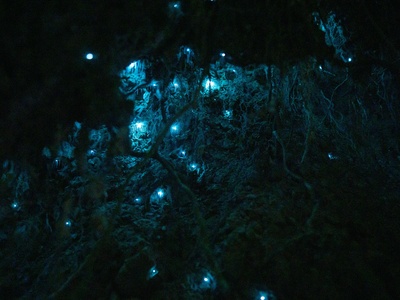
Pandora bioluminescent trees (fictional)
Iconic glowing blue trees from James Cameron’s film Avatar, featuring luminous canopies and fibers. Not real — serves artistic and ecological storytelling, inspiring designers and popular imagination about luminous forests and alien plant aesthetics.