Tropical rainforests teem with life, and that biodiversity includes a surprising variety of nuts tucked into the canopy and understory. Local markets, traditional cuisines, and small-scale producers make regular use of these seeds for food, oil, and trade, so they’re as culturally important as they are ecologically interesting.
There are 24 tropical rainforest nuts, ranging from Areca / Betel nut to Tucumã nut. For each entry you’ll find below Scientific name,Native range,Culinary uses to help you compare origins and kitchen applications.
Which of these nuts are safe to eat raw or need processing?
Many rainforest nuts are eaten raw as snacks, but several require drying, roasting, or leaching to remove bitter compounds or toxins; for example, some varieties are high in tannins or naturally occurring alkaloids. When trying an unfamiliar nut, follow local guidance, buy from reputable sources, and start with small amounts to check for allergies or digestive reactions.
What are the most common culinary uses for these nuts?
These nuts are used whole as snacks, ground into flours, pressed for oils, or made into pastes for sauces and desserts; some appear in savory dishes, sweets, and traditional beverages. The Culinary uses column below will show typical preparations and regional recipes to inspire how to cook with each one.
Tropical Rainforest Nuts
| Name | Scientific name | Native range | Culinary uses |
|---|---|---|---|
| Brazil nut | Bertholletia excelsa | Amazon Basin, South America | Eaten raw or roasted; oil; confectionery |
| Cacao (cocoa) bean | Theobroma cacao | Upper Amazon to Central America | Chocolate, cocoa powder, butter; confections |
| Cupuaçu seed | Theobroma grandiflorum | Western Amazon, Brazil, Peru | Pulp and seeds used for sweets; cupulate chocolate alternative |
| Monkey pot (sapucaia) | Lecythis pisonis | Amazon Basin | Roasted snack; oil; baking ingredient |
| Murumuru nut | Astrocaryum murumuru | Amazon Basin | Oil for food and cosmetics; roasted kernels |
| Tucumã nut | Astrocaryum vulgare | Western Amazon | Pulp and kernel used in regional dishes; oil |
| Cohune nut | Attalea cohune | Central America, northern South America | Oil, cooking fat; sometimes eaten cooked |
| Kola nut | Cola nitida / Cola acuminata | West and Central African rainforests | Chewed stimulant; flavoring in beverages |
| Ogbono (bush mango) | Irvingia gabonensis | West and Central African rainforests | Seeds ground as thickener; oil; roasted snack |
| Pangium / Kluwak | Pangium edule | Southeast Asian rainforests | Fermented spice in stews; must be processed |
| Tonka bean | Dipteryx odorata | Amazon Basin | Flavoring; perfumery (use with coumarin caution) |
| Pili nut | Canarium ovatum | Philippine rainforests, SE Asia | Roasted snack; baking; oil; confectionery |
| Galip / Ngali nut | Canarium indicum | New Guinea and Pacific rainforests | Roasted nuts; oil; traditional foods |
| Illipe / Tengkawang | Shorea stenoptera and other Shorea spp. | Borneo and SE Asian rainforests | Fat for cooking, baking, chocolate; cosmetic uses |
| Candlenut / Kukui | Aleurites moluccanus | Malesia, SE Asia, Pacific islands | Ground as spice, thickener; oil; lighting (toxic raw) |
| Jackfruit seed | Artocarpus heterophyllus | South and Southeast Asian rainforests | Boiled or roasted; curries; snacks |
| Breadnut | Artocarpus camansi | New Guinea and SE Asian rainforests | Seeds roasted like chestnuts; ground into flour |
| Areca / Betel nut | Areca catechu | South and Southeast Asian rainforests | Chewed with betel leaf; traditional stimulant |
| Sapucaia nut (Brazilian Lecythis) | Lecythis zabucajo | Amazon Basin | Roasted snack; local confectionery |
| Cocoa relatives: Cupulate makers | Theobroma subincanum and related spp. | Amazon and Guianas | Local chocolate-like pastes and oils |
| Coula nut (African walnut) | Coula edulis | West and Central African rainforests | Roasted or boiled; eaten as snack |
| Attalea maripa (maripa nut) | Attalea maripa | Amazon Basin and Guianas | Roasted kernels; oil extraction |
| Tonka relatives used regionally | Dipteryx micrantha and related species | Amazon Basin | Local flavoring, artisanal uses |
Images and Descriptions

Brazil nut
A giant canopy tree of Amazon rainforests producing hard, woody pods filled with 10–25 large oily seeds. Nuts are rich, buttery and eaten roasted or raw; harvesting supports wild populations but overharvest and deforestation threaten some groves.
Cacao (cocoa) bean
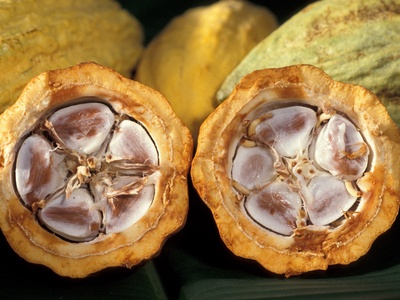
Small seeds from rainforest pods are fermented, dried and roasted to make chocolate and cocoa. Cacao trees are understory tropical rainforest species; beans are intensely flavored and central to global cuisines and agroforestry conservation efforts.
Cupuaçu seed
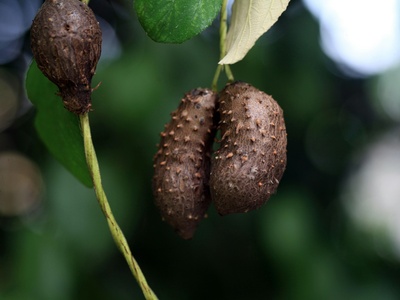
Related to cacao, cupuaçu bears large pods with aromatic pulp and fat-rich seeds. Seeds can be processed into a chocolate-like paste called cupulate; the tree grows in humid Amazonian forests and is prized in regional confectionery.
Monkey pot (sapucaia)
This tall Lecythidaceae tree bears big woody “monkey pot” fruits that hold several chestnut-like seeds. Nuts are roasted and eaten; shells are distinctive and local harvest supports rural economies in Amazon rainforests.
Murumuru nut
A spiny palm of the Amazon whose seeds yield murumuru butter, a rich, creamy fat used in confections and hair care. Kernels are processed for oil; the palm grows in swampy rainforest areas.
Tucumã nut
Tucumã is a palm with orange pulp and a firm kernel. The fruit pulp and kernels are eaten regionally in Amazonian cuisine; seeds are prized locally for their flavor and oil content.
Cohune nut
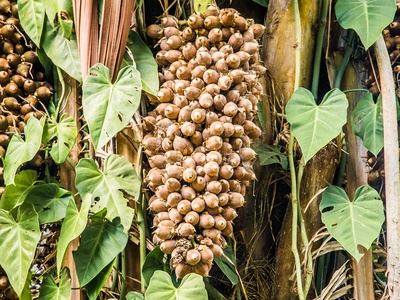
The cohune palm of lowland rainforests yields large, hard nuts processed for cohune oil. Traditionally used for cooking and lighting, the heavy seeds require cracking and heating before eating.
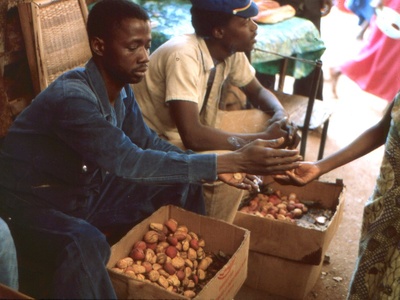
Kola nut
Kola trees produce firm, caffeinated seeds chewed socially and used historically as soda flavoring. Nuts are bitter and aromatic; culturally important across West African rainforest communities.
Ogbono (bush mango)
The African bush mango yields fibrous fruits whose large kernels are dried and ground into ogbono powder, a prized soup thickener. Seeds are rich in fat and economically important locally.
Pangium / Kluwak
A Southeast Asian forest tree whose large seeds are poisonous raw due to cyanogenic compounds. After careful fermentation and cooking they become kluwak, a dark, earthy spice essential to Indonesian cuisine; safety processing is critical.
Tonka bean
Amazonian tree produces wrinkled seeds called tonka beans, intensely fragrant due to coumarin. Used sparingly as a vanilla-like flavor and in perfumery; regulatory and health considerations limit culinary use in some countries.
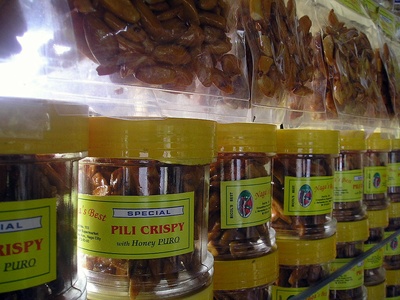
Pili nut
Pili is a tropical rainforest tree producing rich, buttery nuts with thin shells. Popular in the Philippines and Southeast Asia, kernels are roasted, candied, or pressed for oil; cultivated and wild-harvested.
Galip / Ngali nut
A staple forest tree in New Guinea and Pacific islands. Galip nuts are roasted or boiled and pressed for oil. They support local diets and agroforestry systems across humid island rainforests.
Illipe / Tengkawang
Dipterocarp trees produce seeds rich in fat used as illipe butter, a cocoa-butter substitute. Tengkawang harvest is an important traditional income in Borneo; sustainable management matters for rainforest conservation.
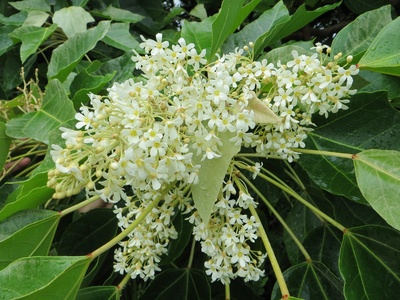
Candlenut / Kukui
A widely used rainforest tree whose oily kernels are used as a spice and for oil. Kernels contain toxins if raw and are typically cooked or roasted before use in Southeast Asian and Pacific cuisines.
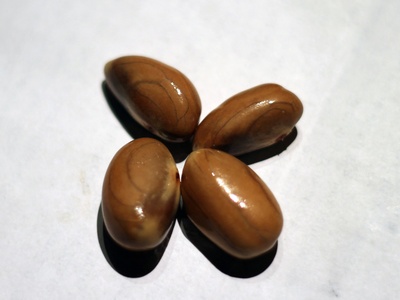
Jackfruit seed
Jackfruit trees of wet tropical forests bear enormous fruits with numerous starchy seeds. Seeds are boiled or roasted and eaten like chestnuts, used in curries and as a protein-rich snack in regional foodways.
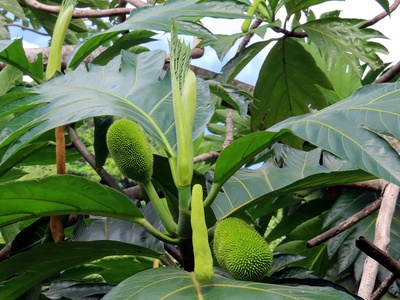
Breadnut
Breadnut is a rainforest tree producing many large seeds that are boiled or roasted and used as a starchy staple. The seeds are chestnut-like in texture and important in Pacific and Australasian cuisines.
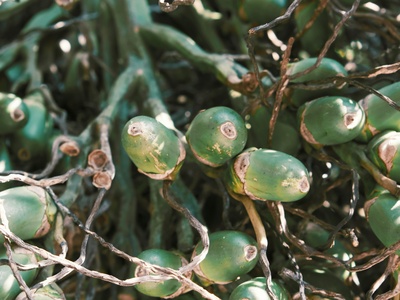
Areca / Betel nut
Areca palm seeds are chewed with betel leaf across tropical Asia and Pacific for their stimulant effects. They are socially significant but linked to health risks, including oral cancers, when habitually chewed.
Sapucaia nut (Brazilian Lecythis)
A prominent Amazonian Lecythidaceae tree that yields large, edible nuts inside woody pots. Seeds are collected and roasted; they’re a traditional snack and locally traded forest product.
Cocoa relatives: Cupulate makers
Several Theobroma relatives in Amazonian rainforests produce seeds used locally like cocoa to make chocolate-like pastes and oils. They’re less commercial but important in indigenous and local culinary traditions.
Coula nut (African walnut)
Coula is an African rainforest tree producing hard-shelled nuts often called African walnuts. Kernels are nutritious and consumed roasted or boiled; they are a traditional wild-harvested food in forest communities.
Attalea maripa (maripa nut)
A large palm common in Amazonian forests that bears clusters of round fruits with oily kernels. Seeds can be processed for oil and eaten after preparation; palms are components of floodplain and plateau forests.
Tonka relatives used regionally
Several Dipteryx species in Amazon rainforests produce fragrant seeds similar to tonka. Used sparingly for local flavoring and craft, they contain coumarin and are subject to culinary caution and regulation.