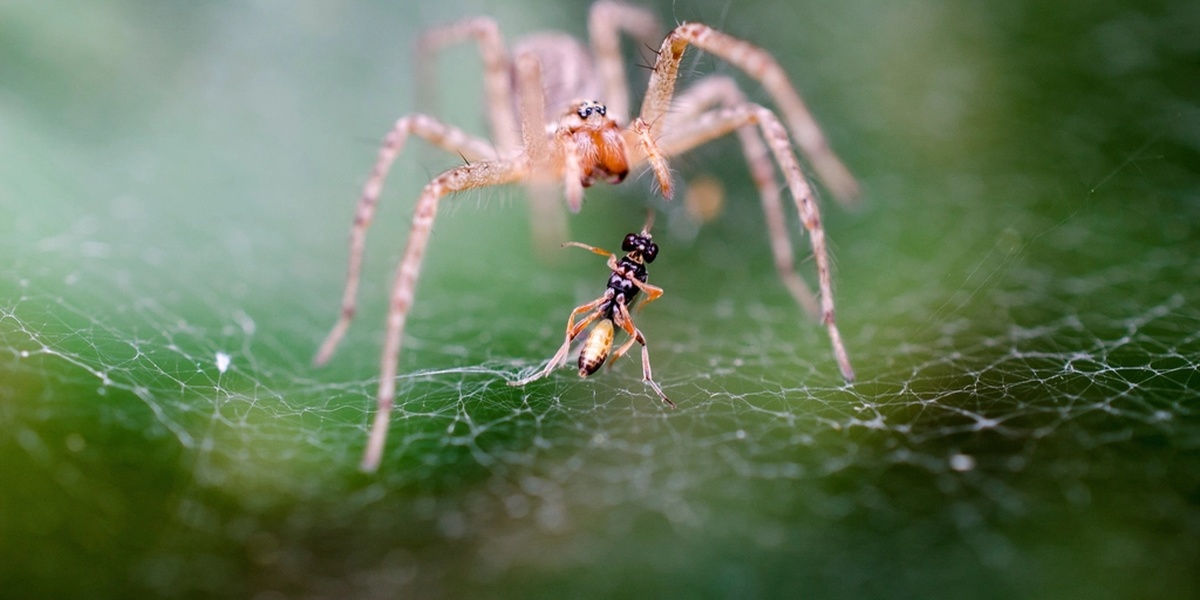
Across gardens, forest edges and coastal scrub, a few spiders stand out for their pink or rose tones, popping against green leaves and bark. Seeing them up close gives a different perspective on spider diversity and how color plays a role in camouflage and signaling across habitats.
There are 9 pink spiders, ranging from the Australian spiny orb-weaver to the White-banded crab spider. For each species I list the Scientific name, Size (mm), Range — concise fields you’ll find below.
Are pink spiders dangerous to people?
Most pink spiders are small and not aggressive; their bites are rare and typically cause only mild local reactions if any. As with any wild spider, avoid handling them, and seek medical advice if you experience unusual symptoms after a bite.
How can I tell a pink spider apart from a similarly colored insect or debris?
Look for consistent body segments (cephalothorax and abdomen), eight legs, and characteristic movement; photographing the creature and noting size and habitat helps, and you can compare it to the Scientific name, Size (mm), Range entries listed below for an accurate ID.
Pink Spiders
| Name | Scientific name | Size (mm) | Range |
|---|---|---|---|
| Goldenrod crab spider | Misumena vatia | 6-10 mm | North America, Europe, Asia |
| White-banded crab spider | Misumenoides formosipes | 5-8 mm | North America |
| Flower crab spider | Thomisus onustus | 6-8 mm | Europe, Mediterranean |
| Thomisus spectabilis | Thomisus spectabilis | 5-7 mm | Australia, Southeast Asia |
| Synema globosum | Synema globosum | 5-8 mm | Europe |
| Spiny-backed orb-weaver | Gasteracantha cancriformis | 5-9 mm | Americas, Caribbean |
| Australian spiny orb-weaver | Gasteracantha fornicata | 6-9 mm | Eastern Australia |
| Happy-face spider | Theridion grallator | 3-5 mm | Hawaii |
| Cucumber orb-weaver | Araniella cucurbitina | 4-6 mm | Europe |
Images and Descriptions
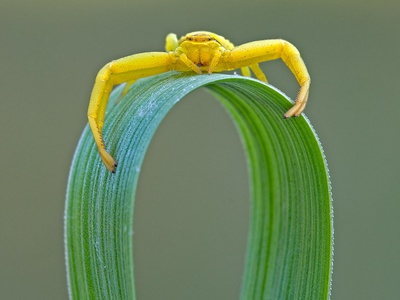
Goldenrod crab spider
Small crab spider often on flowers; adult females 6-10 mm long, commonly white, yellow or pink. Thick-bodied, sideways stance; hunts on blossoms in meadows and gardens. Harmless to people; mild bite rarely causes minor irritation.
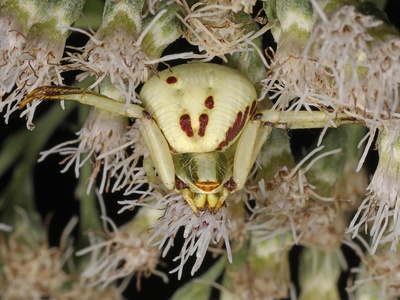
White-banded crab spider
Stocky crab spider on flowers, adult females 5-8 mm, often white or yellow but frequently pinkish when on red blossoms. Common in North American meadows and gardens in summer. Ambush hunter; bite harmless to humans, slight local soreness possible.
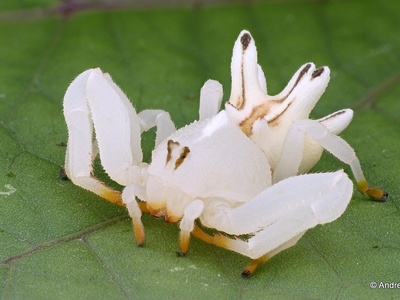
Flower crab spider
Small flower crab spider, females 6-8 mm, notable color change between white, yellow or pink. Found on blossoms across Europe and the Mediterranean in spring and summer. Ambush predator with crab-like stance; not dangerous to people, bite very mild.
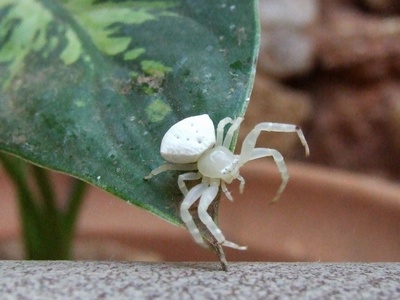
Thomisus spectabilis
Colorful crab spider, adults 5-7 mm, often show pink, cream or brown forms with stout legs. Lives on flowers and shrubs in Australia and Southeast Asia, active in warmer months. Harmless to humans; bites extremely rare and minor.
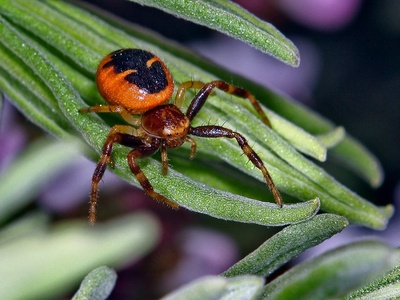
Synema globosum
Small crab spider, 5-8 mm, females display vivid red, orange or pinkish abdomens with darker markings. Sunlit meadows and flowers across Europe. Ambush hunter blending into blooms. Not dangerous; bite is uncommon and slightly painful at most.
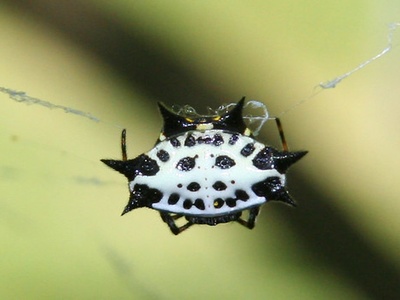
Spiny-backed orb-weaver
Spiny-backed orb-weaver, adults 5-9 mm, distinctive flattened spiny abdomen often white, orange or pink with black spots. Builds small orb webs in trees and shrubs across the Americas and Caribbean. Harmless to people; bite rarely reported and mild.

Australian spiny orb-weaver
Australian spiny orb-weaver, adults 6-9 mm, variable colors including pinkish-red and yellow morphs; strong lateral spines and compact shape. Found in eastern Australian gardens and forests building small orb webs. Non-dangerous; bite insignificant.
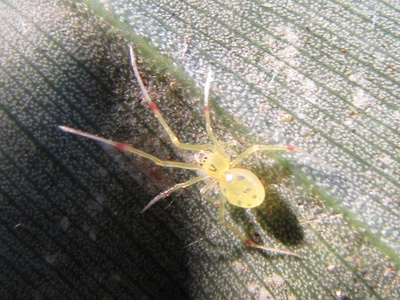
Happy-face spider
The Hawaiian “happy-face” spider, adults 3-5 mm, usually yellow with dark dorsal markings but many red/pink background morphs occur. Lives on understory vegetation in Hawaiian forests year-round. Harmless to people; too small to be medically significant.
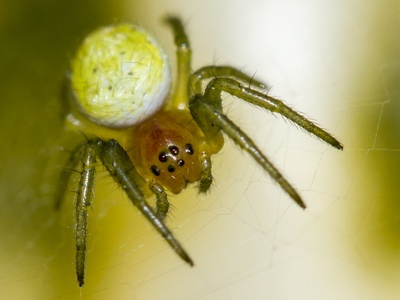
Cucumber orb-weaver
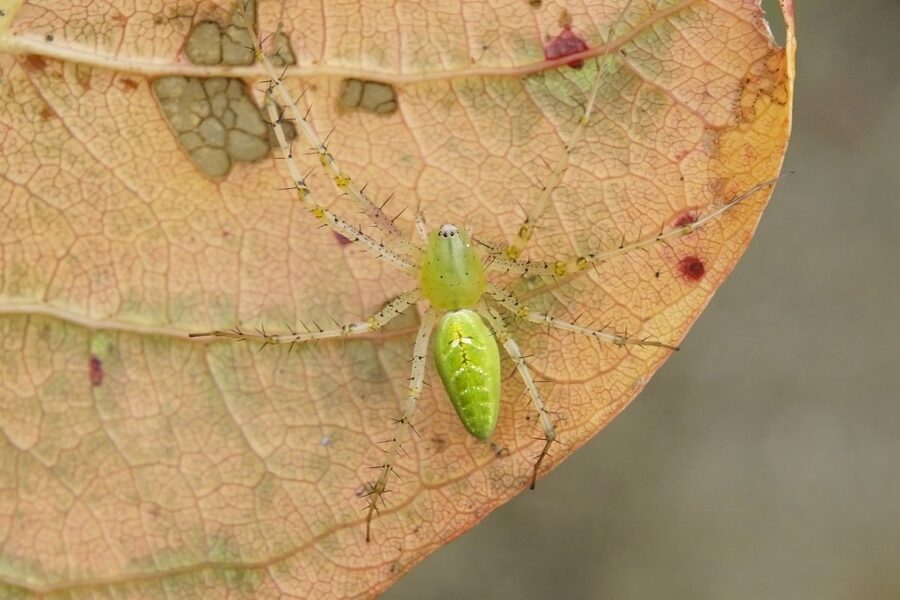
Tiny orb-weaver, adults 4-6 mm, typically bright green but can show pinkish or reddish abdominal tints in some individuals. Found on leaves and shrubs across Europe in spring–summer. Non-dangerous; bite not notable to humans.