Rainforests—from lowland wet forests to cloud forests—hold plants found nowhere else on Earth. Many species are scarce because of tiny ranges, habitat loss, or collection, and listing them helps clarify which need urgent attention and why.
There are 8 rare rainforest plants, ranging from Agarwood to Wollemi pine; for each entry, information is organized as Scientific name,Native range,IUCN / national status — you’ll find below.
How is a plant on this list determined to be rare or threatened?
A plant’s rarity is judged by its distribution, population trends, and known threats, usually documented by assessments like the IUCN Red List or national conservation lists. The entries below use those status assessments alongside native range to show why each species is considered rare, with references where available.
Can I visit sites to see species such as Agarwood or the Wollemi pine?
Some species occur in protected areas where controlled visits are possible, but many are legally protected or sensitive to disturbance; always check local regulations, avoid collecting or propagating wild material, and report observations to local conservation groups to help monitoring and protection.
Rare Rainforest Plants
| Name | Scientific name | Native range | IUCN / national status |
|---|---|---|---|
| Wollemi pine | Wollemia nobilis | Australia (New South Wales) | Critically Endangered (CR) |
| Titan arum | Amorphophallus titanum | Sumatra, Indonesia | Vulnerable (VU) |
| Agarwood | Aquilaria malaccensis | Southeast Asia (India, Bangladesh, Myanmar, Thailand, Malaysia, Indonesia) | Vulnerable (VU) |
| Borneo pitcher plant | Nepenthes clipeata | Borneo (Mount Kelam, West Kalimantan, Indonesia) | Critically Endangered (CR) |
| Indian pitcher plant | Nepenthes khasiana | Northeast India (Meghalaya, Assam) | Endangered (EN) |
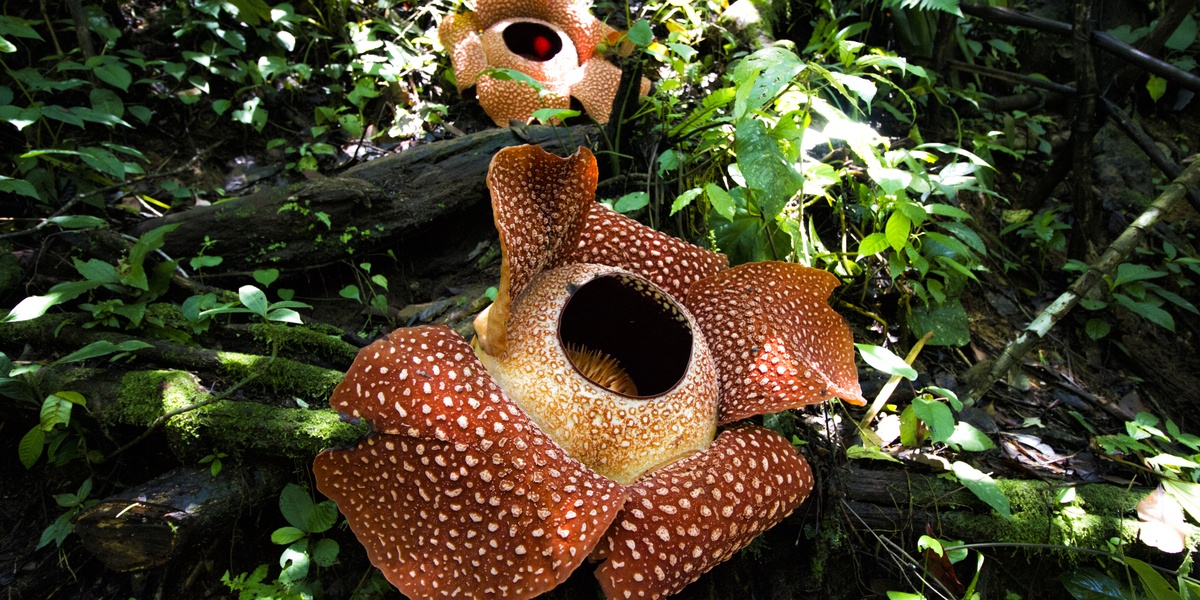
| Giant Rafflesia | Rafflesia arnoldii | Sumatra and Borneo (Indonesia) | Endangered (EN) |
| Moabi | Baillonella toxisperma | Central Africa (Cameroon, Gabon, Republic of Congo, Democratic Republic of Congo) | Vulnerable (VU) |
| Bigleaf mahogany | Swietenia macrophylla | Central & South America (Mexico to Bolivia) | Vulnerable (VU) |
Images and Descriptions
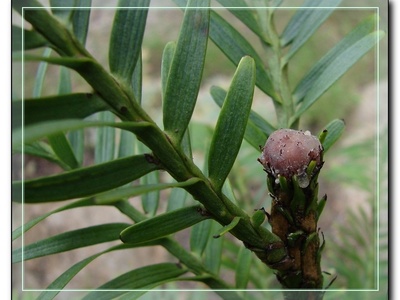
Wollemi pine
A rare, ancient conifer known from fewer than 100 mature wild trees in remote canyon rainforest. Critically endangered because of tiny population, limited range and disease risk; famous for its “dinosaur-era” lineage and intense conservation attention.
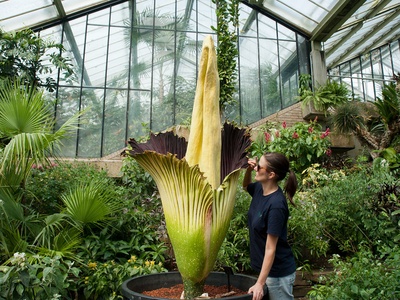
Titan arum
A giant rainforest tuber producing the world’s largest inflorescence and a strong carrion odor. Vulnerable due to habitat loss and overcollection; rare in wild, grows in lowland Sumatran rainforest and draws botanical and public interest when it blooms.

Agarwood
A tropical tree whose resinous heartwood (agarwood) is highly prized for perfume and incense. Overharvesting and habitat loss have made it vulnerable across its rainforest range; wild populations are fragmented and severely depleted.
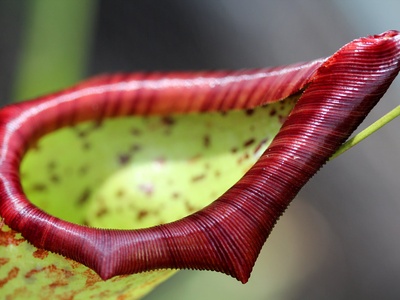
Borneo pitcher plant
A cliff‑dwelling carnivorous pitcher plant with very restricted mountaintop habitat and tiny wild populations. Critically endangered from habitat disturbance, fire and collection; prized by collectors and a focus for in‑situ and ex‑situ conservation.
Indian pitcher plant
A large, charismatic pitcher plant endemic to northeastern Indian montane rainforest and foothills. Endangered from habitat conversion, overcollection and grazing; notable for its striking pitchers and cultural significance to local communities.
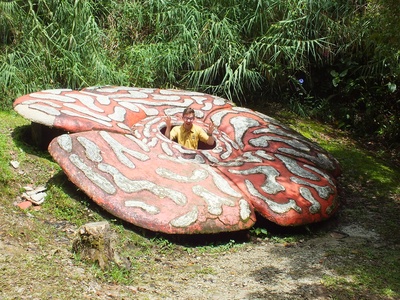
Giant Rafflesia
A parasitic flowering plant producing the largest single flowers on Earth, emitting a strong carrion smell to attract pollinators. Endangered due to habitat loss, low reproductive rates and specialized host needs in lowland rainforest.
Moabi
A large rainforest canopy tree valued for dense timber and edible oil; vulnerable because of overexploitation and slow growth. Naturally uncommon with fragmented populations across West and Central African rainforests, important for local economies and wildlife.
Bigleaf mahogany
A tall, commercially prized rainforest timber tree with high-value wood for furniture. Vulnerable from centuries of logging and habitat loss; wild populations are reduced and fragmented, prompting regulated trade and reforestation efforts.