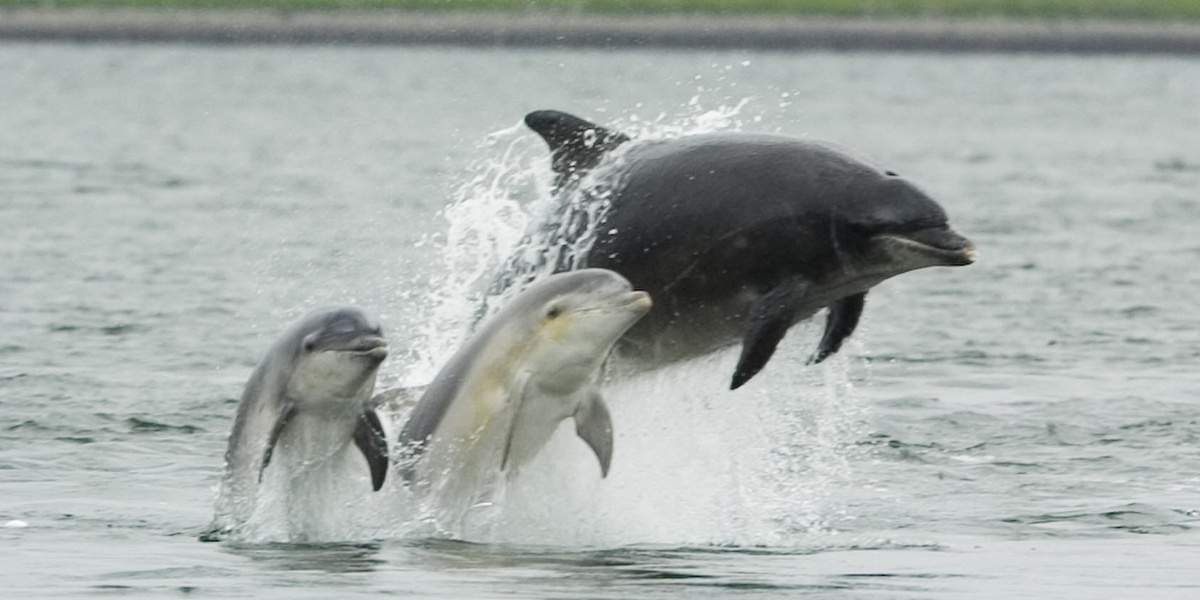
In the 19th century naturalists first split small toothed whales into distinct groups — what we now casually call ‘dolphins’ and ‘porpoises’ — after recognizing consistent differences in skulls and teeth.
That historical split helps explain why the two animals can look similar to a casual observer yet differ in anatomy, behavior, ecology and how people interact with them.
Casual confusion persists because many species overlap in size and are both toothed whales, and popular media often uses the terms loosely.
Understanding the differences between dolphins and porpoises matters for conservation, for staying safe around wild animals, and for interpreting wildlife reports. This piece lays out 10 clear differences across anatomy, behavior, ecology and human interactions.
Anatomy and Physical Traits
1. Beak and Rostrum Shape
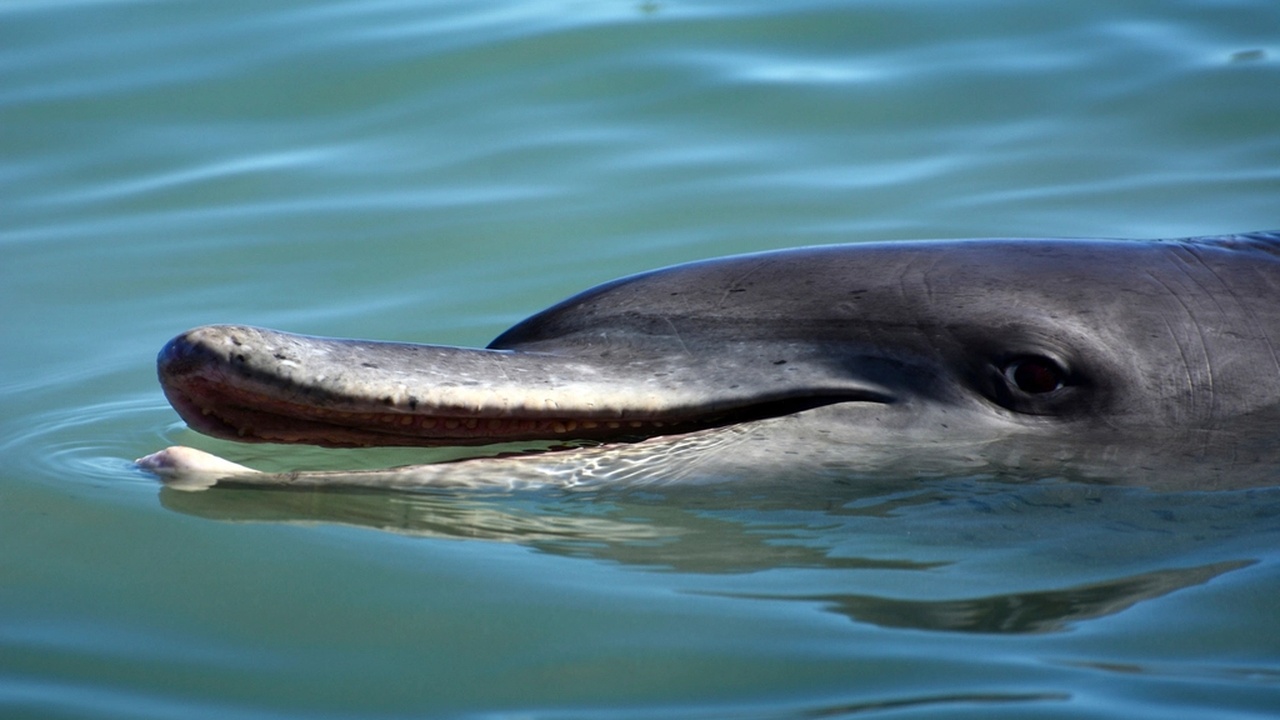
Dolphins typically have a pronounced, elongated rostrum or “beak” that projects well beyond the jaw; common bottlenose dolphins (Tursiops truncatus) are a familiar example with a long, curved snout used to seize and manipulate prey.
Porpoises, by contrast, have short, blunt faces with little or no visible beak—the harbor porpoise (Phocoena phocoena) shows the compact, rounded profile typical of the family.
That difference isn’t just cosmetic: an extended rostrum helps some dolphins probe crevices, grab larger or more mobile fish, and perform specialized feeding tactics that porpoises’ short snouts are less suited for.
2. Dorsal Fin and Body Shape
Most dolphins have a falcate (hooked) dorsal fin and a more streamlined, slender body that supports fast, acrobatic swimming.
Porpoises tend to be chunkier with a triangular, upright dorsal fin; their bodies give a more compact, robust silhouette. Harbor porpoises are usually 1.2–1.9 m long, whereas many common dolphins fall between about 1.5 m and over 4 m.
Remember that size has outliers: orcas are the largest living delphinids (6–9 m) and are classified as dolphins despite their size, illustrating why shape and fin form are more reliable field cues than absolute length.
3. Teeth, Skull and Species Counts
Tooth shape is a clear anatomical divider: dolphins have conical, pointed teeth adapted to grasping slippery prey, while porpoises possess spade-shaped (flattened) teeth better suited to shearing or holding smaller fish.
Skull morphology echoes that dental difference, which is why early taxonomists split the groups on cranial characters. Taxonomically, about 35–40 species are recognized in the dolphin family (Delphinidae), while porpoises number roughly seven species in Phocoenidae (sources: NOAA, IUCN).
Those counts matter for conservation: the vaquita (a porpoise) and several river dolphins have unique skull and tooth adaptations that reflect their diets and evolutionary history.
Behavior, Communication and Senses
Behavior and acoustic signals provide major distinctions that influence how researchers study and protect these animals.
4. Social Structure and Group Size
Dolphins usually form larger, fluid social groups with complex relationships; bottlenose dolphin pods commonly number 10–30 individuals and occasionally form superpods of hundreds for feeding or migration.
Porpoises are more often solitary or found in small groups—frequently under 20 animals—and they lack the multi-level alliance structures seen in some delphinids. That social contrast affects detectability in surveys and how groups respond to predators and vessels.
5. Vocalizations: Whistles vs Silence
Many dolphins produce a rich acoustic repertoire that includes broadband clicks and tonal whistles used for social identity, coordination and learning; bottlenose dolphins famously use “signature whistles” that function like names.
Porpoises, in contrast, rarely produce whistles and rely primarily on clicks for navigation and foraging. That difference means captive studies of dolphin social calls don’t translate cleanly to porpoises, and field researchers need different expectations when listening for either group (see NOAA, Marine Mammal Center for acoustic research summaries).
6. Echolocation: Frequency and Detection
Porpoises typically use narrow-band, high-frequency (NBHF) echolocation clicks—harbor porpoises often center around ~130 kHz—which provide fine target resolution but attenuate quickly in water, reducing detection range.
Dolphins tend to emit lower-frequency, broadband clicks that travel farther but with coarser resolution. Practically, monitoring programs need hydrophones capable of NBHF detection to find porpoises; otherwise surveys will undercount them and misjudge bycatch risk.
That acoustic divide also affects mitigation: high-frequency clicks are less likely to trigger some types of acoustic deterrents, so engineers and conservationists tailor devices to species’ hearing ranges.
Ecology and Habitat
Where these animals live and what they eat produce important ecological differences with direct conservation consequences.
7. Range and Habitat: Marine vs Freshwater Occurrences
Porpoises are strictly marine and occur mainly in temperate and subpolar coastal waters; none of the known porpoise species inhabit freshwater river systems.
Dolphins span marine, estuarine and several freshwater habitats—the Amazon river dolphin (Inia geoffrensis) is a striking example adapted to the Amazon Basin’s rivers. Geographic specialization—like the vaquita in the northern Gulf of California—can dramatically increase extinction risk for species with tiny ranges.
8. Diet and Foraging Techniques
Both groups eat fish and squid, but dolphins frequently employ cooperative and culturally transmitted hunting tactics such as corralling, strand-feeding or coordinated drives that require group coordination.
Porpoises more often hunt alone or in simple aggregations and take smaller, nearshore prey. Their spade-shaped teeth and blunt rostrum suit quick captures of small schooling fish rather than complex prey handling.
Those differences shape interactions with fisheries: cooperative dolphin hunts can overlap with commercial nets, while porpoise bycatch in gillnets remains one of the biggest threats to several species.
Taxonomy, Conservation and Human Interactions
Taxonomic status influences legal protections, while life history and habitat determine which human threats matter most.
9. Taxonomy: Family-Level Differences
Dolphins are mostly placed in the family Delphinidae; porpoises belong to Phocoenidae. That family-level split reflects consistent differences in skull shape, teeth and other skeletal features.
Common names can confuse: several river-dwelling species are called “river dolphins” but belong to different families than marine delphinids. Clear taxonomy matters for conservation listings and research priorities (see NOAA or IUCN classifications for up-to-date status).
10. Conservation Status and Human Interactions
Different habitats and behaviors produce different threats. The vaquita (Phocoena sinus) is a porpoise restricted to the northern Gulf of California and has declined to only a few dozen or fewer individuals, making it among the most imperiled marine mammals (IUCN/NOAA summaries outline the crisis).
Bycatch in gillnets is a top threat for many porpoises, while dolphins face pressures from fisheries, noise, pollution and the ethics of captivity. Lifespan and reproduction vary: bottlenose dolphins can live 40–50 years, and many delphinids have gestation periods around 10–12 months.
For responsible wildlife viewing, stay a respectful distance, avoid chasing or encircling animals, and support policies that reduce bycatch and noise. Taxonomic clarity helps managers target protections where they are most needed.
Summary
- Face and tooth shape are quick field cues: beaked, conical-toothed dolphins versus blunt-faced, spade-toothed porpoises.
- Acoustic and social behavior differ: dolphins use whistles and complex social calls; porpoises rely on high-frequency clicks and tend to be more solitary.
- Habitat and taxonomy influence risk—porpoises are marine-only and include highly threatened species like the vaquita, while some dolphins occupy freshwater systems (e.g., Amazon river dolphin).
- Support conservation by choosing responsible wildlife-viewing operators, backing bycatch-reduction policies, and consulting authoritative sources such as NOAA and IUCN for species-specific guidance.