In 1975, marine biologists observing reef animals first documented cephalopods using skin texture and color together to vanish from predators — a discovery that changed how scientists thought about animal camouflage.
That observation opened a bigger question: why do some creatures change appearance at all? The reasons range from survival — hiding from or ambushing other animals — to social signaling and even thermoregulation. Engineers and materials scientists have taken notice, too; adaptive coloration in nature has inspired everything from tunable optical films to soft robots that blend into their surroundings. This piece profiles 10 species that illustrate the full spectrum of color change mechanisms, from blink-fast skin-patterning in the ocean to slow, molt-driven seasonal shifts on tundra. The list is organized into three groups: marine masters, reptiles and amphibians, and seasonal land-and-air changers.
Marine masters of disguise
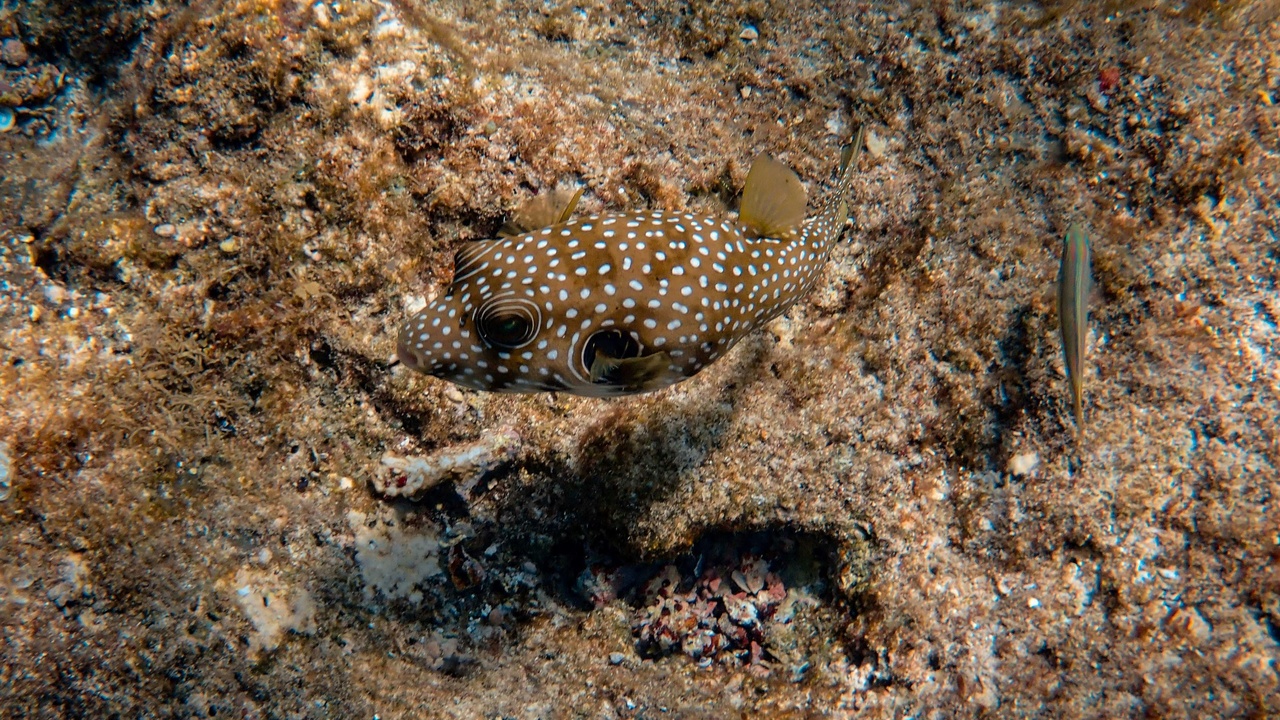
Water favors fast, dynamic displays. Many cephalopods can shift patterns in under one second, producing combinations of spots, bands, and texture changes that outmatch most fish. The basic toolkit in cephalopod skin usually has three layers: pigment-bearing chromatophores that expand or contract, iridophores that produce iridescent structural colors, and leucophores that reflect ambient light. Those pigment and structural systems let animals both hide and signal; light, depth, and substrate complexity in reefs or sand flats shape how those displays evolve. Researchers at institutions such as Woods Hole Oceanographic Institution have filmed sub-second pattern changes in lab and field settings, and flatfish studies show that many species can match a wide range of colors and textures across tens of centimeters of substrate variation.
1. Common cuttlefish (Sepia officinalis)
Cuttlefish are masters of rapid pattern and texture change, switching from uniform tones to high-contrast disruptive patterns and raised skin papillae in less than a second when needed. Their three-layer skin—chromatophores, iridophores, and leucophores—lets them tune color, brightness, and shine simultaneously.
Laboratory work (including time-lapse filming at Woods Hole and European cephalopod labs) documents those near-instant transitions during hunting and social displays. Cuttlefish use mottle patterns to approach prey stealthily, uniform backgrounds to hide, and sudden disruptive displays to startle predators.
Engineers have borrowed from cuttlefish skin: teams at MIT and DARPA-funded groups have tested soft-actuated skins and multilayer optical films inspired by chromatophore/iridophore arrangements for adaptive camouflage and low-power displays.
2. Common octopus (Octopus vulgaris)
The common octopus blends color change with texture (papillae) and dramatic posturing. Octopuses often match rock and kelp during daytime hunting, then flash bold colors or patterns when threatened to confuse predators or warn rivals.
Field researchers and marine labs have filmed octopuses altering skin patterning and arm displays as part of both camouflage and distraction tactics, sometimes changing within seconds. Their nervous system affords distributed control of skin units, a model that sparked interest in flexible display tech and active camouflage materials.
Behavioral observations include arm-spreading displays that divert attacks away from the body and rapid color pulses that coordinate with movement as the animal slips into crevices.
3. Caribbean reef squid (Sepioteuthis sepioidea)
Reef squid use rapid color pulses and traveling waves across the mantle for schooling coordination, camouflage, and communication. These banded displays can propagate in coordinated patterns so that nearby squid mirror each other, helping with group cohesion and mate attraction.
Field teams working on Caribbean reefs have recorded synchronized flash patterns in groups—seconds-long pulses that change with group size and context. That decentralized signaling has been cited in engineering work on swarm robotics and simple coordination protocols modeled on squid signaling.
4. Peacock flounder (Bothus lunatus)
Peacock flounder and other flatfish are expert background matchers. By shifting pigment cells and subtly altering posture, they match sand, rubble, and seafloor textures across tens of centimeters of substrate changes, making them hard to spot for both predators and prey.
Field studies on reef flats show flounder adjusting coloration and slight body rotations to maximize concealment, a passive strategy that complements ambush hunting. Designers studying passive adaptive camouflage have looked to flatfish patterning for textiles and vehicle concealment concepts.
Reptiles and amphibians: quick color shifts for signaling and thermoregulation
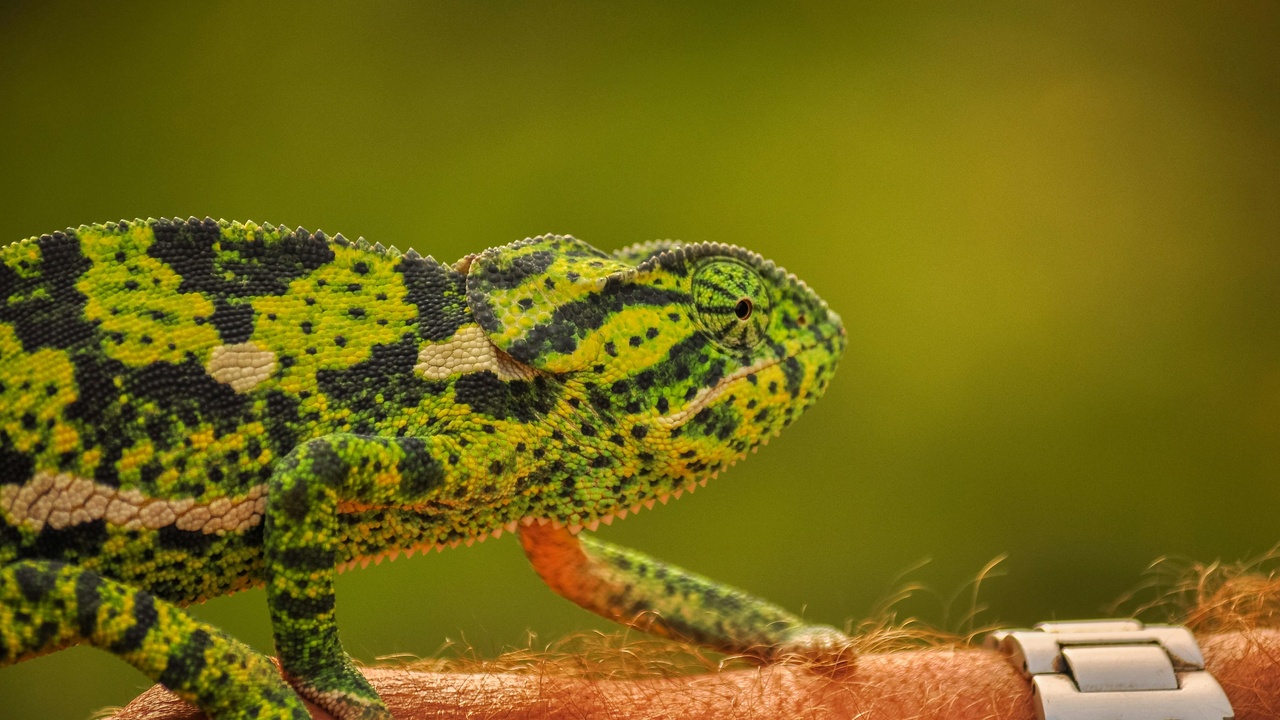
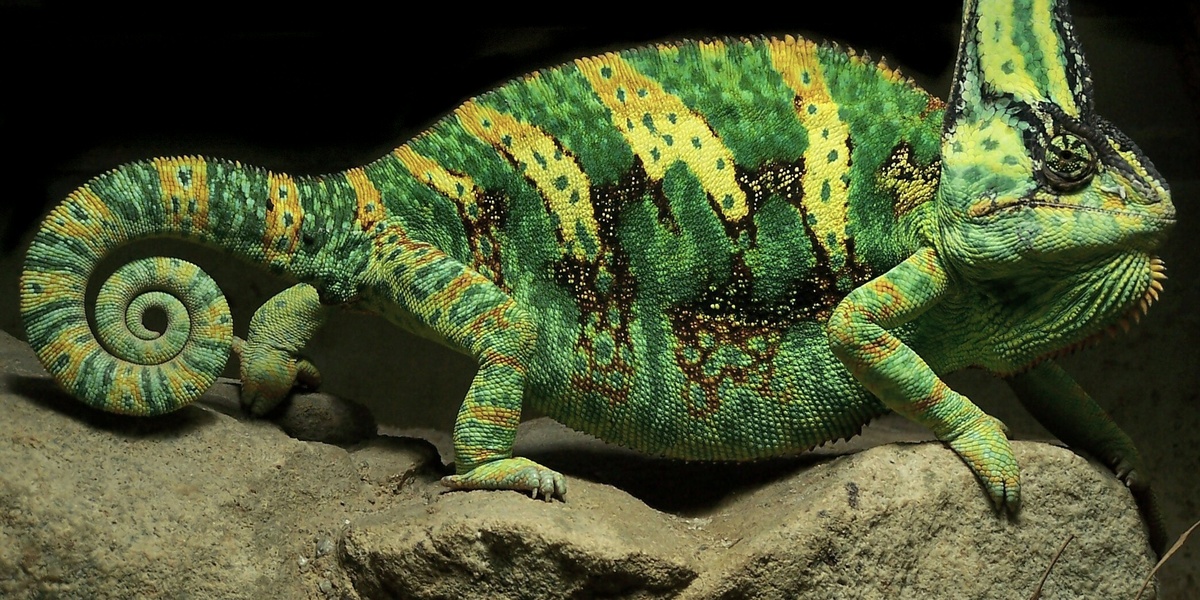
On land, ectotherms use color change for a mix of purposes: camouflage, social signaling, and controlling how much heat they absorb. Mechanisms range from pigment redistribution in skin cells to structural tuning at the nanoscale, and timescales run from seconds to days. For instance, a landmark 2015 study showed chameleons adjust spacing in guanine nanocrystal layers to tune hue, while some treefrogs shift hue over hours in response to humidity or temperature. These differences reflect ecological needs—fast signaling during territorial disputes versus slower physiological responses to environment.
5. Panther chameleon (Furcifer pardalis)
Panther chameleons are famous for vivid, rapid color shifts used in territorial and mating displays. Males flash bright oranges, blues, and greens during courtship and when challenged by rivals.
Recent work (the 2015-style nanocrystal research) revealed chameleons change structural color by tuning the spacing of guanine nanocrystals in skin cells, not just by moving pigments around. That lets them shift hue and reflectance quickly and predictably; measured reflectance can change by tens of percent between display states.
Materials scientists cite this mechanism when designing tunable photonic devices and color-changing films that don’t rely solely on dyes.
6. Green anole (Anolis carolinensis)
Often called the “American chameleon,” the green anole can switch between bright green and brown tones over minutes to hours. Triggers include mood, temperature, and social context—males popularly darken or brighten during territorial displays.
Mechanistically, anoles manipulate pigment cell expansion and contraction. Field observations document color shifts during aggressive interactions and when individuals thermoregulate on sunlit branches. Researchers use anoles to study vertebrate skin physiology because hormonal and thermal controls are experimentally accessible.
7. Gray treefrog (Hyla versicolor)
The gray treefrog changes hue from gray to green over hours or days, responding to background color, humidity, and temperature. These shifts help with concealment among leaves and bark and can influence heat absorption.
Herpetology field guides and observational studies report frogs adjusting coloration across a day as humidity rises and falls. Amphibian skin physiology—where hydration influences pigment distribution—differs from reptile chromatophore-driven shifts, which is why treefrog transitions are slower.
Land and air: seasonal molts and slower color transitions
Seasonal color change is a different animal. Often driven by molt or pigment synthesis cycles, these transitions play out over days to months and are timed to seasons. Ptarmigan populations typically molt twice a year, Arctic foxes replace coats each spring and autumn, and some spiders change color in days to match particular flowers. These slower processes are biologically distinct from chromatophore-based rapid shifts and carry important conservation implications as seasons shift with climate change.
8. Goldenrod crab spider (Misumena vatia)
Goldenrod crab spiders can change color to match the flower they ambush—most famously shifting between white and yellow on daisies and goldenrod. The transition takes days to weeks as pigment synthesis and physiological changes accumulate.
Field observations and short-term experiments show spiders that match flower color capture more pollinators, a clear ecological payoff for slow color change. That aggressive mimicry improves hunting success without the metabolic cost of constant rapid change.
9. Arctic fox (Vulpes lagopus)
The Arctic fox shifts from brown or gray in summer to white in winter to blend with snow. Molting usually happens twice per year (spring and autumn), and the complete seasonal transformation can take several weeks to months.
Beyond concealment, seasonal coats provide insulation suited to cold months. Recent ecological studies link shorter snow seasons to increased predation risk because white coats persist into snow-free periods, creating camouflage mismatches that can reduce survival rates.
10. Rock ptarmigan (Lagopus muta)
Rock ptarmigan molt twice annually, trading cryptic brown summer plumage for white winter feathers that hide them on tundra and rocky slopes. Timing of molt is tied to photoperiod and breeding schedules, and populations show consistent biannual cycles in field studies.
As with Arctic foxes, changing snow patterns threaten to decouple plumage timing from background conditions, exposing birds to higher predation during mismatched seasons. These seasonal examples remind us that color change solves ecological problems on many timescales.
Summary
- Mechanisms vary widely: pigment cells, structural nanocrystals, and molts each produce adaptive coloration suited to ecological needs.
- Timescales range from sub-second cephalopod patterning to multi-week or seasonal molts, reflecting trade-offs between speed, energetics, and function.
- Applications are broad: cephalopod skin inspired adaptive materials, chameleon nanocrystals inform tunable optics, and seasonal studies highlight conservation concerns under changing climates.
- Notable examples: cuttlefish for rapid concealment, panther chameleons for structural-color signaling, and Arctic foxes and ptarmigan for seasonal camouflage—each shows a different solution to the same problem.