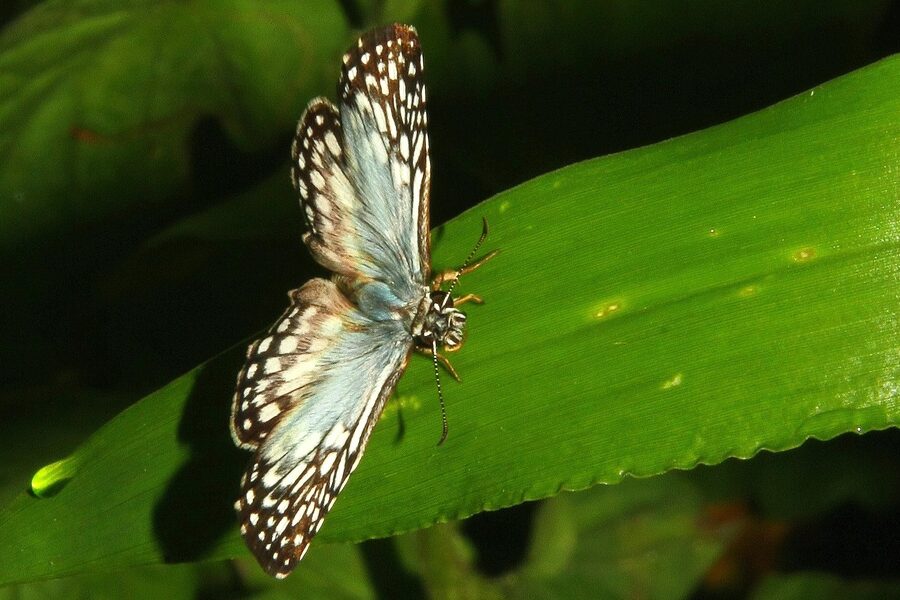
India’s diverse climates — from the Himalayan foothills to the Western Ghats and coastal plains — make India one of the richest places in the world for butterfly watching. Whether you enjoy short roadside sightings or planned nature walks, the variety and seasonal shifts mean there’s almost always a species to spot.
There are 50 butterfly species in india, ranging from Black-veined White to Yellow Pansy. For each species, the list below is organized with the columns Scientific name,Regions,Wingspan (mm) to help with identification and comparison; see the full list you’ll find below.
How were these 50 species selected?
The list focuses on a representative mix: commonly observed species, regionally important ones, and those with reliable taxonomic records across India. Selection prioritized verifiable sightings and coverage across habitats so the set gives a practical snapshot rather than an exhaustive taxonomic catalog.
When is the best time to see the widest variety of these butterflies in India?
Peak diversity is usually after the monsoon into early winter (late summer through November) when vegetation and nectar sources are plentiful; mornings on sunny days are best for active sightings, though exact timing varies by region and elevation.
Butterfly Species in India
| Name | Scientific name | Regions | Wingspan (mm) |
|---|---|---|---|
| Common Mormon | Papilio polytes | Throughout India, common in gardens | 80-100 |
| Lime Swallowtail | Papilio demoleus | Widespread across India, common in plains | 80-100 |
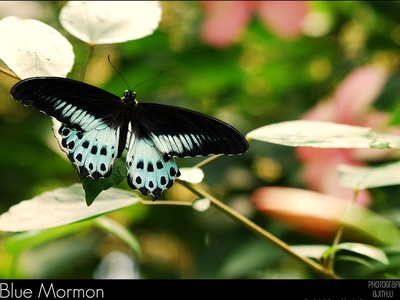
| Blue Mormon | Papilio polymnestor | Western Ghats and peninsular India | 120-150 |
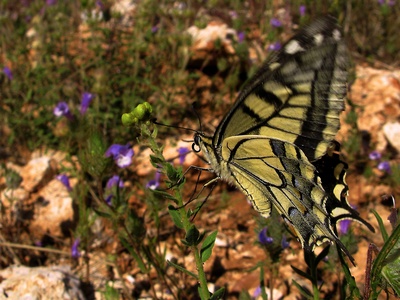
| Common Yellow Swallowtail | Papilio machaon | Himalayan foothills and north India | 70-90 |
| Common Rose | Pachliopta aristolochiae | Widespread in India, gardens and forests | 80-95 |
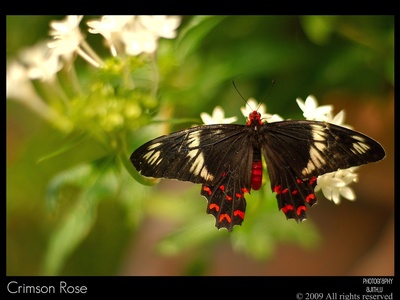
| Crimson Rose | Pachliopta hector | Western Ghats and southern India | 90-110 |
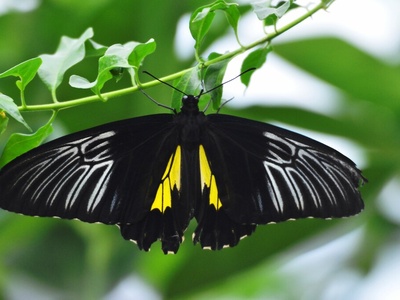
| Common Birdwing | Troides helena | Southern India, NE India, forested areas | 120-180 |
| Common Jay | Graphium doson | Widespread in forests across India | 75-95 |
| Tailed Jay | Graphium agamemnon | Widespread in India, often in gardens | 70-90 |
| Common Bluebottle | Graphium sarpedon | Forests and gardens across India | 75-95 |
| Common Jezebel | Delias eucharis | Widespread in India, gardens and forests | 63-75 |
| Common Emigrant | Catopsilia pomona | Throughout India, common migrant and resident | 50-70 |
| Mottled Emigrant | Catopsilia pyranthe | Widespread in India, open habitats | 50-70 |
| Common Grass Yellow | Eurema hecabe | Widespread across India, common in fields | 35-50 |
| Plain Tiger | Danaus chrysippus | Throughout India, abundant in open areas | 70-95 |
| Striped Tiger | Danaus genutia | Widespread across India, forests and gardens | 75-95 |
| Common Crow | Euploea core | Widespread, common in plains and coasts | 80-100 |
| Blue Tiger | Tirumala limniace | Wet forests and plains across India | 85-120 |
| Great Eggfly | Hypolimnas bolina | Widespread in India, common in open areas | 70-95 |
| Danaid Eggfly | Hypolimnas misippus | Widespread, mimics Danaus; common in plains | 60-80 |
| Peacock Pansy | Junonia almana | Open fields, gardens throughout India | 50-65 |
| Blue Pansy | Junonia orithya | Widespread in open and disturbed areas | 45-65 |
| Yellow Pansy | Junonia hierta | Dry open habitats across India | 45-60 |
| Common Leopard | Phalanta phalantha | Widespread in open and scrub habitats | 50-70 |
| Indian Fritillary | Argynnis hyperbius | Hills and open areas across India | 75-95 |
| Indian Red Admiral | Vanessa indica | Himalayas and higher elevations, migratory | 60-75 |
| Painted Lady | Vanessa cardui | Regular migrant across India, especially winters | 55-70 |
| Common Sailor | Neptis hylas | Forests and edges across India | 55-75 |
| Commander | Moduza procris | Forests of India, especially hills and south | 70-90 |
| Common Castor | Ariadne merione | Widespread in gardens and scrub across India | 50-60 |
| Common Evening Brown | Melanitis leda | Grasslands and forest edges across India | 60-85 |
| Common Five-ring | Ypthima baldus | Widespread in grasslands and roadsides | 35-45 |
| Pale Grass Blue | Zizeeria maha | Widespread, common in gardens and fields | 25-35 |
| Long-tailed Blue | Lampides boeticus | Widespread migrant, grasslands and gardens | 25-35 |
| Indian Sunbeam | Curetis thetis | Forests and clearings across India | 45-60 |
| Black-veined White | Aporia crataegi | Himalayan foothills and temperate zones | 55-75 |
| Large White | Pieris brassicae | Frequent in northern India, fields and gardens | 55-70 |
| Psyche | Leptosia nina | Widespread in India, small delicate white butterfly | 30-42 |
| Common Pierrot | Castalius rosimon | Widespread, sunny scrub and gardens | 30-40 |
| Common Cerulean | Jamides celeno | Widespread in forests and gardens | 25-35 |
| Double-branded Crow | Euploea klugii | Forests and plains in India, less common | 80-95 |
| Dark Blue Tiger | Tirumala septentrionis | Forests and coastal areas in India | 90-120 |
| Red Lacewing | Cethosia biblis | Northeast India and eastern forests | 70-95 |
| Leopard Lacewing | Cethosia cyane | Forests and gardens across India | 65-85 |
| Common Albatross | Appias albina | Coastal and plains across India | 55-70 |
| Common Gull (butterfly) | Cepora nerissa | Widespread in open areas and gardens | 50-70 |
| Great Satyr | Aulocera padma | Himalayan forests and grassy slopes | 65-90 |
| Orange Oakleaf | Kallima inachus | Forests across India, especially NE and Western Ghats | 85-110 |
| Common Nawab | Polyura athamas | Forests of India, hill regions | 85-105 |
| Brown Awl | Hasora badra | Widespread in forests across India | 45-55 |
Images and Descriptions
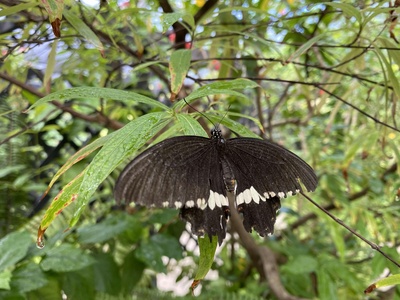
Common Mormon
Black swallowtail with white spots and variable female mimics; seen year-round in plains and gardens. Very common and adaptable, often attracted to citrus; easy to identify by tail and pale markings.
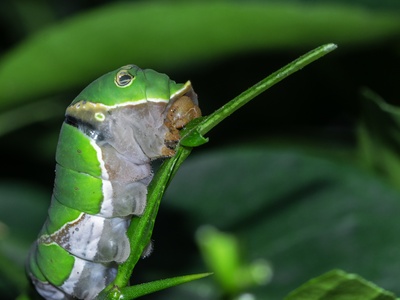
Lime Swallowtail
Yellow-and-black swallowtail with distinctive chequered hindwing margins; flies year-round, especially near citrus. Extremely common and a frequent garden visitor; larvae feed on rutaceae.
Blue Mormon
Large glossy black swallowtail with blue sheen on hindwings; restricted to Western Ghats and southern forests. Impressive size, seen mainly in monsoon and post-monsoon; locally common but habitat-dependent.
Common Yellow Swallowtail
Pale yellow swallowtail with black veins and tails; found in temperate Himalayan meadows spring to autumn. Locally common in highlands; delicate compared to tropical swallowtails.

Common Rose
Black butterfly with striking red body and white patches on forewing; flies year-round in gardens. Slow, fluttering flight, common and recognizable by crimson body and tail-less shape.
Crimson Rose
Similar to Common Rose but with broader crimson abdomen and more extensive red markings; found in southern forests and gardens. Less widespread than Common Rose; often seen feeding on Lantana and nectar plants.
Common Birdwing
Very large black-and-yellow birdwing with slow gliding flight; seen in forested regions mainly during monsoon and post-monsoon. Spectacular and protected in some areas; less common in heavily disturbed habitats.
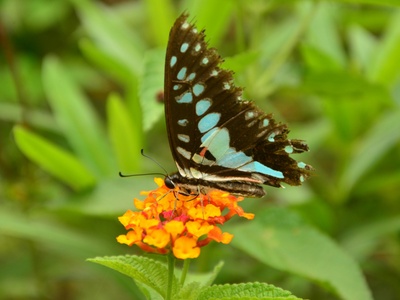
Common Jay
Greenish-black swallowtail with pale spots and fast, erratic flight; frequent in forest openings and gardens. Active year-round in moist areas; often seen visiting flowers and hilltops.
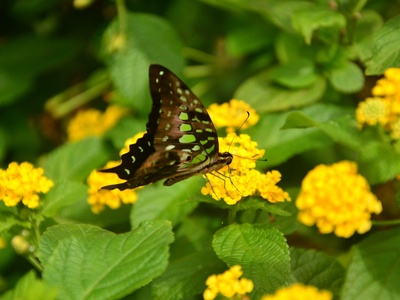
Tailed Jay
Bright green-spotted swallowtail with distinctive tails and rapid flight. Common in gardens and forest edges, especially in warm months; attracted to flowers and flying fast in shady corridors.
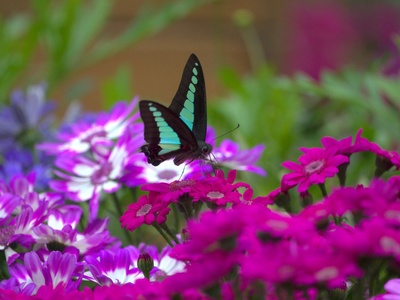
Common Bluebottle
Metallic blue-green medial band on dark wings and quick flight; common in forests and gardens during monsoon and post-monsoon. Often visits nectar and damp patches; recognizable by shimmering band.
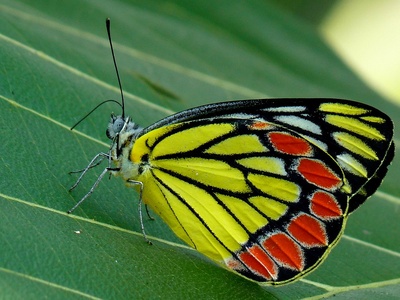
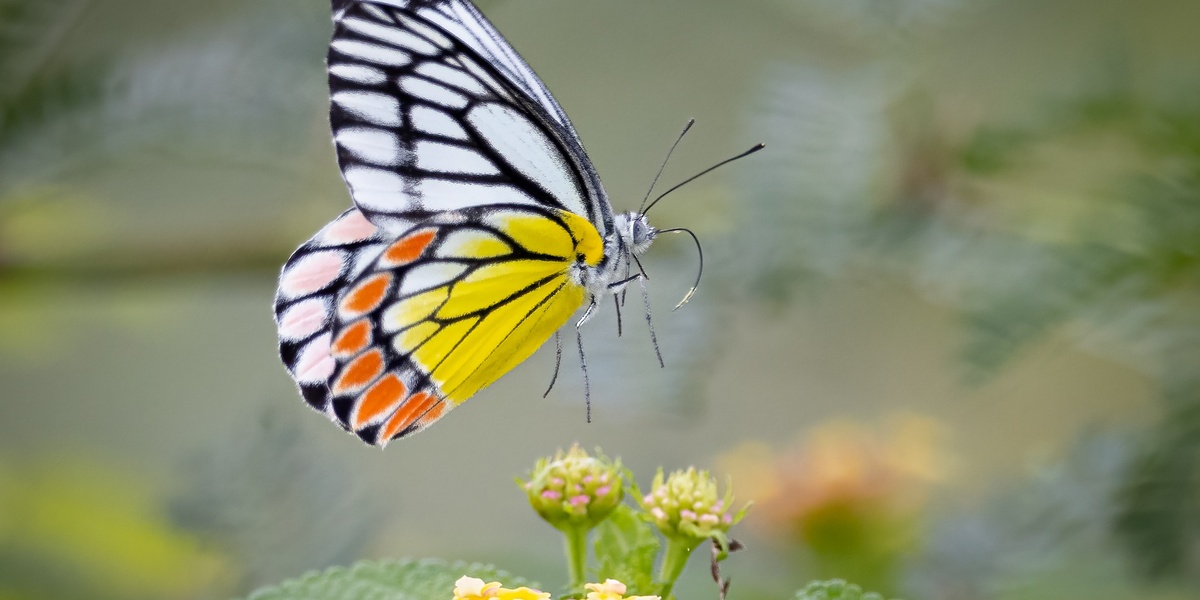
Common Jezebel
White and yellow upperwings with black margins and bright red underside patches; common from spring to autumn. Slender flight, favors edges and gardens; larvae feed on mistletoes.
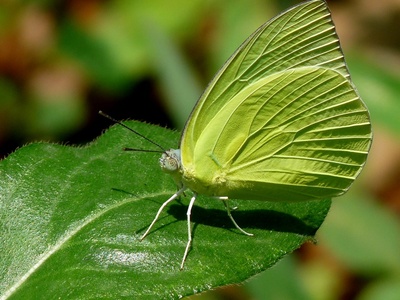
Common Emigrant
Pale yellow butterfly that migrates seasonally; wings often with variable black margins. Seen in monsoon and post-monsoon, common in open habitats and fields; easy ID by plain yellow wings.
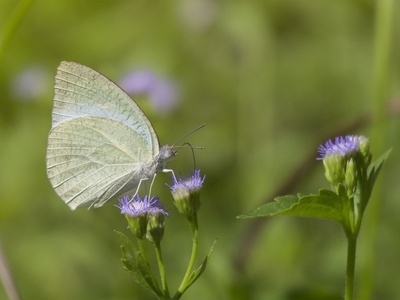
Mottled Emigrant
Yellow to pale orange with mottled underwing; frequent in gardens and scrub, especially during migrations. Common and quick-flying; often found near host plants and puddling sites.
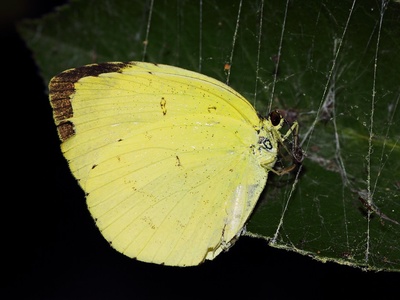
Common Grass Yellow
Small lemon-yellow butterfly with faint markings, quick undulating flight. Seen year-round in open habitats, very common and often basks on vegetation; easy to overlook due to size.
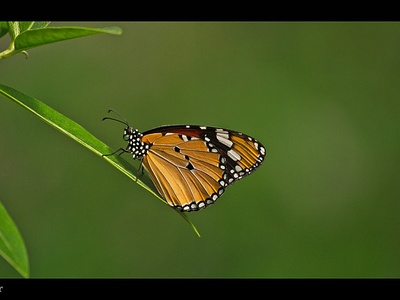
Plain Tiger
Orange-brown with black borders resembling monarchs; common in gardens and meadows year-round. Larvae feed on milkweeds; very common and involved in mimicry complexes.
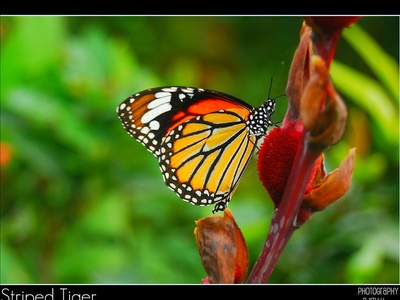
Striped Tiger
Bold orange with black stripes and white spots; flutters slowly through forests and gardens, common in monsoon to winter. Important mimicry model and widespread across varied habitats.
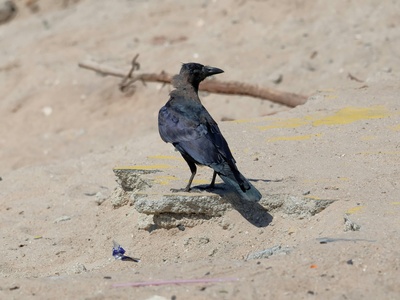
Common Crow
Large dark butterfly with bluish sheen and white spots; slow, gliding flight common near coasts and plains. Often forms clusters; common and unpalatable to predators.
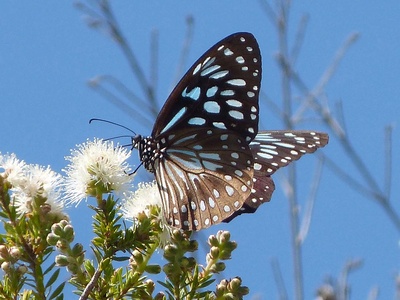
Blue Tiger
Dark wings with bluish streaks and rows of spots; migratory flier seen in monsoon and winter. Common in moist forests and plains, part of migratory milkweed-feeding group.
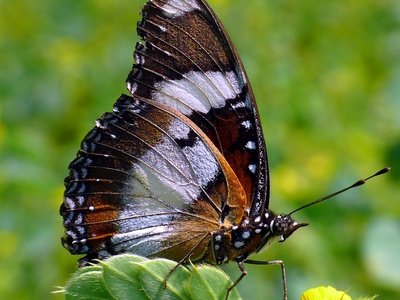
Great Eggfly
Dark wings with large iridescent blue or purple discal patches in males; females variable and mimetic. Seen year-round in open areas; common and conspicuous when perching.
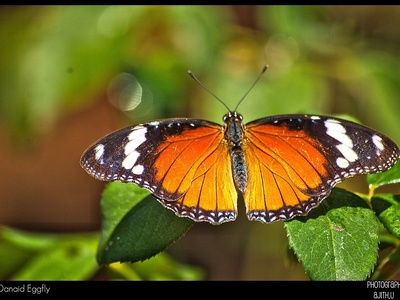
Danaid Eggfly
Female resembles poisonous Danaus species; males dark with white spots. Found year-round in open habitats, common and notable for Batesian mimicry.
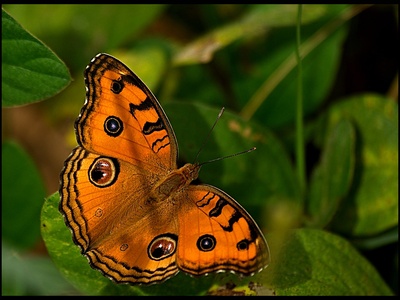
Peacock Pansy
Orange-brown with large ocelli (eye-spots) on wings; basks in sun and is common in summers. Easily identified by striking eyespots and rapid fluttering flight.
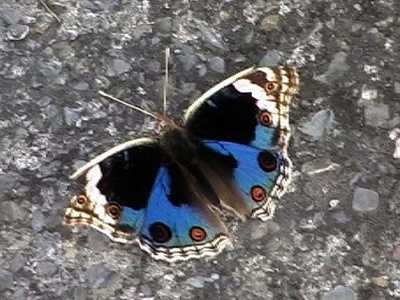
Blue Pansy
Dark wings with vivid blue patches and eye-spots; basks on bare ground and flowers. Seen in warm months, common in gardens and wastelands, and tolerates disturbance.
Yellow Pansy
Pale yellow with dark borders and small eyespots; prefers dry scrub and open ground. Common in arid regions, active in sunny conditions and easily noticed when basking.
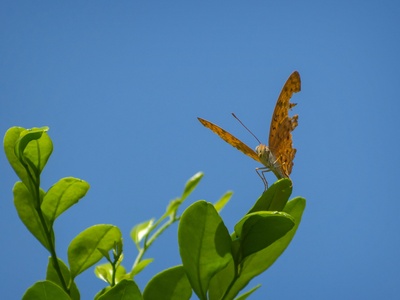
Common Leopard
Orange butterfly with black leopard-like spots and swift low flight; common in gardens and scrub year-round. Often seen puddling and in sunny gaps.
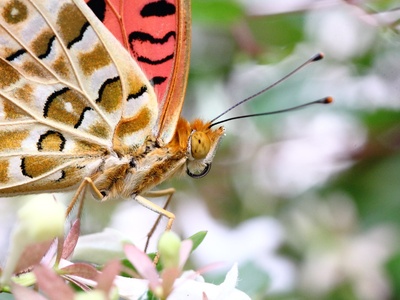
Indian Fritillary
Orange-brown with silver-spotted underside; prefers open hillsides and forest clearings. Seen in warmer months; locally common where violets (larval hosts) are present.
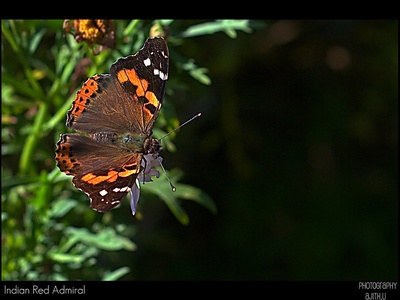
Indian Red Admiral
Dark wings with reddish bands and white spots; favors higher elevations and migratory movements. Seen spring to autumn in hills; less common in lowlands.
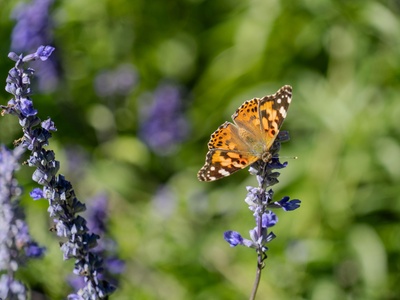
Painted Lady
Highly migratory orange-brown butterfly with complex pattern; appears in large numbers seasonally. Common during migrations, easy to spot on flowers.
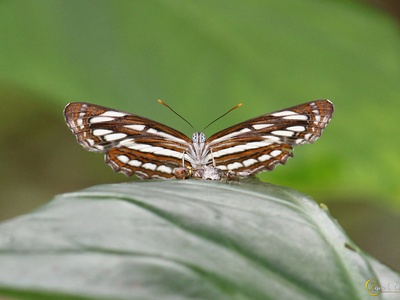
Common Sailor
Black-and-white banded wings with elegant gliding flight; common along forest trails and shaded gullies. Seen in monsoon and post-monsoon; distinctive pattern aids ID.
Commander
Reddish-brown with white bands and bold wing shape; perches openly on sunlit patches. Found in forests and hill slopes, locally common in suitable habitat.
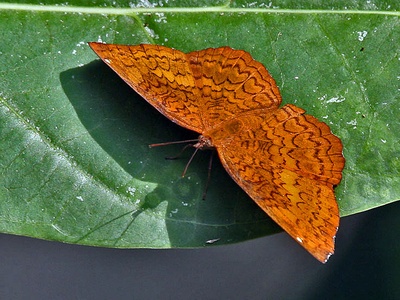
Common Castor
Orange-brown with wavy lines and ragged wing edges; quick, fluttery flight. Common in gardens and hedgerows, larvae on castor plants; easy to find year-round.
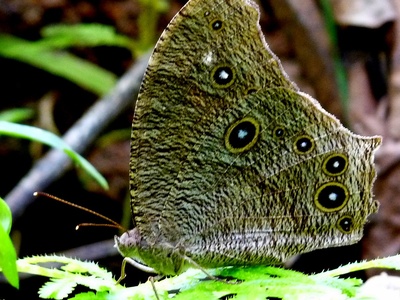
Common Evening Brown
Camouflaged brown with seasonal forms; flies weakly at dusk and rests with wings closed. Common in grassy and forested habitats, more active in monsoon.
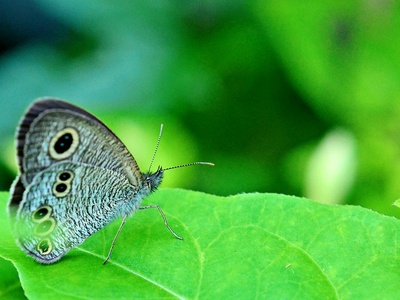
Common Five-ring
Small brown butterfly with five characteristic eye-rings on hindwing underside; slow, low flight on grass. Very common in open grassy areas, often seen basking.
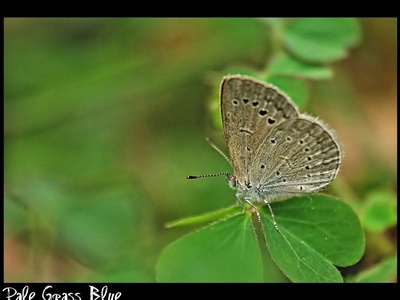
Pale Grass Blue
Tiny pale blue with understated markings; quick flight close to ground. Seen year-round in open places, very common and often overlooked due to size.
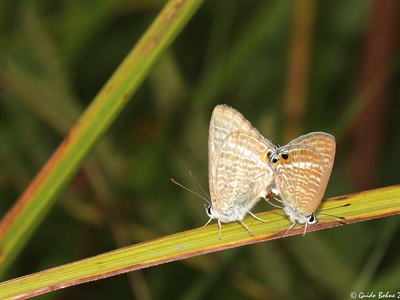
Long-tailed Blue
Small blue with tiny tail-like extensions on hindwing and streaked underside; migratory and common on legumes. Easily seen on flowers and puddling spots.
Indian Sunbeam
Orange-gold upperwings in males, pale underside with subtle lines; sun-loving and perches on leaf tops. Found seasonally in forest gaps, locally common where host plants occur.
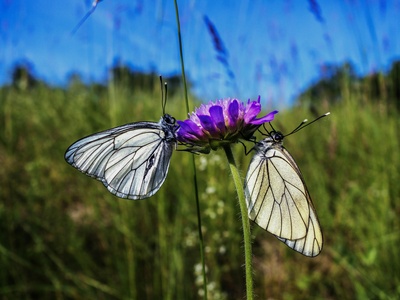
Black-veined White
White butterfly with strong black veins, slow flight in temperate zones. Seen spring to summer in the Himalaya; locally common in meadows and orchards.
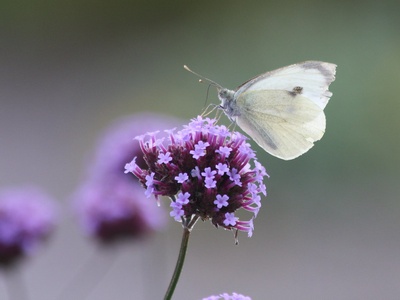
Large White
White butterfly with bold black forewing tips and two black spots; common in agricultural areas. Often seen year-round in warmer regions, a frequent pest on brassicas.

Psyche
Delicate white with translucent wings and faint markings; flutters slowly among bushes. Prefers shady habitats and is common in many lowland regions year-round.
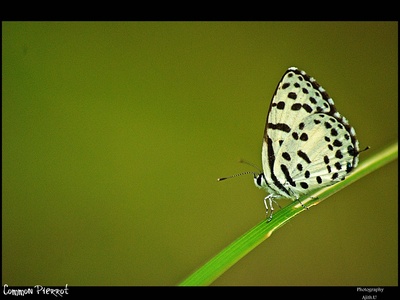
Common Pierrot
Small white-and-black butterfly with neat bands; basks on leaves in sunlit areas. Common in gardens and scrub, easily identified by its stark banding.
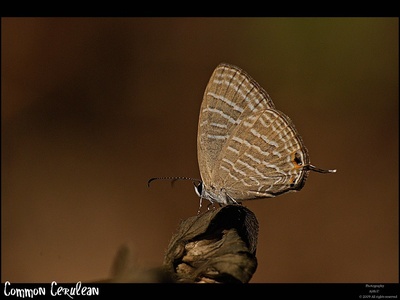
Common Cerulean
Small blue with iridescent upperwings and underside speckles; flits around shrubs and flowers. Seen year-round in many habitats, common and fond of flowering plants.
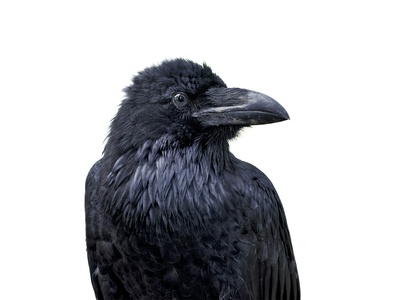
Double-branded Crow
Dark glossy wings with subtle pale bands; slow, gliding flight typical of milkweed feeders. Less common than Euploea core; found in moist forests and protected areas.
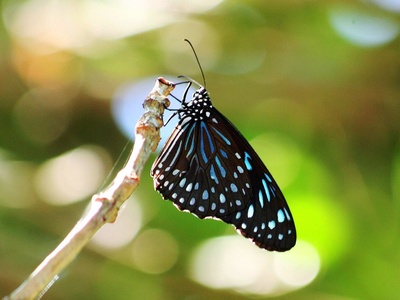
Dark Blue Tiger
Dark wings with bluish streaks and pale spots; migratory and often seen in groups. Common in moist forests and coastal belts during migration seasons.
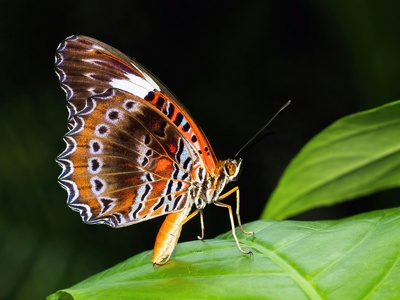
Red Lacewing
Bright orange-red upperwings with black borders and intricate underside; common in moist forest edges. Localized to northeast and eastern India, favorite of butterfly photographers.
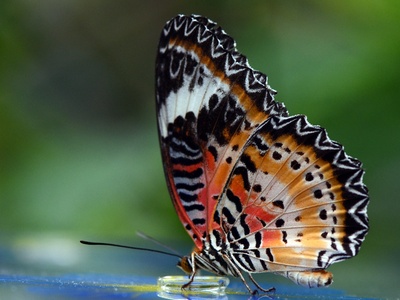
Leopard Lacewing
Orange with black-and-white patterned margins and ornate underside; basks openly in sunny clearings. Widespread in suitable habitats, locally common and showy.
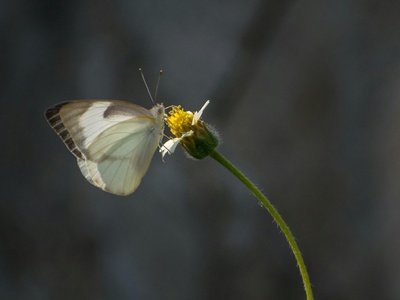
Common Albatross
White with subtle grey or green veins and swift flight; found near coasts and plains. Seasonally common, often seen in windy coastal habitats and open countryside.
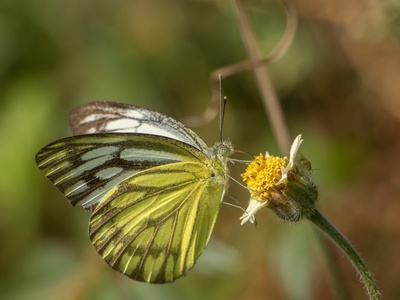
Common Gull (butterfly)
White wings with greenish under markings and rapid flight; frequents gardens and scrub. Common and widespread, often visits nectar sources and puddling sites.
Great Satyr
Dark brown satyr with broad pale bands and slow flight among grasses. Found in mid-elevation Himalayas, locally common where grassy slopes and forest margins exist.
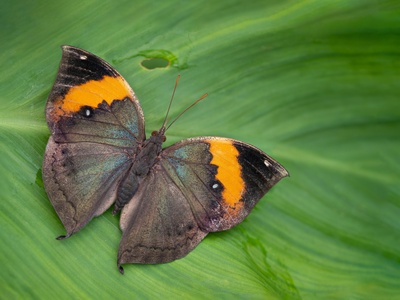
Orange Oakleaf
Remarkable dead-leaf camouflage on closed wings and bright orange upperwings when open. Seen in shaded forest trails, cryptic at rest and locally common in well-wooded areas.
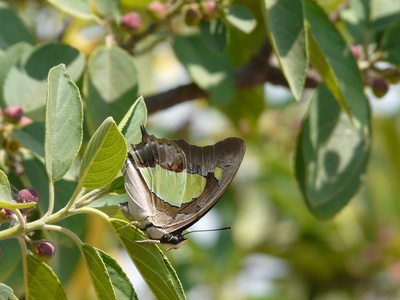
Common Nawab
Brown with bold white bands and tail extensions; strong flier often seen in forest canopy descents. Found in hill forests across India, seasonal and locally common.
Brown Awl
Stout dark skipper with rapid, powerful flight and small tail; perches in shady understory. Common in forested areas, active in monsoon and post-monsoon when host plants are fresh.