From cloud-forest ponds to backyard aquariums, amphibians show surprising color variation that can help them hide, warn predators, or simply reflect genetic quirks and diet. Observing these colors across habitats highlights how the same basic body plan produces very different appearances.
There are 4 pink amphibians, ranging from Axolotl (leucistic morph) to Tomato frog. For each, you’ll find below the Scientific name,Size (cm),Pink cause so you can compare why they’re pink and how big they typically get — you’ll find the details below.
Are pink amphibians uncommon or at risk in the wild?
It depends on the species and the cause of the pink coloration: leucistic or albino individuals (like some axolotls) are rare and may be more vulnerable in the wild, while naturally pigmented species (such as the Tomato frog) can be locally common but still face habitat loss or collection pressures; check IUCN or local listings for each species’ status.
What actually makes an amphibian look pink?
Pink coloration can come from genetics (leucism or albinism), specific pigments (carotenoids, pteridines), translucent skin showing blood vessels, or diet-driven pigment changes; the “Pink cause” column below explains the mechanism for each listed species.
Pink Amphibians
| Common name | Scientific name | Size (cm) | Pink cause |
|---|---|---|---|
| Olm (white form) | Proteus anguinus | 20-30 | Leucism/albinism causing translucent skin; blood shows through |
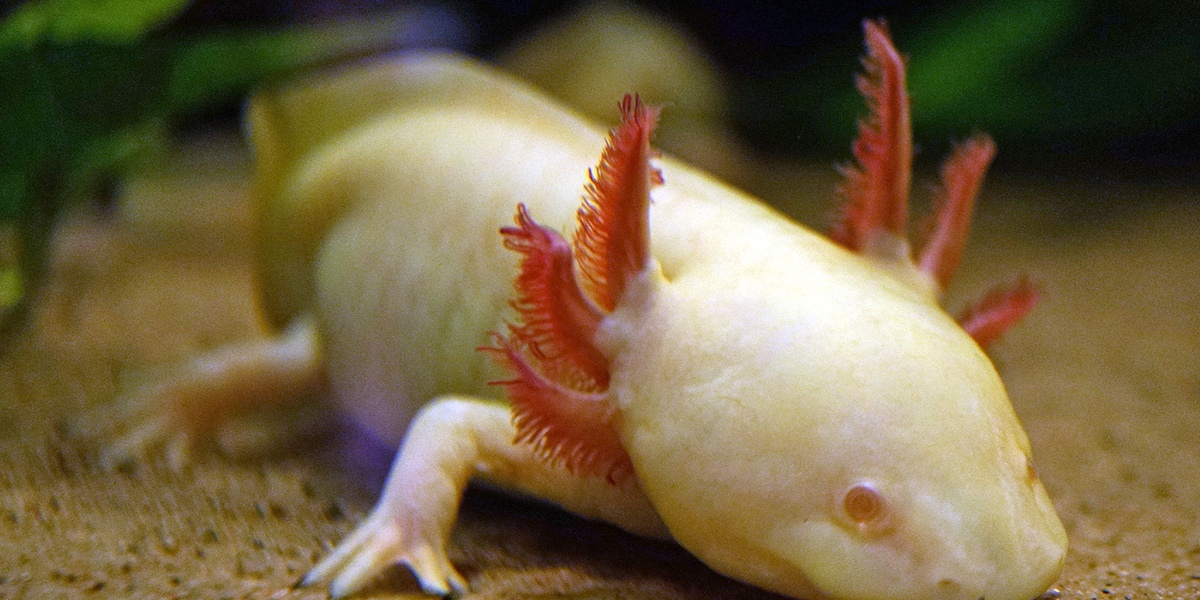
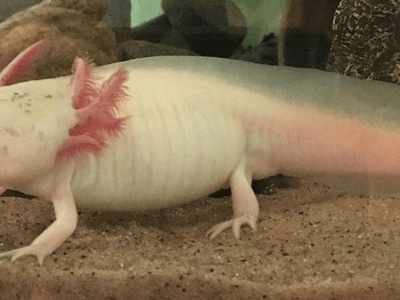
| Axolotl (leucistic morph) | Ambystoma mexicanum | 15-23 | Leucistic/neotenic morph with reduced pigment revealing pink skin |
| Eastern newt (red eft juvenile) | Notophthalmus viridescens | 6-11 | Juvenile aposematic pigmentation often orange-red, sometimes pinkish |
| Tomato frog | Dyscophus antongilii | 6-10 | Genetic species coloration often bright red-orange to pink |
Images and Descriptions

Olm (white form)
Cave-dwelling European salamander found in the Dinaric Karst; the “white” or pinkish form lacks pigment so blood vessels show. Adults 20–30 cm, rare and locally endangered; obligate troglobite in subterranean pools, slow-growing and long-lived.
Axolotl (leucistic morph)
Mexican lake salamander best known in the pet trade for the pink leucistic morph with dark eyes; wild populations are critically endangered and typically dark. Leucistic pinks arise from genetic mutations and are very rare in the wild but common in captivity.
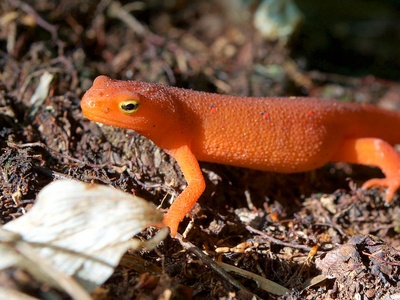
Eastern newt (red eft juvenile)
Widespread in eastern North America; the terrestrial “red eft” juvenile stage can be bright orange to pink, warning predators with skin toxins. Adults 6–11 cm inhabit ponds and forested areas; juveniles are common but conspicuous and transient.
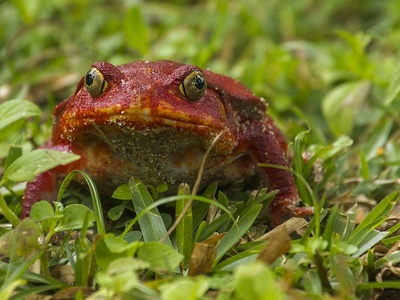
Tomato frog
Endemic to Madagascar’s eastern lowland forests and swamps. Adults 6–10 cm, famed for vivid red-orange skin that can appear pink in some individuals; not globally widespread and vulnerable to habitat loss, secretes sticky toxins when threatened.