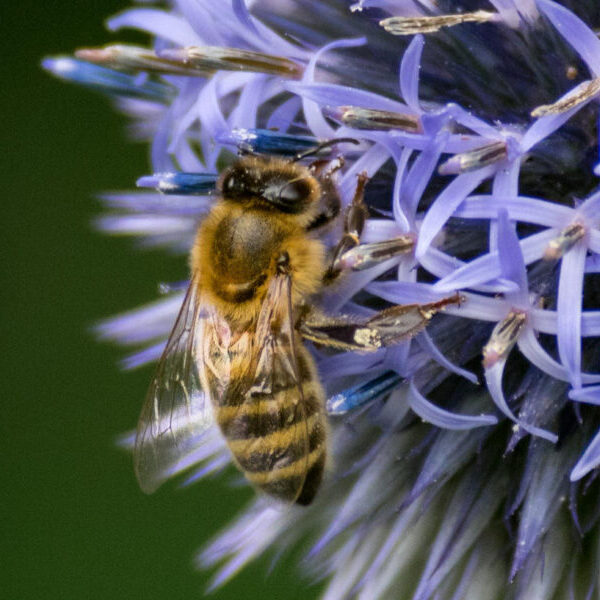
A honeybee lands on what looks to us like a plain yellow sunflower. But the bee isn’t seeing yellow. She’s seeing a glowing bullseye of ultraviolet patterns painted across the petals, lines converging on the nectar like runway lights guiding a plane home. We’re standing in the same garden, looking at the same flower, and we’re functionally blind to half of what’s happening.
Ultraviolet light sits just beyond the violet end of the visible spectrum, below 400 nanometers in wavelength. Humans can’t see it because our eye lenses filter it out before it reaches the retina. For a long time, scientists assumed most animals shared that limitation. They were spectacularly wrong. Research over the past few decades has revealed that UV vision isn’t a rare superpower. It’s the norm. We’re the odd ones out.
From insects reading flower patterns to reindeer spotting predators against arctic snow, animals that can see ultraviolet light use it for everything from finding food to choosing mates. Here are twelve of the most remarkable.
Honeybees See a Completely Different Garden
Honeybees have three types of color receptors, but their sensitivity is shifted compared to ours. Where we see red, green, and blue, bees detect green, blue, and ultraviolet. Red is essentially invisible to them. UV is vivid.
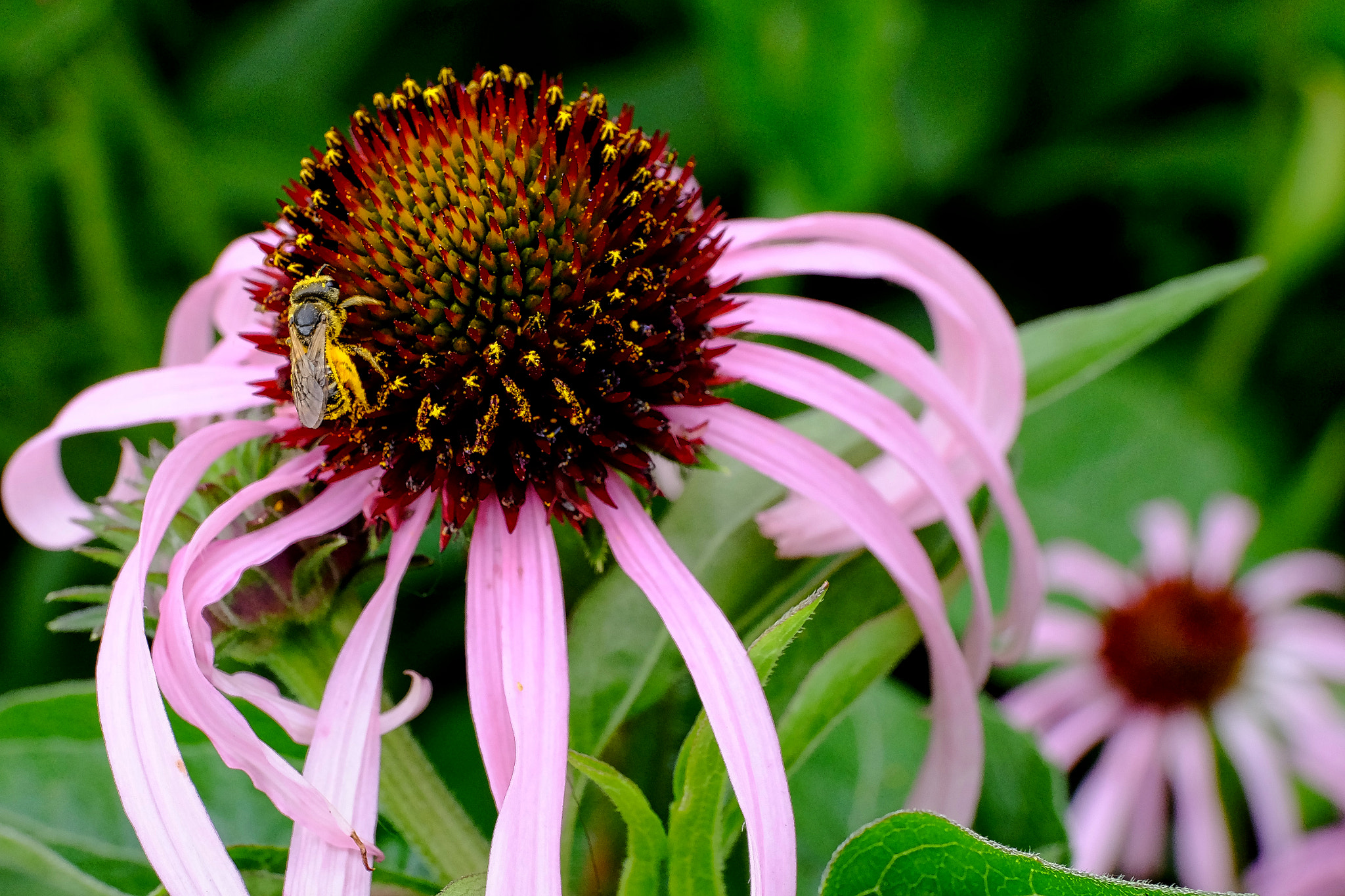
That shift changes everything about how flowers look. Many blossoms that appear plain white or yellow to us are covered in UV-absorbing patterns that create bold bullseye targets, known as nectar guides. These patterns funnel pollinators straight to the pollen and nectar, cutting down on wasted foraging time. Research published in Plant Biology found that the majority of bee-pollinated flowers display UV-absorbing centers ringed by UV-reflecting petals, creating contrast patterns that are invisible to humans but unmistakable to bees.
It’s a visual language between flowers and their pollinators that we’ve been locked out of for our entire evolutionary history. Flowers aren’t just pretty. They’re billboards written in light we can’t read.
Butterflies Have the Widest Color Vision on Earth
If bees see a hidden world, butterflies see a hidden universe. Some butterfly species have up to fifteen types of photoreceptors, making them one of the most visually complex creatures alive. Most have at least five receptor types, including UV-sensitive ones, giving them access to colors that don’t exist in human perception.
Swallowtail butterflies, for example, use UV vision to evaluate the quality of host plants for egg-laying. The UV reflectance of a leaf tells them about its chemical composition. It’s a level of information we’d need a spectrometer to detect, and they gather it in a glance.
Male butterflies also use UV-reflecting wing patterns as signals during courtship. To our eyes, two wings might look identically blue. Under UV, one blazes with reflected ultraviolet while the other absorbs it completely. The females know exactly which male is putting on the better show.
Reindeer Use UV to Survive Arctic Winters
This one genuinely surprised researchers. In 2011, a team led by Professor Glen Jeffery at UCL’s Institute of Ophthalmology discovered that reindeer can see ultraviolet light down to wavelengths of about 320 nanometers, well into the UV range that would cause snow blindness in humans.
In the Arctic winter, the sun barely clears the horizon, and most of the light reaching the ground is blue or UV. Snow reflects up to 90% of that UV light, creating a landscape that’s essentially bathed in ultraviolet. For an animal that can see UV, anything that absorbs those wavelengths stands out like a dark stain against a white sheet.
Wolf fur absorbs UV. So does urine from predators and competitors. So do lichens, the reindeer’s primary winter food source. In a world of blinding white, these critical survival cues pop out against the snow in stark contrast. It’s an elegant adaptation to one of the harshest environments on the planet.
What still puzzles researchers is how reindeer avoid UV damage to their eyes. Prolonged UV exposure causes snow blindness in humans and most mammals. Reindeer either have protective mechanisms we haven’t identified yet, or UV exposure is less harmful than we assumed. Jeffery’s team is still investigating.
Mantis Shrimp See UV in Ways No Other Animal Can
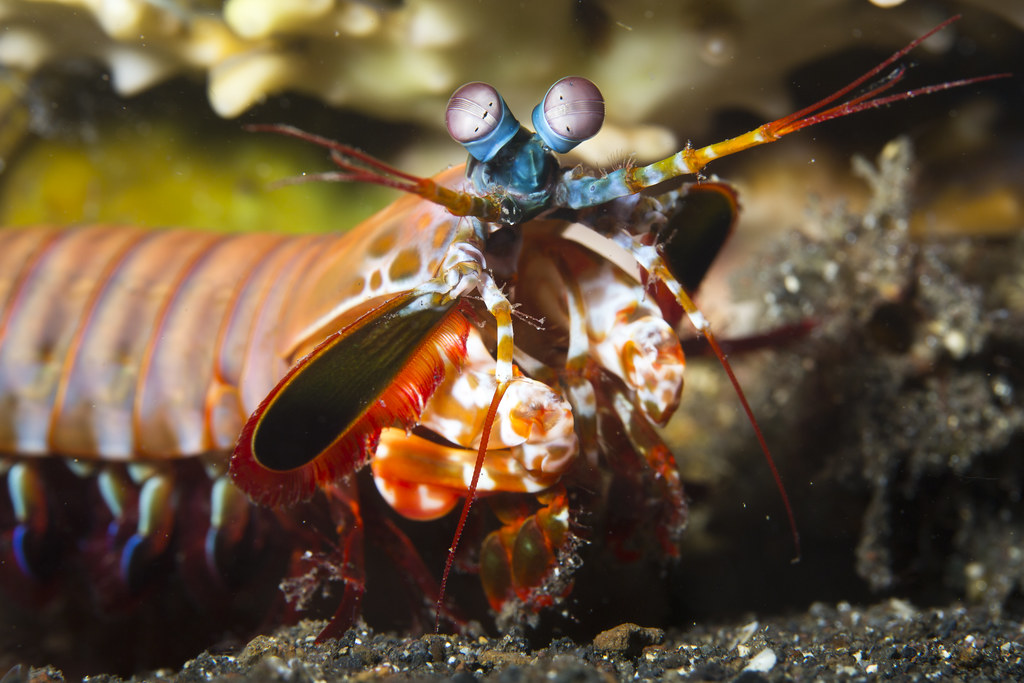
Mantis shrimp are famous for their visual system, and for good reason. They have 16 types of photoreceptors, compared to our three. Six of those are dedicated exclusively to ultraviolet light, each tuned to a different UV wavelength. No other known animal discriminates between UV wavelengths with that level of precision.
What makes their UV vision even stranger is how they achieve it. Most animals use specialized opsin proteins to detect different wavelengths. Mantis shrimp take a completely different approach. They use mycosporine-like amino acids (MAAs), compounds normally found in marine organisms as sunscreen to protect against UV damage. The shrimp have repurposed these molecules as optical filters in their cone cells, layering them to create distinct UV channels. Nature invented sunscreen, and the mantis shrimp turned it into a camera lens.
The practical benefit is still debated. Some researchers believe this fine-grained UV discrimination helps mantis shrimp identify mates, rivals, and prey species that all look similar in visible light but display different UV patterns.
Birds See UV Plumage We Never Knew Existed
For decades, ornithologists studied bird plumage under human-visible light and drew conclusions about which species were “colorful” and which were “dull.” Then UV photography upended everything. A 2003 study found that 72% of surveyed bird species display UV-reflective plumage that’s completely invisible to humans.
That “drab” brown female sparrow? She may be evaluating male suitors based on UV brilliance we literally cannot see. Blue tits, European starlings, and budgerigars all use UV plumage signals during mate selection. In budgerigars, researchers discovered that females consistently prefer males with stronger UV-reflecting feathers, and when UV was filtered out during experiments, those preferences disappeared.
Birds of prey use UV vision for hunting, too. The urine trails left by voles and other small rodents reflect UV light. A kestrel hovering over a meadow doesn’t just see grass. It sees the ultraviolet highways that small mammals leave behind, marking exactly where dinner went.
Sockeye Salmon See UV as Juveniles
Young sockeye salmon have UV-sensitive vision that they use during their freshwater juvenile phase. Their eyes contain UV-sensitive photoreceptors that help them spot zooplankton, their primary food source, which absorbs UV light and stands out against the UV-scattered background of shallow streams.
As salmon mature and migrate to the ocean, their UV sensitivity fades. The deeper, darker waters of the open ocean have very little UV penetration, making the receptors unnecessary. It’s one of the clearest examples of an animal’s visual system adapting to its life stage and environment. The fish literally sees a different world as a juvenile than it does as an adult.
Cats and Dogs See More Than We Thought
For years, veterinary science assumed that cats and dogs saw the world much like humans, just with fewer color distinctions. Then in 2014, a study by Ronald Douglas and Glen Jeffery at City University London and UCL examined the ocular media of 38 mammal species and discovered that many of them, including cats, dogs, ferrets, and hedgehogs, have lenses that transmit significant amounts of UV light.
That doesn’t mean your cat sees UV the way a bee does. Cats don’t have dedicated UV photoreceptors. Instead, UV light reaches their existing blue-sensitive cones, giving them a blurry but real perception of ultraviolet wavelengths. The researchers speculate this may explain some otherwise puzzling behaviors: cats reacting to things humans can’t see, or dogs tracking trails more effectively than their sense of smell alone would explain.
This study also found that hedgehogs, okapis, and some bat species have UV-transmitting lenses. The list of mammals that might see UV is probably far longer than we currently know.
Jumping Spiders Hunt in UV
Jumping spiders don’t spin webs and wait. They stalk prey with two enormous forward-facing eyes that give them some of the sharpest vision in the invertebrate world. Many species also see ultraviolet light and use it in ways that are both practical and surprisingly social.
Male jumping spiders of some species have UV-reflective patches on their bodies that they display during elaborate courtship rituals. Remove the UV component by filtering it out, and female interest drops dramatically. The UV flash is part of the signal.
UV vision also helps these spiders detect prey. Some insects that are well-camouflaged in visible light reflect or absorb UV differently than their surroundings, making them visible to a UV-sensitive predator.
Goldfish Are UV Pioneers of the Lab
Goldfish were among the first vertebrates proven to see ultraviolet light in controlled laboratory conditions. They have four types of cone cells, including one that peaks in the UV range around 360 nanometers. It was goldfish research in the 1990s that helped establish that UV vision in fish was not rare but likely widespread.
In the wild, UV-sensitive vision helps freshwater fish detect plankton and algae that absorb or reflect UV light differently from surrounding water. For goldfish specifically, UV vision may also play a role in social recognition. Fish that look identical to us under normal light can display different UV patterns that other fish recognize.
Rodents Follow UV Urine Trails
Mice and rats see UV light, and they put it to a use that sounds unpleasant but is remarkably effective. Rodent urine fluoresces under UV light, and rodents can see these glowing trails directly. For a mouse moving through its territory at dusk, the landscape is painted with UV-visible pathways marking where every other mouse has been.
This serves territorial purposes, mate-finding, and predator avoidance. Fresh urine glows differently than old urine, giving temporal information too. A mouse can tell not just where another animal has been, but roughly when. Researchers studying rodent behavior in controlled UV environments have confirmed that mice preferentially follow UV-marked trails when other cues are absent.
Scorpions Glow Under UV, But Can They See It?
Here’s where things get interesting and genuinely unresolved. Scorpions fluoresce bright blue-green under ultraviolet light, a trait visible to anyone with a blacklight. The fluorescence comes from compounds in their exoskeleton, and it’s so reliable that entomologists use UV flashlights as their primary tool for finding scorpions in the field at night.
But whether scorpions can actually see UV light is a different question. Some researchers propose that the entire exoskeleton functions as a giant light-detection organ, allowing the scorpion to sense UV levels across its body and determine whether it’s safely concealed in shadow. Others think the fluorescence is simply a byproduct of exoskeleton chemistry with no visual function at all. The research is still developing, and I find the whole-body-sensor hypothesis fascinating even if it’s not yet proven.
Ambon Damselfish Use UV as a Secret Channel
The ambon damselfish lives in the coral reefs of the western Pacific and uses UV facial patterns as a private communication channel. These small fish have UV-reflective and UV-absorbing patches on their faces that create patterns visible only to other UV-sensitive fish. Their predators, mostly larger reef fish, can’t see UV wavelengths.
It’s the visual equivalent of whispering. The damselfish can signal to each other, recognize members of their own species among look-alike neighbors, and coordinate behavior while remaining cryptic to anything that might eat them. Researchers confirmed this by measuring the UV sensitivity of predator species and finding that most lacked the receptors to detect the damselfish’s UV markings.
Why Humans Lost UV Vision
With so many animals seeing ultraviolet, the real question isn’t who has UV vision. It’s why we lost it. The answer comes down to a tradeoff.
Human lenses contain proteins that absorb UV light before it reaches the retina. This costs us an entire dimension of color. But it buys us sharper images. UV light scatters easily, creating a haze effect similar to looking through fog. By filtering it out, our eyes produce cleaner, crisper images with better contrast and resolution. Yellow-tinted ski goggles work on the same principle, blocking UV and blue light to sharpen the visual scene.
There’s a peculiar historical footnote here. The painter Claude Monet had his lens removed during cataract surgery in 1923. Afterward, he began perceiving UV wavelengths as a whitish-blue color, and his paintings from that period show a noticeable shift toward blue and violet tones. He was, briefly and accidentally, seeing what most of the animal kingdom sees all the time.
Most animals that can see color can see UV. We gave it up for sharper vision. Whether that was a good trade depends on your perspective. But next time you’re in a garden and a bee seems to know exactly where to land on a flower, remember: she’s reading instructions you can’t see, written in a light you’ll never know.
Featured image: “Mantis Shrimp – Odontodactylus scyllarus” by prilfish / Flickr / CC BY 2.0