Something is buzzing near your picnic. You freeze. Is it a bee? A wasp? Something bigger? The instinct is to run, but the smarter move is to look. These three insects behave so differently that what you do next should depend entirely on which one you’re dealing with.
Bees, wasps, and hornets are all members of the order Hymenoptera, which makes them distant cousins. But calling them the same thing is like calling a wolf and a golden retriever the same animal because they’re both Canis lupus. The physical differences are real, the behavioral differences are dramatic, and ecologically, these insects couldn’t be more distinct. One feeds your family. One keeps your garden alive. One is mostly just trying to find a caterpillar to eat. Let’s sort them out properly.
Quick Verdict
If you want the short version: Bees are fuzzy vegetarians that almost never sting unless cornered. Wasps are smooth-bodied predators that are more short-tempered but still manageable. Hornets (technically a subset of wasps) are the largest, most painful, and most willing to escalate. And for ecological importance? Bees win in a landslide. They are, without exaggeration, holding the global food supply together.
Round 1: How to Actually Tell Them Apart
Most people panic and back away before they get a good look, which is understandable. But if you can get one good glance, body shape alone will usually tell you what you’re dealing with.
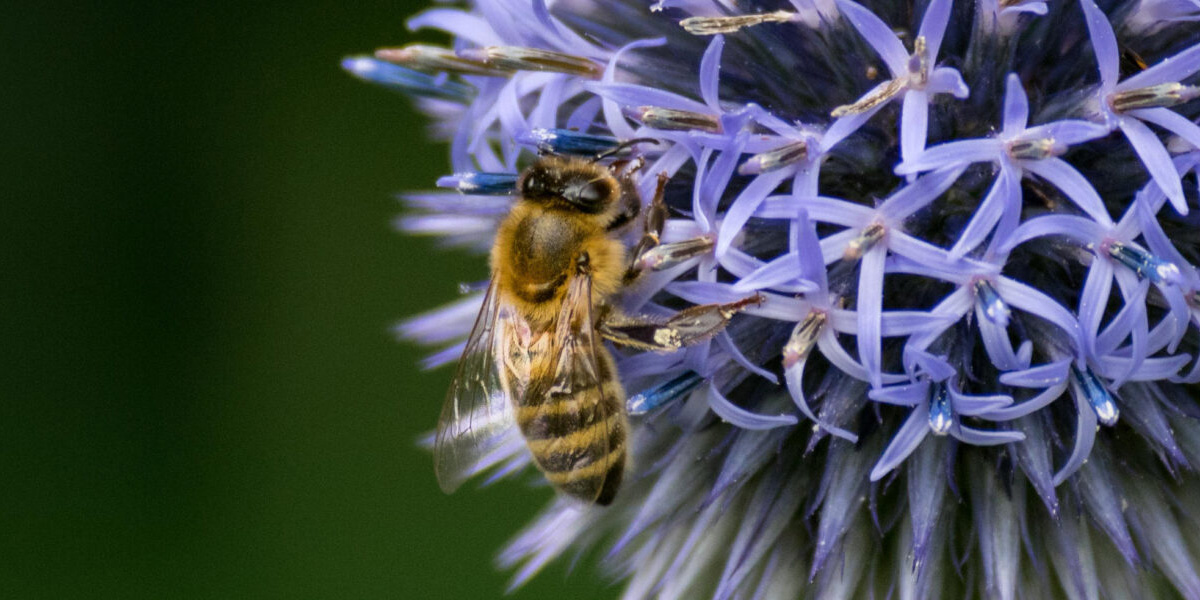
Bees are visibly fuzzy. That hair isn’t decorative. It’s functional. The tiny branched hairs (called plumose hairs) trap pollen grains as a bee moves through a flower. Many species also have specialized structures on their back legs called corbiculae, or pollen baskets. You can sometimes see these as fat yellow clumps when a bee is foraging. Honeybees are the familiar golden-brown striped version. Bumblebees are rounder and often larger, with more obvious banding. Their bodies look round, their waists are not pinched, and they move with a certain unhurried quality because they are not hunting anything.
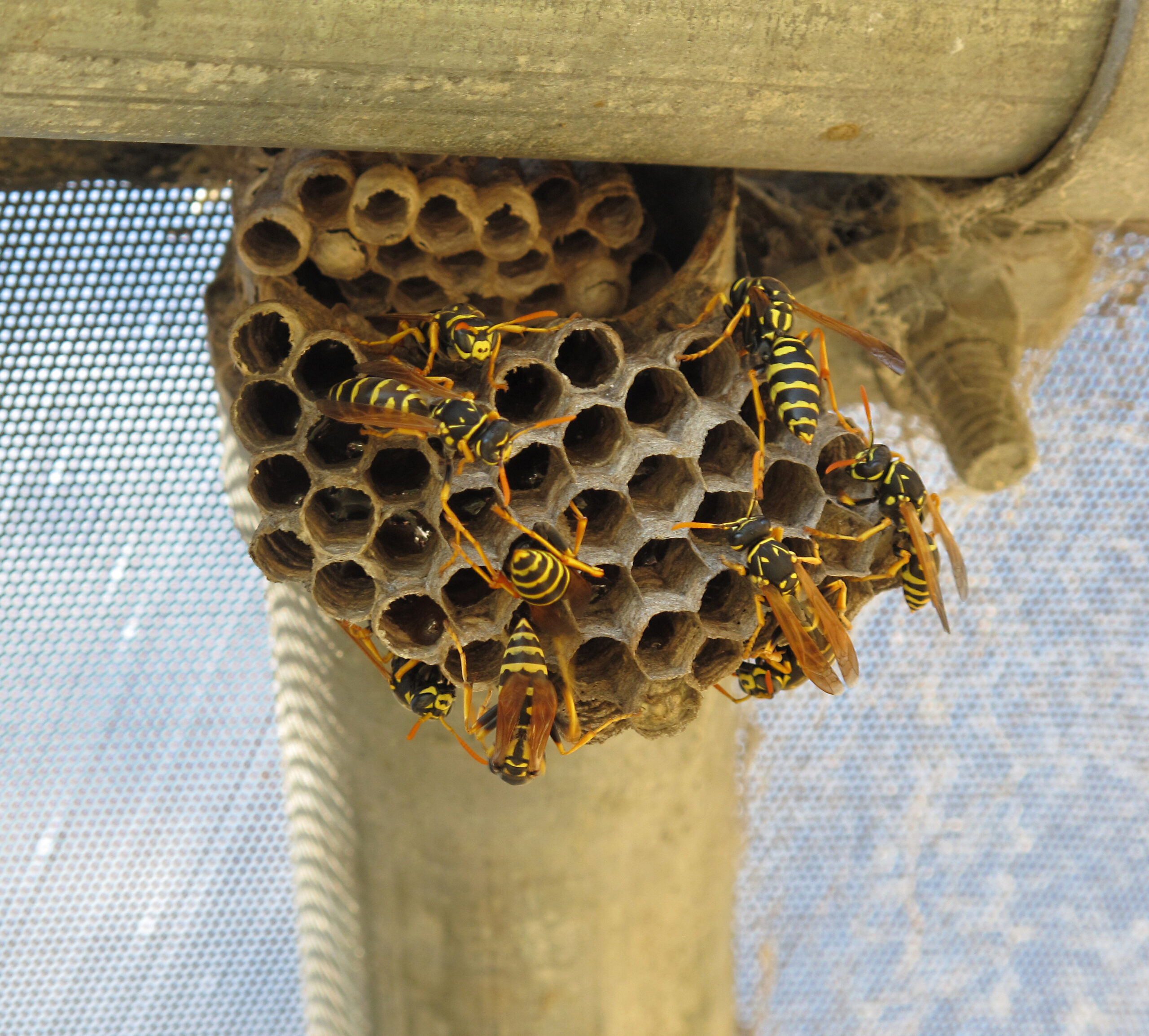
Wasps look like nature ran the blueprint through a weight-loss program. They have a dramatically narrow waist (called the petiole) and smooth, shiny bodies with almost no hair. The classic yellow jacket is black with bright yellow markings, legs that dangle visibly in flight, and a body that looks tightly engineered. Paper wasps are slimmer still, with long dangling legs and a tapered abdomen. There are around 30,000 known wasp species, ranging from solitary mud daubers to the social yellow jackets that ruin late-summer barbecues.
Hornets are wasps. Full stop. Taxonomically, they belong to the genus Vespa, making them a subset of the family Vespidae. What distinguishes them from other wasps is size and a few physical cues. The European hornet (Vespa crabro), the only true hornet in North America, measures up to 1.5 inches and has a reddish-brown thorax with yellow and brown stripes on the abdomen. Less neon than a yellow jacket, more muted and hulking. The bald-faced hornet that most North Americans recognize, with its white-and-black markings, is technically a yellowjacket wasp in the genus Dolichovespula. The naming is a mess. The size is not: hornets are unmistakably bigger.
If you’re still unsure at a distance, ask yourself one question: is it furry? Bee. Is it slick and narrow-waisted? Wasp or hornet. Is it the size of your thumb? Hornet.
Round 2: Diet and Lifestyle
This is where the gap between bees and the wasp-hornet group becomes enormous.
Bees are strict vegetarians. Adult bees drink nectar; their larvae are fed pollen and nectar. That’s it. The entire bee life strategy revolves around flowers: finding them, extracting nutrition from them, and accidentally moving pollen between them in the process. A honeybee colony at peak summer might contain 60,000 to 80,000 individuals, all organized around feeding, honey production, and protecting a queen who can lay up to 2,000 eggs per day. The colony is perennial, surviving winter by clustering together and living off stored honey. There is something almost impressive about how completely bees have committed to this one food source and built an entire civilization around it.
Wasps eat meat. Adults hunt caterpillars, flies, aphids, and other invertebrates, chew them up, and bring the protein back to feed their larvae. The adults themselves often drink nectar or sweet liquids for their own energy needs (which is why yellow jackets hover around your soda can in August), but the larval diet is pure protein. Social wasps build annual colonies. In spring, a lone queen starts a nest from scratch. By late summer, a large colony might reach 5,000 workers. When the first frost hits, the colony collapses. Only new queens survive, mated and dormant, to start the cycle again next year.
Hornets follow the same basic pattern as other social wasps, with one meaningful difference: they hunt larger prey. European hornets are known to take bees, large moths, and even dragonflies. Their colony sizes are smaller than yellow jacket nests, typically 100 to 700 workers, but the individual animals are formidable enough to compensate. They also forage at night, which almost no other temperate wasp species does.
Round 3: Aggression and the Sting Question
Here’s the thing about bees that most people don’t fully appreciate: they are not interested in stinging you. Worker honeybees have barbed stingers, which means stinging a mammal is a one-way trip. The stinger embeds, tears free from the bee’s abdomen, and the bee dies. This isn’t a martyr strategy; it’s a physical constraint. Because of it, bees have evolved to be genuinely reluctant to sting unless the nest is under serious threat. Disturb a flower a bee is visiting and you’ll almost certainly be ignored. Swat at it, trap it against your skin, or start shaking the branch its hive is on. Then you’re in different territory.
Bumblebees and most solitary bees don’t have barbed stingers at all and can sting repeatedly, but they are among the most docile insects you will ever encounter. I’ve watched bumblebees bumble directly into people’s arms on field surveys without stinging once. They have almost no interest in defending anything except an active nest.
Wasps are a different calculation. Their stingers are smooth and can be deployed repeatedly without cost. A yellow jacket that perceives a threat can sting five, ten, fifteen times. They also release alarm pheromones when disturbed, which signals nest-mates to join in. Swatting at one wasp in a high-traffic area is exactly the wrong response. The Schmidt Sting Pain Index, developed by entomologist Justin Schmidt (who allowed himself to be stung by dozens of species in the name of science), rates common yellow jacket stings at 2 out of 4, described as “hot and smoky, almost irreverent.” Not unbearable, but not subtle either.
Hornets occupy the upper end of that pain scale. Their venom contains higher concentrations of acetylcholine, which amplifies the pain signal, and their larger size means they deliver more venom per sting. The Asian giant hornet (Vespa mandarinia), sometimes sensationally called the “murder hornet” and now establishing a foothold in parts of North America, rates at a 2 out of 4 on Schmidt’s scale, but the sheer volume of venom and the physical size of the sting make encounters significantly more dangerous. Most North American encounters with European hornets are far less dramatic, though no less uncomfortable.
One important note: hornets near their nest are the version to respect most. They will defend it aggressively and with more coordination than most wasp species. Finding a European hornet nest inside a wall void or hollow tree and deciding to deal with it yourself is one of the more reliably bad ideas a person can have.
Round 4: Ecological Role
This is the round that matters most, and it isn’t close.
Bees are responsible for pollinating roughly one-third of the world’s food crops by volume, according to the United Nations Environment Programme. The economic value of bee pollination services globally exceeds $125 billion per year. Managed honeybee colonies in the United States alone dropped from roughly 6 million in 1947 to fewer than 2.5 million today, driven by pesticides, habitat loss, disease, and parasitic Varroa mites. This is not an abstract ecological concern. If bees continue declining at their current rate, the agricultural systems that feed billions of people face real disruption. You can read more about the broader consequences of biodiversity loss in our piece on 10 reasons why biodiversity matters.
Wasps, for all the animosity directed at them, pull more ecological weight than most people realize. According to the Natural History Museum in London, social wasps in the UK alone capture an estimated 14 million kilograms of insect prey each summer, functioning as a distributed, free pest control system for agricultural landscapes. Dr. Gavin Broad, a wasp specialist at the museum, has noted that wasps function as apex predators within the invertebrate world; when their numbers decline, it signals something is wrong with the ecosystem below them. Globally, insect predation as a form of biocontrol, including wasp hunting, is estimated to be worth over $400 billion annually to agriculture.
Wasps also pollinate. About 164 plant species depend on wasps for pollination, including some orchid species that have evolved specifically to attract them. Fig wasps are perhaps the most famous example: figs and fig wasps have co-evolved so tightly over millions of years that neither can reproduce without the other.
Hornets serve a similar predatory role to wasps at a larger scale. The European hornet particularly earns grudging respect from foresters and orchard owners. It hunts large defoliating moths and other insects that cause real damage to trees. They are not villains. They are managing something.
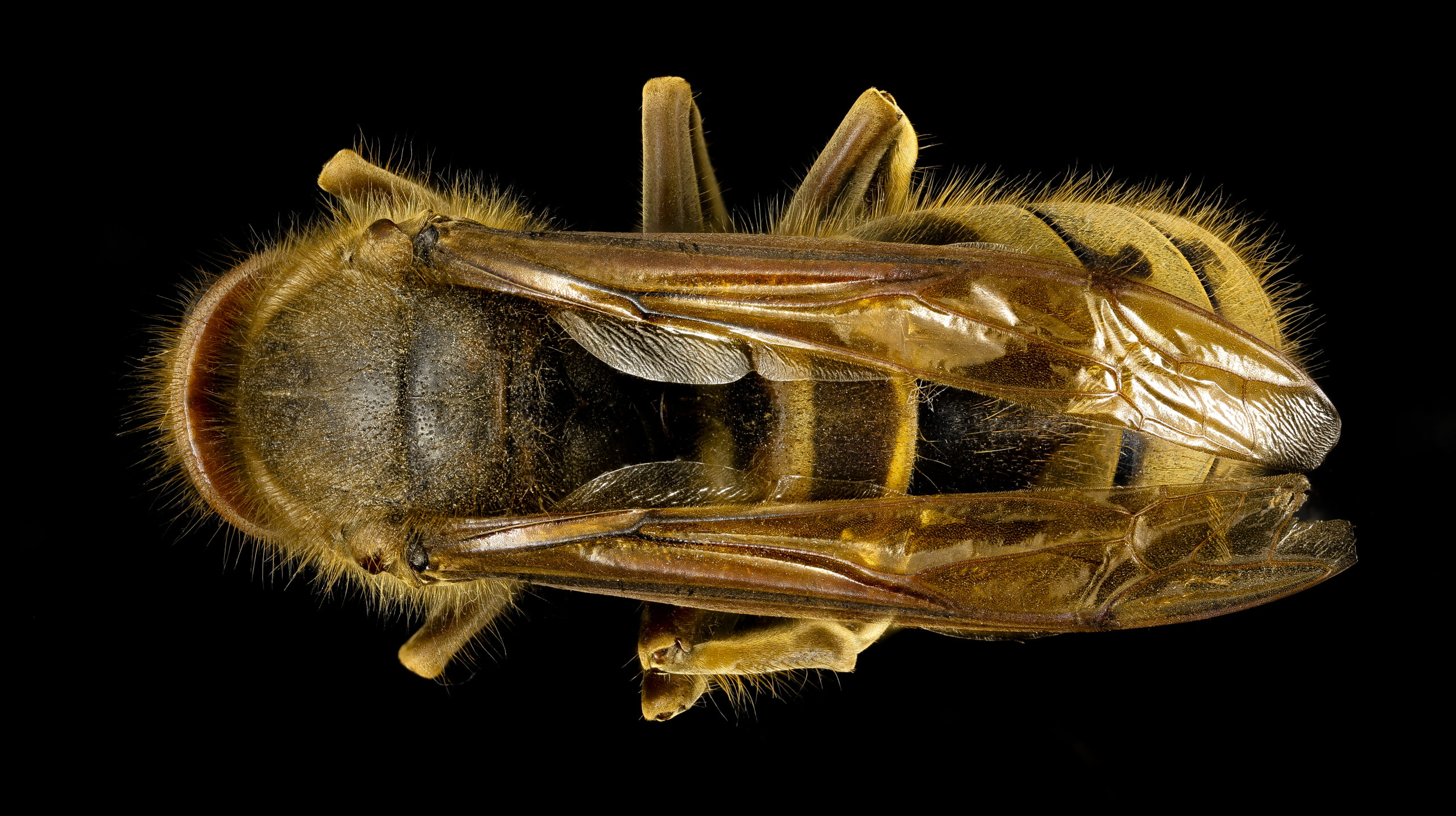
Bees vs Wasps vs Hornets: At a Glance
| Feature | Bees | Wasps | Hornets |
|---|---|---|---|
| Body | Fuzzy, rounded | Smooth, narrow waist | Smooth, larger |
| Diet | Pollen and nectar (vegetarian) | Insects + nectar (carnivore) | Insects, large prey (carnivore) |
| Colony type | Perennial (honeybees) | Annual | Annual |
| Colony size | Up to 80,000 (honeybee) | Up to 5,000 | 100–700 |
| Sting behavior | Reluctant; dies after stinging (honeybee) | Can sting repeatedly; moderately aggressive | Can sting repeatedly; defends nest strongly |
| Sting pain | Schmidt Index: 1–2 | Schmidt Index: 2 | Schmidt Index: 2–3 |
| Nest material | Beeswax | Chewed wood pulp (paper) | Chewed wood pulp (paper), enclosed spaces |
| Ecological role | Primary pollinator, food security | Pest control, minor pollinator | Apex insect predator |
Round 5: Nests
The nest tells you a great deal about the animal.
Honeybee hives are architectural achievements. Beeswax combs built in precise hexagonal cells, engineered to maximize storage and minimize material use. A mature colony’s comb can hold tens of thousands of cells for brood, pollen, and honey. Wild honeybees typically nest in tree cavities or rock crevices. Bumblebees nest in the ground or in pre-existing cavities; abandoned rodent burrows are a favorite. Their nests are modest in size and disorganized-looking compared to honeybee comb.
Wasps build with paper. They chew wood fiber, mix it with saliva, and create a pulped material they mold into layered combs covered by a papery grey envelope. The result is that distinctive grey football shape you find hanging from eaves or tree branches, or the underground nests yellow jackets build in old rodent burrows. The paper is surprisingly sturdy. A yellow jacket nest at peak summer can house thousands of workers across dozens of combs, and the colony will aggressively defend it.
Hornet nests look like larger, better-constructed versions of wasp nests. European hornets prefer privacy. They nest inside hollow trees, wall voids, attics, and other enclosed spaces rather than the exposed aerial nests yellow jackets often build. Bald-faced hornets (which, recall, are actually yellowjackets) do build the visible aerial football nests, sometimes reaching the size of a basketball by late summer. Finding one of those in your garden shed is one of nature’s more attention-getting surprises.
The Verdict: Who Wins?
Bees. It’s bees. Not even a contest.
If we’re picking the most important of the three, the one whose presence or absence matters most to human civilization, to agricultural ecosystems, and to the natural world broadly, bees are the answer. Their role as pollinators is irreplaceable in a way that no other insect group matches. Wasps and hornets matter ecologically, and I’ll go to bat for them when people reach for the can of spray, but they don’t alter the fundamental structure of food systems the way bees do.
For most people the practical question is different, though: which one should I be worried about? And there, the ranking flips. Hornets first, then wasps, then bees. A honeybee going about its business near your garden needs nothing from you and will leave you alone. A yellow jacket investigating your lunch is more opportunistic and more easily provoked. A European hornet nest discovered at close range while you’re doing yard work: that’s the scenario where you step back, assess calmly, and don’t make sudden movements.
The more useful instinct to develop isn’t fear of any of them. It’s identification. That slightly furry, unhurried thing working the lavender is a bumblebee that has no interest in you whatsoever. Give it room and watch it work. The slick yellow-and-black one hovering over your drink is a yellow jacket angling for sugar. Cover your cup. The large, loud thing navigating your porch light at dusk is almost certainly a European hornet, which sounds alarming and is actually quite calm unless you corner it.
Understanding which insect you’re looking at changes everything about how you respond. And it turns out, for two of the three, the correct response is almost always to do nothing at all.
If you want to go deeper on the bee-wasp distinction specifically, our article on the 5 key differences between bees and wasps covers the comparison in more detail. And for context on what’s at stake when stinging insect populations drop, see our guide to dangerous animals in the United States, where the stinging insects section puts the threat statistics in real perspective.
Sources
- Natural History Museum London — What Do Wasps Do?
- UNEP — Why Bees Are Essential to People and Planet
- Animal Diversity Web — Apis mellifera (honey bee)
- University of Maryland Extension — Social Wasps: Yellowjackets, Hornets, and Paper Wasps
- PMC — Pain and Lethality Induced by Insect Stings (Schmidt Sting Pain Index study)