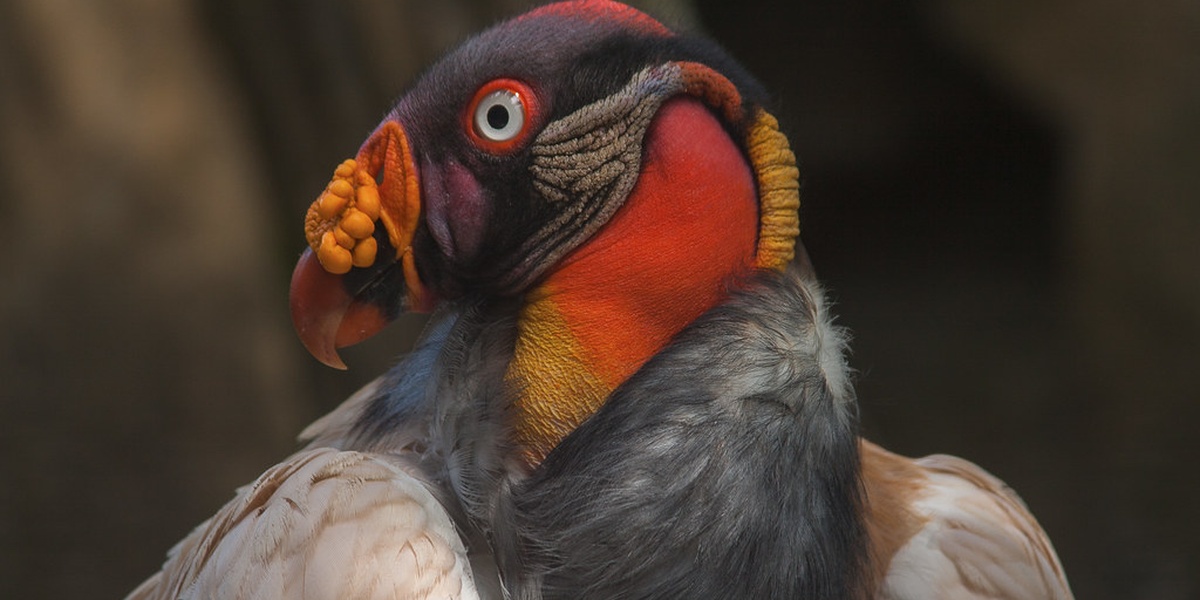
The Amazon is a mosaic of rivers, floodplains and dense canopy where nutrient recycling happens fast and scavengers play a steady, practical role in keeping habitats healthy. They follow seasonal pulses, feed on carrion and link predators to decomposers across a vast landscape.
There are 20 amazon rainforest scavengers, ranging from Black Caiman to Turkey Vulture. For each species I list Scientific name,Scavenging role,Range so you can quickly see who they are, what part they play in cleanup and where they’re found — you’ll find below.
How do scavengers benefit the Amazon ecosystem?
Scavengers speed nutrient return to the soil, limit disease spread by removing carcasses, and provide food for smaller organisms; together these actions maintain energy flow and habitat cleanliness, helping both forest and river communities stay balanced.
How are scavenging roles and ranges determined for each species?
Researchers combine field observations, camera traps, necropsies and range mapping, often supported by diet studies and citizen reports; organizing the results by Scientific name,Scavenging role,Range makes comparisons and conservation planning much easier.
Amazon Rainforest Scavengers
| Name | Scientific name | Scavenging role | Range |
|---|---|---|---|
| King Vulture | Sarcoramphus papa | Obligate scavenger | Brazil, Peru, Colombia, Ecuador |
| Turkey Vulture | Cathartes aura | Regular opportunistic scavenger | Widespread Amazon Basin |
| Black Vulture | Coragyps atratus | Regular opportunistic scavenger | Northern and western Amazon regions |
| Greater Yellow-headed Vulture | Cathartes melambrotus | Regular opportunistic scavenger | Amazon lowland forests (Brazil, Peru, Colombia) |
| Southern Caracara | Caracara plancus | Facultative scavenger | Amazon edges and mosaics (Brazil, Colombia) |
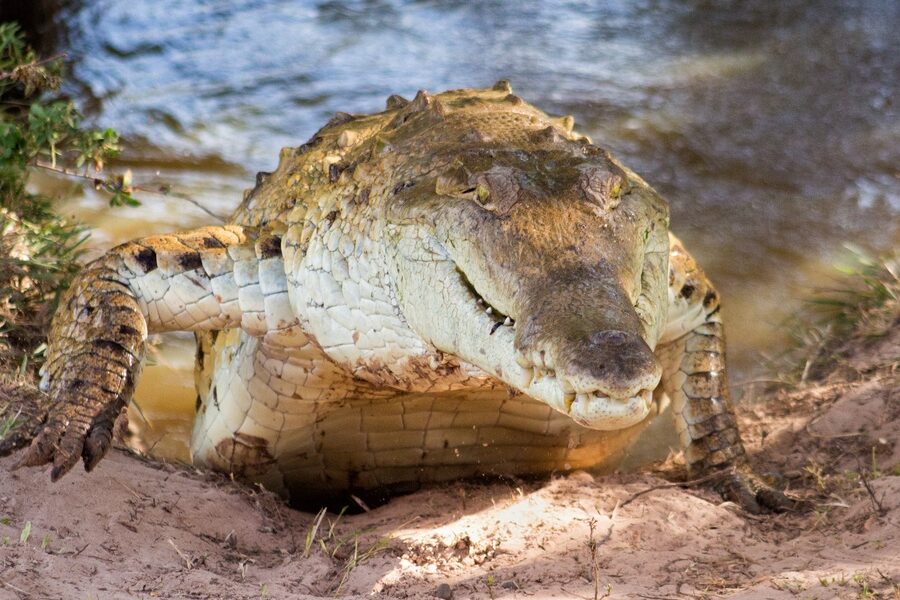
| Black Caiman | Melanosuchus niger | Regular opportunistic scavenger | Large Amazon rivers and floodplains (Brazil, Peru, Colombia) |
| Spectacled Caiman | Caiman crocodilus | Regular opportunistic scavenger | Widespread Amazon waterways and floodplains |
| Red-bellied Piranha | Pygocentrus nattereri | Regular opportunistic scavenger | Rivers and floodplains across the Amazon |
| Piraíba catfish | Brachyplatystoma filamentosum | Regular opportunistic scavenger | Main Amazon channels (Brazil, Peru) |
| Common Opossum | Didelphis marsupialis | Facultative scavenger | Amazon lowland forests and edges |
| Tayra | Eira barbara | Facultative scavenger | Amazon forests (Brazil, Peru, Colombia) |
| South American Coati | Nasua nasua | Facultative scavenger | Forest edges and clearings in the Amazon |
| Crab-eating Raccoon | Procyon cancrivorus | Facultative scavenger | Amazon rivers, floodplains and wetlands |
| Crab-eating Fox | Cerdocyon thous | Facultative scavenger | Amazonian edges, gallery forests and mosaic habitats |
| Jaguar | Panthera onca | Facultative scavenger | Widespread across the Amazon Basin |
| Puma | Puma concolor | Facultative scavenger | Amazon foothills, mosaics and edges |
| Secondary screwworm fly | Cochliomyia macellaria | Regular opportunistic scavenger | Throughout Amazon Basin |
| Tropical fire ant | Solenopsis geminata | Regular opportunistic scavenger | Widespread Amazon forests and disturbed sites |
| Oxelytrum carrion beetle | Oxelytrum discicolle | Regular opportunistic scavenger | Amazon Basin and tropical South America |
| Giant South American River Turtle | Podocnemis expansa | Regular opportunistic scavenger | Large Amazon rivers and floodplain lakes |
Images and Descriptions
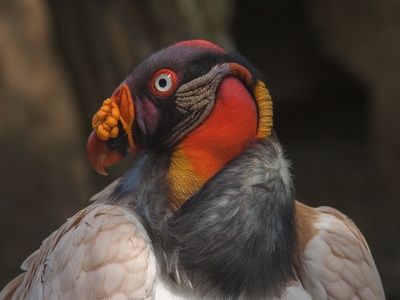
King Vulture
Large, colorful New World vulture that locates carcasses visually, tearing open hides with a powerful bill. Highly visible in canopy gaps, it often opens large carcasses for smaller scavengers and plays a keystone role in recycling nutrients.
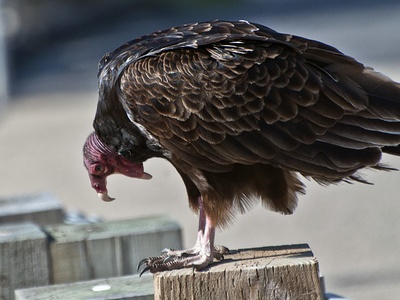
Turkey Vulture
Common, long-winged vulture that uses an acute sense of smell to find carrion in forests and along rivers. Often first to arrive at roadkill or river carcasses, it rapidly reduces decay and disease risk.
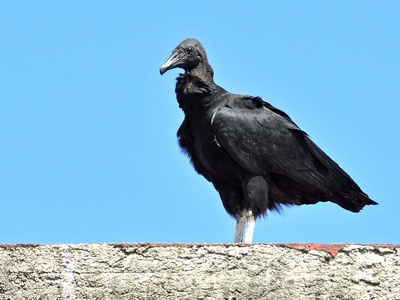
Black Vulture
Gregarious, dark vulture that scavenges roadkill, carcasses and scraps near clearings. Bold and social, it competes with other scavengers and helps strip meat quickly, especially around human-disturbed sites.
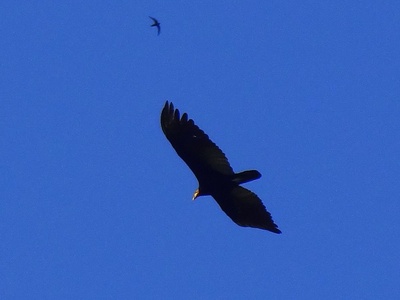
Greater Yellow-headed Vulture
Forest-specialist vulture that locates carrion by scent, often in closed-canopy habitat. Smaller than king vulture but efficient at finding interior-forest carcasses and linking forest food webs to nutrient cycling.
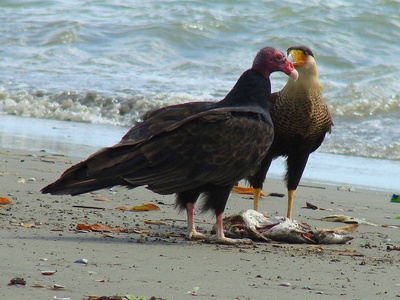
Southern Caracara
Long-legged raptor often seen walking at carcasses and roadkill, eating carrion, invertebrates and eggs. Bold around people, it acts as a versatile recycler in open forest patches and flooded margins.
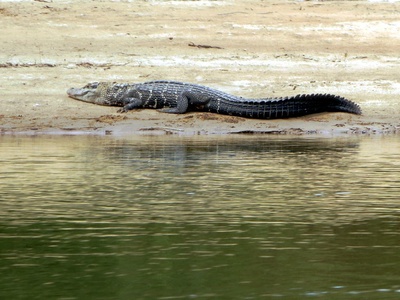
Black Caiman
Massive river crocodilian that takes live prey and scavenges fish, mammals and birds along riverbanks. Often consumes floating carcasses, moving nutrients between aquatic and terrestrial systems.
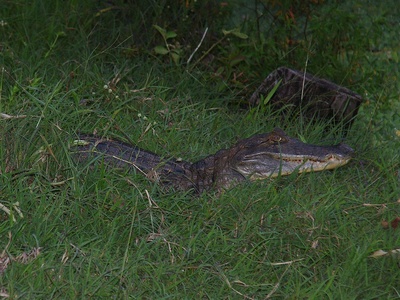
Spectacled Caiman
Smaller, common caiman that scavenges fish and vertebrate carcasses in shallow water. Abundant and secretive, it helps remove carrion from aquatic habitats and supports nutrient turnover.
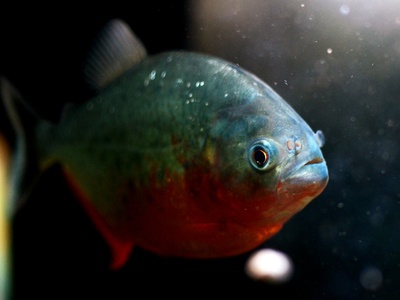
Red-bellied Piranha
Famous schooling fish that quickly strip carcasses of soft tissue, especially in flooded forests and pools. Highly visible when feeding, piranhas accelerate decomposition and recycle animal matter in waterways.

Piraíba catfish
Very large migratory catfish that scavenges dead fish and mammals drifting in rivers. A top aquatic scavenger, it transports nutrients long distances during seasonal movements.
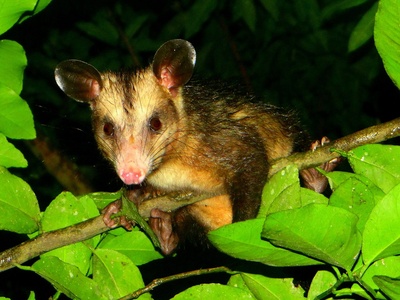
Common Opossum
Nocturnal omnivore that eats fruit, insects and carrion, often exploiting small carcasses and roadkill. Widespread and adaptable, opossums help break down remains and seed-cycle through mixed diets.
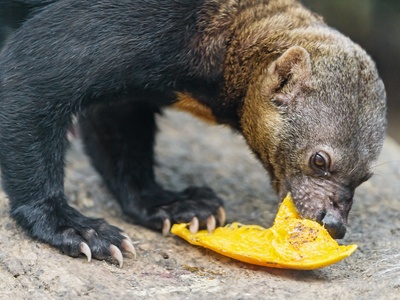
Tayra
Weasel-like omnivore that hunts but regularly scavenges carcasses, eggs and carrion in trees and on the ground. Agile climber and bold forager, it redistributes nutrients within forest strata.
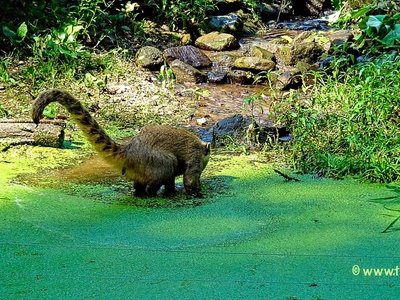
South American Coati
Social omnivores that forage in groups and visit carcasses for meat, eggs and invertebrates. Highly visible at forest edges, they speed local decomposition and disperse seeds from mixed meals.
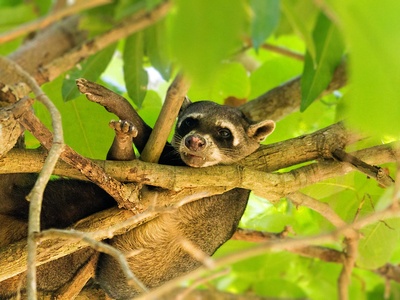
Crab-eating Raccoon
Nocturnal, dexterous omnivore that scavenges fish, crustaceans and vertebrate carrion along waterways. Uses forepaws to manipulate food; links aquatic carcasses to terrestrial scavengers.
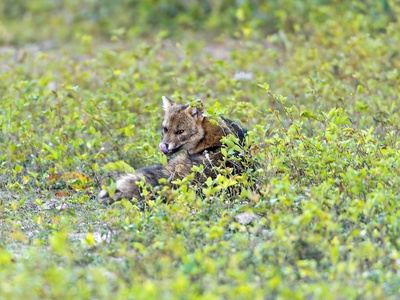
Crab-eating Fox
Small canid that opportunistically feeds on carrion, fruits and invertebrates, especially near clearings and rivers. Often visits roadkill and helps remove small carcasses from the landscape.
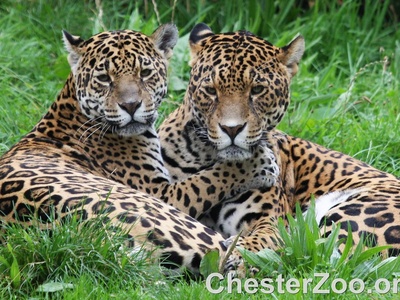
Jaguar
Top predator that also scavenges when convenient, consuming carcasses left by floods or other predators. Powerful and secretive, jaguars influence prey populations and nutrient flows when they abandon bulky kills.
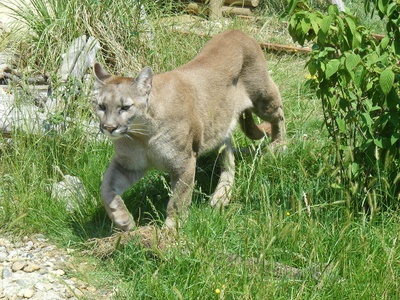
Puma
Large felid that mainly hunts but will feed on carrion, especially in fragmented or human-impacted areas. Secretive presence at carcasses influences scavenger hierarchies and carcass fate.
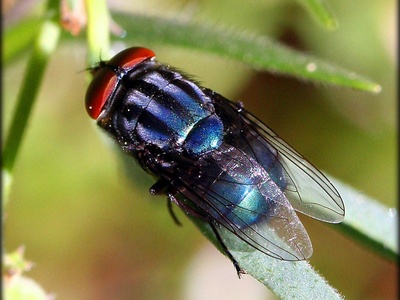
Secondary screwworm fly
Native blowfly species whose adults locate carcasses quickly and whose larvae consume soft tissues. Although tiny, their maggots are major decomposers and food for many predators and scavengers.
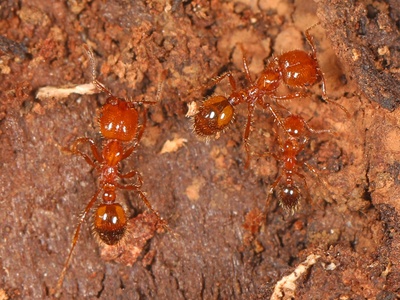
Tropical fire ant
Small, aggressive ant species that scavenges arthropod and vertebrate carrion, rapidly disassembling remains. Colonies speed nutrient release and provide food for ant-following predators.
Oxelytrum carrion beetle
Nocturnal carrion beetle that locates small to medium carcasses and feeds on decaying tissue and fly larvae. Important for nutrient cycling and controlling fly populations.
Giant South American River Turtle
Large river turtle that is largely herbivorous but will opportunistically consume fish carcasses and organic matter. Bulk feeders that can concentrate nutrients and alter carcass availability for other scavengers.