TL;DR
Hungary has a compact but genuinely interesting amphibian fauna: a mix of widespread European frogs, toads, and newts, plus a few species that are easy to miss unless you know where to look. The short list includes familiar names like the common frog, common toad, tree frog, fire-bellied toad, and several newts.
If you want the practical answer, start with wetlands, floodplains, fishponds, reedbeds, forest pools, and seasonal puddles after rain. Spring is the best time to hear and see them. For a field-friendly checklist, the most useful approach is to think in terms of loud breeders in shallow water, quiet woodland newts, and rare, highly protected species tied to specific habitat pockets.
Table of contents
- Amphibians of Hungary: the full picture
- Hungary’s amphibian species list
- Where amphibians live in Hungary
- How to identify the common species
- When to see them
- Conservation and threats
- Best places to look in Hungary
- Summary
Amphibians of Hungary: the full picture
Hungary sits in the middle of Central Europe, which makes it a useful crossroads for amphibians. The country has lowland wetlands, river corridors, forested hills, agricultural plains, karst areas, and scattered standing waters that hold on just long enough for breeding. That mix supports a solid amphibian checklist without turning it into a tropical paradise of weird frogs.
The key thing to know: Hungary’s amphibians are strongly tied to water for breeding, but many adults spend a lot of time on land. That means the same place can look empty in midsummer and suddenly become alive after a warm April rain.
For a broader taxonomic overview, the IUCN Amphibian Specialist Group and the IUCN Red List are useful starting points, especially if you want conservation status alongside distribution. For a wider regional view, see Amphibians of Europe: The Complete List.
Hungary’s amphibian species list
Here’s a practical field-guide style list of amphibians recorded in Hungary, grouped by the main families people are most likely to encounter.
| Common name | Scientific name | Typical Hungarian habitats | Notes |
|---|---|---|---|
| Common spadefoot | Pelobates fuscus | Sandy soils, loose farmland, temporary pools | Mostly nocturnal, often heard more than seen |
| Common midwife toad | Alytes obstetricans | Rocky slopes, wooded areas, dry hillsides | Male carries eggs on hind legs |
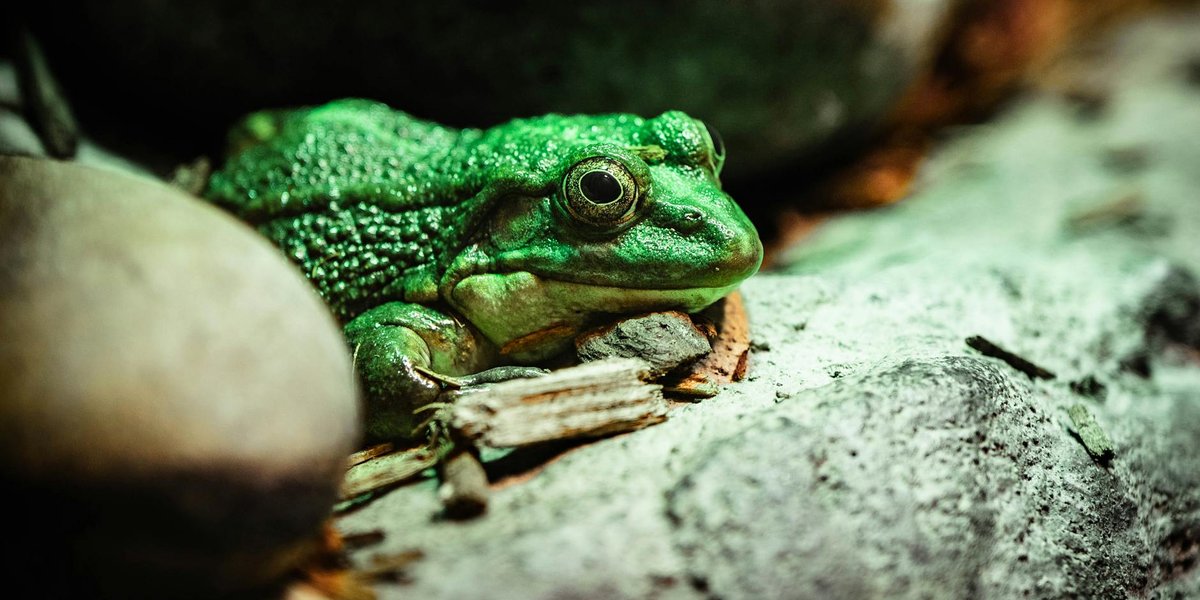
| Fire-bellied toad | Bombina bombina | Marshes, oxbows, floodplains, shallow ponds | Bright warning belly; thrives in lowland wetlands |
| Yellow-bellied toad | Bombina variegata | Upland pools, forest tracks, muddy puddles | More tied to hilly, wooded terrain |
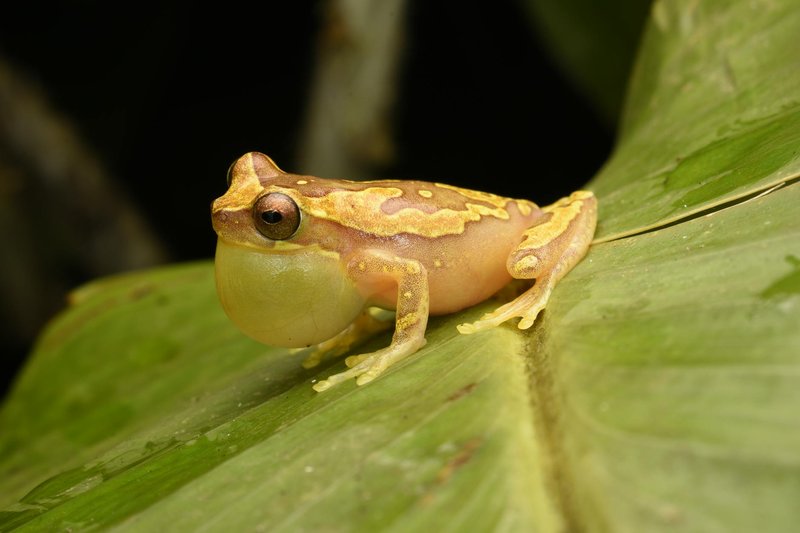
| Eastern tree frog | Hyla orientalis | Reedbeds, shrubs, marsh edges, gardens near water | Small, green, and loud in breeding season |
| Pool frog | Pelophylax lessonae | Ponds, marshes, slow waters with vegetation | One of the green frog complex species |
| Marsh frog | Pelophylax ridibundus | Larger ponds, canals, lakes, fishponds | Bigger, more aquatic, very common in suitable habitat |
| Edible frog | Pelophylax kl. esculentus | Mixed wetlands, ponds, drainage ditches | Hybrid form in the green frog complex |
| Common frog | Rana temporaria | Forest edges, meadows, cooler wetlands, springs | Early breeder, often among the first active in spring |
| Agile frog | Rana dalmatina | Deciduous forests, woodland pools, leaf litter | Slender, long-legged, very jumpy |
| Common toad | Bufo bufo | Gardens, forests, farmland, ponds for breeding | Big, warty, and widely distributed |
| Green toad | Bufotes viridis | Warm lowlands, villages, disturbed ground | Likes open, sunny places and temporary water |
| Moor frog | Rana arvalis | Wet meadows, boggy areas, marshy grasslands | Males can turn striking blue during breeding |
| European pond turtle? | — | — | Not an amphibian, so ignore the imposter |
The exact species count can shift with taxonomy and hybrid treatment, especially in the green frog complex. That’s normal. Amphibian naming is sometimes tidy in the way a flooded boot is tidy.
A good reference for European taxonomy and conservation context is the Amphibian and Reptile Conservation site, along with regional faunal databases used by researchers across Europe.
Where amphibians live in Hungary
Hungary’s amphibians cluster around a few habitat types:
Lowland wetlands and floodplains
These are prime territory for fire-bellied toads, green frogs, marsh frogs, and tree frogs. Slow water, dense vegetation, and seasonal inundation are the magic ingredients. The Great Hungarian Plain and Danube-related wetland systems are especially important.
Fishponds, canals, and drainage ditches
Human-made waters are surprisingly useful. They support breeding sites for green frogs, toads, and sometimes tree frogs, especially where vegetation is thick and fish pressure is lower.
Forest pools and shaded woodland edges
This is where you look for common frogs, agile frogs, and some newts. Temporary pools matter a lot here because fish-free water gives larvae a chance.
Dry sandy or rocky ground
This is the less obvious amphibian habitat, but it matters for spadefoot toads and midwife toads, both of which spend much of their time away from open water and use burrowing or sheltered ground.
Hilly and upland terrain
The yellow-bellied toad is one of the more habitat-specific species in the country, often tied to small, temporary pools in forested or disturbed upland landscapes.
According to the Hungarian Natural History Museum, Hungary’s herpetofauna is shaped heavily by wetland availability, land use, and the presence of fish-free breeding waters.
How to identify the common species
You don’t need a microscope to narrow down most Hungarian amphibians. A few field marks go a long way.
Frogs
- Common frog (Rana temporaria): Usually brown or reddish-brown, with a more blunt snout and a stockier look. It breeds early in spring, sometimes before the trees fully leaf out.
- Agile frog (Rana dalmatina): Slimmer, longer-legged, and built like it has places to be. It often looks more graceful than the common frog.
- Moor frog (Rana arvalis): Best known for the breeding males that can turn blue for a short period. That’s the party trick.
- Green frogs (Pelophylax complex): Usually green or olive, often with strong patterning and a more aquatic lifestyle. If it’s sitting in a pond like it pays rent there, start here.
Toads
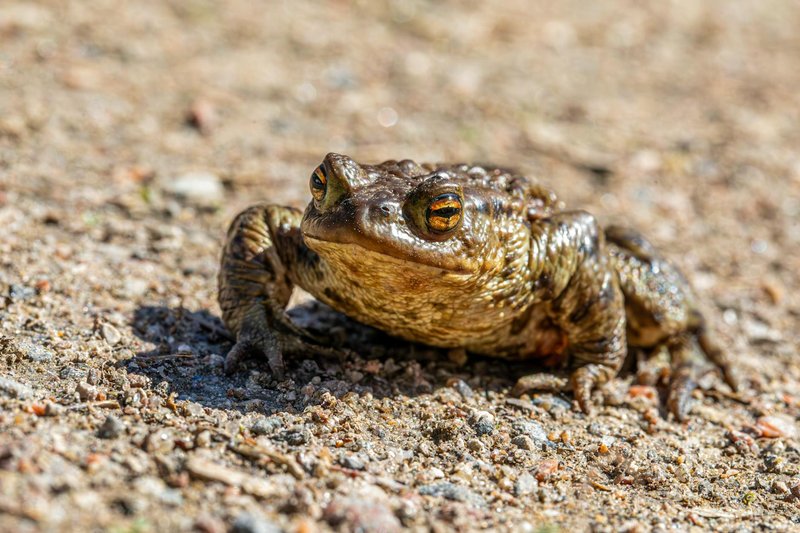
- Common toad (Bufo bufo): Large, brown, heavily built, with prominent warts and a slow, deliberate gait.
- Green toad (Bufotes viridis): Smaller, pale, and often greenish with blotches. It likes warm, open habitats rather than deep forest.
- Fire-bellied toad (Bombina bombina): Flat-looking from above, dark and spotted, but the underside is the giveaway: a bright red-orange belly with black markings. When startled, it arches up to flash that warning color.
Tree frogs and burrowers
- Eastern tree frog (Hyla orientalis): Small and usually green, with toe pads for climbing. You’ll often hear it before you see it.
- Common spadefoot (Pelobates fuscus): Harder to spot, with a rounded body and a strong digging adaptation. It’s the kind of species that rewards patience, night searches, and a little luck.
- Midwife toad (Alytes obstetricans): Small, squat, and more terrestrial than most people expect. The male’s egg-carrying habit is the signature trait.
Newts
Hungary has several newts, and they’re easiest to find in spring when they move into ponds.
- Smooth newt and related forms are often the first ones beginners encounter.
- Crested newt species are larger and more dramatic, with higher breeding crests in males.
- Danube crested newt is the kind of regional species serious herpers keep an eye out for.
For fine-grained identification, especially among newts and green frogs, field guides or museum references beat guesswork every time. The Amphibian Ark is also useful for understanding broader amphibian conservation issues, even if it’s not a local ID tool.
When to see them
Spring is the sweet spot. Once nighttime temperatures rise and rain starts filling temporary pools, amphibians move fast.
- Late winter to early spring: Common frogs and toads may begin breeding early.
- Spring: Best overall season for activity, especially at night near water.
- Summer evenings: Tree frogs, toads, and some frogs remain active, especially after rain.
- Autumn: Smaller bursts of movement before dormancy.
- Winter: Most species are hidden, inactive, or buried in protected places.
If you want the best chance of seeing multiple species, go after a warm rain on a mild evening and check the margins of ponds, ditches, marsh edges, and woodland pools. Quietly. Amphibians hate a noisy audience.
Conservation and threats
Hungary’s amphibians face the usual European pressure points:
- wetland drainage and habitat loss
- road mortality during breeding migrations
- pollution and pesticide exposure
- fish stocking in otherwise suitable breeding waters
- drought and climate-driven drying of temporary ponds
- fragmentation of habitat, which traps populations in isolated pockets
Species tied to temporary ponds or specialized habitats are usually the most vulnerable. That includes some newts, spadefoots, and local wetland specialists. Bigger generalists like the common toad or marsh frog are more flexible, but that doesn’t make them invincible.
The European Environment Agency and the European Commission’s biodiversity resources both track the broader habitat pressures that affect amphibians across the region. For a country-level overview of invasive species that could affect amphibians in Hungary, see List of Invasive Species in Hungary.
Best places to look in Hungary
If your goal is observation rather than a species audit, these habitat types give you the best return:
- Protected marshes and oxbows: Great for fire-bellied toads, green frogs, and tree frogs
- Lowland fishpond systems with vegetated edges: Good for aquatic species
- Forest pools and small temporary waters: Best for common frogs, agile frogs, and newts
- Hilly woodland tracks and puddles: Worth checking for yellow-bellied toads
- Gardens near water: Surprisingly decent for common toads and tree frogs
A useful rule of thumb: if the water looks too clean, too deep, or too full of fish, amphibians often do worse there than you’d expect. They want messy water. Not pond-showroom water.
Summary
The amphibians of Hungary include a practical mix of frogs, toads, and newts that reflect the country’s wetlands, forests, floodplains, and temporary waters. The headline species are easy enough to name — common frog, common toad, fire-bellied toad, eastern tree frog, marsh frog, agile frog, and several newts — but the real action is in the habitats they use and the timing of their breeding.
If you want to see them well, go in spring, look at night, and focus on shallow, fish-free water with vegetation. If you want to identify them, start with body shape, habitat, and breeding call before worrying about finer taxonomic details. That’s usually enough to get you to the right neighborhood.
For a biodiversity-rich country in the middle of Europe, Hungary punches above its weight. The amphibians are there. You just have to meet them on their schedule.