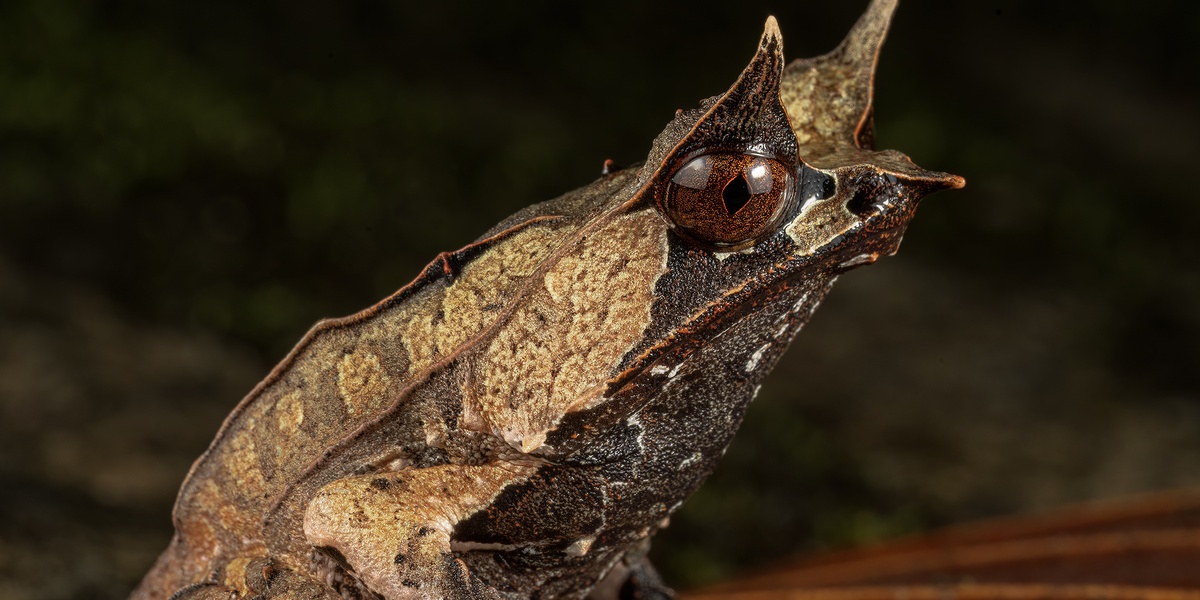
Southeast Asia’s patchwork of rainforests, peat swamps, limestone karsts and montane streams supports a rich amphibian fauna, from seasonally breeding toads in lowlands to arboreal frogs in canopy forests. These species reflect both ancient biogeographic links across the region and local endemism tied to islands and mountain ranges.
There are 10 Amphibians of Southeast Asia, ranging from the Asian Common Toad to Wallace’s Flying Frog. For each species you’ll find below Scientific name,Range (countries),IUCN status so you can quickly compare taxonomy, distribution and conservation standing — see the list you’ll find below for details.
How current are the IUCN statuses listed?
The IUCN status in this list reflects the most recent publicly available assessments at the time of compilation, but statuses can change with new surveys or taxonomic revisions; for the latest updates always check the IUCN Red List or recent peer-reviewed studies.
Can I rely on this list for field identification or scientific work?
This list is meant as a concise reference for names, country ranges and conservation status; for field identification or formal research you should consult regional field guides, original species descriptions and local experts or museum records.
Amphibians of Southeast Asia
| Common name | Scientific name | Range (countries) | IUCN status |
|---|---|---|---|
| Asian Common Toad | Duttaphrynus melanostictus | Myanmar;Thailand;Laos;Cambodia;Vietnam;Malaysia;Singapore;Indonesia;Brunei | Least Concern |
| Banded Bullfrog | Kaloula pulchra | Myanmar;Thailand;Laos;Cambodia;Vietnam;Malaysia;Singapore;Indonesia;Philippines;Brunei | Least Concern |
| Common Tree Frog | Polypedates leucomystax | Myanmar;Thailand;Laos;Cambodia;Vietnam;Malaysia;Singapore;Indonesia;Brunei;Philippines | Least Concern |
| Green Paddy Frog | Papurana erythraea | Myanmar;Thailand;Laos;Cambodia;Vietnam;Malaysia;Singapore;Indonesia;Brunei | Least Concern |
| East Asian Bullfrog | Hoplobatrachus rugulosus | Myanmar;Thailand;Laos;Cambodia;Vietnam;Malaysia;Singapore;Indonesia;Philippines | Least Concern |
| Wallace’s Flying Frog | Rhacophorus nigropalmatus | Malaysia;Indonesia;Brunei | Least Concern |
| Common Gliding Frog | Rhacophorus reinwardtii | Myanmar;Thailand;Malaysia;Indonesia;Singapore | Least Concern |
| Vietnamese Mossy Frog | Theloderma corticale | Vietnam | Least Concern |
| Narrow-mouthed Frog | Microhyla butleri | Myanmar;Thailand;Laos;Cambodia;Vietnam;Malaysia;Singapore;Indonesia;Brunei;Philippines | Least Concern |
| Bornean Flat-headed Frog | Barbourula kalimantanensis | Indonesia;Malaysia | Endangered |
Images and Descriptions
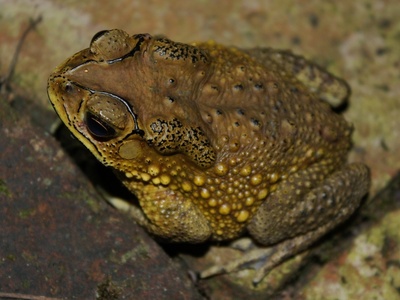
Asian Common Toad
A hardy, widespread toad of lowland forests, gardens and disturbed habitats; recognizable by warty skin and parotoid glands. Common across much of mainland and maritime Southeast Asia, it tolerates human environments but faces local declines from pollution and habitat loss.
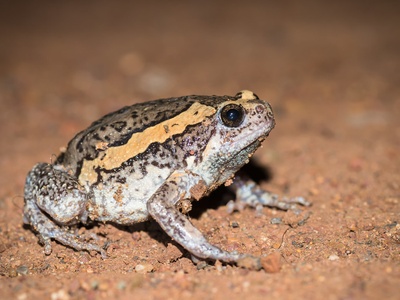
Banded Bullfrog
Small, stout-bodied burrowing frog often found in gardens, rice paddies and urban areas. Known for round appearance and explosive breeding in rainy season. Widely distributed through Southeast Asia; adaptable but sometimes affected by habitat conversion and pet trade.
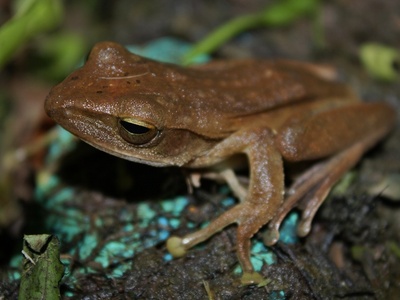
Common Tree Frog
Arboreal, adaptable frog that breeds in temporary ponds and water-filled tree holes; often seen around houses. Calls loudly during the wet season. Occurs throughout mainland and island Southeast Asia and thrives in secondary forests and human-modified landscapes.
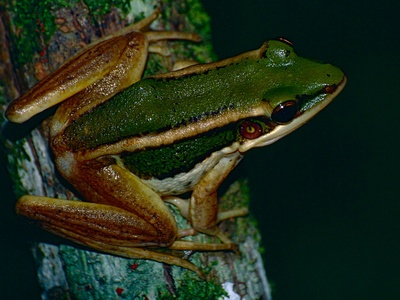
Green Paddy Frog
Slim, greenish frog commonly found in rice fields, ponds and marshes; excellent jumper and active at night. Very common across lowland Southeast Asia, it is important for pest control but declines with heavy pesticide use and wetland loss.
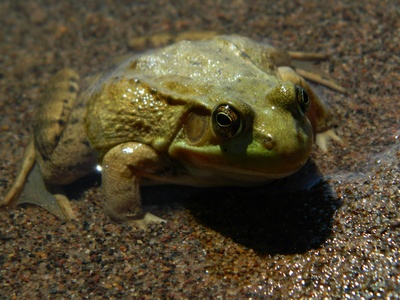
East Asian Bullfrog
Large, robust frog living in ponds, flooded fields and slow streams; prized as food in some regions. Strong jumper with loud mating calls. Native to much of Southeast Asia, populations are healthy in many areas but locally overharvested.
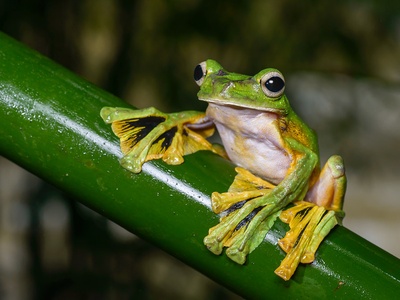
Wallace’s Flying Frog
Spectacular canopy frog with large webbed feet used for gliding between trees. Bright green body and dark webbing make it unmistakable. Lives in lowland and hill dipterocarp forests of Borneo and Malay Peninsula where canopy streams provide breeding sites.
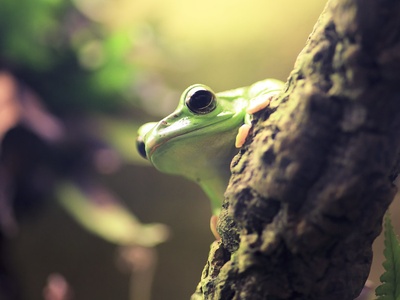
Common Gliding Frog
Medium-sized tree frog that glides with webbed toes between branches; often seen near forest edges, plantations and gardens. Breeds in temporary pools and tree holes. Distributed across Sundaland and parts of mainland Southeast Asia, adaptable to disturbed habitats.
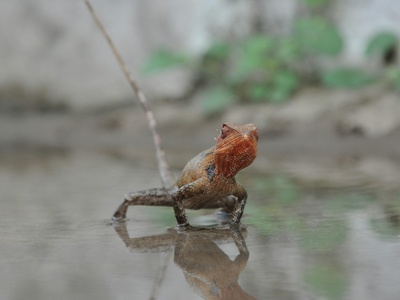
Vietnamese Mossy Frog
Remarkable camouflaged frog with moss-like skin texture that hides among wet rocky streams. Nocturnal and arboreal, it inhabits shaded limestone and karst forests in northern Vietnam. Popular in pet trade but habitat loss is the main concern.
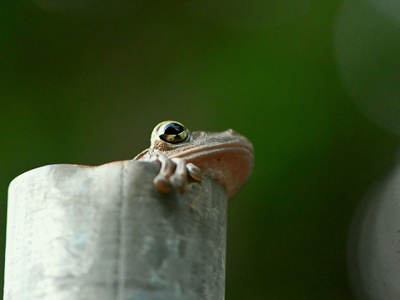
Narrow-mouthed Frog
Tiny, round-bodied microhylid that lives in leaf litter, grasslands and agricultural fields; known for its peeping call after rain. Found widely across Southeast Asia, often using temporary puddles for explosive breeding events during monsoon.
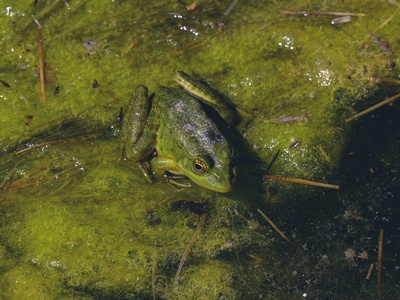
Bornean Flat-headed Frog
Rare, fully aquatic frog from cold, clear streams in Borneo; notable for lacking lungs and breathing through skin. Extremely range-restricted and sensitive to water quality; it faces threats from deforestation, pollution and climate change.