Southern Africa’s wetlands, rocky streams and grasslands host a wide mix of frogs and toads that appear with the rains and hide in plain sight the rest of the year. Knowing where and when to look makes spotting different species much easier.
There are 12 Amphibians of Southern Africa, ranging from African Bullfrog to Natal Ghost Frog. For each, you’ll find below Scientific name,Range (countries/regions),Typical size (cm), so you can quickly compare distribution and body size—you’ll find below.
How can I tell these species apart in the field?
Listen for calls during or after rain, note habitat (pans, streams, fynbos), and check size, skin texture and toe pads; photographs of the dorsal pattern and a quick note on whether the frog is near water are often enough to narrow identification to a few candidates.
Are any of these species at risk and what should I do if I find one?
Some have restricted ranges or depend on shrinking wetlands; consult local red lists or conservation agencies for status, avoid moving or handling animals unnecessarily, and report unusual sightings to local amphibian groups to support monitoring and protection efforts.
Amphibians of Southern Africa
| Name | Scientific name | Range (countries/regions) | Typical size (cm) |
|---|---|---|---|
| African Bullfrog | Pyxicephalus adspersus | South Africa;Namibia;Botswana;Zimbabwe;Mozambique | 20–24 cm total |
| African Clawed Frog | Xenopus laevis | South Africa;Namibia;Botswana;Zimbabwe;Mozambique;Zambia;Malawi | 7–12 cm total |
| Cape Platanna | Xenopus gilli | South Africa (Western Cape) | 6–8 cm total |
| Common Rain Frog | Breviceps adspersus | South Africa;Namibia;Botswana;Zimbabwe;Mozambique | 4–6 cm SVL |
| Cape Rain Frog | Breviceps gibbosus | South Africa (Western Cape) | 5–7 cm SVL |
| Micro Frog | Microbatrachella capensis | South Africa (Western Cape) | 1–2 cm SVL |
| Marbled Reed Frog | Hyperolius marmoratus | South Africa;Mozambique;Zimbabwe;Eswatini | 2.5–3.5 cm SVL |
| Delalande’s Sand Frog | Tomopterna delalandii | South Africa;Namibia;Botswana;Eswatini;Mozambique | 6–8 cm SVL |
| Guttural Toad | Sclerophrys gutturalis | South Africa;Mozambique;Zimbabwe;Eswatini | 7–11 cm SVL |
| Delalande’s River Frog | Amietia delalandii | South Africa;Lesotho;Eswatini;Mozambique | 6–9 cm SVL |
| Natal Ghost Frog | Heleophryne natalensis | South Africa;Lesotho | 5–7 cm SVL |
| Cape Ghost Frog | Heleophryne purcelli | South Africa (Western Cape) | 6–9 cm SVL |
Images and Descriptions
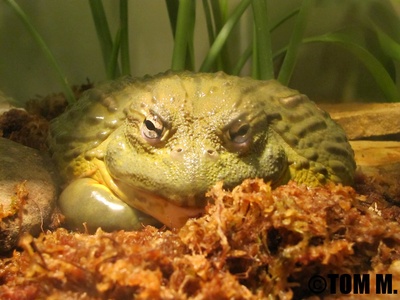
African Bullfrog
Huge, stocky frog with broad head and olive-green back; males are massive. Found in pans, seasonal pools and open savanna; breeds explosively after heavy rains. Often heard at night during wet season. Least Concern
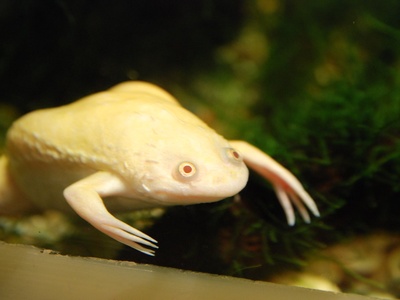
African Clawed Frog
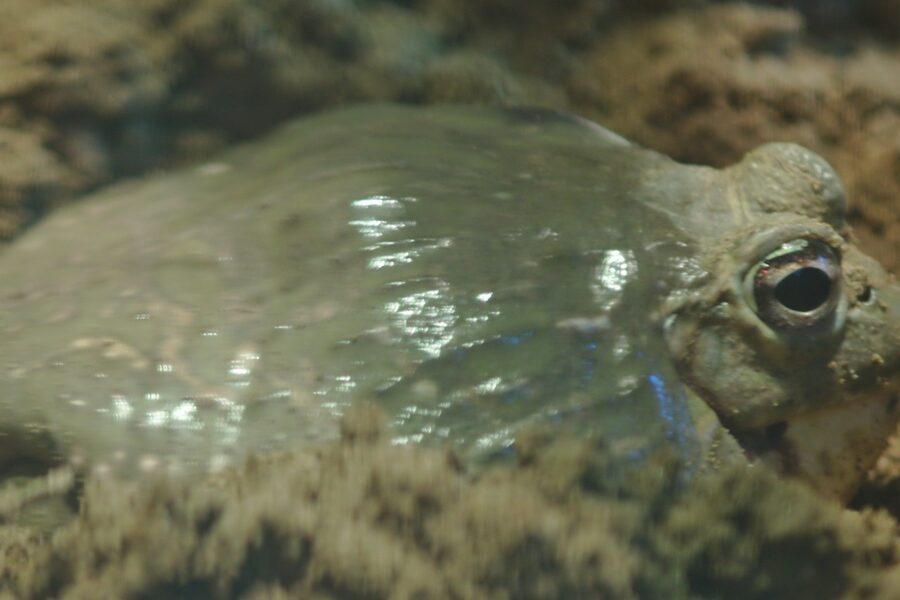
Flattened, fully aquatic frog with clawed hind toes and smooth skin; dark dorsum, pale underside. Lives in ponds, lakes and slow rivers; active year-round but breeding peaks in cooler months. Least Concern

Cape Platanna
Small platanna with dark mottling and reduced lateral line; flat body and fully aquatic. Restricted to coastal wetlands and seasonal vleis in Western Cape; threatened by habitat loss and invasive Xenopus. Endangered
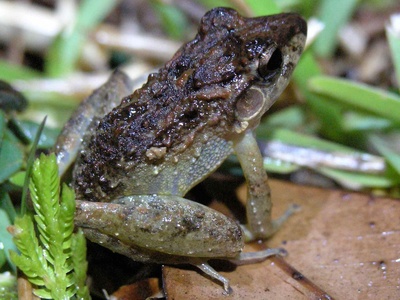
Common Rain Frog
Round, short-legged burrowing frog with smooth skin and sticky, folded appearance; often found under vegetation. Emerges in heavy rains to breed in temporary pools; common across savanna and grassland. Least Concern
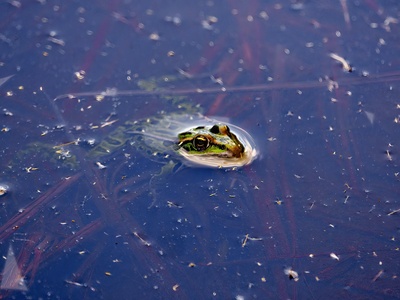
Cape Rain Frog
Stout, pale to brown rain frog with short limbs and rough skin; endemic to fynbos slopes of Western Cape. Secretive, spends most time buried and emerges during winter rains to breed. Near Threatened
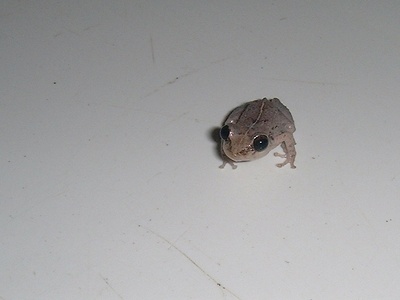
Micro Frog
Tiny, dark marsh frog barely one to two centimetres long; distinctive high-pitched call. Confined to seasonal wetlands and seepages in limited coastal fynbos sites; vulnerable to drainage and invasive plants. Endangered
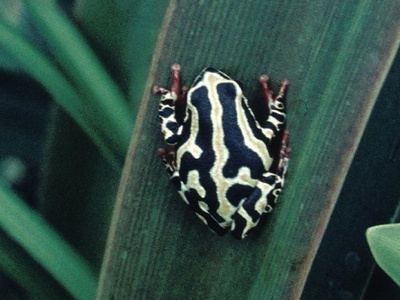
Marbled Reed Frog
Small, colourful tree frog with marbled green and brown pattern and adhesive discs on toes. Found in reedbeds, marshes and gardens near water; active in rainy season and often seen calling from vegetation. Least Concern
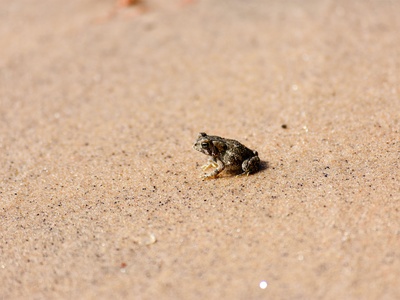
Delalande’s Sand Frog
Cryptic, sandy-coloured frog with short limbs and distinctive click-like call; often buried in loose soil. Inhabits dry savanna, grassland and river margins, breeding after seasonal rains in temporary pools. Least Concern
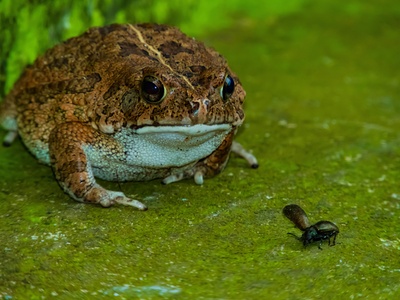
Guttural Toad
Medium-sized toad with rough skin and pale ventral markings; color variable brown to olive. Occupies savanna, gardens and wetlands; tolerates disturbed habitats and breeds in ponds during rainy season. Least Concern
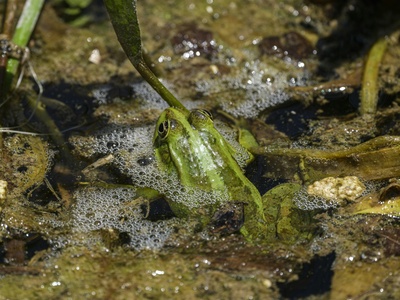
Delalande’s River Frog
Stream-associated frog with long legs and smooth brown dorsum; often near rocky streams and rivers in montane and forested areas. Active mostly in wet season, males call from banks. Least Concern
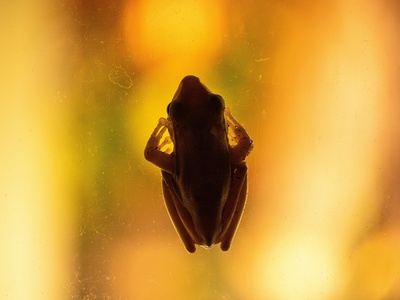
Natal Ghost Frog
Flattened, stream-adapted frog with cryptic brown pattern and large toe discs for gripping rocks. Confined to fast-flowing montane streams in Natal and Drakensberg; tadpoles cling to rocks. Breeding tied to year-round mountain flow. Least Concern
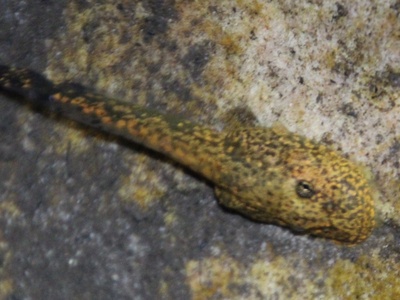
Cape Ghost Frog
Large, robust ghost frog with mottled brown skin and short limbs; found in cool, rocky streams in Western Cape mountains. Nocturnal and secretive; tadpoles adapted to torrent habitats. Least Concern