Coastal reefs, tidepools and shallow seas are full of surprising partnerships where animals tap photosynthesis to supplement their diets. These interactions shape how species feed, grow and respond to light across different habitats.
There are 17 animals with chloroplasts, ranging from Acropora millepora to Tridacna maxima. The list below is organized so you can quickly compare species: Scientific name,Chloroplast source (donor algae),Retention time (days); the table shows donor identity and how long the chloroplasts remain functional, details you’ll find below.
How do animals come to have chloroplasts?
Many acquire chloroplasts by eating algae and retaining the organelles (kleptoplasty) or by hosting algal endosymbionts; sea slugs commonly steal chloroplasts from their prey, while corals and some clams harbor symbiotic algae inside their tissues. Mechanisms vary by group and determine how long the chloroplasts stay functional.
Does having chloroplasts make an animal fully photosynthetic?
No—chloroplast-harboring animals typically supplement rather than replace feeding. Retention times range from days to months, and most species still rely on captured food or symbiont nutrients during low-light periods; see the Retention time (days) column below for specifics.
Animals with Chloroplasts
| Name | Scientific name | Chloroplast source (donor algae) | Retention time (days) |
|---|---|---|---|
| Elysia chlorotica | Elysia chlorotica | Vaucheria litorea (yellow‑green alga) | 300 |
| Elysia timida | Elysia timida | Acetabularia spp. (green algae) | 90 |
| Elysia viridis | Elysia viridis | Codium and Bryopsis spp. (green algae) | 40 |
| Elysia crispata | Elysia crispata | Bryopsis spp. and other green algae | 120 |
| Plakobranchus ocellatus | Plakobranchus ocellatus | Multiple Bryopsidales (Bryopsis, Halimeda and relatives) | 270 |
| Costasiella kuroshimae | Costasiella kuroshimae | Avrainvillea/Caulerpa and related green algae | 40 |
| Thuridilla hopei | Thuridilla hopei | Caulerpa and Bryopsis group (green algae) | 30 |
| Bosellia mimetica | Bosellia mimetica | Ulva and Bryopsis group (green algae) | 30 |
| Phyllodesmium longicirrum | Phyllodesmium longicirrum | Symbiodiniaceae (zooxanthellae from soft‑coral prey) | Indefinite (>1,000) |
| Pteraeolidia ianthina | Pteraeolidia ianthina | Symbiodiniaceae (zooxanthellae from cnidarian prey) | Indefinite (>1,000) |
| Tridacna gigas | Tridacna gigas | Symbiodiniaceae (dinoflagellate zooxanthellae) | Indefinite (>1,000) |
| Tridacna maxima | Tridacna maxima | Symbiodiniaceae (dinoflagellate zooxanthellae) | Indefinite (>1,000) |
| Acropora millepora | Acropora millepora | Symbiodiniaceae (dinoflagellate zooxanthellae) | Indefinite (>1,000) |
| Porites lobata | Porites lobata | Symbiodiniaceae (dinoflagellate zooxanthellae) | Indefinite (>1,000) |
| Exaiptasia pallida | Exaiptasia pallida | Symbiodiniaceae (model zooxanthellae strains) | Indefinite (>1,000) |
| Cassiopea xamachana | Cassiopea xamachana | Symbiodiniaceae (dinoflagellate zooxanthellae) | Indefinite (>1,000) |
| Anthopleura elegantissima | Anthopleura elegantissima | Symbiodiniaceae (dinoflagellate zooxanthellae) | Indefinite (>1,000) |
Images and Descriptions

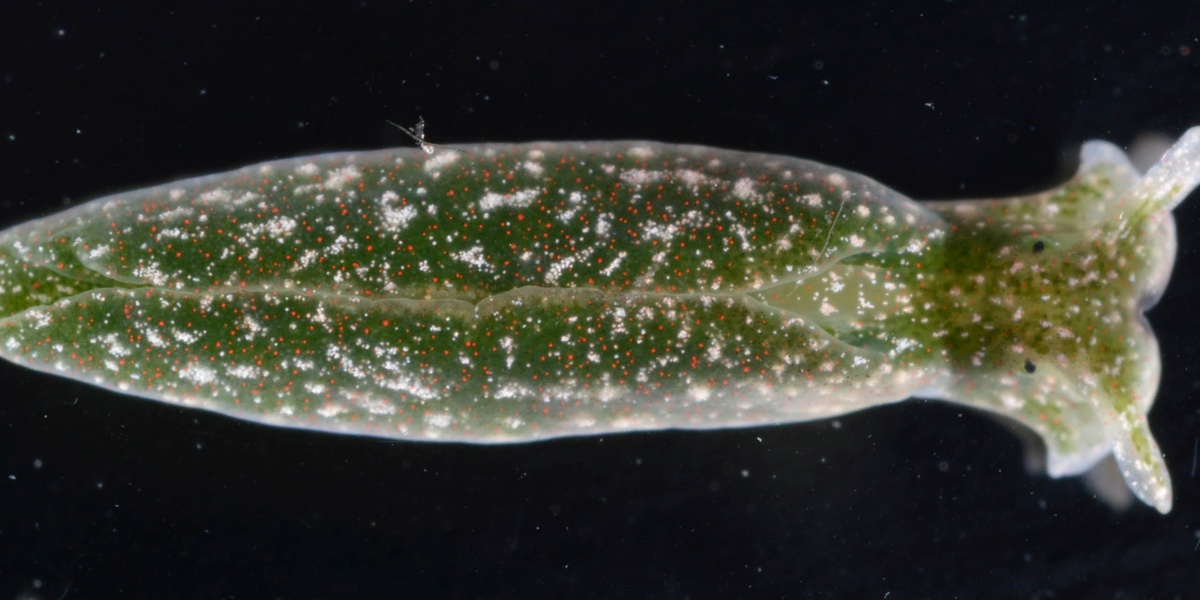
Elysia chlorotica
A well‑studied Atlantic sacoglossan that steals plastids from Vaucheria. Kleptoplasts remain photosynthetically active for many months, fueling part of the slug’s metabolism and allowing long periods without food — a flagship example of sustained kleptoplasty.
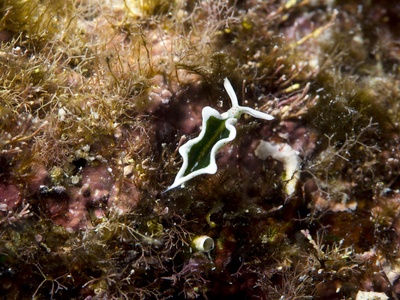
Elysia timida
Mediterranean and Atlantic sacoglossan that sequesters chloroplasts from Acetabularia and related green algae. Retained plastids can photosynthesize for weeks to a few months, supporting the slug’s energy budget and brood provisioning during food scarcity.
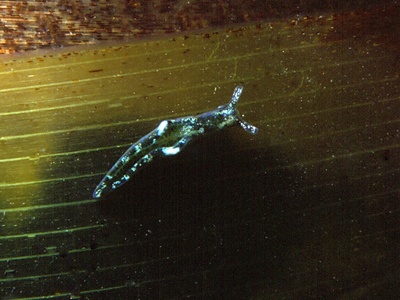
Elysia viridis
Common European sacoglossan that feeds on siphonous green algae such as Codium and Bryopsis. It incorporates functional chloroplasts into digestive tissue, giving the slug green coloration and a modest, short‑term photosynthetic boost.
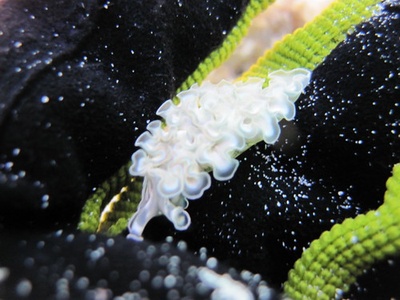
Elysia crispata
The Caribbean “lettuce sea slug” consumes multiple Bryopsis species and retains diverse kleptoplasts. These plastids can remain functional for weeks to months, contributing to the slug’s energy through supplemental photosynthesis and impressive color variation.
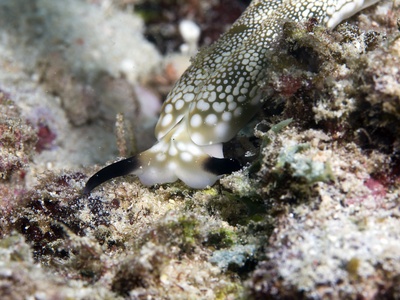
Plakobranchus ocellatus
A tropical Indo‑Pacific sacoglossan known for long‑term retention of mixed kleptoplasts from several algal prey. Kleptoplasts have been reported functional for many months, making this slug one of the most persistent kleptoplast hosts.
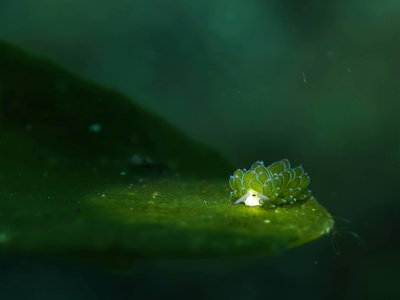
Costasiella kuroshimae
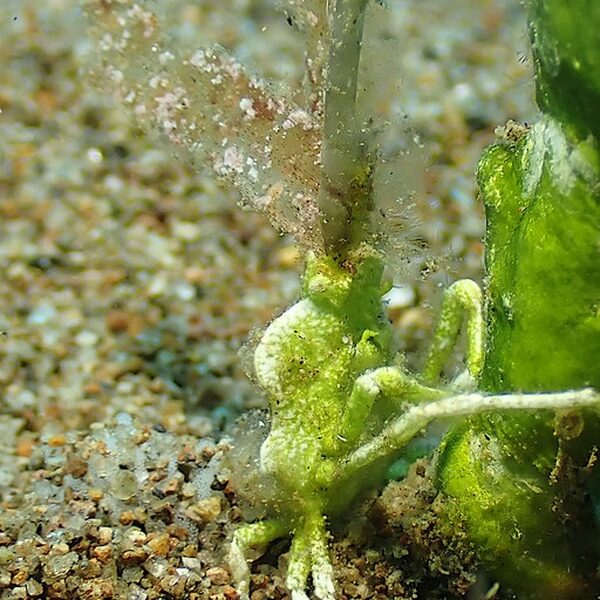
A small “leafy” sacoglossan (often called “leaf sheep”) that sequesters chloroplasts from green algal prey. Kleptoplasts can photosynthesize for several weeks, helping sustain the slug between meals and inspiring popular interest.
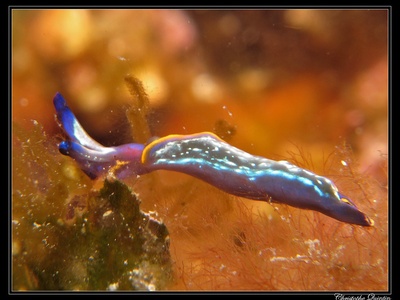
Thuridilla hopei
A colourful sacoglossan that feeds on siphonous green algae and retains functional chloroplasts for short periods. Photosynthesis by those kleptoplasts supplements the slug’s diet, especially during brief food shortages.
Bosellia mimetica
A small sacoglossan that mimics its algal food and sequesters plastids from green algae. Kleptoplasts persist for weeks, conferring photosynthetic capability and camouflage benefits through maintained pigmentation.
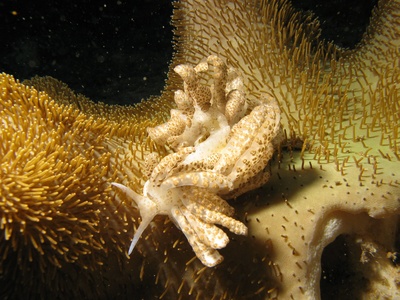
Phyllodesmium longicirrum
An Indo‑Pacific nudibranch that obtains and hosts whole dinoflagellate symbionts (zooxanthellae) from soft‑corals. Because the algae are maintained and can divide, photosynthetic function is long‑term and integral to the nudibranch’s energy strategy.
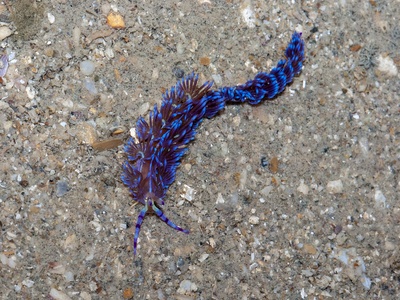
Pteraeolidia ianthina
An aeolid nudibranch that harbors zooxanthellae within its cerata after eating cnidarian prey. The retained endosymbionts remain functional and can provide a sustained photosynthetic contribution to the host.
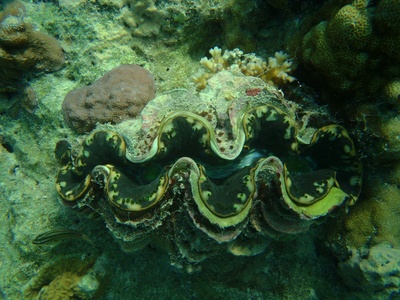
Tridacna gigas
The giant clam hosts abundant intracellular zooxanthellae in mantle tissues. These symbionts provide significant photosynthate to the clam, supporting rapid growth and bright mantle coloration; the relationship is stable and long‑term across the animal’s life.
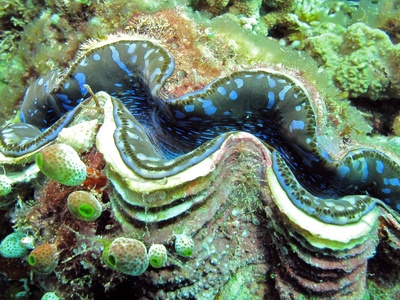
Tridacna maxima
A smaller giant clam species that maintains dense populations of intracellular zooxanthellae in mantle tissue. The algae supply fixed carbon continuously, making the clams highly dependent on and adapted to light‑driven nutrition.
Acropora millepora
A reef‑building stony coral that houses intracellular dinoflagellate symbionts whose chloroplasts drive much of the colony’s energy budget. Symbionts are maintained, reproduce in hospite, and are central to coral ecology and reef productivity.
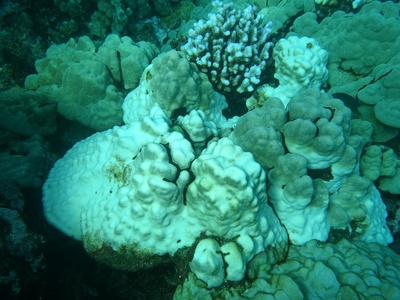
Porites lobata
A massive coral species that contains intracellular zooxanthellae throughout its tissues. These symbionts provide ongoing photosynthetic products that support calcification and long‑term coral health under suitable light conditions.
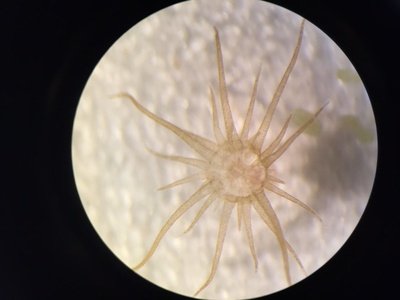
Exaiptasia pallida
The sea anemone (Aiptasia) used as a laboratory model for cnidarian–algal symbiosis. It hosts intracellular dinoflagellates that photosynthesize continuously, making it invaluable for studying symbiont maintenance and bleaching.
Cassiopea xamachana
The “upside‑down” jellyfish rests on the seabed with symbiotic zooxanthellae in its tissues. Those intracellular algae photosynthesize while exposed to light, contributing substantially to the jellyfish’s energy budget in shallow habitats.
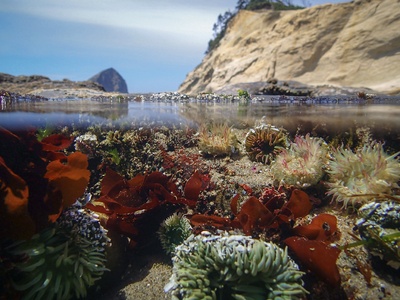
Anthopleura elegantissima
A temperate intertidal anemone that hosts intracellular dinoflagellate symbionts in epidermal tissues. The zooxanthellae perform photosynthesis regularly, helping the anemone survive in nutrient‑poor conditions and influencing its zonation on shores.