From cottage borders to coastal scrub and city balconies, red blooms are a reliable way to catch the eye and anchor a planting scheme. Whether you like bold focal points or repeated splashes of color, knowing which species suit your space makes a big difference.
There are 15 big red flowers, ranging from Amaryllis (Hippeastrum) to Waratah. For each entry you’ll find below Scientific name,Bloom size (cm),Native range — concise columns to compare form, scale and origin at a glance; you’ll find below
How do I choose the right red flower for my climate and garden size?
Look at native range and bloom size first: species from your climate will be easier to grow and a bloom size that fits your bed or pot avoids awkward scale. Consider soil and sun needs (many red-flowering bulbs prefer sun and good drainage) and pick a mix of early and late bloomers for longer impact.
Can I grow these big red flowers in containers, or do they need garden beds?
Many can be container-grown—Amaryllis (Hippeastrum) is a classic potted bloomer—if you choose varieties with smaller root systems and provide deep pots, rich free-draining mix, regular feeding and winter protection. Larger shrubs like Waratah are generally better in the ground or very large containers with room for root growth.
Big Red Flowers
| Name | Scientific name | Bloom size (cm) | Native range |
|---|---|---|---|
| Hibiscus | Hibiscus rosa-sinensis | 12-25 | Tropical Asia |
| Scarlet rosemallow | Hibiscus coccineus | 8-15 | Southeastern United States |
| Oriental poppy | Papaver orientale | 10-15 | Caucasus, Turkey |
| Common peony | Paeonia officinalis | 10-15 | Europe to Western Asia |
| Tree peony | Paeonia suffruticosa | 12-20 | China |
| Amaryllis (Hippeastrum) | Hippeastrum puniceum | 8-15 | South America (Brazil, Uruguay) |
| Dahlia | Dahlia pinnata | 10-30 | Mexico |
| Gladiolus (garden gladiolus) | Gladiolus × hortulanus | 8-12 | Garden hybrid (ancestry: Africa, Mediterranean) |
| Rhododendron (red truss) | Rhododendron arboreum | 10-20 | Himalaya, India |
| Bottlebrush | Callistemon citrinus | 8-15 | Australia |
| Canna lily | Canna indica | 8-12 | Tropical Americas |
| Garden tulip | Tulipa gesneriana | 8-10 | Central Asia (cultivated worldwide) |
| Waratah | Telopea speciosissima | 8-15 | Southeastern Australia |
| Sugarbush protea | Protea repens | 8-15 | South Africa (Cape region) |
| Claret cup cactus | Echinocereus coccineus | 8-10 | Southwestern United States, Mexico |
Images and Descriptions
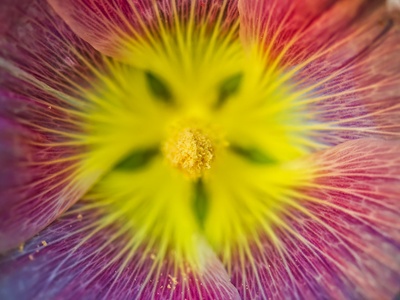
Hibiscus
Tropical evergreen shrub with very large, trumpet-shaped red blooms frequently reaching 12–25 cm across. Striking, glossy petals make it unmistakably big and red in summer and year-round in warm climates; used for garden specimen plants, hedges and dramatic cut flowers.
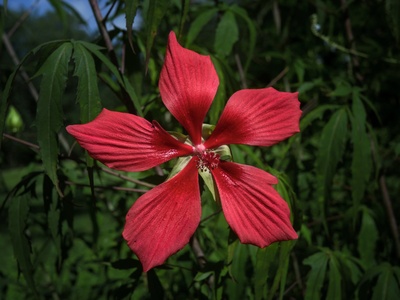
Scarlet rosemallow
A swamp-hardy hibiscus with vivid scarlet, 8–15 cm single flowers and narrow, poinsettia-like leaves. Blooms midsummer; bright red, open-faced flowers make bold borders, rain gardens and pollinator plantings, and work well as big cut blooms for rustic bouquets.
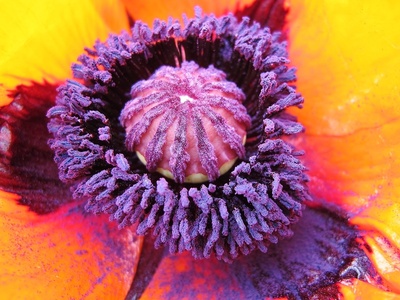
Oriental poppy
Heralded for enormous crepe-paper petals, this poppy bears 10–15 cm red flowers that open on stout stems in late spring. The bold, saucer-like blooms are eye-catching in cottage borders and make dramatic, short-lived cut flowers when supported.
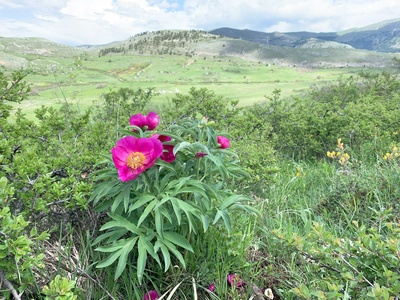
Common peony
Herbaceous peony producing large, often deep-red double blooms 10–15 cm across in late spring. Luxuriant, fragrant flowers sit atop sturdy stems; classic in perennial borders, formal beds and premium wedding bouquets for their size and romantic look.
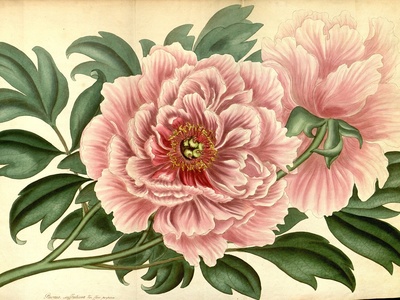
Tree peony
Woody shrub with enormous, ruffled red flowers typically 12–20 cm wide in late spring. Blooms are showy and long-lasting on stiff branches; prized as specimen plants, in mixed shrub borders and for striking, long-stemmed cuts.
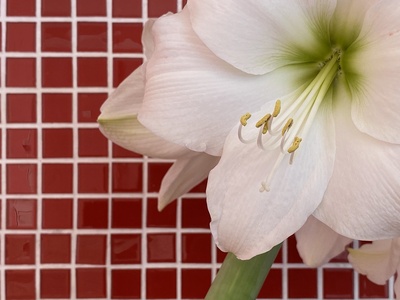
Amaryllis (Hippeastrum)
Bulbous plant with bold, trumpet-shaped red flowers 8–15 cm across on tall stalks that bloom in late winter to spring indoors or in warm climates. Famous for holiday displays, massed containers and single-stem cut flowers.
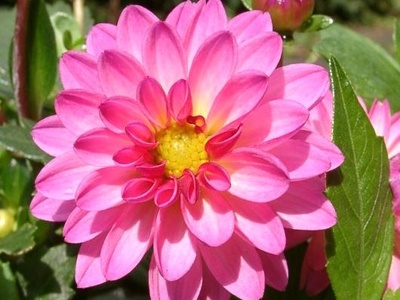
Dahlia
Tuberous plant offering large, showy red blooms—from decorative to dinnerplate types—often 10–30 cm across in summer to autumn. Petal-packed flowers make spectacular borders, cutting gardens and long-lasting vase arrangements when regularly deadheaded.
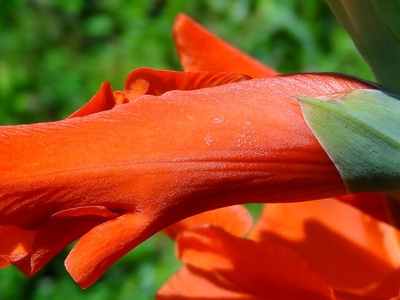
Gladiolus (garden gladiolus)
Tall spikes of funnel-shaped red flowers, each bloom typically 8–12 cm across; whole spike forms a showy vertical display in summer. Widely used in cut-flower displays, summer borders and formal beds for dramatic height and color.
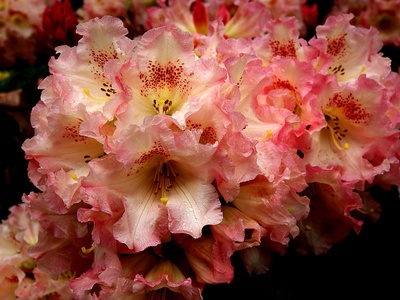
Rhododendron (red truss)
Evergreen tree with dense trusses of bell-shaped red flowers, truss display typically 10–20 cm across in spring. Vivid scarlet clusters create bold woodland or shrubby specimens and attract bees and birds; excellent mass plantings and focal shrubs.
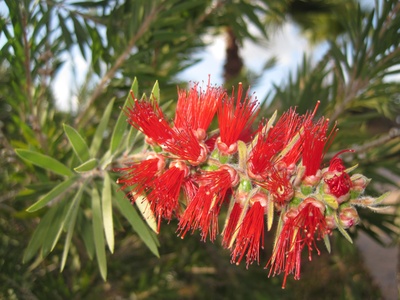
Bottlebrush
Shrub or small tree with distinctive cylindrical red flower spikes 8–15 cm long composed of showy stamens. Blooms in late spring to summer; the long, brush-like inflorescences are excellent for wildlife gardens, screening hedges and striking, architectural accents.
Canna lily
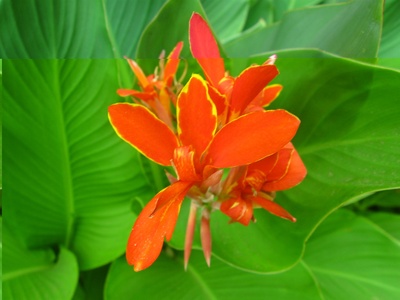
Tropical perennial with large, open red blooms and overlapping petals forming flaring flowers about 8–12 cm across in summer. Bold foliage complements the big red flowers; used in tropical-style beds, container shows and informal cut-flower arrangements.
Garden tulip
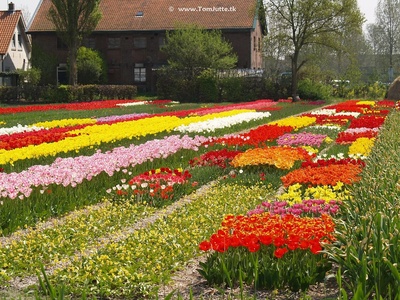
Classic spring bulb with single or double cup-shaped red flowers typically 8–10 cm across. Blooms in spring for vibrant seasonal color in beds, edging and mass displays; widely used in cut bouquets and formal garden designs.

Waratah
Large evergreen shrub bearing dense, dome-shaped red flower heads 8–15 cm across made of many tubular flowers. Blooms in spring; iconic Australian native prized as a specimen plant and for distinctive, long-lasting cut flowers.
Sugarbush protea
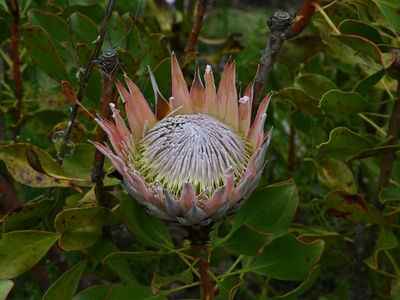
Proteaceous shrub with large, rounded red flower heads 8–15 cm across composed of many small flowers and colorful bracts. Blooms in winter–spring; used as architectural specimens in gardens and prized in long-lasting exotic floral arrangements.
Claret cup cactus
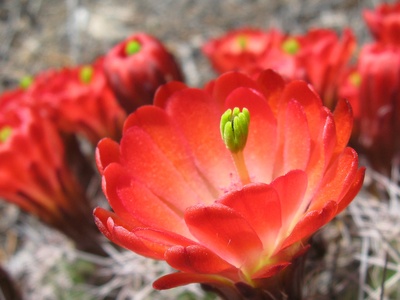
Cushing low to mid-height cactus producing single, cup-shaped scarlet flowers about 8–10 cm across in spring. The dramatic, saturated red blooms sit above spiny stems; excellent for xeriscapes, rock gardens and seasonal cut displays.