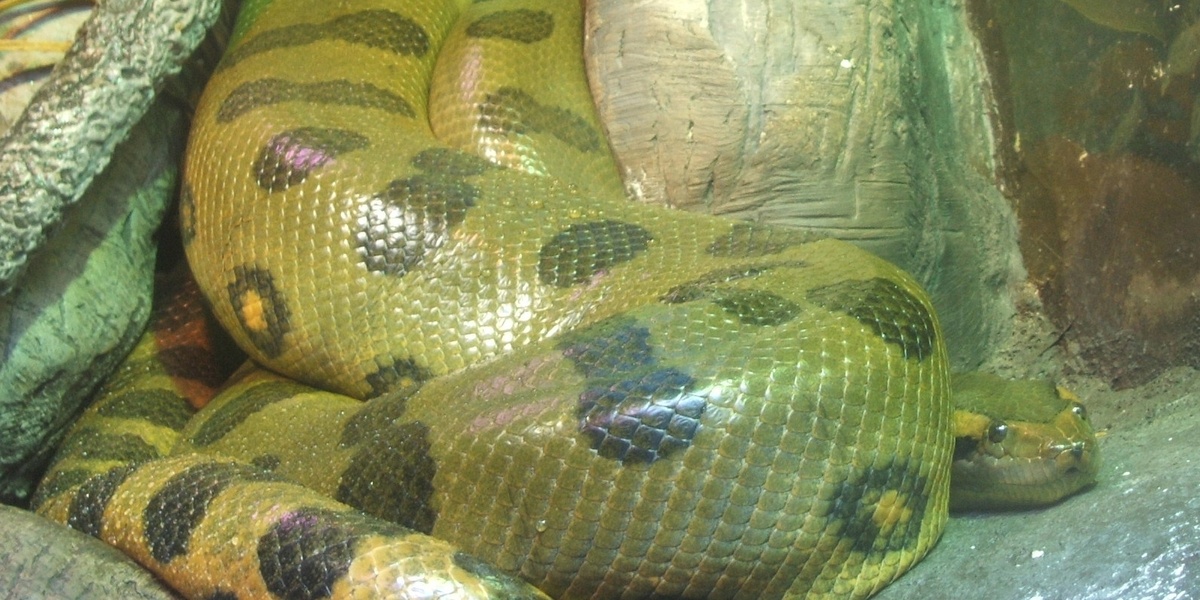
Green anacondas are among the heaviest snakes on Earth — large individuals can exceed 5 meters (about 17 feet) and weigh more than 200 kg. Early European explorers returned with dramatic tales from the Amazon, and those stories reflect a species that shaped wetland food webs and local livelihoods long before modern science studied it. These 10 defining characteristics of a anaconda show how anatomy, behavior, and human connections combine to make the species both ecologically important and culturally significant across South America.
Physical and Anatomical Traits
Anaconda anatomy explains movement, diet, and habitat preference. The four points below cover size, locomotion, skull/jaw features, and skin — traits that together enable aquatic ambush predation, a broad prey range, and the ability to swallow very large meals whole.
1. Size and mass
Green anacondas (Eunectes murinus) are among the largest and heaviest snakes: typical large adults measure roughly 3–4.5 m in length, with maximum reported specimens approaching 5 m (about 17 ft) and some exceptional individuals exceeding 200 kg in mass (museum records and field reports document the heaviest animals). That bulk expands the range of feasible prey to include sizeable mammals and reptiles, and it acts as a deterrent to many would-be predators, especially for fully grown adults.
Museum specimen records and long-term field surveys provide much of the size data for green anacondas, while a comparison with the reticulated python shows a difference in form: reticulated pythons can be longer, but anacondas typically achieve greater average mass because of their thicker, more massive bodies.
2. Muscular body and locomotion
Anacondas have a thick, cylindrical, heavily muscled body built for strength more than speed. That musculature favors constriction and powerful aquatic propulsion rather than long-distance terrestrial sprinting.
On land they use lateral undulation and concertina movements, but in water their bodies provide efficient paddling and subtle station-keeping while waiting for prey. Field observations and zoo husbandry notes report quiet, deliberate swims and short bursts of power during ambush strikes, and the same muscles that drive movement also allow snakes to coil tightly around and subdue large prey.
3. Skull, jaw, and feeding mechanics
The anaconda skull and jaw are highly specialized for ingesting large prey: quadrate bones allow wide gape, and elastic ligaments and loosely jointed skull elements let the two halves of the lower jaw move independently. Backward-facing teeth secure struggling animals during the swallow.
Because of this architecture, anacondas can consume prey with a cross-sectional area larger than their head. Documented prey include capybaras (roughly 35–65 kg for large adults) and caimans, with zoo feeding records and field stomach-content studies describing the prolonged swallow process and long post-meal fasting that follows.
4. Skin, scales, and coloration
Green anacondas have thick, often keeled scales and a dark olive-green base color patterned with black or brown ovoid blotches that provide excellent camouflage in murky water and flooded vegetation. The coloration helps them disappear along river margins and among submerged logs.
Scales reduce abrasion, retain moisture, and offer some protection from parasites and rough substrates. Seasonal shedding is common and ties to growth and parasite control; captive shedding cycles and field photographs (field guides) show the same pattern as wild animals after large meals or during growth phases.
Behavior and Ecological Habits
Anaconda behavior reflects their choice of watery habitats and their role as opportunistic predators. The next three sections cover aquatic habits, diet and hunting methods, and reproduction and life history.
5. Aquatic habits and habitat preference
Anacondas are primarily aquatic, favoring slow-moving rivers, oxbow lakes, marshes, and seasonally flooded forests across the Amazon and Orinoco basins. They commonly spend long periods submerged with only their nostrils and eyes above water, a posture that minimizes detection by prey.
Field observations from riverbanks and oxbow wetlands show semi-aquatic behavior: long, patient ambushes at the water’s edge and thermoregulatory use of sun-warmed shallow pools. Captive observations also note comfort in deep pools, where anacondas swim and rest for extended intervals.
6. Diet and hunting strategy
Anacondas are classic ambush predators with a broad, opportunistic diet. They wait submerged near the shoreline, strike with a rapid lunge, wrap in tight coils to constrict, then swallow prey whole. Frequent prey items include fish and waterfowl, and larger individuals take mammals and reptiles.
Field studies and stomach-content analyses record capybaras and caimans among large prey items. After consuming a large meal an anaconda may fast for weeks to months, relying on the high energy yield of the captured biomass before hunting again.
7. Reproduction and life cycle
Green anacondas are ovoviviparous: embryos develop inside eggs retained within the mother and she gives birth to live young. Typical litter sizes commonly range from about 20 to 40 pups, according to field observations and zoo records.
Mating aggregations — several males entwined with a single receptive female — have been documented in the wild. Gestation lasts roughly six months, juveniles face high predation rates, and sexual maturity is reached after several years, which together shape local population dynamics.
Human Interaction, Conservation, and Cultural Role
Anacondas intersect with people as providers of ecosystem services, subjects of folklore, and occasionally as targets for hunting or misunderstanding. The following sections discuss their ecological role, conservation challenges, and cultural and safety aspects.
8. Role in ecosystems
As top wetland predators, anacondas help regulate populations of fish, birds, and mammals, including large herbivores such as capybaras. That control can cascade to affect vegetation composition and the prevalence of certain parasites and diseases linked to herbivore density.
Field ecologist notes and case studies suggest that removing large predators alters prey densities and behavior, changing grazing pressure on aquatic plants. Conservative estimates from related predator studies suggest notable prey biomass removal by top predators each year, underscoring anacondas’ value to wetland resilience.
9. Threats and conservation status
Main threats include habitat loss from deforestation and wetland drainage, localized hunting for skins or subsistence use, and incidental mortality such as roadkill. Conservation status varies by species and region, so consult IUCN assessments and regional reports for up-to-date listings.
Parts of the Amazon have experienced more than 10% forest loss since 2000 (conservative regional figures), which fragments wetland habitat and reduces prey availability. Recommended conservation actions include protecting key wetlands, supporting community programs that reduce hunting pressure, and ongoing population monitoring.
10. Cultural significance and safety around people
Anacondas feature prominently in Amazonian folklore and appear in modern ecotourism, where ethical viewing can provide income for local communities. Popular media often exaggerates danger, but verified attacks on humans are rare; most conflicts arise when snakes are cornered or handled.
Practical safety tips from local guides include avoiding secluded oxbows at dawn and dusk, not handling wild snakes, and using guides for night river travel. Responsible wildlife tourism that respects animals and habitats creates economic incentives to conserve anacondas and their wetlands.