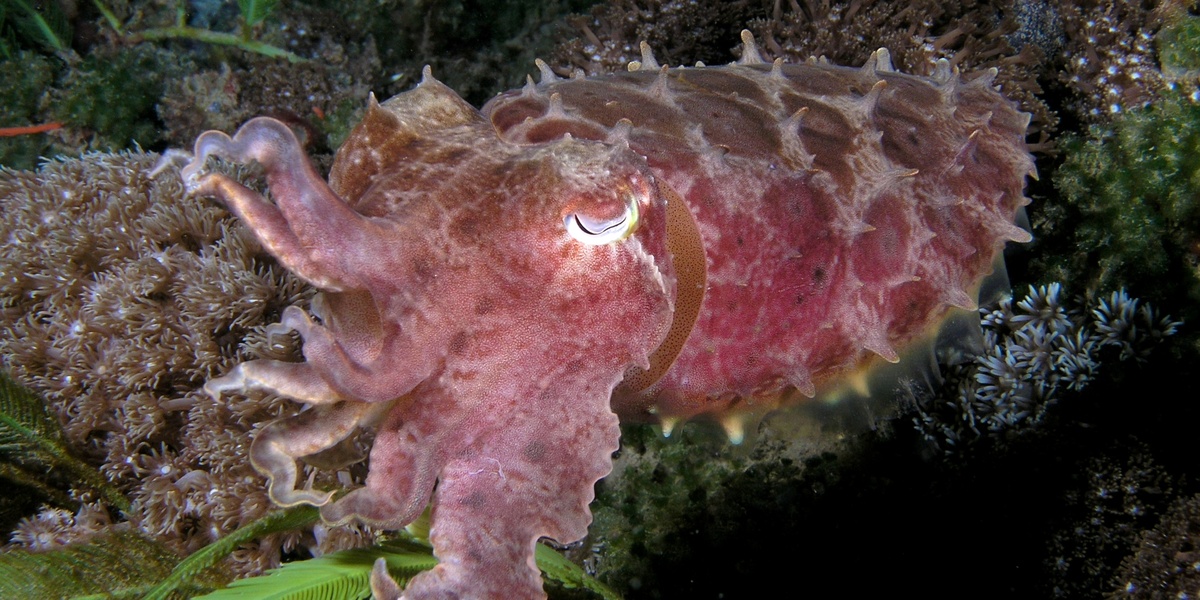
A cuttlefish can change its skin pattern in less than a second and has a brain-to-body ratio among the highest of all invertebrates. Early naturalists often lumped cuttlefish together with squid and octopus, which slowed appreciation of what makes them unique. These animals matter not just to marine life lovers: their anatomy, rapid camouflage, and problem-solving abilities inform soft robotics, materials science, and studies of animal cognition. Below are ten key traits, grouped into three categories—Biology & Anatomy; Behavior & Intelligence; and Adaptation & Camouflage—that explain why cuttlefish are both fascinating and scientifically useful.
Biology & Anatomy
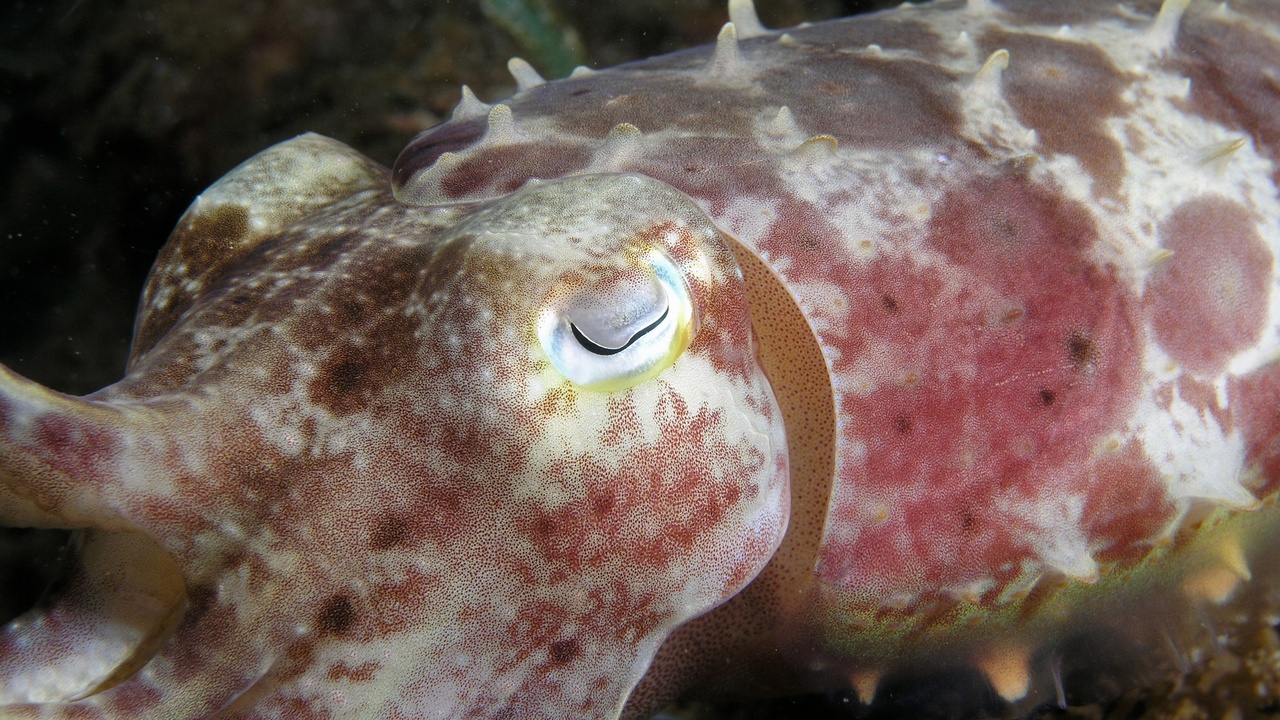
Cuttlefish are cephalopods in the order Sepiida; common species include Sepia officinalis (the common cuttlefish) and Metasepia pfefferi (the flamboyant cuttlefish). Their body plan supports buoyancy control, acute vision, and surprisingly complex behavior. The next four numbered points describe the anatomical features that set them apart.
1. Ten appendages: eight arms plus two specialized tentacles
Cuttlefish have 10 appendages—eight shorter arms for manipulating objects and two long, retractable tentacles specialized for striking prey. The arms hold and position food while the tentacles shoot out and retract, often capturing prey in a single, highly coordinated motion.
Those tentacle strikes are astonishingly fast, occurring in milliseconds, and can reach forward several body lengths depending on species and prey. Aquaria observations of Sepia officinalis show tentacle strikes timed to precision when targeting crabs or small fish.
Engineers working on soft robotics borrow design ideas from cephalopod limbs—flexible grasping, distributed control, and rapid extension—because cephalopod appendages combine strength, speed, and fine manipulation in compact form.
2. Cuttlebone: internal shell that controls buoyancy
One of the defining characteristics of a cuttlefish is its cuttlebone, a porous, chambered internal shell made of aragonite. The cuttlebone acts like a buoyancy tank: by regulating gas and fluid in its chambers the animal fine-tunes its density and vertical position in the water column.
People know cuttlebone for household uses—quarries of small cuttlebone pieces are sold in pet stores as a calcium source and polishing substrate for birds. Hobbyists and jewelers also use cuttlebone as an easy mold material for casting small metal pieces.
Researchers study the cuttlebone’s lightweight, porous aragonite structure to inspire buoyant, strong materials for engineering—think low-density panels and underwater platform components that mimic natural chambered designs.
3. Exceptional eyes: W-shaped pupils and polarization vision
Cuttlefish eyes are conspicuously large with a distinctive W-shaped pupil that helps modulate incoming light and enhance contrast along horizontal edges. Rather than relying on color vision, many cuttlefish detect polarized light, which gives them an edge in spotting transparent or low-contrast prey.
Laboratory experiments and field observations show polarization sensitivity helps cuttlefish detect prey like transparent shrimp that would otherwise be hard to see. Their vision is optimized for hunting in low-light or visually complex seafloor habitats.
These visual capabilities have motivated polarization-sensitive camera research and improved underwater imaging approaches that borrow ideas from cephalopod optics to enhance contrast without adding illumination.
4. Three hearts and advanced nervous system
Cuttlefish possess three hearts—two branchial hearts that pump blood through the gills and one systemic heart that circulates oxygenated blood to the body. This circulatory layout supports their active lifestyle and high metabolic demands during hunting and signaling.
Their nervous system is highly developed for an invertebrate; cuttlefish have a large brain relative to body size and extensive neural circuitry for vision, motor control, and learning. Scientists often compare cephalopod brain complexity to that of some vertebrates when discussing convergent evolution of intelligence.
In labs, researchers document rapid decision-making and coordinated limb control during prey capture and escape, making cuttlefish useful models for studies into distributed control and learning mechanisms outside vertebrate brains.
Behavior & Intelligence
Cuttlefish are behaviorally sophisticated: skilled hunters, quick learners, and complex social actors during mating. Below are three behavioral characteristics highlighted by field observations and controlled experiments that reveal their cognitive breadth.
5. Sophisticated hunting strategies: ambush, pursuit, and tentacle strikes
Cuttlefish employ multiple hunting tactics depending on the prey and environment: motionless ambush using camouflage, rapid pursuit powered by jet propulsion, and the lightning-fast tentacle strike for final capture. They target crustaceans, small fish, and mollusks using the tactic best suited to the situation.
For example, Sepia officinalis often lies mottled on a sandy bottom and transitions to a striped stalking pattern before launching a tentacle strike at a crab within a few body lengths. Aquarium studies report high capture success when the animal times camouflage and approach precisely.
Understanding those modes helps ecologists model predation dynamics and could inform fisheries management or bycatch reduction strategies by predicting when and where cuttlefish are most actively hunting.
6. Learning, memory, and problem solving
Cuttlefish demonstrate notable learning and memory abilities in lab settings, showing rapid habituation to non-threatening stimuli and forming associative links between cues and food. Juveniles can learn prey preferences after a few exposures, and some experiments show retention over days to weeks.
Researchers run controlled trials—habituation tests, associative learning tasks, and problem-solving mazes—to probe memory duration and flexibility. Those studies reveal cognitive skills that aren’t tied to a vertebrate brain architecture, offering comparative insights into how learning systems can evolve.
Insights from cuttlefish cognition also influence artificial intelligence and learning algorithm research by providing examples of efficient, non-vertebrate strategies for rapid learning and sensory integration.
7. Complex social and reproductive behavior, including female mimicry
Mating is a behavioral hotspot: males perform conspicuous displays to attract females, guard receptive mates, and—when necessary—use deception. Field and lab observers have documented sneaker males that adopt female-like coloration and posture to slip past guarding males and mate.
Male Sepia species may flash zebra-like patterns during courtship, then switch strategies if a rival approaches. These tactics illustrate intense sexual selection pressures and the flexible use of body patterning for communication.
Studying these behaviors sheds light on signaling theory, the evolution of deception, and how complex social interactions can arise in relatively short-lived animals (many cuttlefish live about 1–2 years).
Adaptation & Camouflage
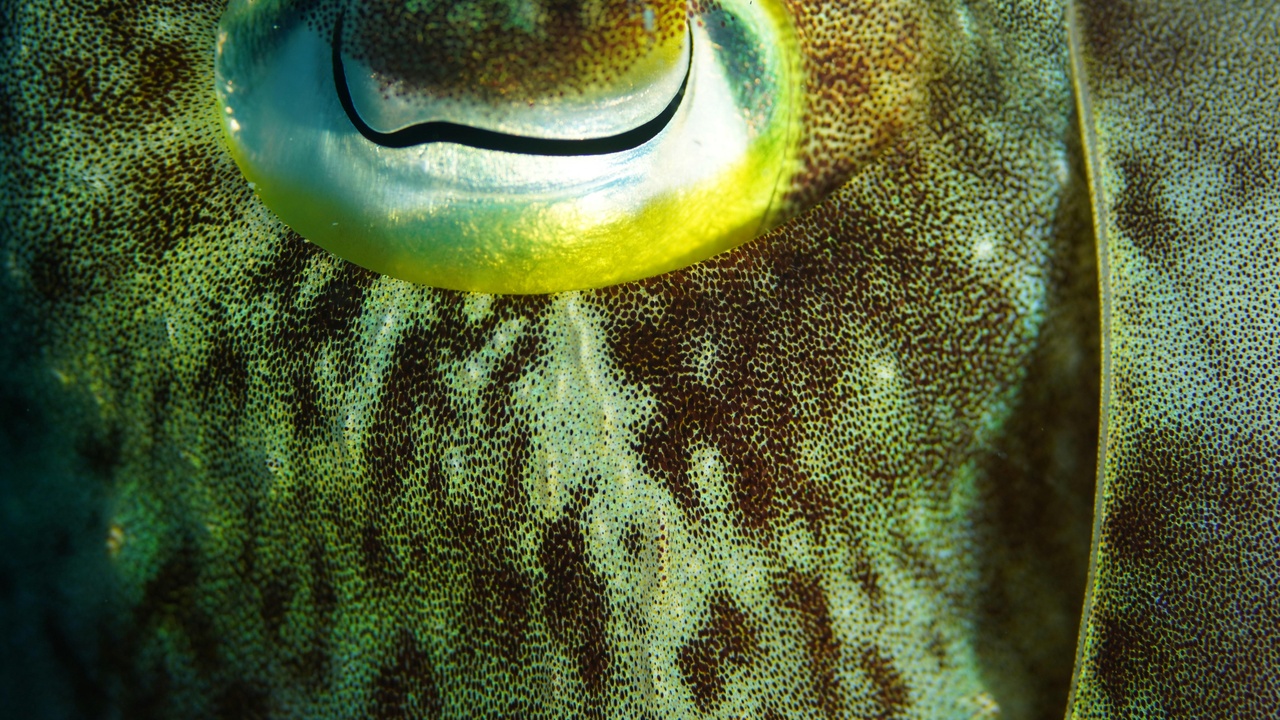
Cuttlefish are masters of dynamic camouflage and signaling, blending color, texture, and motion. The three points below describe how their skin and behavior produce instant concealment, tactile matching, and defensive displays with broad applications in materials and defense research.
8. Instant camouflage: chromatophores, iridophores, and leucophores
Cuttlefish can alter skin color and pattern in milliseconds—often in under a second—by controlling a layered system of skin cells. Pigment-containing chromatophores expand and contract under direct neural control to create bold pigments.
Beneath chromatophores lie iridophores, which create iridescence through structural reflection, and leucophores, which scatter broad-spectrum light. Together these three layers let a cuttlefish produce high-contrast patterns, shimmering flashes, or background-matching hues.
These mechanisms inspire adaptive camouflage fabrics and low-energy display surfaces. The characteristics of a cuttlefish—rapid neural control over multiple optical layers—provide a model for materials that change appearance without high power demands.
9. Skin texture and 3-D sculpting with papillae
Beyond color, cuttlefish change skin texture by raising muscular papillae to produce bumps, ridges, or spines that match the three-dimensional structure of the substrate. This sculpting can transform a smooth mantle into a pebble-like or coral-like surface in seconds.
Field reports show individuals matching gravel beds, rock faces, and seagrass patches by combining pattern and texture, which greatly improves concealment from both predators and prey. The muscular control behind papillae offers engineers a blueprint for tactile, morphing skins.
Robotics research now explores surface morphing that mimics papillae to create adaptive grippers and coverings that alter friction and profile on demand.
10. Ink, warning displays, and defensive signaling
Ink remains a classic cephalopod defense: ejected as a cloud it can serve as a visual smokescreen, a decoy blob, or a chemical deterrent that confuses predators and gives the cuttlefish a chance to flee. Aquaria and field studies document rapid ink-jet escapes followed by sudden pattern changes.
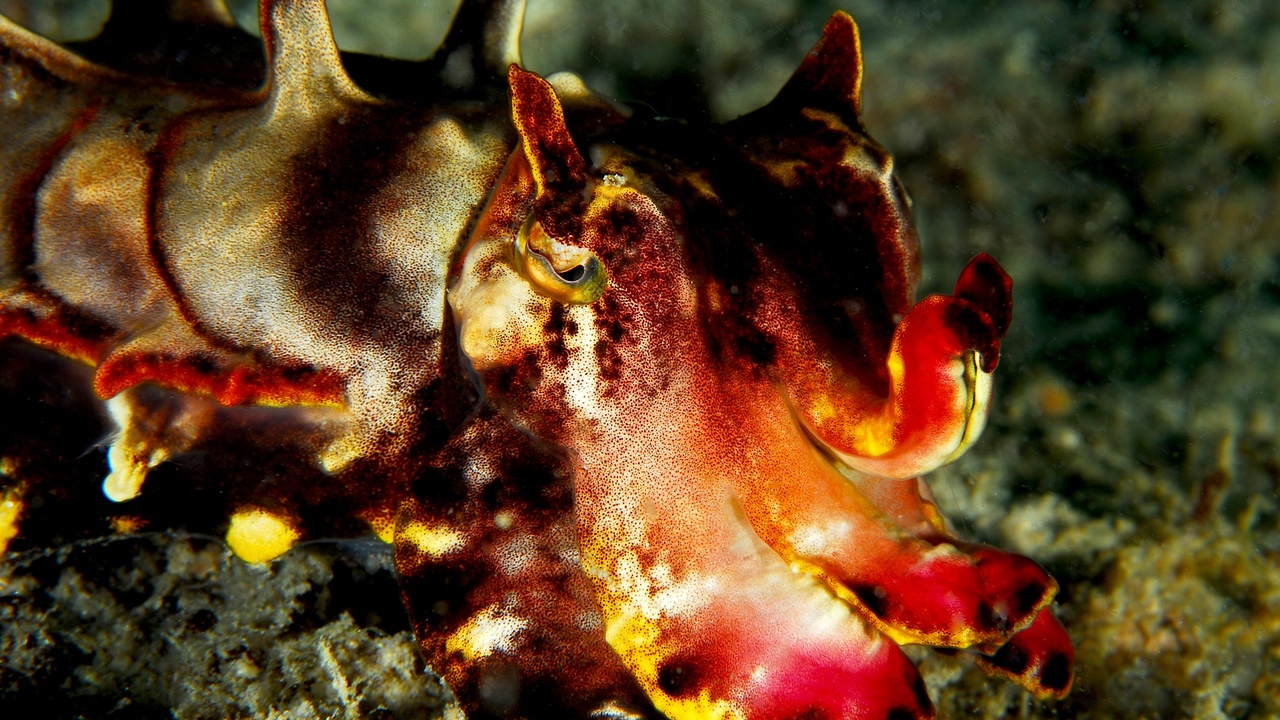
Some species, notably Metasepia pfefferi (the flamboyant cuttlefish), combine bright, conspicuous color with slow, walking behavior as an aposematic—warning—signal to predators that they may be distasteful. These mixed strategies show how visual and behavioral signals work together defensively.
Studying ink dispersal and startling displays informs research on anti-predator signaling and could inspire bio-inspired masking or aerosol systems that mimic rapid concealment or diversion tactics.
Summary
Key takeaways:
- Cuttlefish blend distinctive anatomy (8 arms + 2 tentacles, a porous cuttlebone, three hearts) with advanced neural control to perform fast, precise behaviors.
- Their rapid, multi-layered skin system and papillae allow color and texture changes in under a second—capabilities that inspire adaptive materials and camouflage technologies.
- Behavioral studies show learning, memory, flexible hunting tactics, and social deception (e.g., sneaker males), making them valuable models for comparative cognition and robotics.
- Common species like Sepia officinalis and Metasepia pfefferi illustrate both subtle camouflage and bold warning displays, emphasizing ecological diversity among cuttlefish.
- Watch responsibly: follow local tide-pool guides or current biomimetic research if you want to observe or learn more about these inventive cephalopods.