In 1998, entomologists in Allentown, Pennsylvania, first confirmed the brown marmorated stink bug in the United States — an unassuming insect that would become a headline pest within two decades. That initial detection matters because this group of bugs can trigger agricultural outbreaks, pile up as a household nuisance each autumn, and surprise homeowners with a sharp, lingering odor when disturbed. Understanding the characteristics of a stink bug helps explain how their shape, mouthparts, scent chemistry, and life cycle combine to make some species costly pests and others useful predators. Below are ten defining traits organized into three categories — physical characteristics, behavioral patterns, and ecological or human interactions — with concrete examples, numbers, and practical ID tips you can use in the field.
Physical characteristics
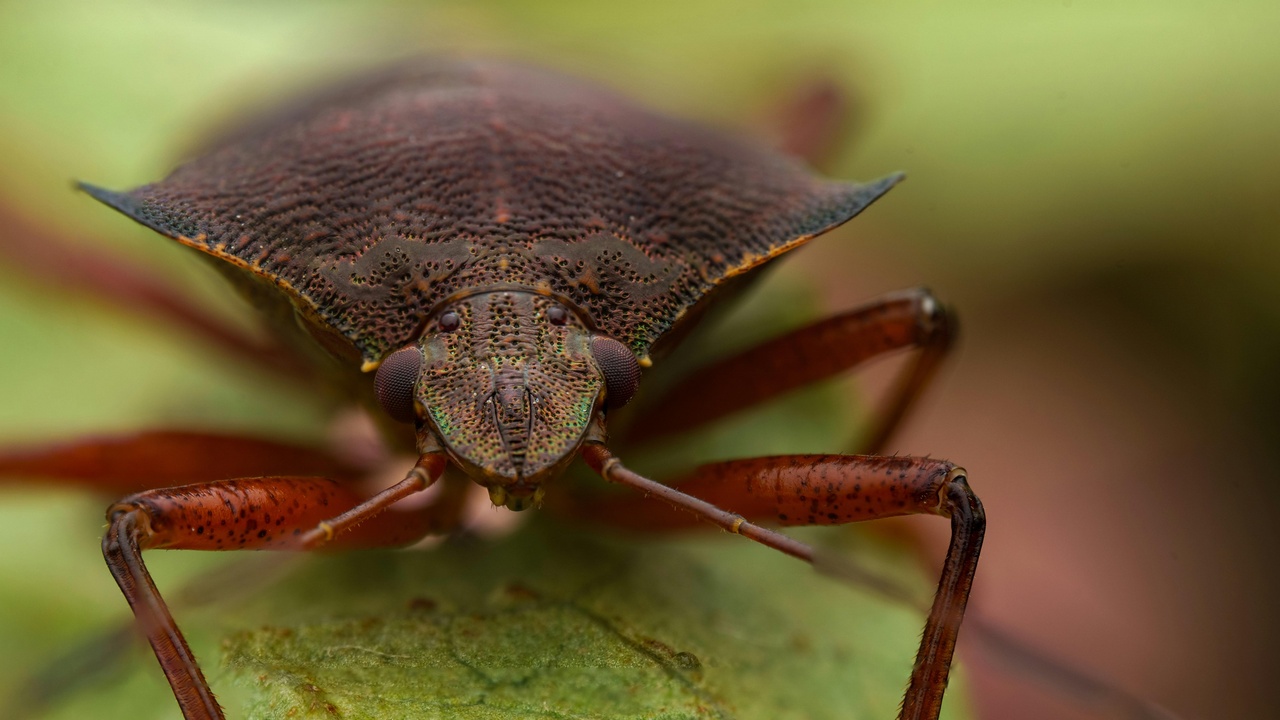
Stink bugs belong to the family Pentatomidae, a large group with roughly 4,700–5,000 described species worldwide. Most share a recognizable, flattened, shield-like silhouette and a basic body plan that makes field ID fairly reliable at a glance. Adults tend to be compact insects, with many common species measuring about 12–17 mm long. Visible features to check include the broad scutellum (a triangular dorsal plate), clearly segmented antennae, and the position of scent gland openings near the thorax and abdomen. These observable traits are useful whether you’re scouting an orchard or checking plants on your patio.
1. Shield-shaped body
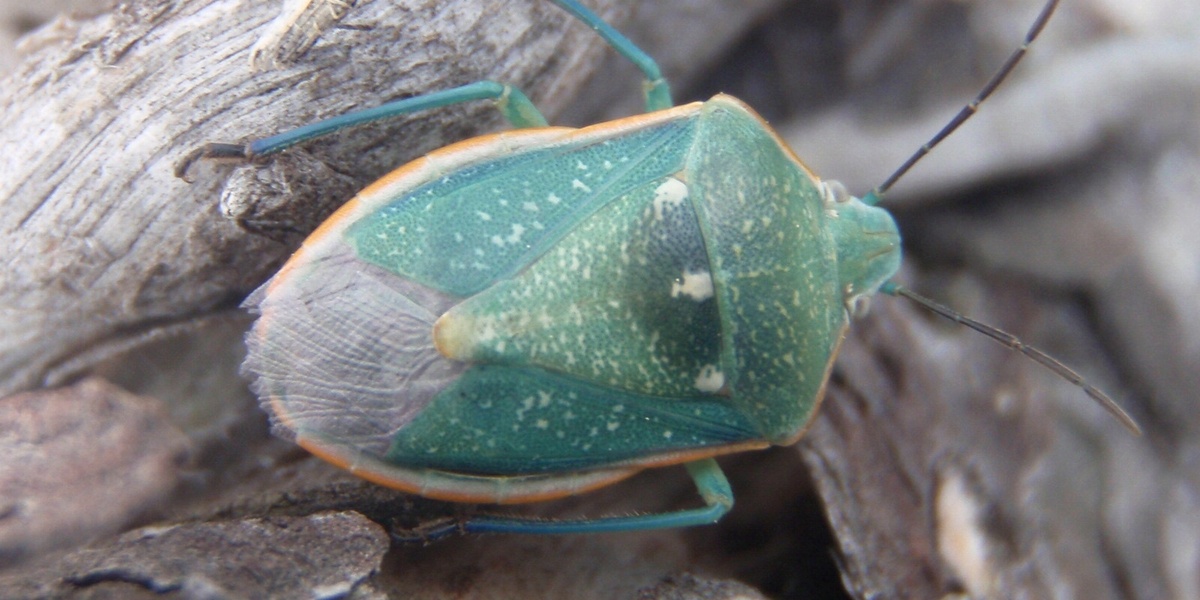
“Shield-shaped” refers to the overall pentagonal silhouette produced by the broad pronotum and the large scutellum that often covers much of the abdomen. The scutellum is the triangular plate visible on the back and helps separate stink bugs from elongated Hemiptera like leaf-footed bugs. Gardeners and farmers can use this silhouette when quickly sorting insects on leaves or fruit—if it’s noticeably broad and rounded rather than long and narrow, a stink bug is a likely suspect. Both Halyomorpha halys (brown marmorated) and Podisus maculiventris (spined soldier bug) show the classic shield look, though the latter has a more tapered, predatory form.
2. Size and coloration
Adult stink bugs often fall in the 12–17 mm length range, though some species are smaller or slightly larger. Color varies by species and season: many are mottled brown, others are green in summer (the “green stink bugs”), and some show pronounced striping or speckling. A reliable field cue for the brown marmorated stink bug is alternating light and dark banding on the antennae. Color helps with quick sorting, but it can mislead—age, wear, and regional variation mean you should combine color with shape and antenna markings for confident ID.
3. Piercing-sucking mouthparts
Stink bugs feed with a multi-segmented rostrum, a piercing-sucking mouthpart that they insert into plant tissues or, in predatory species, into prey. The rostrum delivers saliva that begins digestion and then withdraws nutrient-rich juices. On fruit crops this produces small puncture wounds, sunken or corky areas, and discoloration—common symptoms on apples, peaches, and soybeans. Predatory species use the same tool to immobilize caterpillars and other soft-bodied insects, so the rostrum is a single instrument used for very different diets.
4. Scent glands and defensive odor
Members of Pentatomidae carry a single pair of metathoracic scent glands that release volatile compounds when the insect is threatened. Typical chemicals include short-chain aldehydes and esters, which people describe as musty, sharp, or herbaceous—some even say “cilantro-like.” Bugs commonly release the odor when grabbed, crushed, or crowded, which explains why homeowners notice a stink after disturbing an overwintering cluster or squashing one indoors. The odor functions mainly to deter predators and communicate alarm to nearby conspecifics.
Behavioral traits
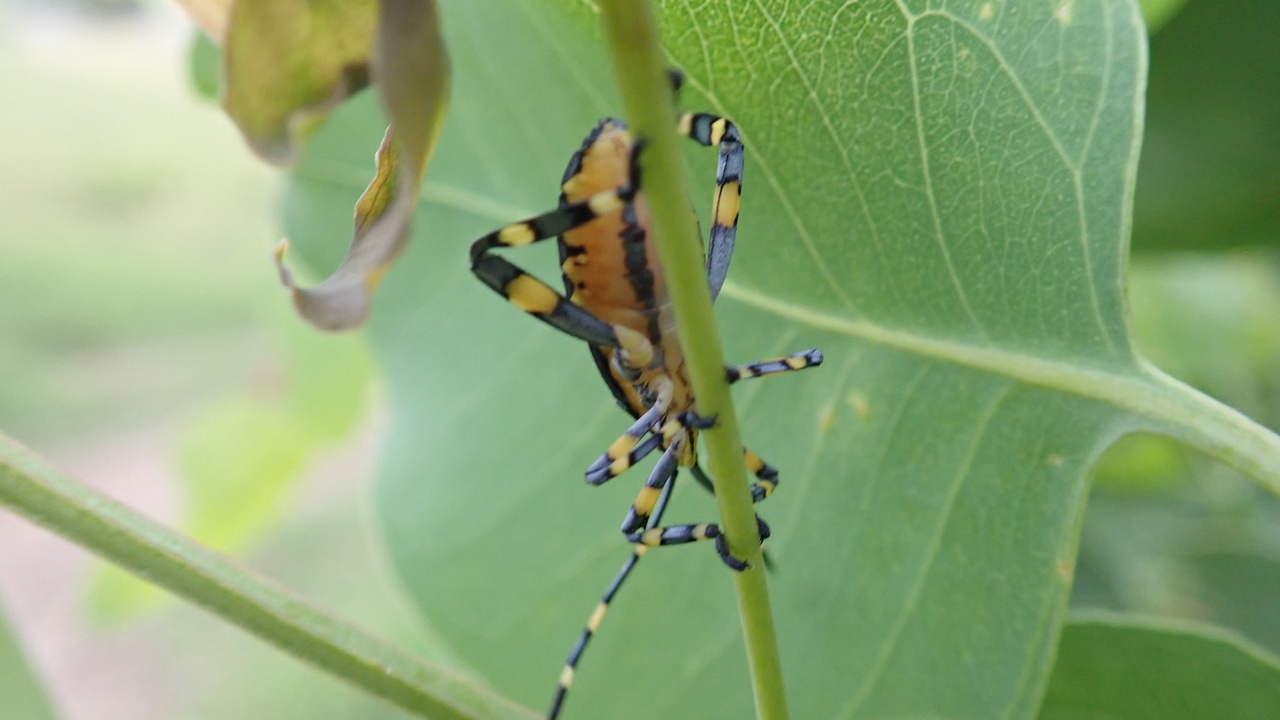
Behaviorally, stink bugs show a mix of feeding strategies, a multistage life cycle, and distinct seasonal movements. Some species are strict plant feeders while others are predators that help control pests. Typical development includes egg clusters, five nymphal instars, then adulthood, with egg clutches often numbering about 20–30 eggs. In temperate zones many species complete one to two generations per year and adults seek sheltered sites in autumn, where they sometimes aggregate in large numbers. These patterns let growers and homeowners predict when damage and invasions are most likely.
Note: this description of behavioral traits ties directly to practical management—scouting for egg masses, timing controls around the nymphal stages, and watching for fall aggregation can all cut losses.
5. Feeding habits
Most stink bugs are phytophagous, feeding on sap, seeds, stems, and fruit; a subset are predatory and attack other insects. Many species are generalists and will sample a wide host range, which increases their pest potential in mixed landscapes. University extension observations show that late-season feeding, when fruit are ripening, produces the most visible quality loss because punctures translate into pitting and corky areas on marketable fruit.
The brown marmorated stink bug, for example, feeds on apples, peaches, grapes, and a range of vegetables, while Podisus maculiventris is a helpful predator that eats caterpillars in vegetable rows.
6. Reproduction and life cycle
Most stink bugs follow a straightforward life cycle: eggs laid in clusters, five nymphal instars, then the adult stage. Egg clusters are commonly in the 20–30 egg range and are attached to the undersides of leaves. In temperate climates one to two generations per year are typical; warmer regions can support more. Timing matters to management—targeting controls when nymphs are small or before egg hatch is often more effective than treating fully hardened adults.
7. Overwintering and aggregation behavior
Adults of many species overwinter in sheltered microhabitats such as leaf litter, beneath bark, or inside man-made structures. The brown marmorated stink bug is notorious for moving into buildings during autumn, with homeowners commonly reporting wall and attic aggregations from October through November. Aggregation provides a warmer, drier microclimate and safety in numbers, but it also concentrates insects where they become a nuisance and a source of odor complaints.
Ecological role and human interactions
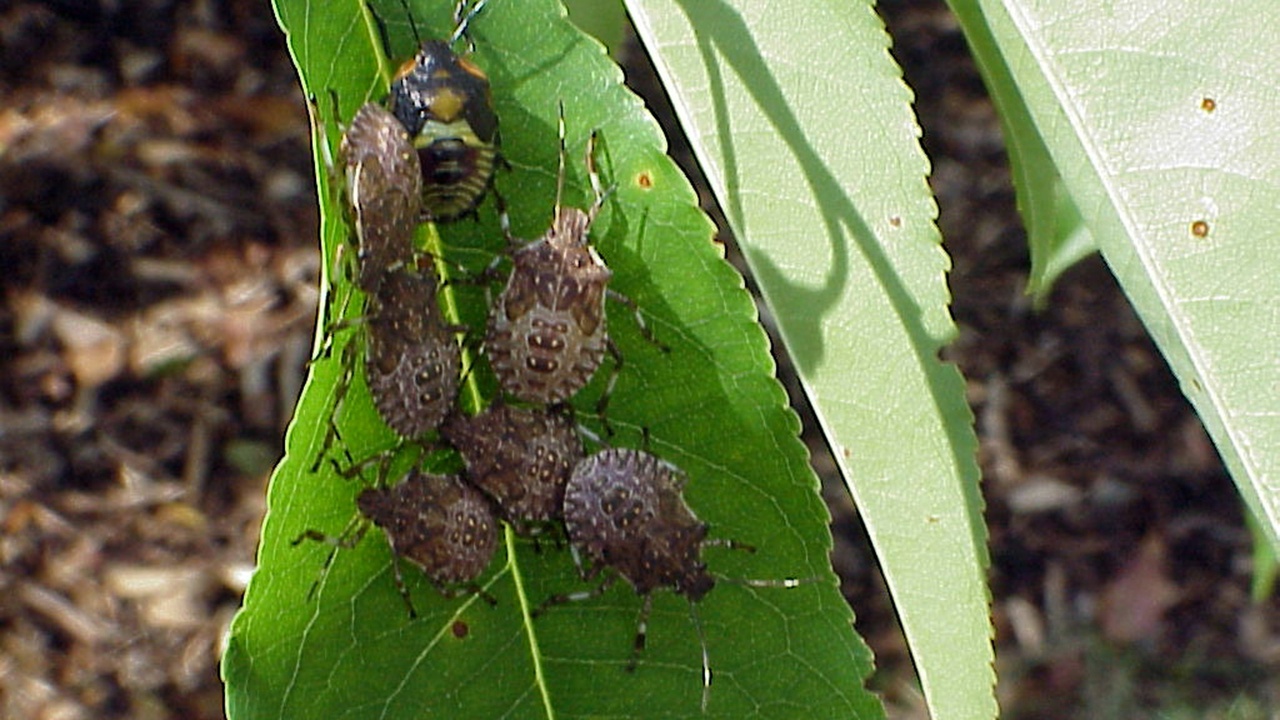
Stink bugs play dual roles: some species are costly agricultural pests, others are predators that suppress crop pests and support integrated pest management. The impact a species has depends on diet, behavior, and local ecology. Economic effects include reduced marketable yields and increased management costs; on the flip side, predatory pentatomids like Podisus maculiventris are beneficial in vegetable systems. Understanding these contrasts is key for growers deciding when to intervene and when to conserve natural enemies.
Where invasives like the brown marmorated stink bug establish, monitoring and targeted control become essential to limit damage and decrease nuisance aggregations.
8. Predators and natural enemies
Stink bugs face predation from birds, spiders, and predatory insects, and their eggs are parasitized by tiny wasps in the genus Trissolcus. Researchers studying biological control have documented Trissolcus japonicus attacking brown marmorated stink bug eggs, and deliberate releases and natural spread of this parasitoid have produced measurable parasitism in some regions. Natural enemies can significantly reduce local populations, and scientists track parasitism rates in sentinel egg mass studies to monitor biological control progress.
9. Agricultural impact (pest status)
Certain species inflict serious crop damage; Halyomorpha halys is a prime example. Growers have reported localized losses of 20–30% of marketable fruit during heavy outbreaks, with symptoms including pitting, catfacing, and discolored or sunken areas on apples, peaches, and pears. Late-season feeding complicates control because ripening fruit are attractive and any treatment risks residue or phytotoxicity concerns. Common grower responses include monitoring with traps, using exclusion netting on high-value blocks, and carefully timed insecticide applications targeted to vulnerable stages.
10. Management and benefits to ecosystems
Integrated pest management for stink bugs combines cultural tactics, monitoring, physical barriers, and biological control. Pheromone-baited traps and sticky cards help track adult activity, netting protects premium fruit, and conserving predators reduces pest pressure. In some vegetable and field systems, predatory stink bugs like Podisus maculiventris contribute directly to pest suppression and reduce the need for chemical sprays.
For homeowners: seal gaps and screen vents to limit autumn entry, and avoid crushing overwintering adults (the odor is unpleasant and unnecessary). For growers: regular scouting, timely intervention around nymphal stages, and coordination with extension services improve outcomes.
Summary
- Stink bugs (Pentatomidae; ~4,700–5,000 species) are identified by a broad, shield-shaped body, a large scutellum, and segmented antennae; many common adults measure about 12–17 mm long.
- Their piercing-sucking rostrum produces characteristic fruit damage, and a single pair of metathoracic scent glands emits aldehydes and esters that smell musty or herbaceous when insects are disturbed.
- Behaviorally they lay egg clusters of roughly 20–30 eggs, pass through five nymphal instars, and often overwinter as adults—frequently aggregating on walls and inside structures in autumn (October–November in many temperate regions).
- Ecologically they’re a mixed bag: invasive species like Halyomorpha halys can cause localized losses reported at 20–30% in heavy outbreaks, while predatory species (e.g., Podisus maculiventris) and parasitoids (Trissolcus spp.) provide biological control benefits.
- Actionable steps: monitor with traps and visual scouting, seal home entry points, avoid crushing overwintering adults, and report unusual outbreaks to your state extension or appropriate invasive species hotline to help managers respond quickly.