In 1945, George Orwell published Animal Farm and turned a pig named Napoleon into a global political metaphor — proof that pigs have been more than farm animals in culture for decades. That opening salvo in modern literature helps explain why a short survey of famous pigs (and their names) still matters: these characters shape how we talk about power, comfort our childhoods, and fuel a surprisingly large merchandising industry.
Below are eight of the most recognizable pigs from books, film, television, and advertising, grouped into three categories — literary & historical, animated & TV, and pop-culture mascots — with dates and examples showing how their names entered the cultural imagination.
Literary and Historical Pigs
Pigs in literature often carry symbolic weight: they stand in for political figures, embody innocence, or serve as the sympathetic center of a children’s tale. These names travel from page to speech, seeding idioms and cultural shorthand that last for decades.
1. Napoleon (Animal Farm)
Napoleon is the central pig in George Orwell’s Animal Farm, first published in 1945. In the novel he evolves from one of the farm’s leaders into a figure who mirrors Stalinist authoritarianism, and Orwell’s line that the farm’s commandments become corrupted — culminating in “All animals are equal, but some animals are more equal than others” — cements the satire.
Because of that clear allegory, “Napoleon” quickly entered political commentary as shorthand for a self-serving, authoritarian leader. Opinion pieces and history primers still invoke the name when discussing leaders who concentrate power, which shows how a literary pig reshaped political vocabulary.
2. Wilbur (Charlotte’s Web)
Wilbur, the hapless and lovable pig at the heart of E.B. White’s Charlotte’s Web, first appeared in 1952. The story revolves around Wilbur’s friendship with Charlotte the spider and examines themes of friendship, mortality, and kindness in a way that became a staple of children’s literature.
Wilbur’s sincerity and the book’s gentle handling of death have made it a common classroom read and a popular source for adaptations: a 1973 animated film and a 2006 live-action adaptation helped keep the character in public memory across generations.
3. Babe (the sheep-pig)
Babe began as Dick King‑Smith’s novel The Sheep‑Pig (1983) and leapt to worldwide fame with the 1995 family film Babe. The movie turned the pig into a box‑office hit, earning roughly $254 million worldwide and garnering critical attention, including multiple Academy Award nominations.
Babe influenced how family films used animal protagonists, advanced animal-training techniques in filmmaking, and generated a steady stream of branded toys and storybook editions — a clear example of a literary pig becoming a commercial phenomenon.
Animated and TV Pigs
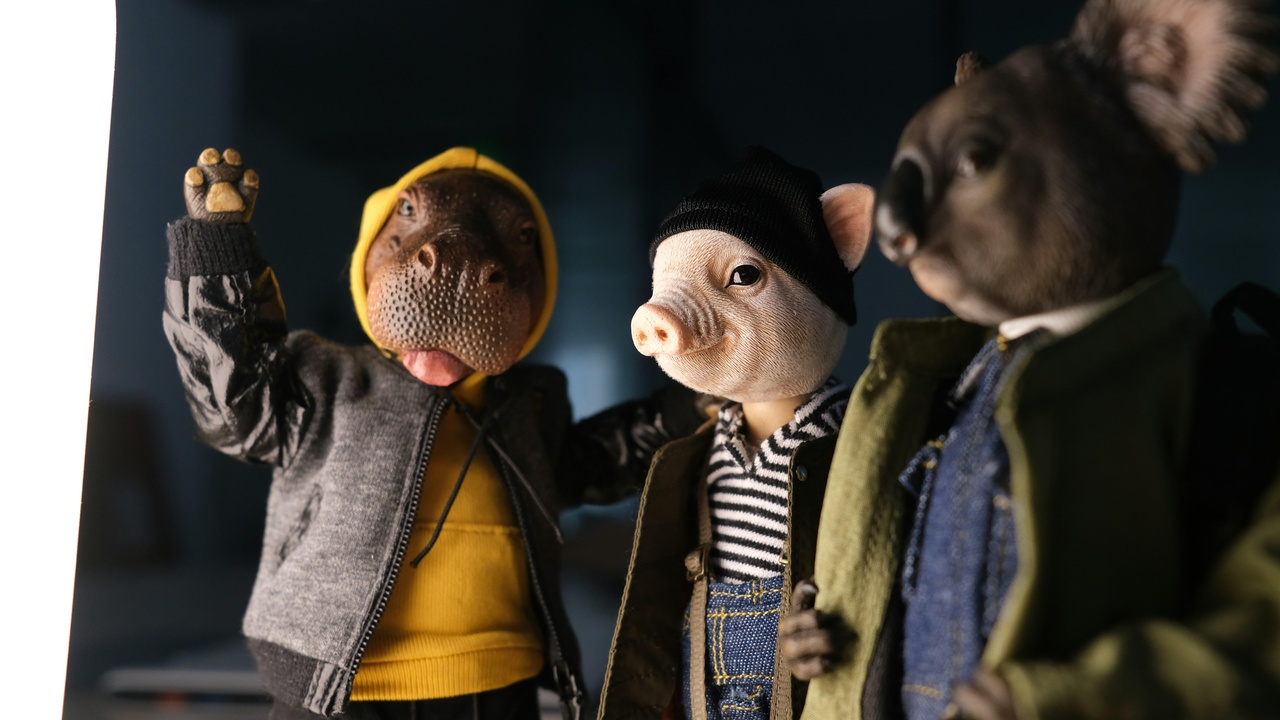
Animated and television pigs often carry catchphrases, comedic traits, and bold personalities that make them memorable. Many debuted decades ago and remain cultural touchstones, showing how a simple animated pig can stick in the public imagination for generations.
4. Porky Pig
Porky Pig debuted in 1935 as part of Warner Bros.’ Looney Tunes shorts and quickly became the studio’s stuttering everyman. Directors like Tex Avery and Bob Clampett shaped Porky’s early persona, and his signature sign-off, “That’s all, folks!” became one of animation’s most recognizable closing lines.
Porky’s influence extends to voice acting and animation tropes; his timing and delivery set standards for comedic pacing, and he has appeared in merchandise and retrospectives celebrating classic animation history.
5. Miss Piggy
Miss Piggy emerged as a star during The Muppet Show era, which rose to prominence in the 1970s (The Muppet Show premiered in 1976). She’s a larger‑than‑life diva with an outsized personality, frequent celebrity cameos, and a penchant for glamour and karate‑style assertiveness.
Her blend of parody and self-assuredness made Miss Piggy fertile ground for merchandising, feminist readings, and countless television appearances, keeping her a visible figure well beyond the original series run.
6. Piglet (Winnie‑the‑Pooh)
Piglet first appeared in A.A. Milne’s Winnie‑the‑Pooh book in 1926 and represents smallness, timidity, and quiet bravery. Though modest in stature, Piglet’s loyalty and courage resonate with readers and viewers, especially through the Disney adaptations that introduced the character to global audiences.
As a result, Piglet frequently appears in classroom settings, children’s programming, and licensed products from plush toys to story collections, demonstrating the staying power of a gentle supporting character.
Pop-Culture Pigs and Mascots
Modern pop‑culture pigs show how a character can become a cross‑platform brand: preschool TV shows, blockbuster film franchises, and toy lines turn simple pig characters into multi‑category properties. Measurable metrics — premiere years, episode counts, and territory reach — make their commercial impact clear.
7. Hamm (Toy Story)
Hamm is the wisecracking piggy bank introduced in Toy Story (1995), voiced by John Ratzenberger. Though a supporting player, Hamm’s wit and distinctive look helped populate Pixar’s ensemble cast across sequels and merchandise lines.
Supporting characters like Hamm contribute to franchise longevity: they appear in sequels, collectible toys, and theme‑park merchandise, which together sustain fan interest and boost ancillary sales long after a film’s theatrical window closes.
8. Peppa Pig
Peppa Pig debuted in the U.K. in 2004 and, by the 2010s, had been broadcast in more than 180 territories. The series’ short episodes and simple, repeatable language made it ideal for preschool audiences and international syndication.
Beyond television, Peppa spawned thousands of licensed products — toys, books, clothing, and school supplies — and a large global merchandising business. Its integration into early learning, international dubbing, and ubiquitous products shows how a modern pig character becomes both a cultural and commercial fixture.
Summary
Across literature, animation, and commerce, pigs have served as political symbols, lovable protagonists, and robust brands. Some characters date back nearly a century — Piglet (1926) and Porky Pig (1935) — while others emerged more recently but achieved rapid global reach, like Peppa (2004) and Babe’s big‑screen debut in 1995.
- Napoleon (Animal Farm, 1945) gave us a political shorthand for authoritarian leadership.
- Wilbur (Charlotte’s Web, 1952) and Piglet (Winnie‑the‑Pooh, 1926) show pigs’ emotional range in children’s literature.
- Porky (1935), Miss Piggy (1976 era), and Hamm (1995) illustrate how TV and film turn pig characters into lasting icons and merchandising drivers.
- Peppa Pig (2004) demonstrates modern global franchising: wide broadcast reach and thousands of licensed products.