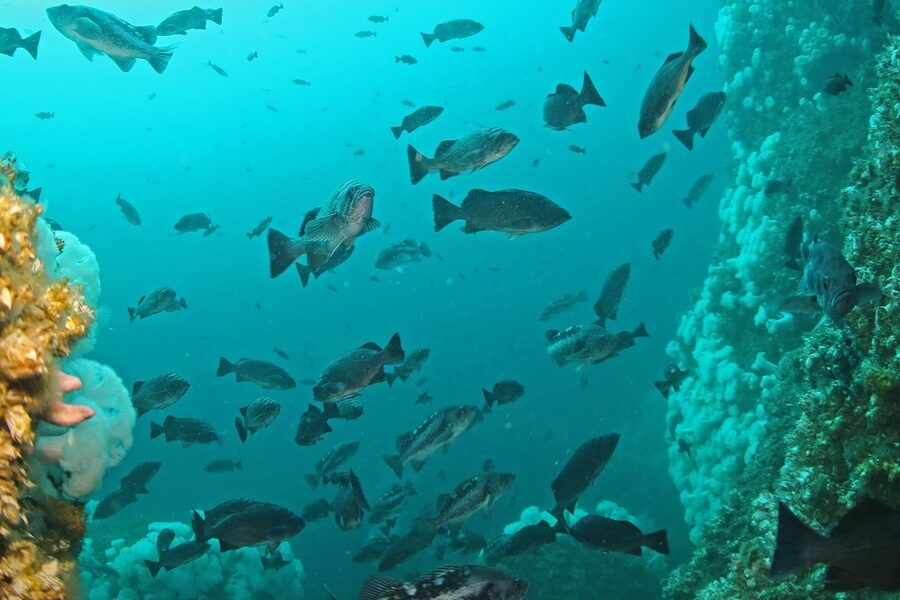
Panama’s coastal waters connect the Caribbean and the Pacific, giving rise to a rich mix of habitats from mangroves and estuaries to offshore depths. That variety supports everything from reef dwellers to big game fish, so a simple checklist makes it easier to spot and understand local species.
There are 26 Fish of Panama, ranging from Blue marlin to Yellowfin tuna. Entries are organized with Scientific name,Max length (cm),Occurrence so you can compare identification details, expected size and where each species is found — you’ll find below.
How can I use the Scientific name, Max length and Occurrence columns to identify a fish I saw?
Match the common name to its Scientific name first to avoid confusion with look‑alikes, then check Max length (cm) to see if the size fits your sighting and use Occurrence to confirm whether that species is known in the area (Pacific, Caribbean, estuary, etc.). Together those three fields narrow down likely candidates quickly.
Will the occurrence info tell me the best time or place to fish for a species?
Occurrence gives a general picture of where a species is found but not seasonal abundance; use it to choose likely habitats (shore, reef, offshore) and combine the list with local reports or seasonal guides for timing and exact locations.
Fish of Panama
| Common name | Scientific name | Max length (cm) | Occurrence |
|---|---|---|---|
| Mahi-mahi | Coryphaena hippurus Linnaeus, 1758 | 200 | Pelagic / Both coasts |
| Yellowfin tuna | Thunnus albacares Bonnaterre, 1788 | 239 | Pelagic / Both coasts |
| Wahoo | Acanthocybium solandri (Cuvier, 1832) | 240 | Pelagic / Both coasts |
| Sailfish | Istiophorus platypterus (Shaw, 1792) | 320 | Pelagic / Both coasts |
| Blue marlin | Makaira nigricans Lacepède, 1802 | 450 | Pelagic / Both coasts |
| Great barracuda | Sphyraena barracuda (Edwards, 1771) | 200 | Coastal reef & open water / Both coasts |
| Roosterfish | Nematistius pectoralis Gill, 1862 | 170 | Coastal surf & nearshore / Pacific |
| Crevalle jack | Caranx hippos (Linnaeus, 1766) | 120 | Coastal & estuary / Both coasts |
| Tarpon | Megalops atlanticus Valenciennes, 1847 | 250 | Estuary, river mouths / Caribbean & coastal |
| Common snook | Centropomus undecimalis (Bloch, 1792) | 140 | Estuary & mangrove coast / Caribbean |
| Grey snapper | Lutjanus griseus (Linnaeus, 1758) | 100 | Reef, mangrove & estuary / Caribbean |
| Mutton snapper | Lutjanus analis (Linnaeus, 1758) | 100 | Reef & reef edges / Caribbean |
| Cubera snapper | Lutjanus cyanopterus (Cuvier, 1828) | 170 | Reef & deep structure / Caribbean |
| Blue tang | Acanthurus coeruleus (Bloch & Schneider, 1801) | 40 | Coral reef / Caribbean |
| Stoplight parrotfish | Sparisoma viride (Bonnaterre, 1788) | 70 | Coral reef / Caribbean |
| Queen angelfish | Holacanthus ciliaris (Linnaeus, 1758) | 45 | Coral reef / Caribbean |
| French angelfish | Pomacanthus paru (Bloch, 1787) | 40 | Coral reef / Caribbean |
| Nassau grouper | Epinephelus striatus (Bloch, 1792) | 200 | Coral reef / Caribbean |
| Red hind | Epinephelus guttatus (Linnaeus, 1758) | 80 | Reef & rocky areas / Caribbean |
| Hogfish | Lachnolaimus maximus (Walbaum, 1792) | 120 | Coral reef & seagrass / Caribbean |
| Nurse shark | Ginglymostoma cirratum (Bonnaterre, 1788) | 350 | Coral reef & shallow bottom / Caribbean |
| Bull shark | Carcharhinus leucas (Valenciennes, 1839) | 330 | Estuary, river & coastal / Both coasts |
| Scalloped hammerhead | Sphyrna lewini (Griffith & Smith, 1834) | 430 | Coastal & offshore schools / Both coasts |
| Red lionfish | Pterois volitans (Linnaeus, 1758) | 38 | Reef & mangrove / Caribbean (invasive) |
| Peacock bass | Cichla ocellaris (Agassiz, 1831) | 100 | Freshwater lakes & rivers / Introduced inland |
| Striped mullet | Mugil cephalus Linnaeus, 1758 | 100 | Estuary, lagoon & coastal / Both coasts |
Images and Descriptions
Mahi-mahi
Vibrant, fast-growing pelagic sportfish often seen near floating weed and debris. Reaches large sizes and is prized by anglers and chefs for firm, flavorful flesh. Common offshore year-round in Panamanian waters during warm-season migrations.
Yellowfin tuna
Powerful, schooling tuna sought by commercial and sport fisheries. Yellowfin make long migrations and are encountered offshore around seamounts and canyons. They grow very large and are important for Panama’s tuna fleets and sportfishing charters.
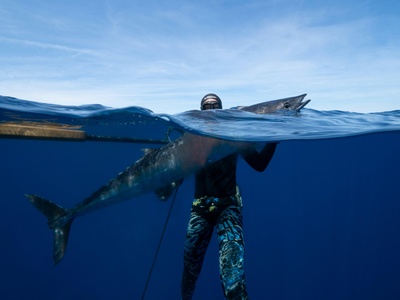
Wahoo
Long, streamlined pelagic predator famous for blistering speed and excellent table quality. Found near drifting objects, bait schools, and reef edges. Popular with anglers for explosive runs and fast, challenging fights.
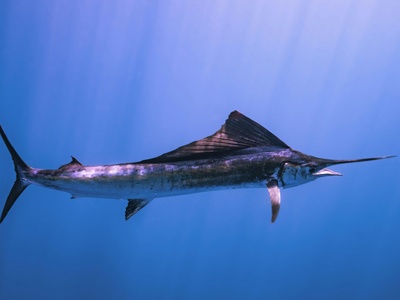
Sailfish
Iconic billfish with a large sail and spectacular leaps; common target for offshore anglers. Sailfish frequent tropical waters and feed on schooling fish, making Panama a good place to sight thrilling sailfish action.
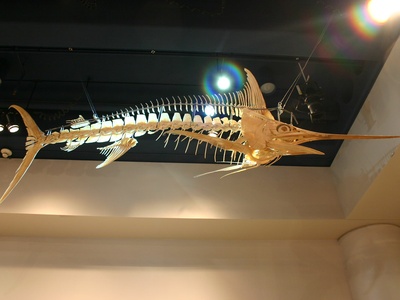
Blue marlin
Huge, powerful billfish prized by big-game anglers. Blue marlin roam offshore deep waters and can reach very large sizes. Sightings are seasonal but Panama’s offshore grounds attract these famed pelagics.
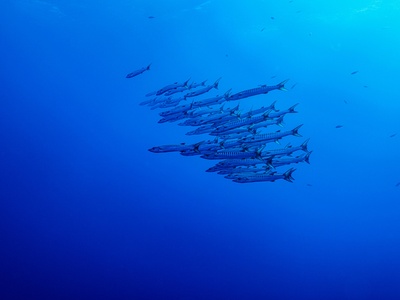
Great barracuda
Long, toothy predator often associated with reefs, seagrass beds, and open water. Can be seen alone or in groups, ambushing prey. Noted for speed and sleek shape; common in coastal Panamanian waters.
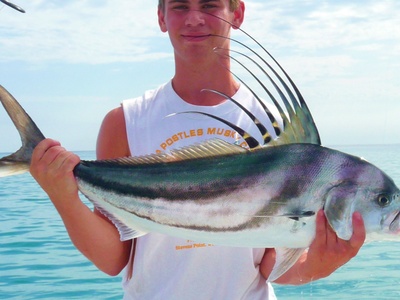
Roosterfish
Distinctive Eastern Pacific gamefish with a high dorsal “rooster” comb used in dramatic displays. Found around rocky points and surf zones on Panama’s Pacific coast; prized by sight-fishing anglers for bold strikes and acrobatic fights.
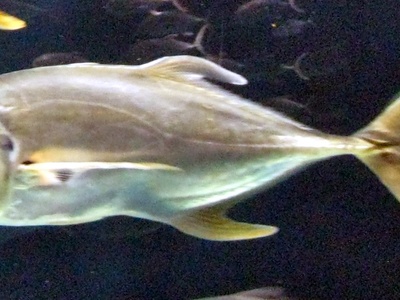
Crevalle jack
Robust, schooling jack common along beaches, estuaries, and near reefs. Aggressive predator and popular sportfish, often found chasing baitfish in shallow water. Thrives in a variety of Panamanian coastal habitats.
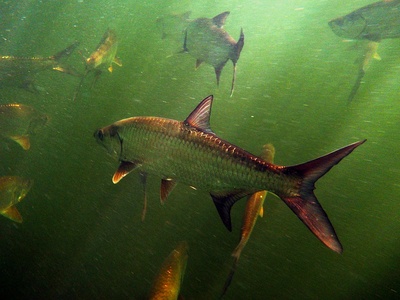
Tarpon
Large, silver-bodied fish famous for spectacular leaps. Tarpon inhabit coastal lagoons, estuaries, and lower river reaches; important for catch-and-release sportfishing in Panama’s Caribbean and protected river mouths.
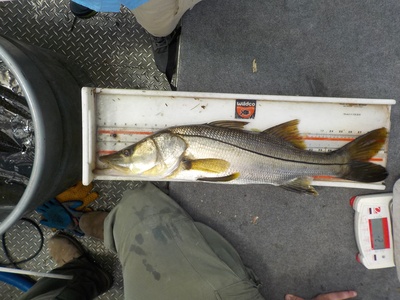
Common snook
Ambush predator linked to mangroves and estuaries on Panama’s Caribbean side. Snook are prized by recreational anglers for strong fights and are vulnerable to habitat loss and fishing pressure in localized areas.
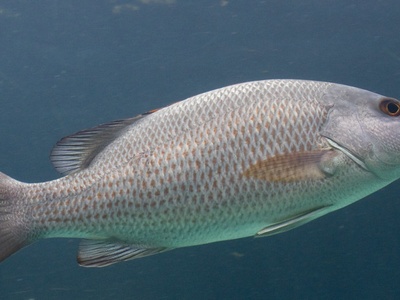
Grey snapper
Also called mangrove snapper, this adaptable species uses mangroves, reefs, and estuaries. Medium-sized and common, it’s a favorite of local fishers and cooks, schooling near structures and inshore habitats around Caribbean Panama.
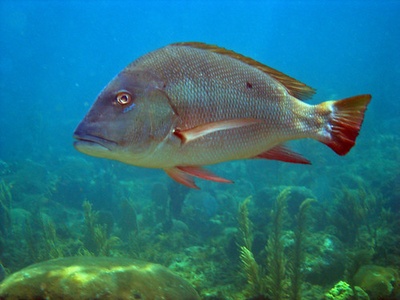
Mutton snapper
Colorful reef snapper found on outer reef slopes and drop-offs. Mutton snapper is valued for its tasty flesh and is often targeted by anglers and fishers in Panama’s Caribbean waters.
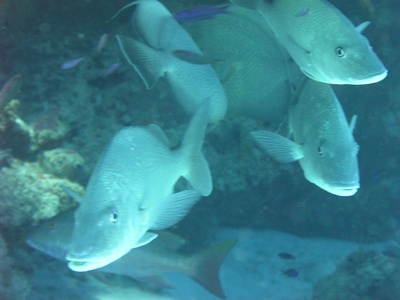
Cubera snapper
Large, powerful snapper found around deep reefs and rocky structures. Cubera grow very large and are prized catches; they concentrate around caves and ledges off Panama’s Caribbean coast.
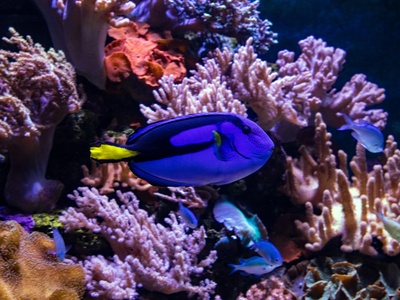
Blue tang
Bright blue surgeonfish common on Caribbean reefs; grazes algae on reef slopes and lagoons. Easily spotted by divers, it plays an important role in reef health by keeping algae under control.
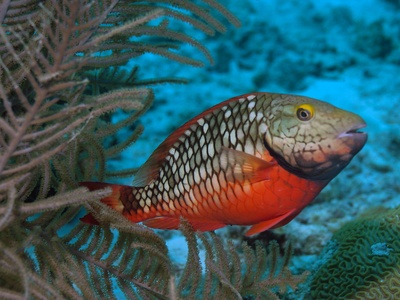
Stoplight parrotfish
Common Caribbean parrotfish that scrapes algae and coral, producing sand. Colorful and active during the day, stoplight parrotfish are frequent sights on Panama’s Caribbean reefs and important reef engineers.
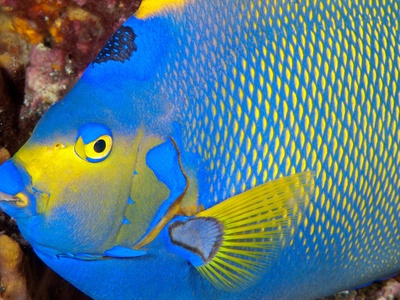
Queen angelfish
Strikingly colored reef angelfish often seen in pairs. Queen angelfish inhabit coral and rocky reefs in Panama’s Caribbean; they feed on sponges and small invertebrates and are a favorite of divers and photographers.
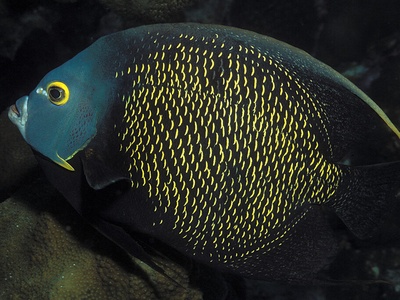
French angelfish
Large, bold angelfish with a distinctive black-and-yellow pattern seen around reefs and drop-offs. French angelfish form pairs, defend territories, and are common and conspicuous on Caribbean reef dives.
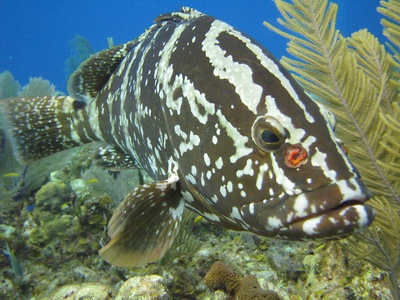
Nassau grouper
Large reef grouper that forms spawning aggregations; historically abundant but now greatly reduced and listed as endangered. Nassau grouper occur on Panama’s Caribbean reefs and are a conservation priority.
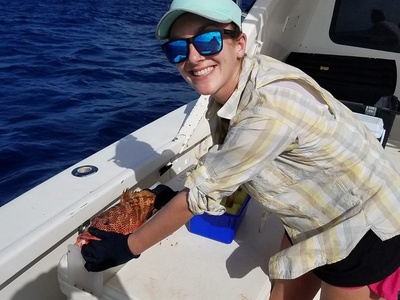
Red hind
Medium-sized grouper common on reefs and rocky bottoms; often seen near ledges and caves. Red hind supports local fisheries and is notable for seasonal spawning behavior.
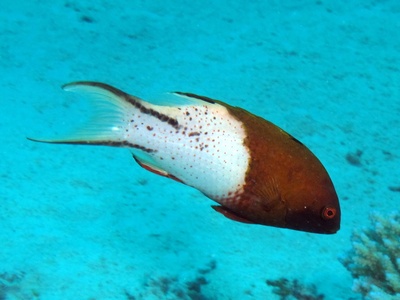
Hogfish
Elongate, distinctive wrasse that forages by flipping over shells and rubble for crustaceans. Hogfish are prized table fish and are commonly encountered on shallow reefs and seagrass edges.
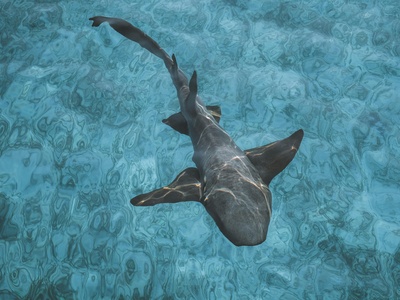
Nurse shark
Docile, bottom-dwelling shark often found resting under ledges and in shallow reefs. Nurse sharks are nocturnal feeders and commonly seen by divers on Caribbean Panama trips; generally harmless unless provoked.
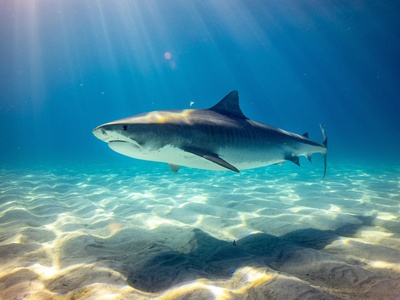
Bull shark
Robust coastal shark notable for tolerating fresh water; ventures into rivers and estuaries and is recorded in Panama’s rivers and coasts. Powerful predator with a reputation for close-shore occurrences.
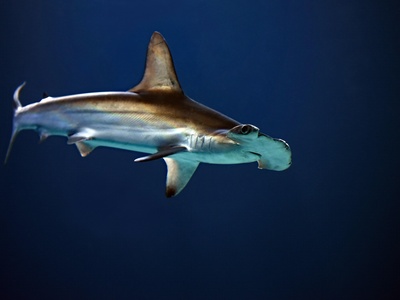
Scalloped hammerhead
Hammerhead species that forms large schools around seamounts and island drop-offs. Scalloped hammerheads migrate through Panamanian waters and are of conservation concern due to fishing and bycatch.
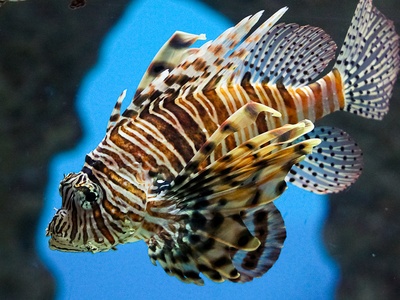
Red lionfish
Invasive Indo-Pacific predator established in Panama’s Caribbean reefs. Brightly banded and venomous, lionfish reduce native fish abundance and are targeted by control programs and spearfishing derbies.
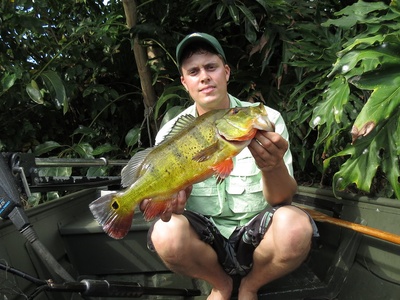
Peacock bass
Introduced sportfish popular with freshwater anglers, vigorous and hard-fighting. Peacock bass occupy reservoirs and slower river stretches in Panama and have changed local fish communities where established.
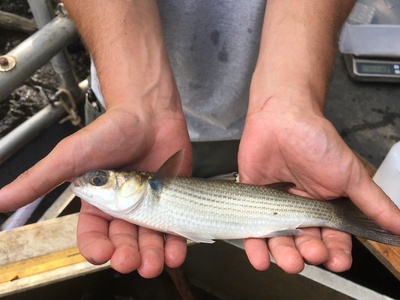
Striped mullet
Widespread, schooling mullet frequenting estuaries, lagoons, and nearshore waters. Important for local subsistence fisheries, these adaptable fish feed on detritus and algae and tolerate brackish conditions.