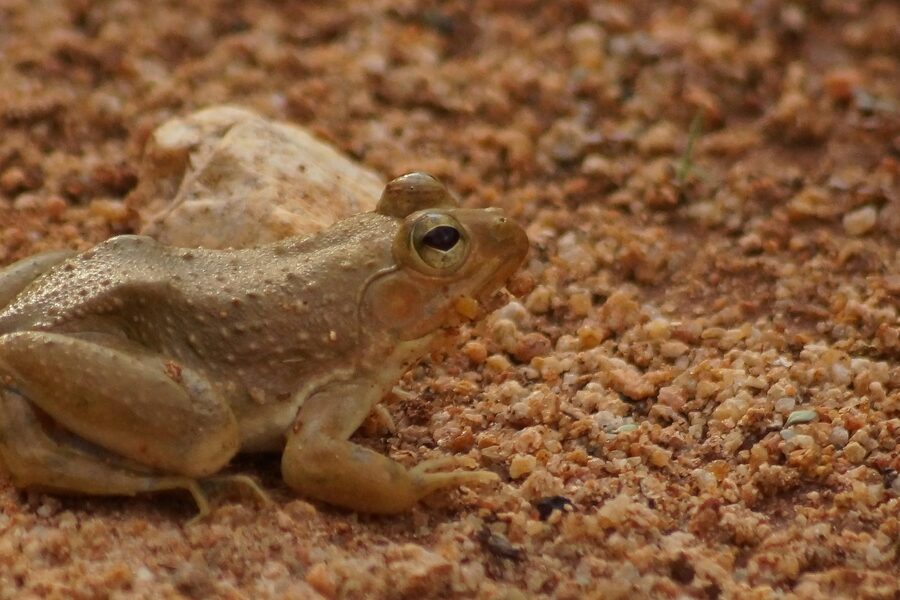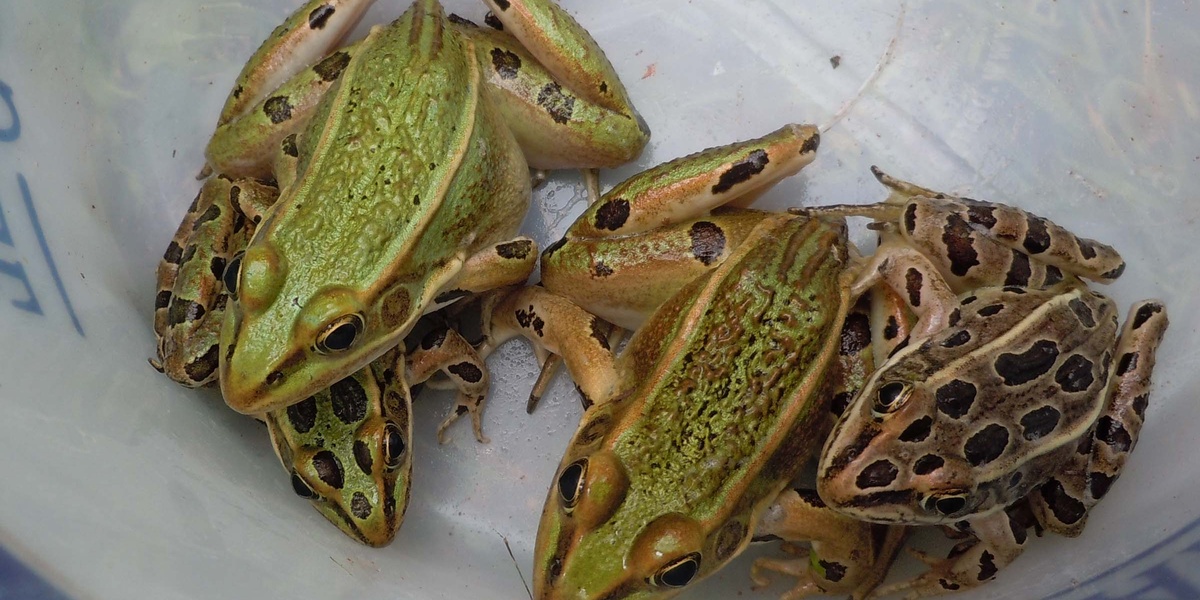
Open grasslands support a distinct set of amphibians adapted to open, seasonally wet conditions, where temporary pools, grass tussocks and sun-warmed soils shape when and where species breed and hide. These environments span continents and include species that favor short vegetation or scattered wetlands rather than dense forest.
There are 38 Grassland Amphibians, ranging from African Bullfrog to Yellow-bellied Toad. For each, you’ll find below Scientific name,Size (SVL cm),Range & habitat, so you can compare identity, typical body size and the habitats where each species occurs—you’ll find the full list and details below.
How can I identify grassland amphibians in the field?
Look for a combination of traits: call, size and shape (SVL is useful), skin texture and color patterns, and microhabitat (temporary pools, grass clumps, burrows). Listening for breeding calls at dusk or after rain and using a regional field guide or photos will narrow IDs quickly; record habitat notes and a photo when possible.
When is the best time to survey grassland amphibians?
Surveys are most productive during or shortly after rainy periods and in breeding seasons, often at dusk or night when many species are active and calling; daytime searches around ephemeral pools and under vegetation can also find non-calling or burrowing species.
Grassland Amphibians
| Common name | Scientific name | Size (SVL cm) | Range & habitat |
|---|---|---|---|
| American Toad | Anaxyrus americanus | 6 | N. America; meadows and prairies |
| Great Plains Toad | Anaxyrus cognatus | 7 | Great Plains; shortgrass and mixed-grass prairies |
| Woodhouse’s Toad | Anaxyrus woodhousii | 7 | Interior N. America; rangeland and grassland |
| Plains Spadefoot | Spea bombifrons | 5 | Great Plains; sandy prairies with temporary pools |
| Couch’s Spadefoot | Scaphiopus couchii | 5 | SW U.S. and N. Mexico; arid grasslands and desert grasslands |
| Boreal Chorus Frog | Pseudacris maculata | 3 | Northern N. America; wet meadows and grassy vernal pools |
| Western Chorus Frog | Pseudacris triseriata | 3 | Eastern & central N. America; wet grasslands and roadside pools |
| Northern Leopard Frog | Lithobates pipiens | 8 | N. America; prairie potholes and marshy meadows |
| Southern Leopard Frog | Lithobates sphenocephalus | 7 | Southeast U.S.; grassy wetlands and ditches |
| Tiger Salamander | Ambystoma tigrinum | 12 | N. American prairies; grasslands with seasonal ponds and burrows |
| Leptodactylus fuscus | Leptodactylus fuscus | 8 | South America; cerrado, llanos and grassland savannas |
| Ceratophrys ornata | Ceratophrys ornata | 11 | Pampas, Argentina; open grasslands and floodplain pools |
| Rhinella marina | Rhinella marina | 12 | Widespread Americas; open country, savannas and grasslands |
| Leptodactylus latrans | Leptodactylus latrans | 9 | S. & Central America; grasslands, savannas and temporary pools |
| Scinax fuscovarius | Scinax fuscovarius | 3 | Pampas and Atlantic grasslands; open ponds within grassland |
| African Common Toad | Sclerophrys regularis | 7 | Sub-Saharan Africa; savanna grasslands and open fields |
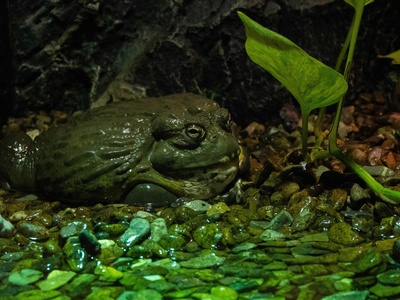
| African Bullfrog | Pyxicephalus adspersus | 14 | Sub-Saharan savannas; grasslands with seasonal pans and burrows |
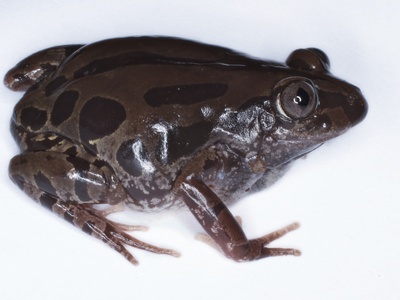
| Kassina senegalensis | Kassina senegalensis | 5 | Sahel & West Africa; grassland puddles and wet-season pools |
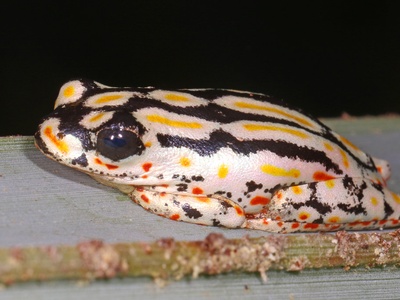
| Hyperolius marmoratus | Hyperolius marmoratus | 3 | East & Southern Africa; grassy wetlands and marsh edges within savanna |
| Ptychadena mascareniensis | Ptychadena mascareniensis | 5 | Sub-Saharan Africa; savannas, open grasslands and floodplain pools |
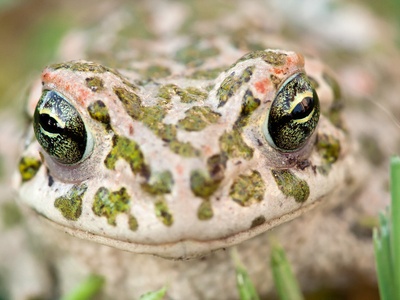
| European Green Toad | Bufotes viridis | 7 | Europe & W. Asia; steppes, dry grasslands and open rocky areas |
| Natterjack Toad | Epidalea calamita | 4 | Europe; sandy coastal and inland grasslands, dunes and heath |
| Common Spadefoot | Pelobates fuscus | 6 | Europe & W. Asia; sandy soils, steppes and open grasslands |
| Moor Frog | Rana arvalis | 6 | Europe & Asia; wet meadows, grassland ponds and flooded pastures |
| Yellow-bellied Toad | Bombina variegata | 4 | Central & E. Europe; sunlit grassland streams and shallow ponds |
| Asian Common Toad | Duttaphrynus melanostictus | 7 | South & SE Asia; open grasslands and agricultural plains |
| Indian Bullfrog | Hoplobatrachus tigerinus | 11 | South Asia; grassland ponds, seasonal wetlands and flooded fields |
| Fejervarya limnocharis | Fejervarya limnocharis | 4 | Southeast Asia; flooded grasslands and wet meadows |
| Limnodynastes dumerilii | Limnodynastes dumerilii | 5 | Australia; grasslands, pastures and ephemeral ponds in lowlands |
| Limnodynastes tasmaniensis | Limnodynastes tasmaniensis | 5 | Australia; grassy wetlands, paddocks and roadside pools |
| Common Eastern Froglet | Crinia signifera | 3 | Australia; grassy marshes, pastures and temporary puddles |
| Leptodactylus fragilis | Leptodactylus fragilis | 6 | Mexico to S. America; open grasslands and savannas with pools |
| Common Toad | Bufo bufo | 9 | Europe; agricultural fields, meadows and ponds |
| Fire-bellied Toad | Bombina bombina | 5 | Eastern Europe; lowland marshes and floodplain meadows |
| Southern Toad | Anaxyrus terrestris | 6 | Southeast U.S.; pine savannas and open sandy grasslands |
| Red-spotted Toad | Anaxyrus punctatus | 5 | SW U.S. and N. Mexico; arid grasslands and rocky deserts |
| Eastern Narrow-mouthed Toad | Gastrophryne carolinensis | 3 | Southeast U.S.; moist grassland edges and ditches |
| Ptychadena mascareniensis | Ptychadena mascareniensis | 5 | Sub-Saharan Africa; savannas and open grasslands with pools |
Images and Descriptions
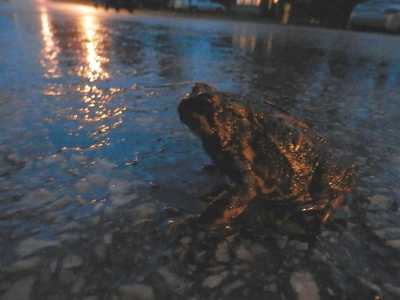
American Toad
Common in fields and suburban grasslands; forages on insects on ground vegetation and breeds in ponds and temporary pools each spring. Notable for dry, warty skin and prolonged breeding choruses after rains; population stable but sensitive to wetland loss.
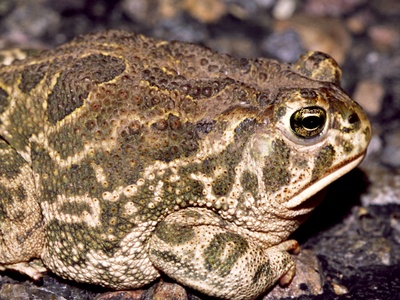
Great Plains Toad
A prairie specialist that spends dry periods buried and emerges for explosive breeding in rain-filled pools. Calls are trumpet-like; mottled coloration camouflages in prairie soils. Populations vulnerable to habitat conversion and road mortality during migrations.
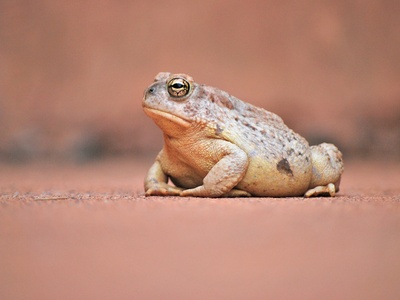
Woodhouse’s Toad
Frequently found in open rangeland and agricultural grasslands, foraging at night on insects and arthropods. Breeds in ponds and roadside pools in spring; adapted to disturbed grasslands but declines where wetlands are drained.
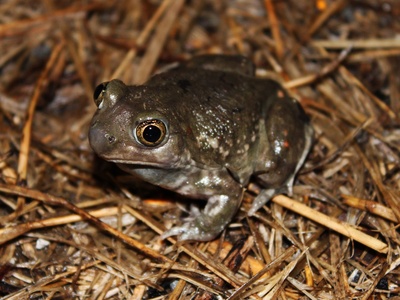
Plains Spadefoot
Burrowing spadefoot that lives in prairies and emerges after storms to breed in ephemeral pools. Tadpoles develop rapidly; adults have vertical pupils and smooth skin. Highly tied to rainfall patterns and vulnerable if breeding pools are lost.
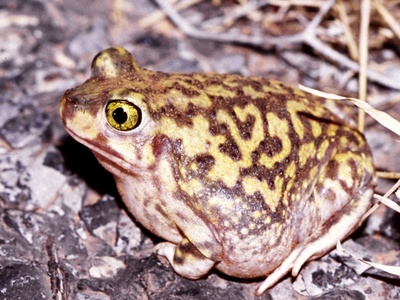
Couch’s Spadefoot
Nocturnal burrower of arid grassland valleys and desert-grass mosaics; breeds explosively after summer monsoon rains. Prominent spade on hind feet for digging; tadpoles metamorphose quickly to exploit temporary water.
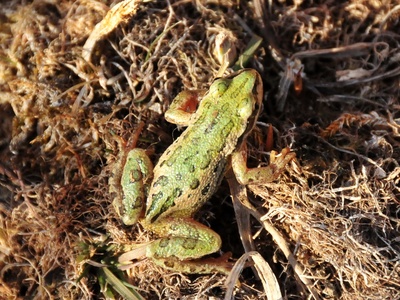
Boreal Chorus Frog
Small frog of wet meadows and grassland vernal pools; males call early spring from grassy edges. Lays eggs in shallow temporary water; slender body and dorsolateral stripes aid field identification.
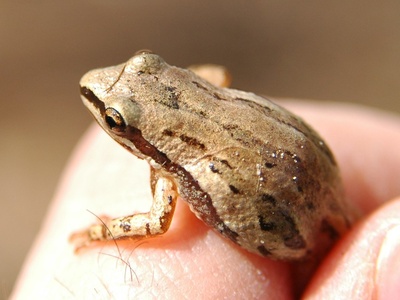
Western Chorus Frog
Common in grassy wetlands and meadows, often heard before seen. Breeds in early spring in shallow pools and ditches; distinctive “ree-ree-ree” call. Sensitive to pesticide use in agricultural grasslands.
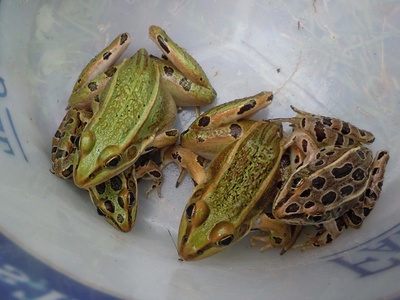
Northern Leopard Frog
Occurs in prairie pothole regions and wet meadows, foraging in grassland margins and breeding in shallow ponds. Green dorsally with dark spots; populations have declined regionally from habitat loss and disease.
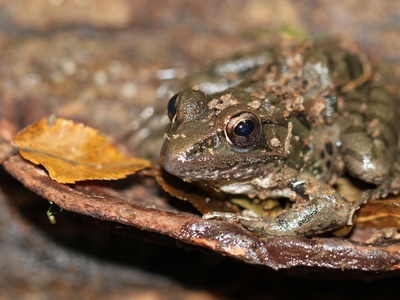
Southern Leopard Frog
Found in grassy wetlands, roadside ditches and pasture ponds; breeds in spring and fall depending on rainfall. Noted for large dorsolateral folds and leopard-like spots; tolerates some disturbance but needs ponds to breed.
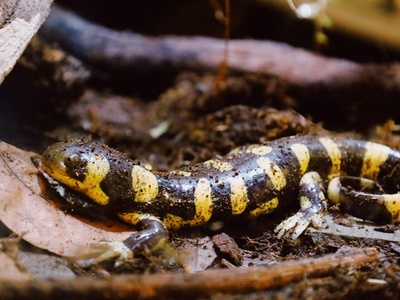
Tiger Salamander
Large mole salamander that uses burrows and grassland soils, migrating to vernal pools to breed in spring. Ambush predator on invertebrates; populations linked to availability of grassland ponds and subterranean refuges.
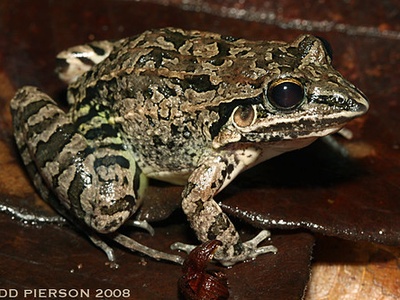
Leptodactylus fuscus
A robust frog of South American savannas and open grasslands that breeds in ephemeral pools and foam nests. Forages on ground in grassland litter and is active in wet season; common in natural and disturbed open habitats.

Ceratophrys ornata
The “Argentine horned frog” inhabits Pampas grasslands and floodplains, ambushing prey at ground level. Breeds in seasonal pools during rains; notable for large mouth and cryptic coloration that blends with dried grass and soil.
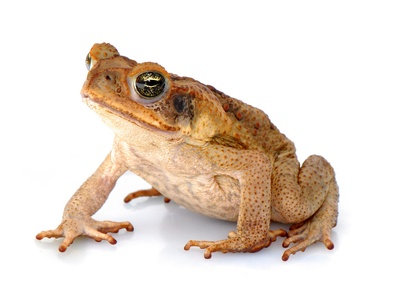
Rhinella marina
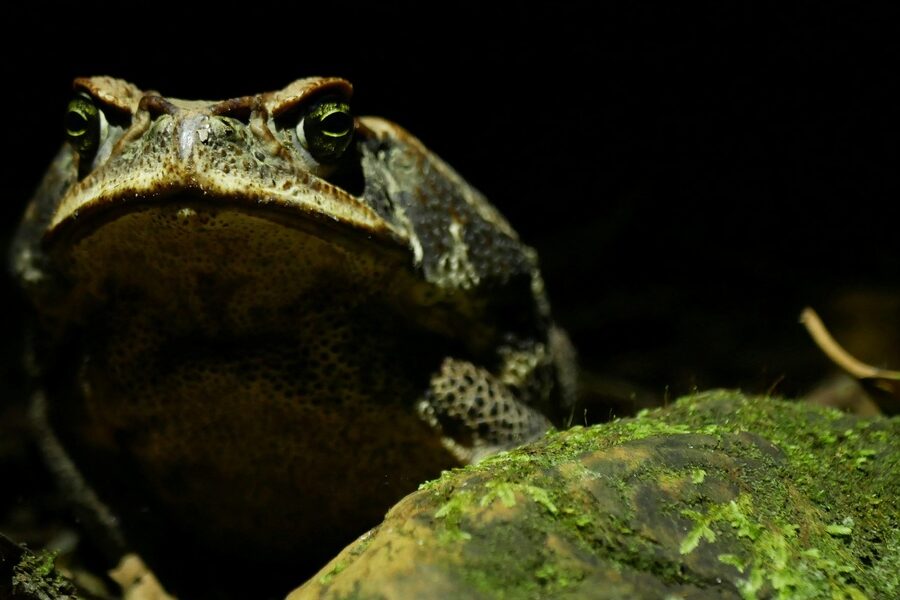
Large, robust toad commonly found in open grasslands and disturbed fields across its native and introduced range. Breeds in ponds and ditches; produces potent toxins and can thrive in modified grassland landscapes, sometimes becoming invasive.
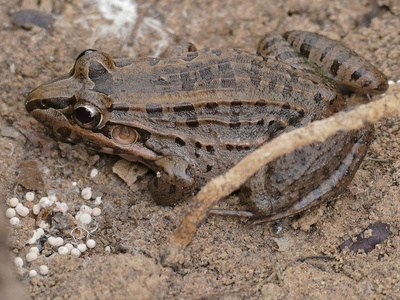
Leptodactylus latrans
A large foam-nesting frog of savannas and open grasslands that forages on the ground and breeds in seasonal pools. Males call from grassland edges; tolerant of some disturbance but reliant on breeding wetlands.
Scinax fuscovarius
A small treefrog often found around ponds in South American grasslands and pampas, using grass and low vegetation for call sites. Breeds in temporary water during rainy season; slender body and high, nasal call.
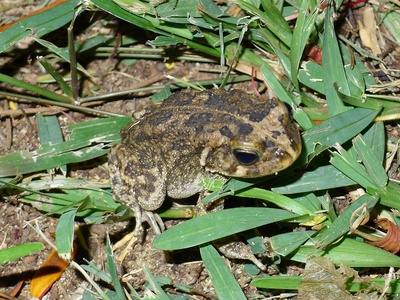
African Common Toad
Widespread toad of savannas and open grasslands; forages on insects and breeds opportunistically in seasonal pools. Tolerant of dry conditions and human-altered grasslands but dependent on breeding water during rains.
African Bullfrog
Massive, burrowing bullfrog of African savannas that estivates in grassland soils and breeds explosively in seasonal pans. Males guard tadpole aggregations; large size and aggressive feeding habits make it a key grassland predator.
Kassina senegalensis
“Running frog” of savanna grasslands that moves by walking or running across grassy ground. Breeds in shallow pools during rainy season; mottled coloration provides camouflage in grass and leaf litter.
Hyperolius marmoratus
A small reed frog that uses grassy marsh edges in savanna and grassland regions for calling and breeding. Often found on low vegetation; males have distinctive calls and bright, variable colors.
Ptychadena mascareniensis
Common grassland frog of Africa that breeds in temporary pools and forages in open grassland. Long-legged and strong jumper; often abundant in wet season and an important prey item for larger predators.
European Green Toad
Steppe and dry grassland specialist that breeds in shallow, often saline pools. Distinct green blotches on pale background; tolerant of warm open habitats but declines when steppe is converted to agriculture.
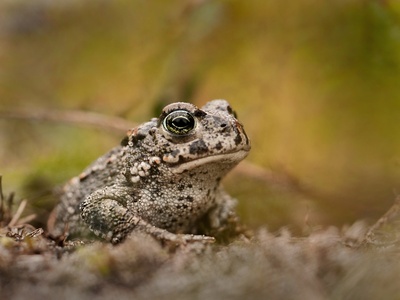
Natterjack Toad
A distinctive toad of sandy grasslands and dune systems that runs quickly across open ground. Breeds in shallow, warm pools with loud long calls; populations fragmented by land-use change and dune stabilisation.
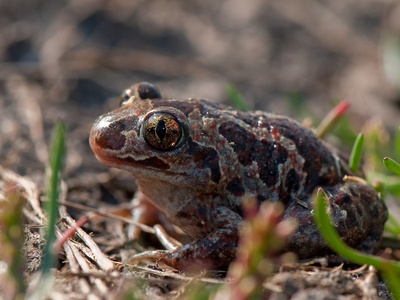
Common Spadefoot
Burrowing spadefoot of steppe and open grasslands; emerges during heavy rains to breed in ephemeral pools. Strongly fossorial with spade-like hind feet; relies on clay or sandy grassland soils for burrowing.
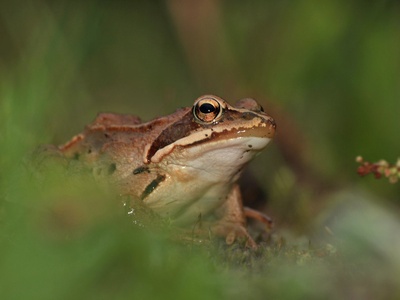
Moor Frog
Found in wet meadows and agricultural grasslands, breeding en masse in spring ponds. Males may change color during breeding season; important indicator of wet grassland health and sensitive to wetland drainage.
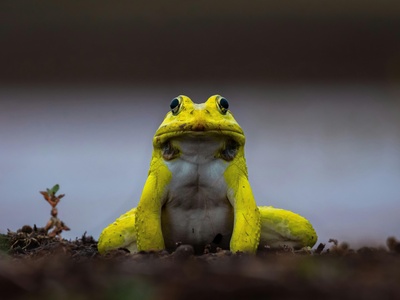
Yellow-bellied Toad
Prefers shallow, temporary pools and slow streams in open, often rocky grasslands. Bright ventral coloration advertises toxicity; breeds in spring and summer in small sun-warmed water bodies.
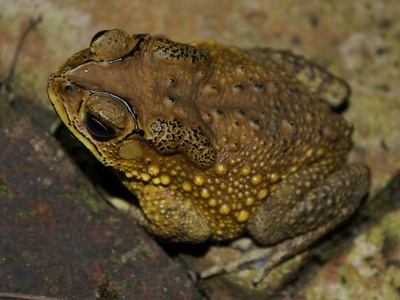
Asian Common Toad
Generalist toad that commonly occupies open grasslands, fallow fields and rural plains, breeding in ditches and ponds after rains. Robust and adaptable but can decline where wetlands are lost or polluted.
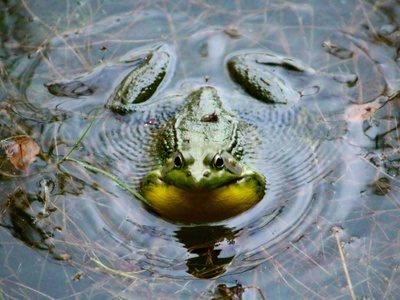
Indian Bullfrog
Large frog of grasslands and agricultural floodplains; breeds in seasonal ponds and marshes during monsoon. Powerful jumper and predator of invertebrates and small vertebrates; populations fluctuate with wetland availability.
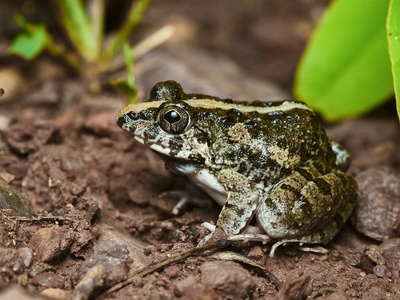
Fejervarya limnocharis
A common small frog in flooded grasslands and rice-field margins that breeds in shallow water during rainy season. Noisy choruses at dusk, tolerates agricultural landscapes but requires wet grassland habitat for reproduction.
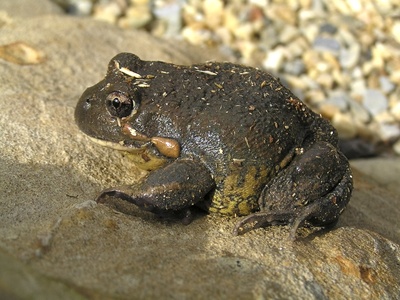
Limnodynastes dumerilii
Australian ground-dwelling frog often found in pastures and lowland grasslands; burrows and calls from grassland pools to breed after rain. Distinctive “bonk” call and rounded body suited to ground life.
Limnodynastes tasmaniensis
Spotted grassland frog common in paddocks and grassy wetlands; breeds in shallow temporary pools and roadside drains. Tolerant of moderate disturbance but relies on seasonal wet areas for reproduction.
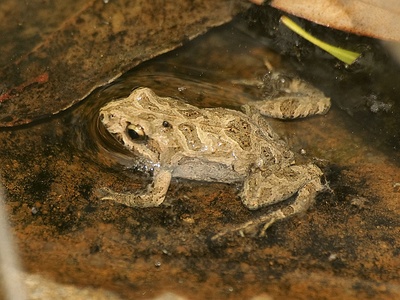
Common Eastern Froglet
Tiny, ground-dwelling frog active in wet grasslands and small puddles; males call from low vegetation and shallow water. Breeds opportunistically in wet seasons and is a frequent inhabitant of pastoral grasslands.
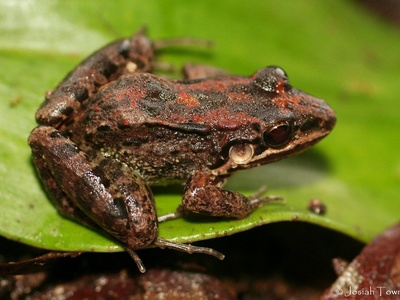
Leptodactylus fragilis
A widespread grassland frog that breeds in foam nests in temporary pools across open country. Forages at night in grassy areas; resilient in natural savannas but declines where wetland breeding sites are removed.
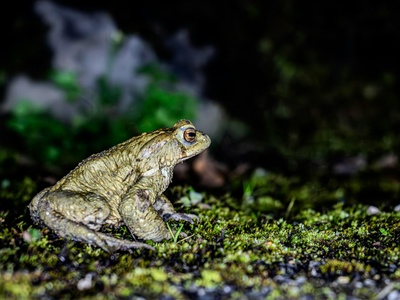
Common Toad
Generalist found in meadows and agricultural grasslands as well as woodlands; migrates to ponds to breed in spring. Large, stocky toad with parotoid glands; local declines linked to pond loss and road mortality.
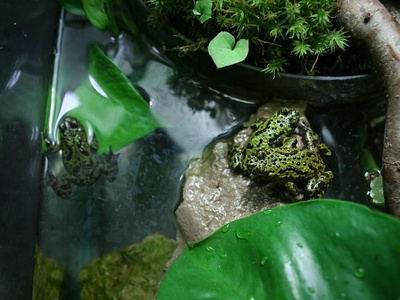
Fire-bellied Toad
Prefers shallow ponds and marshes set in open meadows and floodplain grasslands. Breeds in sunlit water bodies; bright ventral coloration and odd undulating calls help identify this lowland grassland amphibian.
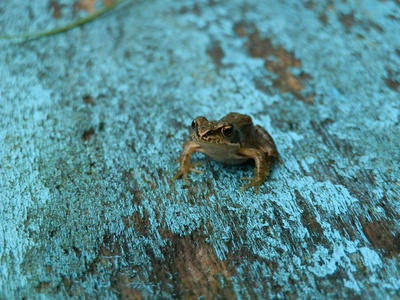
Southern Toad
Found in open, sandy pine savannas and grassy clearings; forages at night and breeds in temporary woodland and grassland pools. Adapted to fire-maintained grassland systems but vulnerable to habitat conversion.
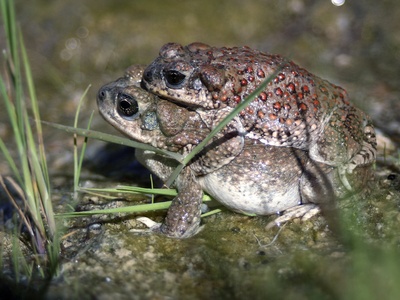
Red-spotted Toad
Small toad of arid grasslands and desert steppe, often near temporary pools and rock crevices. Burrows to avoid drought and emerges with rains to breed; distinctive red spotting on dorsum.
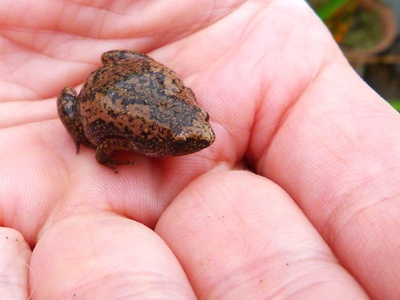
Eastern Narrow-mouthed Toad
Small, rounded toad of moist grassland edges, roadside ditches and low vegetation. Forages on ants and small arthropods; breeds in shallow, often ephemeral pools during warm months.
Ptychadena mascareniensis
Fast-moving grass frog common in African savannas and grasslands, breeding in seasonal pools. Long legs for jumping among grasses; forms large choruses in wet season and is prey for many grassland predators.