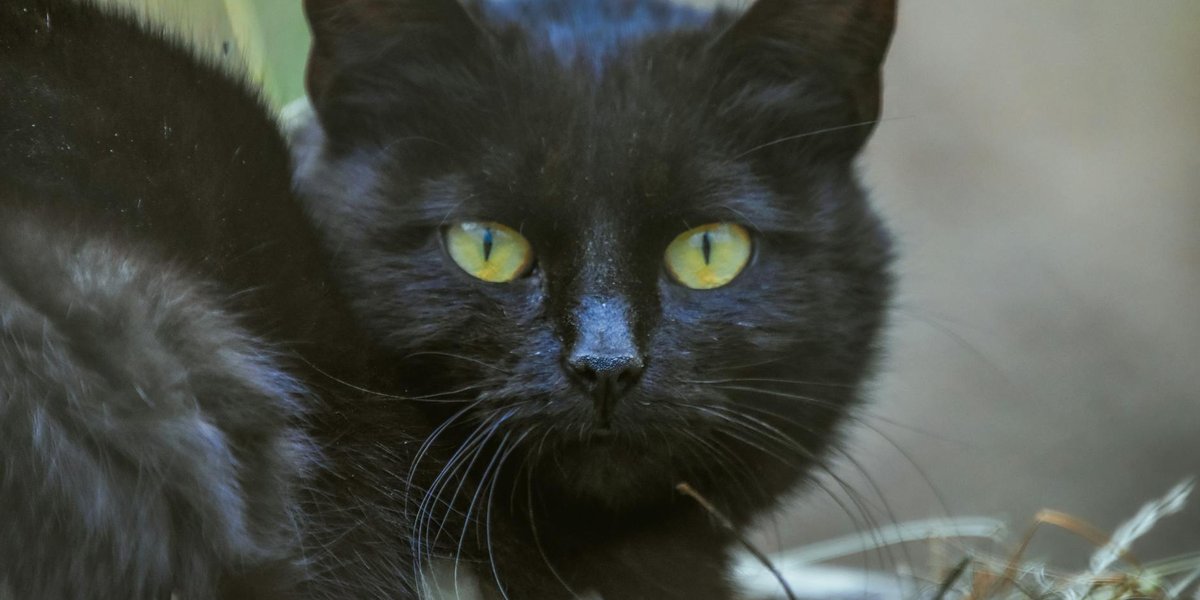
Black cats with long coats get all the dramatic lighting. They look like they walked out of a gothic novel and then promptly knocked your water glass off the table.
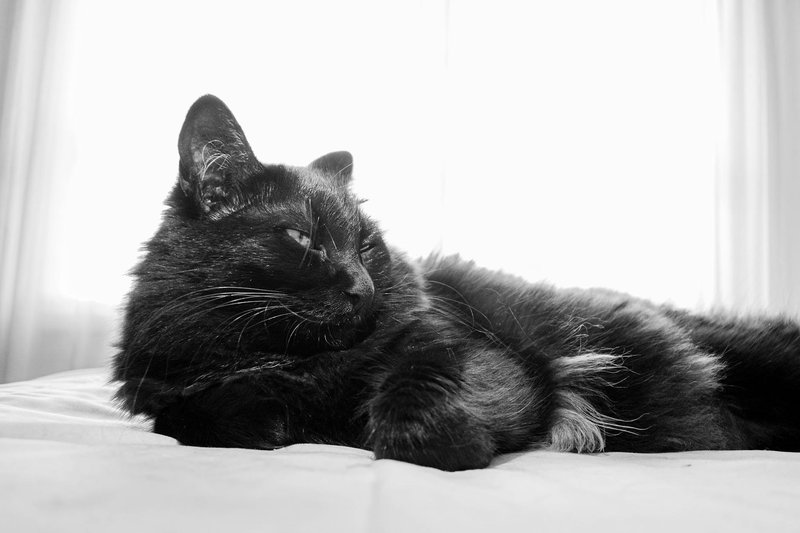
The catch: not every fluffy black cat is a specific breed. A lot of them are domestic longhairs — mixed-breed cats with gorgeous coats. That’s still a great cat. It just means “black and fluffy” doesn’t automatically equal “rare breed.”
Table of contents
- TL;DR
- What counts as a long-haired black cat breed?
- 9 long-haired black cat breeds
- How to tell a breed from a domestic longhair
- Grooming a black long-haired cat
- Final thoughts
TL;DR
The most famous long-haired black cat breed is the Persian, but the best-known big fluffy option is the Maine Coon. Other breeds that can appear in solid black include the Norwegian Forest Cat, Siberian, Ragdoll, British Longhair, Turkish Angora, Himalayan, Birman, and LaPerm.
If the cat has a black coat, a big plume tail, and no clear breed paperwork, odds are high it’s a domestic longhair — not a problem, just the truth.
What counts as a long-haired black cat breed?
A “long-haired black cat” can mean two very different things:
- A purebred cat that can be solid black
- A mixed-breed domestic longhair with a black coat
That second category is much more common. In shelter terms, “domestic longhair” is a coat-length description, not a breed label. The cat may be gorgeous, angular, huge, tiny, opinionated, or all of the above. But breed-wise, it’s usually a mystery unless there’s pedigree paperwork or a DNA test to muddy the water.
For context, black coat color in cats is caused by genetics tied to eumelanin production, and the trait itself is widespread across many breeds. For a broader look at large black cat breeds, Large Black Cat Breeds: The Complete List. The Cat Fanciers’ Association and The International Cat Association both recognize breeds that can come in black, though not every breed allows every pattern or color.
9 long-haired black cat breeds
1. Persian
The Persian is the classic long-haired black cat. Round face, short nose, dense coat, and a vibe that says it would rather be admired than inconvenienced.
Black Persians are striking because the coat tends to show every glint of light. That same coat also mats easily, especially around the armpits, belly, and behind the ears. Daily grooming is the price of admission.
Good fit for: people who don’t mind brushing as part of the ritual
Temperament: calm, quiet, usually low-key
Look for: a very plush coat and a compact, cobby body
2. Maine Coon
The black Maine Coon is one of the easiest long-haired black cat breeds to recognize. It’s big, rectangular, and built like it could open a screen door if it tried hard enough.
Maine Coons have a shaggy, weather-resistant coat rather than a silky show coat. Their neck ruff and bushy tail are usually the giveaway. They’re also among the largest domestic cat breeds, with males often reaching impressive sizes. The breed is widely known for its friendly, dog-like attitude, though individual cats vary like any other.
3. Norwegian Forest Cat
This is the cat that looks like it just returned from a snowstorm and didn’t think it was a big deal.
Norwegian Forest Cats have a thick double coat, a triangular head, and a sturdy frame. Black ones are especially dramatic because the coat is dense but not overly silky, which gives them a rough-and-ready woodland look. They’re not fragile fluffballs; they’re built for cold climates and generally need serious grooming during seasonal shedding.
4. Siberian
Siberians are another long-haired breed that can be black, and they tend to look a little softer and rounder than Norwegian Forest Cats. Their coat is dense and water-resistant, with a plush undercoat and a fuller winter look.
A black Siberian can be hard to mistake for a Persian because the face is less flat and the body is more athletic. They’re also known for being playful and people-oriented. If you meet one, expect motion. Not always graceful motion, but motion.
5. British Longhair
The British Longhair is basically the plush, long-coated cousin of the British Shorthair. Think round face, sturdy body, and a coat that looks like it came pre-fluffed.
In black, this breed can look almost teddy-bear-like. The coat is thick and soft, but not usually as flowing as a Persian’s. The face is more open, the cheeks are fuller, and the whole cat has a solid, calm presence.
6. Turkish Angora
Turkish Angoras are usually described with white coats, but they can also come in black. Their long coat is fine, silky, and less dense than some of the heavier long-haired breeds.
A black Turkish Angora tends to look elegant rather than bulky. Long legs, graceful movement, a plume tail, and a coat that catches light without looking overstuffed. They’re known for being active, smart, and a little more mischievous than their aristocratic appearance suggests.
7. Ragdoll
Ragdolls are famous for their blue eyes and colorpoint coats, but black-based or dark-coated individuals can exist in some lines and registries. That said, a true solid black Ragdoll is not what most people picture, and many “black Ragdolls” are actually mix-bred cats or cats with nonstandard coloring.
If you’re identifying a cat in real life, use caution here. Ragdolls are large, soft-coated, and extremely relaxed in temperament, but color alone is not enough to call one.
8. Birman
Birmans are usually best known for pointed coats, white gloves, and blue eyes, not solid black. Still, long-haired black cats with Birman-like features sometimes get mislabeled, especially online or in shelters where breed guesses are rough.
A real Birman has a silky coat, semi-long fur, and those trademark white paws. If a cat is solid black all over, it’s probably not a Birman — even if it has the same luxurious length.
9. LaPerm
LaPerms can have long or semi-long coats, and their curls are the headline. A black long-haired LaPerm looks like a cat who got a perm and decided to commit to the bit.
The coat can be wavy, ringleted, or loose and tousled. The texture is the clue here, not just the color. They’re uncommon compared with breeds like the Persian or Maine Coon, but they’re memorable once you see one. For a broader look at large black cat breeds, Large Black Cat Breeds: The Complete List.
How to tell a breed from a domestic longhair
This is where a lot of breed lists get sloppy.
A domestic longhair is not a breed. It’s a cat with longer fur and no confirmed pedigree. These cats can be black, gray, orange, tabby, tortoiseshell — basically the whole cat color wheel.
Here’s how to tell you’re probably looking at a domestic longhair instead of a recognized breed:
- No paperwork: no pedigree, no breeder records, no registration
- Mixed traits: one ear shape from one breed, one body type from another, no clear pattern
- Average build: many domestic longhairs have a less specialized body than purebred cats
- Variable coat texture: some are silky, some are cottony, some are just plain fluffy chaos
If the cat has strong breed-specific markers — for example, a flat Persian face, a huge Maine Coon frame, or Birman-style white gloves — then the breed guess gets more plausible. But looks alone can fool you fast. Shelter cats in particular are often assigned a breed label based on appearance, not proof.
For a deeper official look at breed standards, the Cat Fanciers’ Association breed pages are a solid place to compare coat type, body shape, and color acceptance.
Grooming a black long-haired cat
Long hair is gorgeous. It is also maintenance with whiskers.
Black coats show dandruff, dust, and stray lint like they’re trying to embarrass you. They also mat more easily than people expect, especially if the cat has a dense undercoat.
A few grooming basics:
- Brush several times a week; daily is better for Persian-type coats
- Check the tail, belly, and behind the ears for mats
- Use a metal comb to find knots hidden under the topcoat
- Watch seasonal shedding in double-coated breeds like Maine Coons and Norwegian Forest Cats
- Feed well and keep water available — coat quality starts with health
If a cat’s coat suddenly looks dull, greasy, or patchy, that’s not just a grooming issue. It can point to stress, parasites, skin disease, or other health problems. A vet visit beats guessing.
Final thoughts
The phrase long-haired black cat breeds covers a lot of ground, from the iconic Persian to the rugged Maine Coon to the many domestic longhairs that make shelters quietly magical.
If you want the most recognizable black long-haired breeds, start with the Persian, Maine Coon, Norwegian Forest Cat, and Siberian. If you’re trying to identify a cat in front of you, don’t let the fluff fool you. Coat color and coat length only tell part of the story.
A black long-haired cat can be a purebred show cat, a mixed-breed sweetheart, or a little bit of both in the eyes of the internet. The cat, naturally, will not care.