Oceania’s islands, reefs and vast coastlines host ecosystems shaped by isolation and ancient geology, so plants and animals here took unusual evolutionary paths. From freshwater rivers to alpine slopes and coral atolls, the region’s wildlife reflects a mix of ancient lineages and island specialists.
There are 40 Unique Animals in Oceania, ranging from Australian lungfish to ʻIʻiwi. For each species you’ll find the Scientific name, Range, Notable trait (max 15 words) — you’ll find below.
How were the species selected for this list?
Selection focused on animals native or endemic to Oceania with distinctive biology or restricted ranges, using peer-reviewed sources and authoritative field guides to ensure the list represents different habitats and taxonomic groups.
Where can I check the conservation status of these animals?
Many are monitored by the IUCN Red List and regional authorities; check IUCN, national conservation agencies, or local universities for up-to-date assessments and recovery plans.
Unique Animals in Oceania
| Name | Scientific name | Range | Notable trait (max 15 words) |
|---|---|---|---|
| Platypus | Ornithorhynchus anatinus | Eastern Australia,Tasmania | Egg-laying mammal with venomous hind spur |
| Short-beaked echidna | Tachyglossus aculeatus | Australia,New Guinea | Egg-laying spiny mammal with sticky tongue |
| Western long-beaked echidna | Zaglossus bruijni | New Guinea | Large, long-beaked egg-laying mammal, threatened |
| Tasmanian devil | Sarcophilus harrisii | Tasmania | Powerful-jawed marsupial with contagious facial tumor disease |
| Koala | Phascolarctos cinereus | Eastern Australia | Eucalyptus-specialist arboreal marsupial |
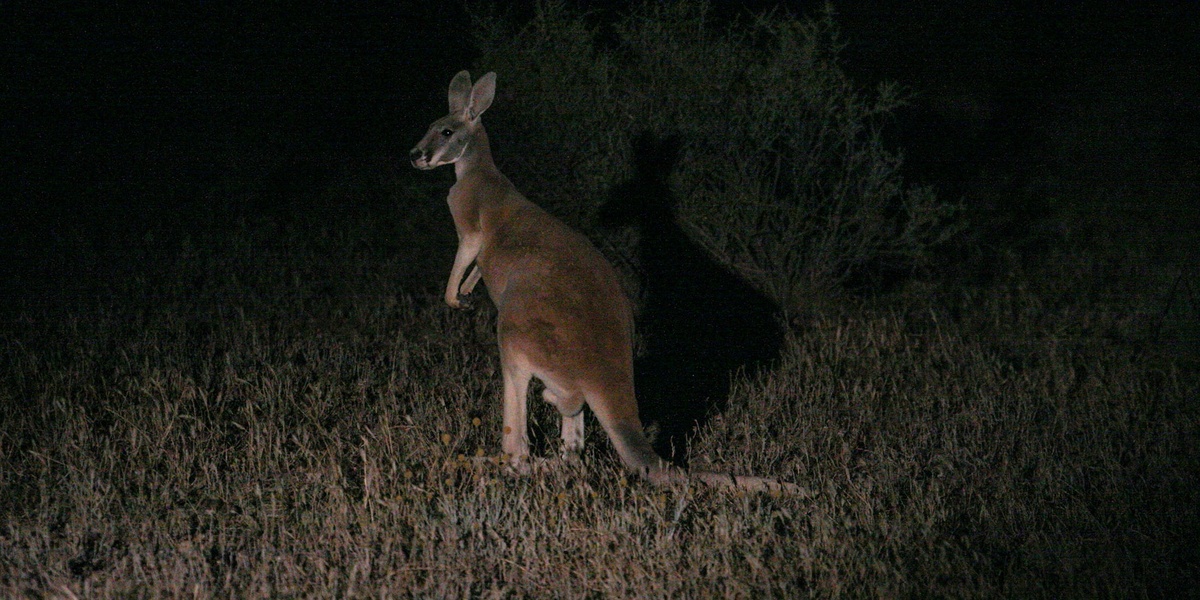
| Red kangaroo | Macropus rufus | Australian interior | Largest living marsupial; powerful hopping locomotion |
| Numbat | Myrmecobius fasciatus | Southwestern Australia | Diurnal termite-eating marsupial with distinctive stripes |
| Greater bilby | Macrotis lagotis | Arid and semi-arid Australia | Long-eared burrowing marsupial, nocturnal omnivore |
| Quokka | Setonix brachyurus | Rottnest Island,Western Australia | Small marsupial famed for friendly appearance |
| Common wombat | Vombatus ursinus | Eastern Australia,Tasmania | Sturdy burrowing herbivore with continuously growing teeth |
| Kakapo | Strigops habroptilus | New Zealand (predator-free islands) | Flightless nocturnal parrot, critically endangered |
| North Island brown kiwi | Apteryx mantelli | North Island,New Zealand | Flightless nocturnal bird with long tactile bill |
| Takahe | Porphyrio hochstetteri | New Zealand (South Island,offshore islands) | Large flightless rail recovered from presumed extinction |
| Kea | Nestor notabilis | Alpine New Zealand | Intelligent alpine parrot known for curiosity and problem-solving |
| Tuatara | Sphenodon punctatus | New Zealand (offshore islands) | Relict reptile from ancient lineage, “living fossil” |
| New Caledonian giant gecko | Rhacodactylus leachianus | New Caledonia | World’s largest gecko species, arboreal |
| Lord Howe Island stick insect | Dryococelus australis | Lord Howe Island (Ball’s Pyramid) | Large, flightless stick insect, conservation icon |
| Kagu | Rhynochetos jubatus | New Caledonia | Pale, crested ground bird with unique nasal structure |
| New Caledonian crow | Corvus moneduloides | New Caledonia | Exceptional tool-using intelligence among birds |
| Coconut crab | Birgus latro | Pacific islands (Indo-Pacific) | Largest terrestrial arthropod, coconut-climbing crab |
| Giant weta | Deinacrida heteracantha | New Zealand | One of the world’s heaviest insects, cricket-like |
| Sydney funnel-web spider | Atrax robustus | Sydney region,Australia | Highly venomous mygalomorph spider with potent toxin |
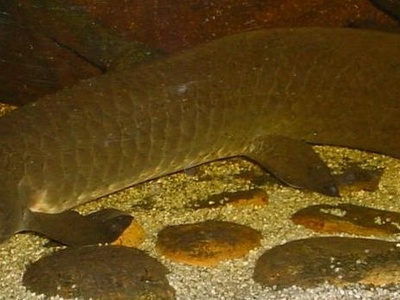
| Australian lungfish | Neoceratodus forsteri | Queensland,Australia | Ancient lungfish that breathes air, “living fossil” |
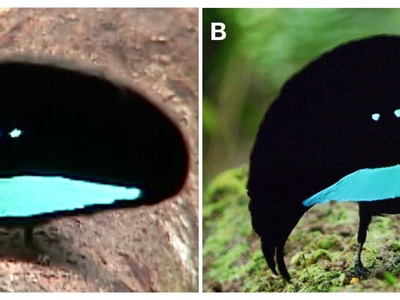
| Superb bird-of-paradise | Lophorina superba | New Guinea | Spectacular courtship display, dramatic plumage transformation |
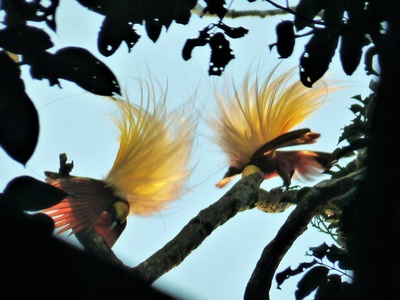
| Raggiana bird-of-paradise | Paradisaea raggiana | Papua New Guinea | Vibrant plumage used in elaborate courtship displays |
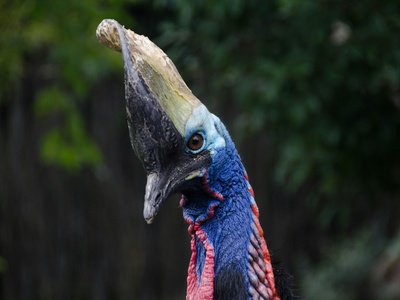
| Southern cassowary | Casuarius casuarius | Northern Australia,New Guinea | Large flightless bird with helmet-like casque, powerful kick |
| New Zealand sea lion | Phocarctos hookeri | New Zealand subantarctic islands | Rare pinniped with restricted breeding range |
| Hawaiian monk seal | Neomonachus schauinslandi | Hawaiian Islands | Critically endangered seal, one of few tropical pinnipeds |
| Nēnē (Hawaiian goose) | Branta sandvicensis | Hawaiian Islands | Only goose species endemic to tropical volcanic islands |
| ʻIʻiwi | Drepanis coccinea | Hawaiian Islands | Vibrant red honeycreeper feeding on nectar, curved bill |
| Fijian crested iguana | Brachylophus vitiensis | Fiji | Distinctive crested iguana, endemic Pacific iguana genus survivor |
| Palau fruit dove | Ptilinopus pelewensis | Palau | Colorful island-endemic dove, important seed disperser |
| Lord Howe woodhen | Hypotaenidia sylvestris | Lord Howe Island | Flightless rail saved by intensive conservation |
| Lesser short-tailed bat | Mystacina tuberculata | New Zealand | Ground-foraging bat, unusual terrestrial habits among bats |
| Chatham Island black robin | Petroica traversi | Chatham Islands,New Zealand | Critically endangered recovery success story from near-extinction |
| Gouldian finch | Erythrura gouldiae | Northern Australia | Brightly colored finch declining due to habitat change |
| Crested gecko | Correlophus ciliatus | New Caledonia | Prior thought extinct; re-discovered, arboreal |
| Palila | Loxioides bailleui | Hawaiian Islands (Island of Hawaii) | Seed-specialist honeycreeper dependent on mamane trees |
| Black-footed rock-wallaby | Petrogale lateralis | Western and central Australia | Agile cliff-dwelling macropod with cryptic coloring |
| Mariana fruit bat | Pteropus mariannus | Mariana Islands,Micronesia | Large frugivorous bat, important seed disperser |
Images and Descriptions
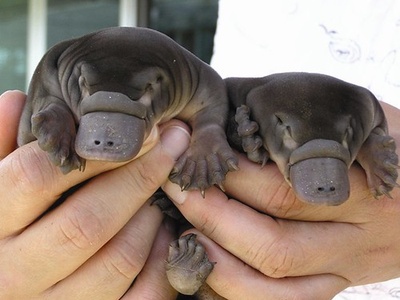
Platypus
Semi-aquatic monotreme that lays eggs, has a duck-like bill and venomous spur. Native to eastern Australia and Tasmania, it represents an ancient mammal lineage. Populations are sensitive to habitat loss and water pollution; conservation measures protect rivers and riparian habitat.
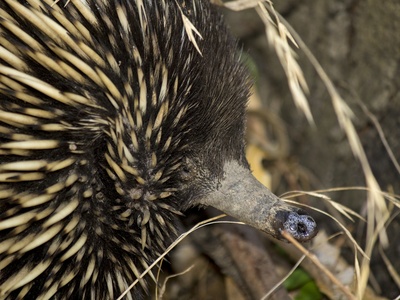
Short-beaked echidna
Spiny monotreme that eats ants and termites with a long sticky tongue. Found across Australia and parts of New Guinea, echidnas are evolutionarily distinct relatives of the platypus. Habitat loss and road mortality threaten local populations; conservation focuses on habitat protection.
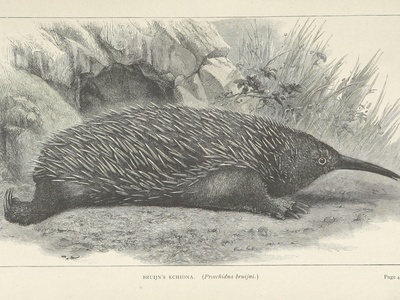
Western long-beaked echidna
One of three long-beaked echidna species endemic to New Guinea, notable for its elongated snout for probing invertebrates. Populations have declined from hunting and habitat loss; it’s listed as endangered and needs protected highland forest conservation.
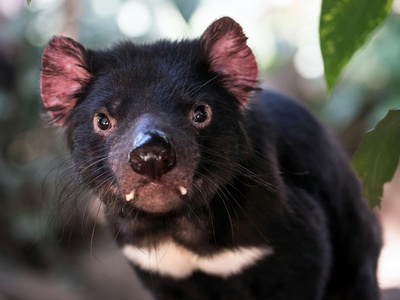
Tasmanian devil
Tasmania’s largest carnivorous marsupial, famous for loud screeches and strong jaws. Devastated by the contagious devil facial tumour disease, populations fell dramatically; intensive disease management, captive breeding, and insurance populations aim to prevent extinction.
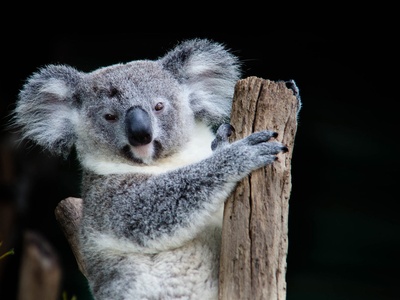
Koala
Tree-dwelling marsupial that feeds almost exclusively on eucalyptus leaves, with a compact body and sleep-heavy lifestyle. Koalas face habitat fragmentation, bushfire impacts, and disease; many populations are listed as vulnerable, prompting habitat restoration and disease research.
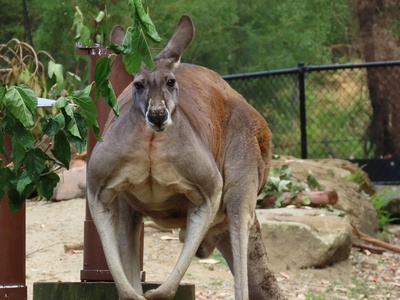
Red kangaroo
Iconic Australian macropod, the red kangaroo is the biggest marsupial, adapted for long-distance hopping across arid interiors. Numbers fluctuate with climate and land use; while broadly common, local declines from pastoral activities and fencing occur, needing landscape-scale conservation.
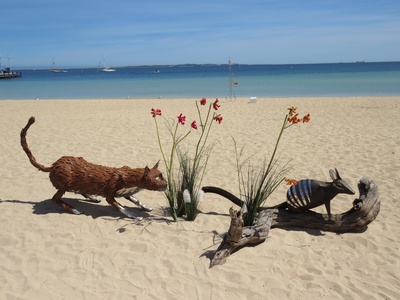
Numbat
Small, brightly striped marsupial that forages for termites with a sticky tongue during daylight. Once widespread, numbers collapsed due to foxes and habitat loss; reintroductions and predator control programs have helped recover isolated populations, but species remains endangered.
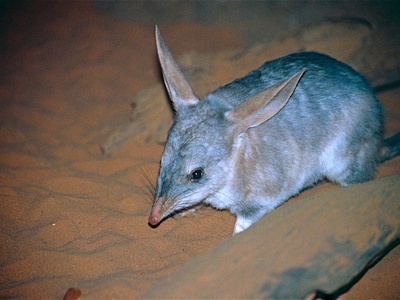
Greater bilby
Nocturnal, long-eared marsupial adapted to desert life, digging complex burrow systems. Bilbies declined from predators and habitat change; reintroduction and predator-proof sanctuary projects have seen local recoveries, but the species remains threatened across its former range.
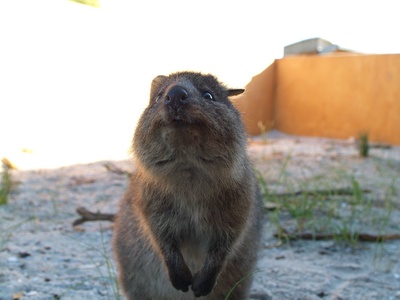
Quokka
Small wallaby-like macropod confined to Rottnest Island and a few mainland pockets, known for its ‘smiling’ face and curiosity. While locally abundant on islands, habitat loss and introduced predators constrain mainland populations; species is listed as vulnerable.
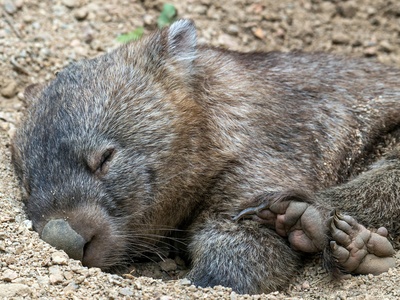
Common wombat
Stocky, burrowing marsupial that excavates extensive warrens and feeds on tough grasses. Wombats play important ecosystem roles but are vulnerable to habitat loss, road strikes, and disease in some regions; conservation includes habitat protection and monitoring.
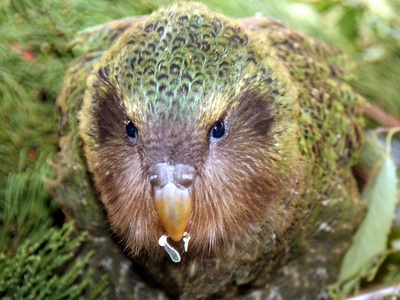
Kakapo
Nocturnal, flightless parrot with mossy-green plumage and a lek breeding system. Confined to predator-free New Zealand islands after mammal introductions, kakapo are critically endangered and managed via intensive conservation with hand-rearing, translocations, and strict predator control.
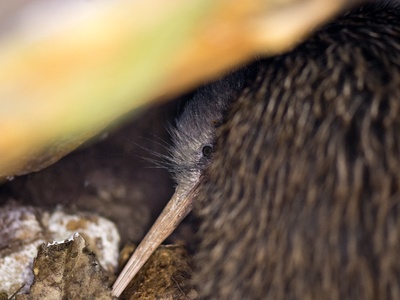
North Island brown kiwi
Iconic, shy, nocturnal bird with a long curved bill used to probe soil for invertebrates. Kiwis are endemic to New Zealand and threatened by introduced predators; conservation programs use trapping, predator control, and captive rearing to boost populations.
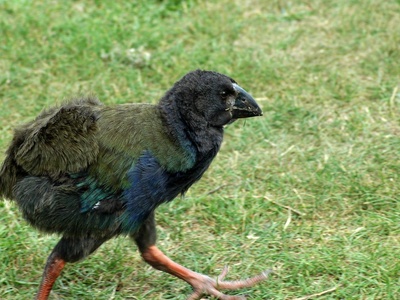
Takahe
Brightly colored, bulky rail once thought extinct and re-discovered; it grazes alpine grasslands and is intensively managed. Takahe face habitat limitations and introduced predators; recovery programs include predator-free island sanctuaries and captive breeding.
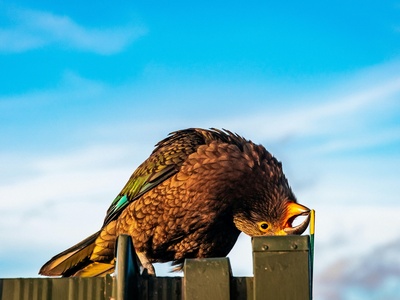
Kea
Noisy, inquisitive parrot of New Zealand’s alpine zones, famous for playful, destructive behavior and remarkable problem-solving skills. Kea population declines stem from human conflict and predation; they are internationally protected and subject to research and mitigation programs.
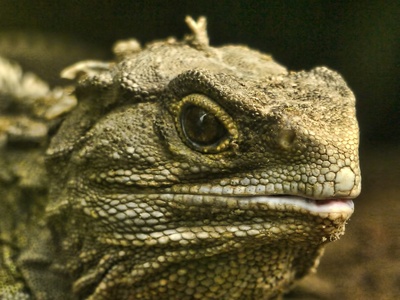
Tuatara
Rare reptile representing the ancient Rhynchocephalia lineage, with unique jaw and skull features. Tuatara survive mainly on predator-free New Zealand islands; conservation includes predator control, captive breeding, and translocations to protect genetic diversity.
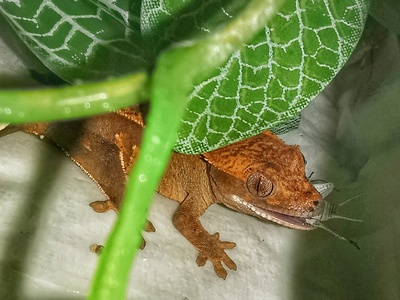
New Caledonian giant gecko
Huge, robust gecko endemic to New Caledonia’s forests, reaching impressive sizes for geckos. It occupies tree hollows and rock crevices; habitat loss and illegal collection pose threats, and conservation emphasizes habitat protection and export controls.
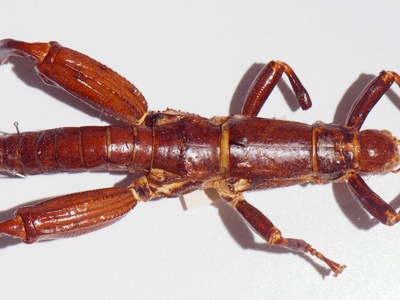
Lord Howe Island stick insect
Colossally large stick insect once thought extinct, rediscovered on Ball’s Pyramid. Endemic to Lord Howe Island originally, it is a flagship species for captive-breeding and reintroduction efforts, with ongoing work to restore island populations.
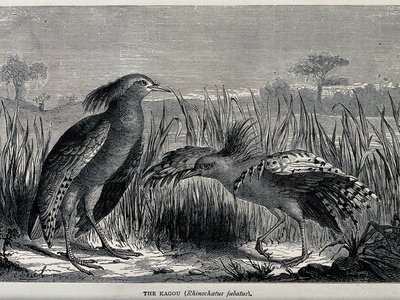
Kagu
Striking, ground-dwelling bird endemic to New Caledonia, notable for its pale plumage, crest, and distinctive nasal corns. Kagu are evolutionarily unique and endangered due to habitat loss and introduced predators; recovery relies on predator control and habitat protection.
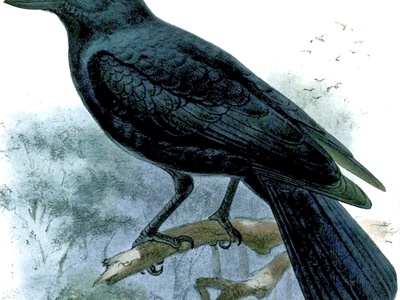
New Caledonian crow
Renowned for sophisticated tool manufacture and problem-solving, this crow is endemic to New Caledonia. Its cognitive abilities offer insights into corvid intelligence. Habitat alteration and trapping for the pet trade threaten some populations; conservation emphasizes habitat protection and research.
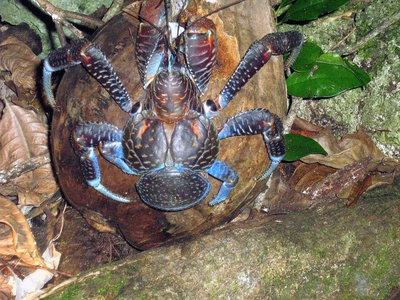
Coconut crab
Massive terrestrial hermit crab inhabiting Indo-Pacific islands, famed for climbing trees to harvest coconuts. Populations are vulnerable to overharvesting and habitat loss on many islands; local protections and hunting restrictions are key conservation tools.
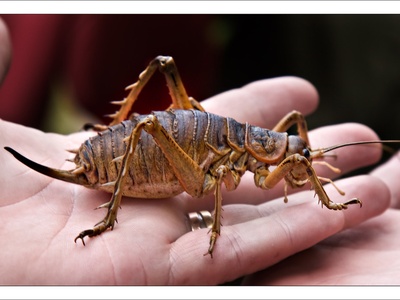
Giant weta
Massive, flightless insect endemic to New Zealand, sometimes weighing more than a small bird. Giant weta are nocturnal herbivores and scavengers. Predation by introduced mammals reduced their range; islands and sanctuaries now provide refuges.
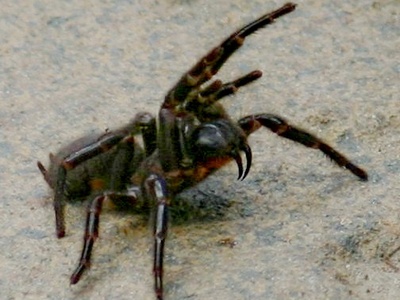
Sydney funnel-web spider
Ground-dwelling, burrowing spider native to the Sydney region, notorious for potent venom dangerous to humans. Antivenom has reduced fatalities substantially. It is evolutionarily distinctive among mygalomorph spiders; habitat loss and urban contact define conservation considerations.
Australian lungfish
Primitive freshwater lungfish endemic to Queensland rivers, able to breathe air and survive low-oxygen water. As a relic of ancient fish lineages, it attracts scientific interest. Habitat modification and water extraction threaten populations; river protection aids conservation.
Superb bird-of-paradise
Male transforms into a shining, velvet-black cape during an elaborate courtship dance to attract females. Endemic to New Guinea forests, this bird-of-paradise highlights extreme sexual selection. Habitat loss is a concern; many species are monitored for conservation.
Raggiana bird-of-paradise
National bird of Papua New Guinea, males display extravagant yellow, red, and green plumes during breeding displays. Endemic to lowland forests, raggiana populations face habitat conversion and hunting pressure; community-based conservation helps protect display grounds and habitat.
Southern cassowary
Imposing, forest-dwelling cassowary with a distinctive casque and strong legs adapted for seed dispersal. Cassowaries are key rainforest species but suffer road mortality and habitat fragmentation; conservation focuses on corridor protection and reducing human-wildlife conflict.
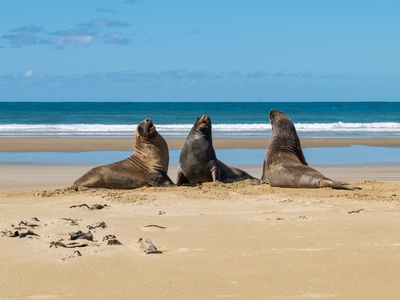
New Zealand sea lion
One of the world’s rarest sea lions, breeding mainly on New Zealand’s subantarctic islands. Populations declined historically from hunting and now face fisheries interactions and disease; management includes protected areas and bycatch reduction efforts.
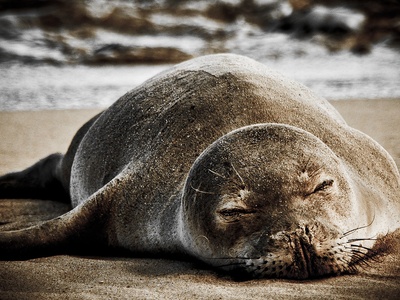
Hawaiian monk seal
Endemic to the Hawaiian archipelago, this monk seal is one of the world’s rare tropical pinnipeds. Numbers are small and declining from entanglement, disease, and habitat disturbance; intensive recovery programs focus on monitoring, protection, and human-wildlife conflict reduction.
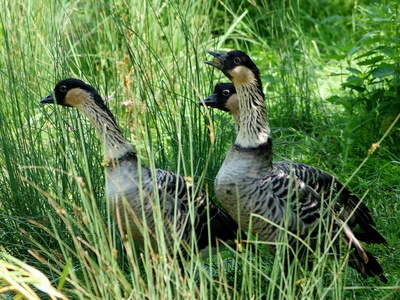
Nēnē (Hawaiian goose)
Endemic Hawaiian goose adapted to volcanic landscapes and grassy habitats. Once near extinction due to hunting and introduced predators, captive breeding and habitat protection enabled recovery, though populations remain vulnerable and require ongoing management.
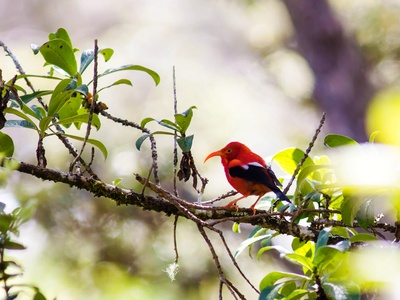
ʻIʻiwi
Striking scarlet honeycreeper with a curved bill specialized for nectar feeding and pollination in Hawaiian forests. Disease and habitat loss have driven declines; conservation includes habitat restoration and control of introduced avian diseases and predators.
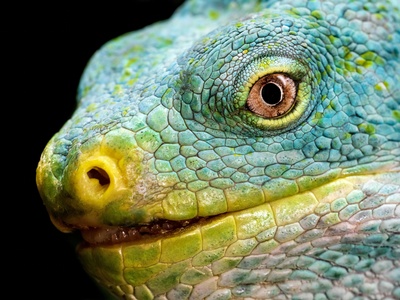
Fijian crested iguana
Large, green iguana endemic to Fiji and one of few Pacific island iguanas surviving outside the Americas. Habitat loss and introduced mammals threaten populations; conservation focuses on protected areas, invasive species control, and community engagement.
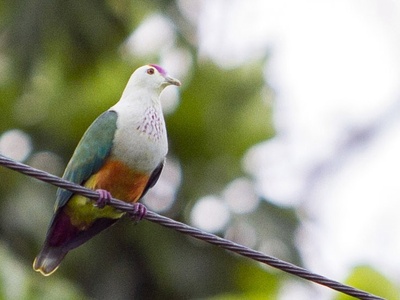
Palau fruit dove
Small, brightly colored fruit dove endemic to Palau, playing a vital role in seed dispersal across island forests. Restricted range makes it susceptible to habitat change and invasive predators; island conservation prioritizes habitat protection and biosecurity.
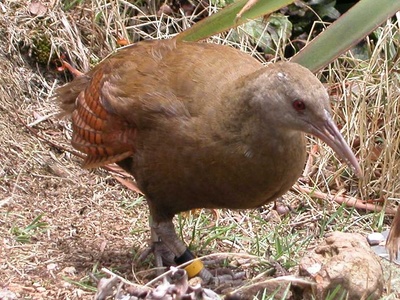
Lord Howe woodhen
Endemic, flightless rail of Lord Howe Island that declined steeply after human arrival but recovered through predator control and captive-breeding. The woodhen remains restricted and reliant on continued management to maintain its small, island-bound population.
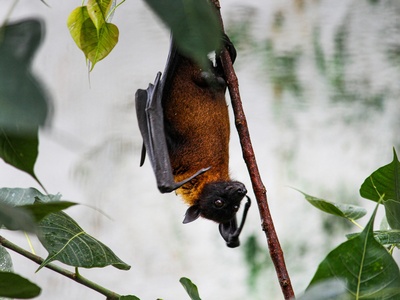
Lesser short-tailed bat
One of the few bats that forages on the ground and in leaf litter, endemic to New Zealand. Its unique ecology makes it vulnerable to introduced predators and habitat loss; conservation projects protect forest remnants and predator-free sites.
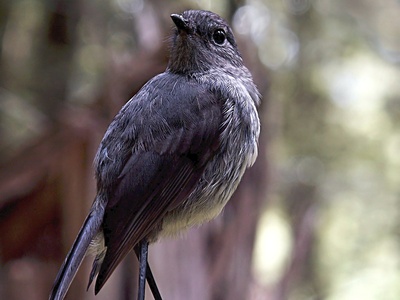
Chatham Island black robin
Tiny songbird endemic to New Zealand’s Chatham Islands that fell to a handful of individuals in the 1980s. Intensive captive breeding and predator control saved it from extinction; recovery continues with habitat management and biosecurity.
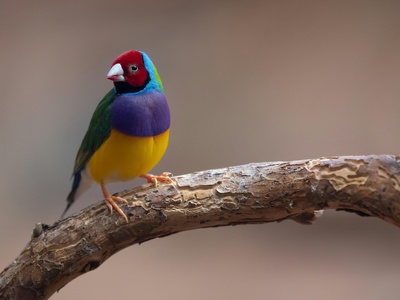
Gouldian finch
Vibrant, multi-colored finch endemic to northern Australian savannas, known for striking plumage. Populations declined from altered fire regimes, grazing, and disease; recovery efforts focus on habitat management, monitoring, and community engagement.
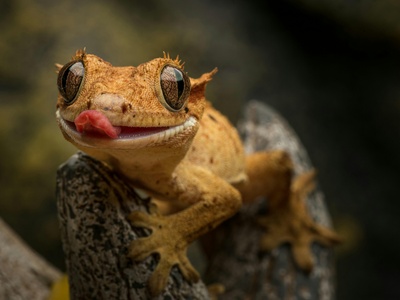
Crested gecko
Arboreal gecko native to New Caledonia once considered extinct until rediscovered. Its distinctive crest and toe pads make it popular in the pet trade, prompting conservation needs for habitat protection and regulated trade.
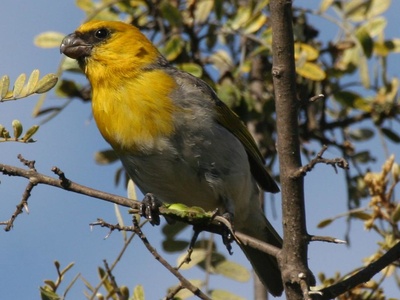
Palila
Rare Hawaiian honeycreeper specialized on mamane seeds, endemic to high-elevation forests of the Island of Hawaii. Habitat loss and invasive ungulates have decimated populations; conservation includes fencing, habitat restoration, and captive propagation.
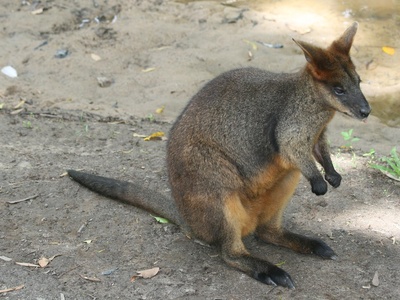
Black-footed rock-wallaby
Small rock-wallaby adapted to rugged cliffs and rocky outcrops, using agility to evade predators. Several populations are isolated and threatened by feral goats, foxes and habitat change; conservation includes predator control and habitat protection.
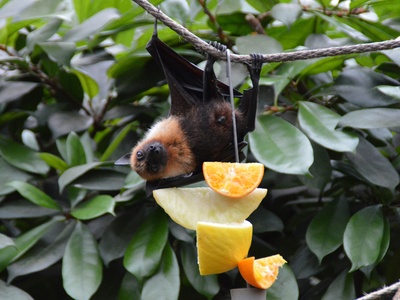
Mariana fruit bat
Large flying fox native to the Mariana Islands, crucial for seed dispersal and forest regeneration. Populations declined from hunting and habitat loss; many islands protect roosts and regulate hunting to support recovery.