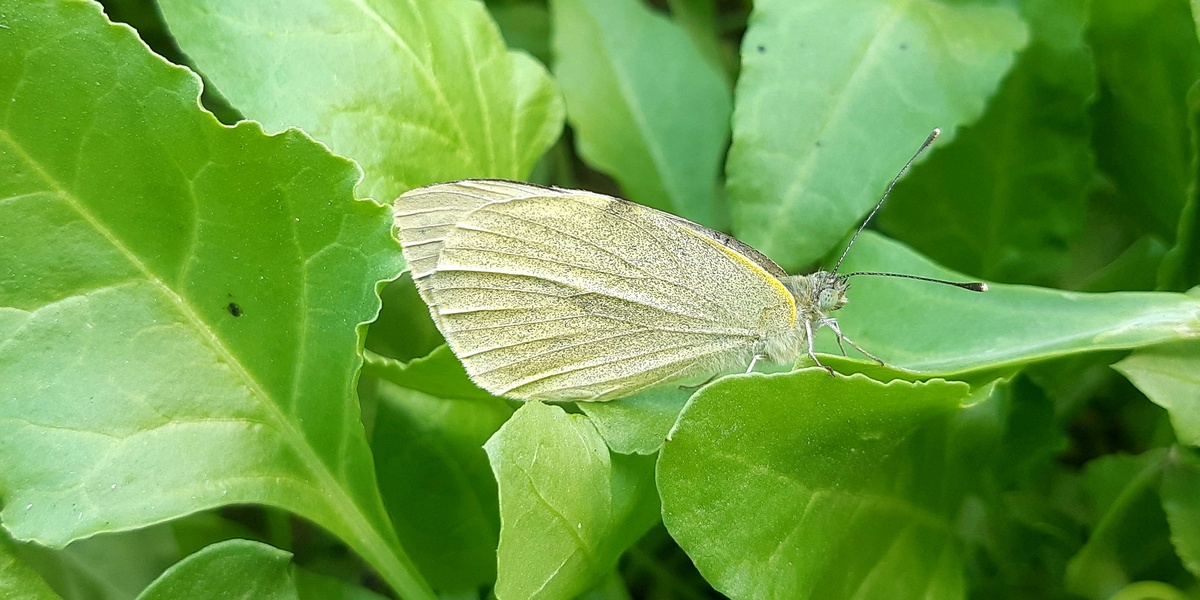
If you spend time in gardens, orchards or near houseplants you’ve probably noticed tiny pale bugs on leaves, stems and fruit. Some are harmless, some cause damage, and many are easy to overlook until numbers build up.
There are 14 white insects, ranging from Asian citrus psyllid (nymph) to Woolly apple aphid. For each entry you’ll find below the Scientific name, Size (mm), Where found so you can quickly compare species and identify what’s on your plants—you’ll find below.
How can I tell these white insects apart from harmless debris or mold?
Look for movement and body shape rather than just color: insects will crawl or cluster and often have legs, wings or distinct nymph forms (like the flattened, scale-like Asian citrus psyllid nymph). Check plant symptoms too—sticky honeydew, sooty mold, curled leaves or stunted growth usually indicate an insect problem rather than inert debris.
Which of the listed white insects are damaging to crops or gardens?
Several are pests: aphids, psyllids and mealybugs can transmit diseases, weaken plants or create honeydew that leads to sooty mold. Woolly apple aphid and Asian citrus psyllid are examples that warrant quick management in orchards; use identification, monitoring and targeted controls based on the species you find.
White Insects
| Common name | Scientific name | Size (mm) | Where found |
|---|---|---|---|
| Whitefly (silverleaf) | Bemisia tabaci | 1 | Worldwide; greenhouses, gardens |
| Whitefly (greenhouse) | Trialeurodes vaporariorum | 1 | Temperate regions; greenhouses, indoor plants |
| Mealybug | Planococcus citri | 4 | Worldwide; houseplants, ornamentals, orchards |
| Cottony cushion scale | Icerya purchasi | 6 | Citrus-growing regions worldwide; trees and shrubs |
| Woolly apple aphid | Eriosoma lanigerum | 3 | Temperate orchards; apple trees, nurseries |
| Subterranean termite (worker) | Reticulitermes spp. | 4 | Soil, damp wood; North America, Europe, Asia |
| White grub (scarab larva) | Scarabaeidae spp. | 20-40 | Soil in lawns, pastures, gardens; worldwide |
| Wax moth larva (waxworm) | Galleria mellonella (larva) | 30 | Beehives, stored wax, dry goods; worldwide |
| Indian meal moth larva (pantry moth) | Plodia interpunctella (larva) | 12 | Pantries, stored-food facilities; worldwide |
| Booklouse | Liposcelis spp. | 1 | Damp indoor sites; books, pantries, basements worldwide |
| Clothes moth larva | Tineola bisselliella (larva) | 7 | Closets, stored textiles;Worldwide |
| Cabbage white (butterfly) | Pieris rapae | 12 | Gardens, fields, roadsides; temperate regions worldwide |
| White ermine (moth) | Spilosoma lubricipeda | 15 | Europe, Asia; gardens, hedgerows |
| Asian citrus psyllid (nymph) | Diaphorina citri (nymph) | 1 | Citrus orchards; Asia, Americas, Africa |
Images and Descriptions
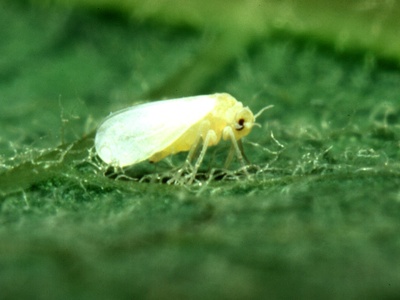
Whitefly (silverleaf)
Tiny, white, moth-like flies on undersides of leaves. Adults about 1 mm long. Found worldwide in greenhouses and gardens, especially on ornamentals and veggies. Major sap-sucking pest and virus vector; sticky honeydew and sooty mold often indicate infestation.
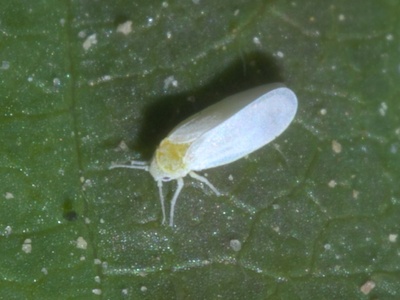
Whitefly (greenhouse)
Common greenhouse whitefly is tiny and powdery white, about 1 mm long. Lives on undersides of leaves in greenhouses and indoor plants across temperate regions. Sap-sucking pest that weakens plants and spreads diseases; leaves sticky honeydew and sooty mold.
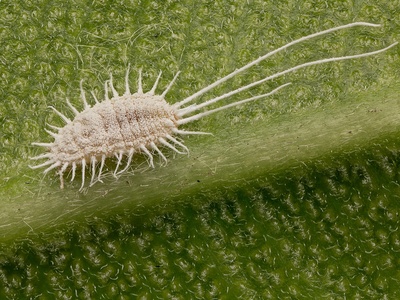
Mealybug
Soft-bodied, cottony white insects about 4 mm long found on houseplants, ornamentals, and fruit trees worldwide. They suck plant sap, causing yellowing, stunted growth and sooty mold. Serious pest; often hidden in leaf axils and root zones, hard to eradicate.
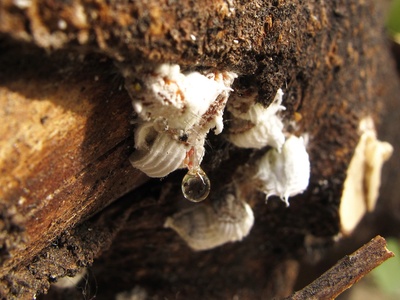
Cottony cushion scale
Adult females are covered in white cottony wax, about 6 mm long, found on trunks and leaves of citrus and ornamentals. Worldwide where citrus grows. Sap-sucking pest that weakens trees; cottony sacs hide eggs and nymphs, attracting ants and sooty mold.
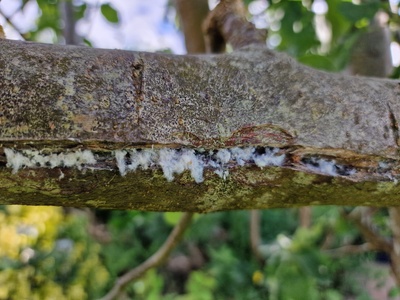
Woolly apple aphid
Small sap-sucking aphid producing a white, woolly wax covering; adults about 3 mm long. Common on apple and related trees in temperate regions. Causes galls and root damage; nursery and orchard pest, often spread on pruning tools and infested stock.
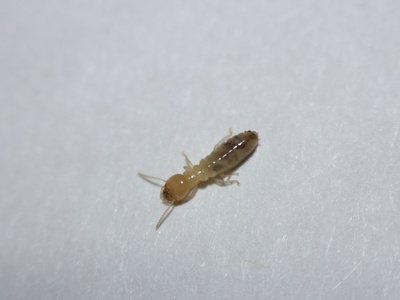
Subterranean termite (worker)
Small, creamy-white worker termites about 4 mm long found in soil and damp wood in North America, Europe and Asia. Hidden wood feeders and major structural pests; often mistaken for white ants. Swarming alates differ in color and size.
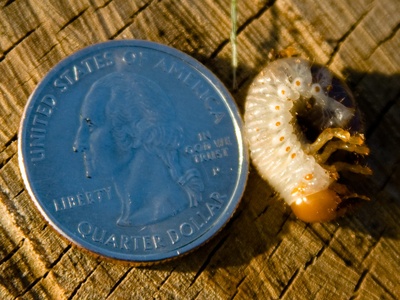
White grub (scarab larva)
C-shaped, cream-coloured larvae of scarab beetles 20–40 mm long in soil. Found in lawns, pastures and garden beds across many continents. They feed on grass roots and tubers, causing dead patches; serious turf and crop pests when abundant.
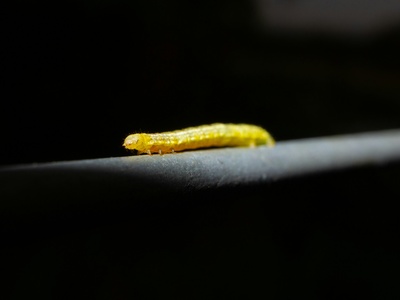
Wax moth larva (waxworm)
Waxworm larvae are cream to white caterpillars about 30 mm long commonly found in beehives, stored wax and dry goods. Major pest of honeycomb; can destroy combs and contaminate hives. Frequently used as fishing bait and pet food.

Indian meal moth larva (pantry moth)
Creamy-white caterpillar larvae about 12 mm long that infest stored grains, cereals, and dried foods worldwide. Found in pantries and warehouses. Major household pest that leaves webbing and frass in food packages; easy to spread between stores and homes.
Booklouse
Tiny, soft-bodied pale insects about 1 mm long found in damp indoor locations, old books, stored food and wallpaper glue. Not dangerous, but can contaminate food and damage book bindings; thrive in humid homes and basements.
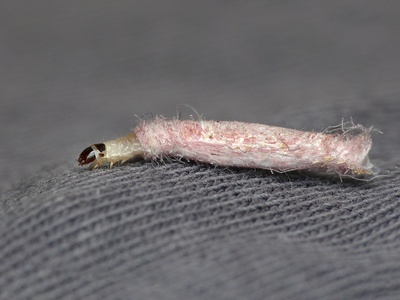
Clothes moth larva
Creamy white larvae about 7 mm long that feed on wool, silk and natural fibres in clothing and carpets. Found inside closets and storage boxes worldwide. Major household fabric pest; adults are small buff moths and often go unnoticed.
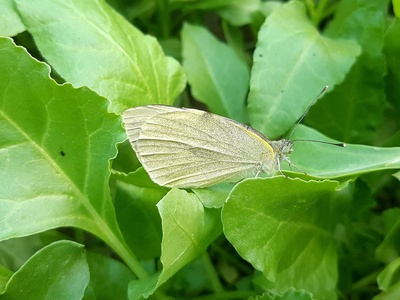
Cabbage white (butterfly)
Common white butterfly with pale white wings and small black spots; body about 12 mm long. Found in gardens, fields and roadside plants across temperate regions. Larvae (green caterpillars) feed on brassicas and can be garden pests.
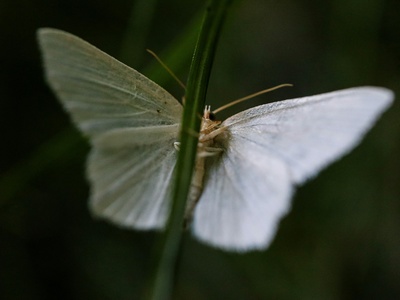
White ermine (moth)
Fluffy white moth about 15 mm long with variable black dots on forewings. Found across Europe and Asia in gardens and hedgerows. Caterpillars feed on many plants; usually not a severe pest but can defoliate ornamental shrubs in outbreaks.
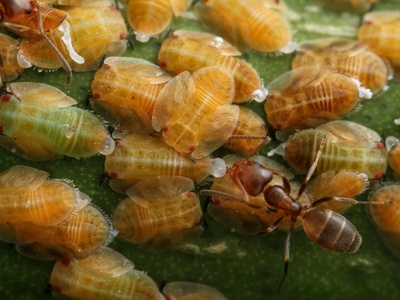
Asian citrus psyllid (nymph)
Pale, flattened, scale-like nymphs about 1 mm long found on citrus leaves and shoots in Asia, the Americas and Africa. They produce white sugary secretions. Major pest because they transmit citrus greening (HLB); control is essential in orchards.