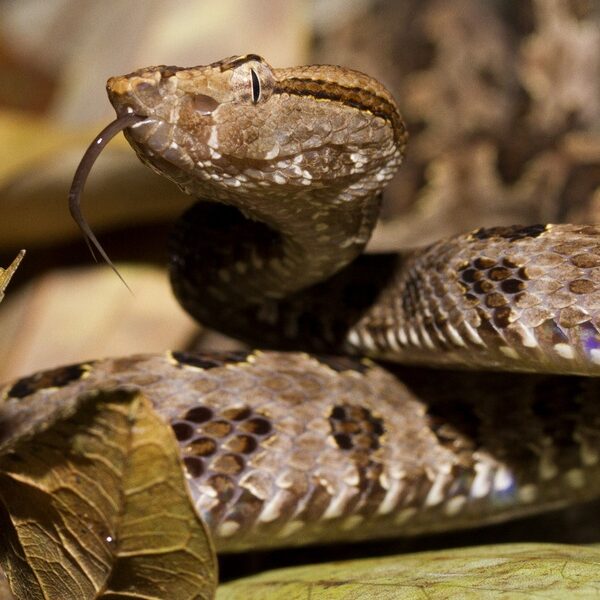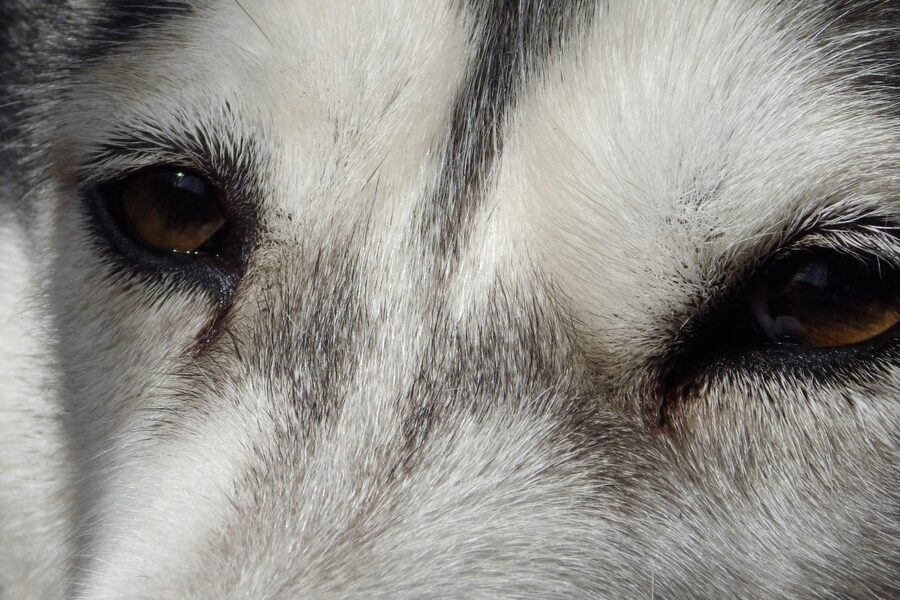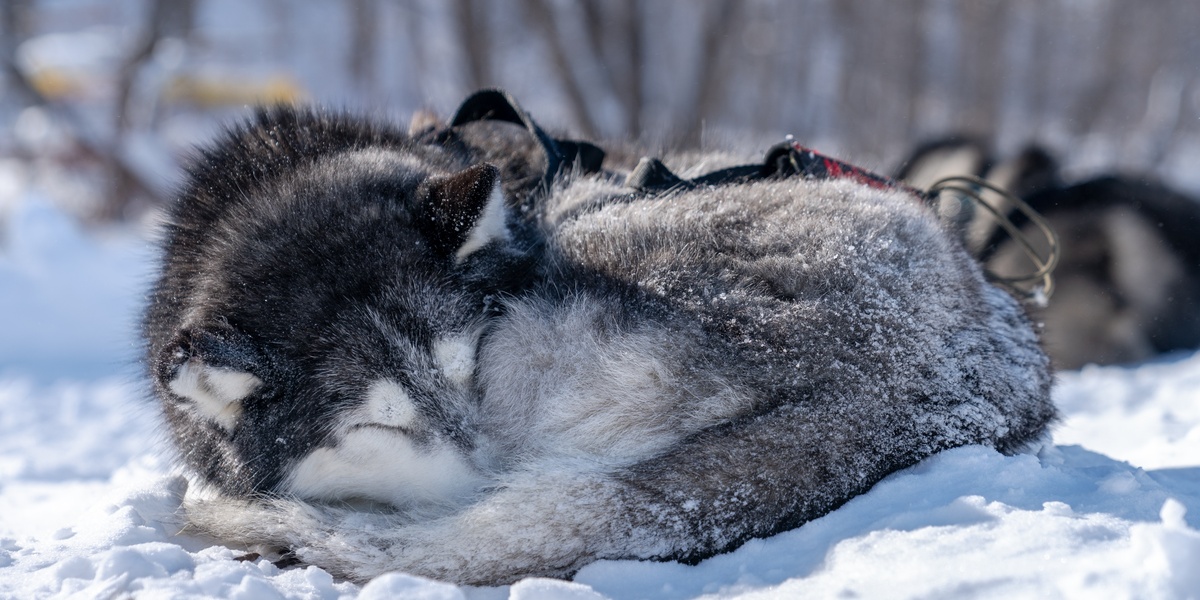
From working farms to urban homes, a dog’s eye color is one of those small details that can catch your attention and hint at breed background or genetics. Noticing amber or yellow tones can be a starting point for learning more about a breed’s history and appearance.
There are 14 yellow eyed dog breeds, ranging from the Australian Kelpie to the Weimaraner. For each breed you’ll find a concise entry organized as Scientific name,Typical eye colors,Yellow eye prevalence (%), so you can compare how common yellow eyes are across breeds — you’ll find below.
How common are yellow eyes across different breeds?
Yellow or amber eyes are relatively uncommon overall but can be typical in certain breeds; prevalence depends on genetics and breed standards. The list below gives breed-specific percentages so you can see which dogs commonly show this eye color versus those where it’s rare.
Could yellow eyes indicate health or vision problems?
Most of the time yellow or amber eyes are purely cosmetic and not a health issue, but eye color can sometimes be associated with genetic variations (for example, coat-pattern genes) that merit attention; consult the breed notes in the list or a veterinarian if you have concerns.
Yellow Eyed Dog Breeds
| Breed | Scientific name | Typical eye colors | Yellow eye prevalence (%) |
|---|---|---|---|
| Siberian Husky | Canis lupus familiaris | blue,brown,amber,heterochromia | common |
| Weimaraner | Canis lupus familiaris | amber,blue-gray,light brown | common |
| Vizsla | Canis lupus familiaris | amber,brown,hazel | common |
| Australian Shepherd | Canis lupus familiaris | brown,blue,amber,hazel | common |
| Border Collie | Canis lupus familiaris | brown,amber,blue,hazel | common |
| Catahoula Leopard Dog | Canis lupus familiaris | amber,gold,blue,heterochromia | common |
| Nova Scotia Duck Tolling Retriever | Canis lupus familiaris | amber,golden,brown | common |
| Pharaoh Hound | Canis lupus familiaris | amber,gold,brown | common |
| Ibizan Hound | Canis lupus familiaris | amber,light brown | common |
| Saluki | Canis lupus familiaris | amber,brown,dark brown | common |
| Chesapeake Bay Retriever | Canis lupus familiaris | yellowish-amber,brown | common |
| Rhodesian Ridgeback | Canis lupus familiaris | amber,brown,hazel | common |
| German Shorthaired Pointer | Canis lupus familiaris | brown,amber,hazel | occasional |
| Australian Kelpie | Canis lupus familiaris | brown,amber,hazel | common |
Images and Descriptions
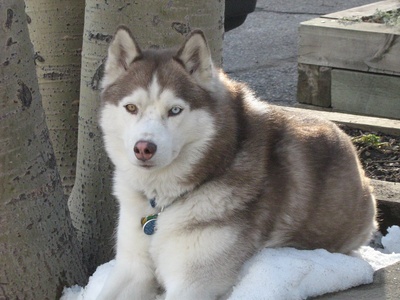
Siberian Husky
Siberian Huskies commonly show blue, brown, amber, or heterochromatic eyes. Amber eyes often appear in red or agouti coats due to pigment and ALX4/other eye genes. Breed standards accept various colors; eye health screening is recommended for inherited ocular issues.

Weimaraner
Weimaraners characteristically have light, amber to blue-gray eyes that darken with age; adults often show golden-amber tones. The eye color complements dilute silver coat due to dilution genes; routine eye checks recommended for PRA and other breed-specific conditions.

Vizsla
Vizslas traditionally have amber to brown eyes that match their golden-rust coat; amber is common and valued in standards. Eye pigmentation links to coat pigment genes; owners should monitor for iris issues but amber itself is a normal breed trait.
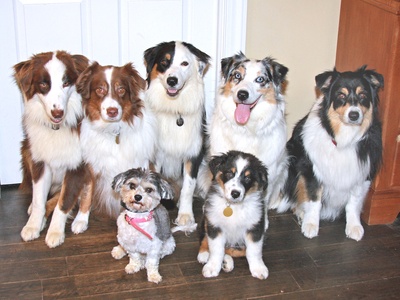
Australian Shepherd
Australian Shepherds routinely show brown, blue, hazel, or amber eyes; merle and bicolor patterns produce striking amber or gold tones. Eye color is genetically linked to coat pattern genes; certain combinations carry higher risk for congenital eye disorders.
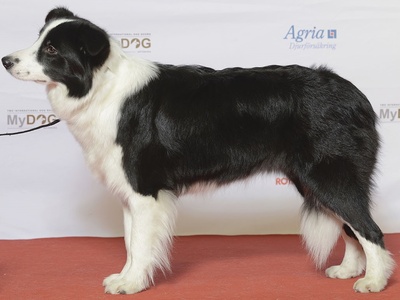
Border Collie
Border Collies frequently have brown, hazel, or amber eyes; merle lines often produce lighter amber or gold shades. Eye color variation relates to coat genetics; some eye combinations may indicate merle-associated vision risks, so breeders often screen for inherited issues.
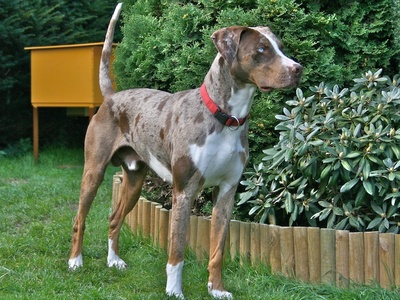
Catahoula Leopard Dog
Catahoulas are famed for diverse eye colors including amber, gold, blue, and heterochromia. Amber/yellow eyes are commonly seen and tied to coat merle/leopard patterns and pigment distribution; eye variation is a hallmark rather than a health sign for most dogs.
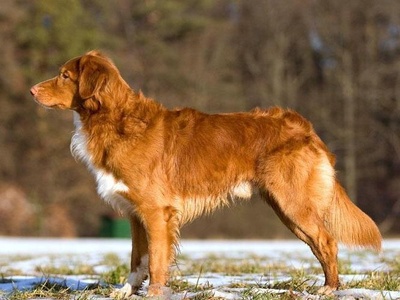
Nova Scotia Duck Tolling Retriever
Tollers typically have warm amber to golden eyes that complement their red-gold coat; amber is common and part of the breed’s expression. Eye color ties to coat pigmentation; breeders note amber as a desired trait without inherent health concerns.

Pharaoh Hound
Pharaoh Hounds often show amber to gold eyes that reflect their tan coats; amber is common and mentioned in breed descriptions. Eye tone complements pigmentation genes and is a breed characteristic, not typically a health issue.

Ibizan Hound
Ibizan Hounds commonly have amber or light brown eyes that blend with their pale coats; amber tones are a recognized breed trait. As a sighthound tendency, lighter eye colors are normal and generally not linked to disease.

Saluki
Salukis often have amber to dark brown eyes; lighter amber shades are common in pale-coated lines. Eye color complements sighthound features and is typically genetic, not pathological, though any vision changes warrant veterinary attention.
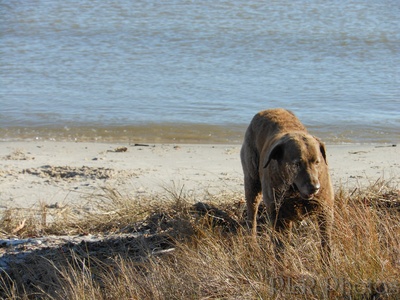
Chesapeake Bay Retriever
Chesapeakes frequently display yellowish-amber to brown eyes that match their water-resistant coat; amber tones are common and noted in standards. Eye pigmentation aligns with coat color genes; breeders watch ocular health but amber itself is normal.
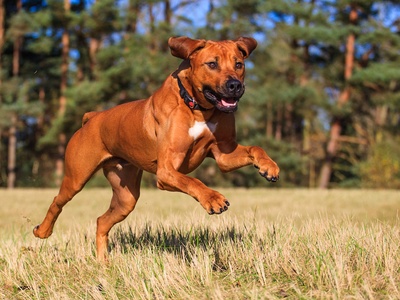
Rhodesian Ridgeback
Rhodesian Ridgebacks commonly have amber to brown eyes that harmonize with their wheaten coats; lighter amber is typical in lighter-colored individuals. Eye color is a breed standard marker and not usually linked to disease.
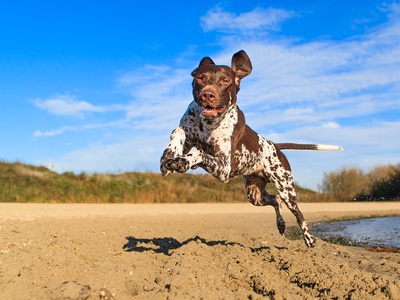
German Shorthaired Pointer
GSPs often have brown to amber eyes; liver-colored dogs frequently show lighter amber shades. Eye color tracks with coat pigmentation genes and is accepted in breed descriptions, though serious ocular issues remain uncommon.
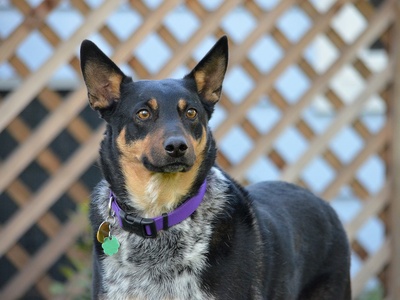
Australian Kelpie
Kelpies commonly have brown or amber eyes; lighter amber often appears in red or fawn coats. Eye color relates to pigmentation genes and is a normal breed variation, not generally linked to health problems.