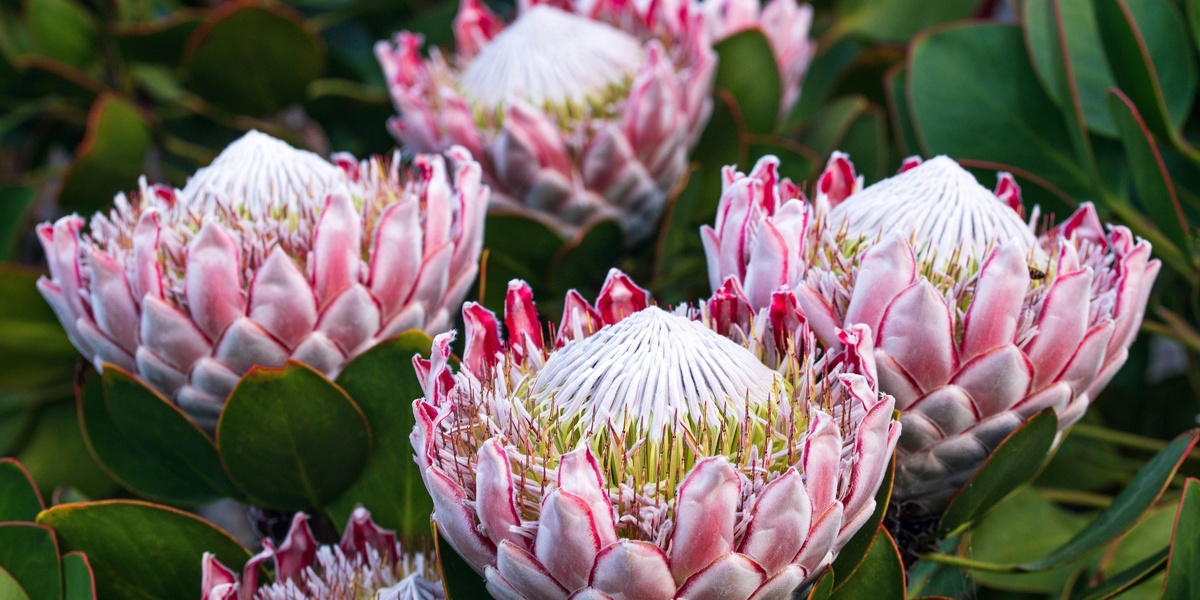
The flora of south africa hosts more than 20,000 species of vascular plants, making it one of the world’s richest countries for plant diversity. Much of that richness is concentrated in the Cape Floristic Region, a global hotspot home to roughly 9,000 plant species and inscribed as a UNESCO World Heritage Site in 2004. These plants matter beyond botany: they support livelihoods through horticulture and harvests, underpin traditional medicine, and shape iconic landscapes that draw tourists and scientists alike. Below are 15 representative plants—grouped by habitat and use—that reveal the ecological roles, cultural values, and conservation stories of South African plant life.
Fynbos Icons (Cape Floristic Region)
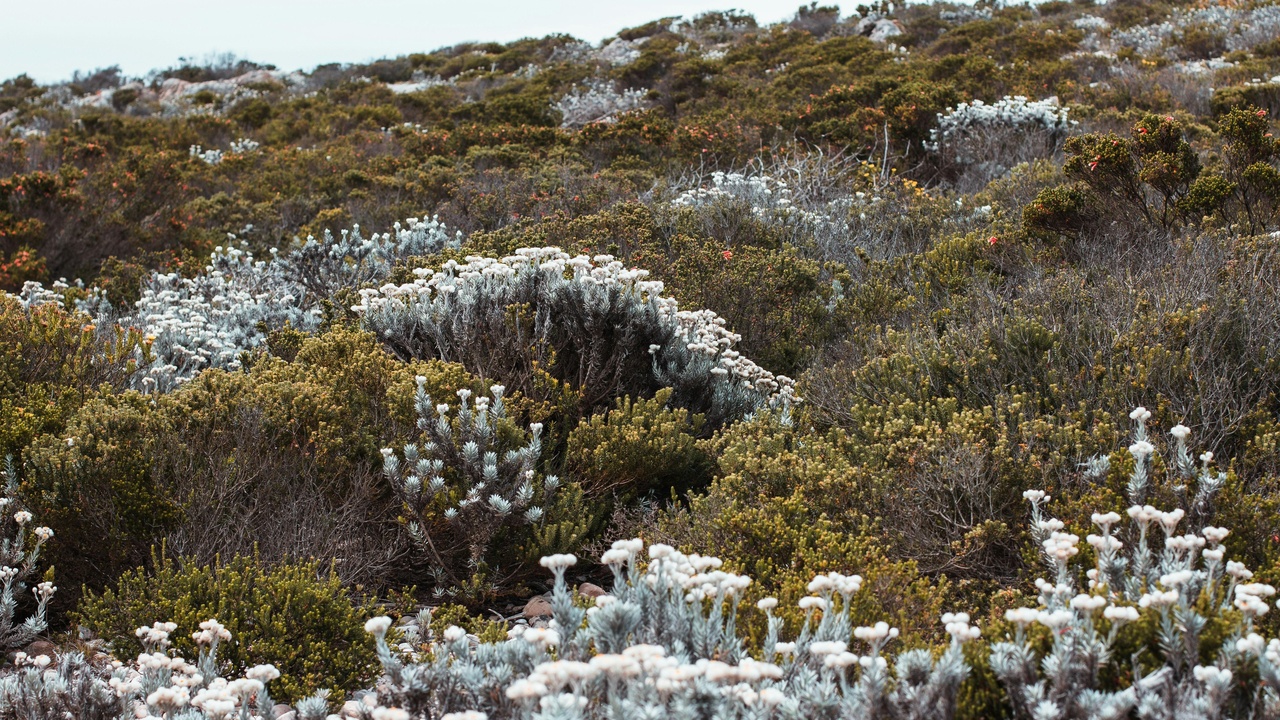
The fynbos biome is a botanical treasure: within the Cape Floristic Region roughly 9,000 species occur, many found nowhere else on Earth. Fynbos plants are fire-adapted, tightly linked to specialized pollinators, and central to South African horticulture and conservation work. Table Mountain National Park and nearby reserves showcase fynbos diversity and are focal sites for research and restoration.
1. King Protea (Protea cynaroides)
The King Protea is South Africa’s national flower and an emblem of fynbos. A member of the Proteaceae family, it produces large, architectural flower heads that attract birds and insects and have become a symbol in tourism imagery. Proteas are major players in the cut-flower industry: King Protea and relatives are cultivated and exported from the Western Cape, and you’ll see them featured in Table Mountain floral displays and international floriculture markets. Most wild proteas are resilient to fire through specialized life histories, though some local forms face habitat pressure.
2. Silver Tree (Leucadendron argenteum)
The Silver Tree is a rare, iconic fynbos tree restricted to slopes around Table Mountain. Its striking silvery foliage and upright habit make it instantly recognizable, but its natural range is very small and populations are vulnerable to altered fire regimes and invasive plants. Local restoration projects and seed‑banking programs propagate seedlings for replanting, and Table Mountain and nearby reserves are where most recovery work takes place. The Silver Tree remains a Cape Town symbol and a reminder that even showy species can be threatened.
3. Cape Sugarbush (Protea repens)
Protea repens is a nectar-rich shrub that has long fed sunbirds, insects, and people. Historically, locals collected its sweet nectar and today the plant supports pollination networks—especially nectar-feeding birds like sunbirds—across coastal fynbos and mountain slopes. Cape Sugarbushes are also grown in gardens for their showy blooms and for restoration plantings where they help reestablish native pollinator interactions along the Cape coast.
4. Heaths (Erica spp.) — the fynbos ‘thicket’
Erica species form dense heathlands and are a major component of fynbos richness—hundreds of Erica species occur across the region. These heaths create structural diversity that supports specialist insects and small birds, and they are a focus for restoration ecology and botanical research. Erica-dominated slopes are common in protected reserves and botanical gardens maintain collections used for both study and replanting programs.
Medicinal and Commercial Plants
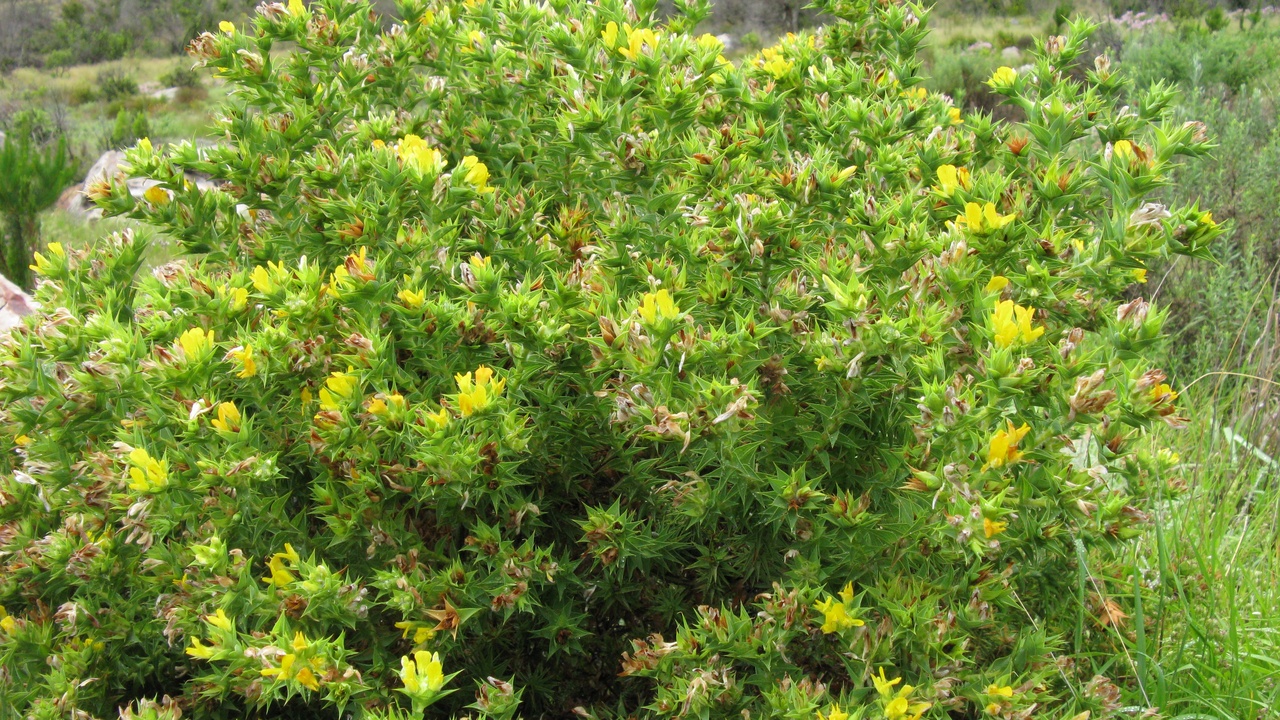
Many South African plants bridge indigenous knowledge and modern markets. Rooibos tea, buchu extracts, hoodia succulents, and Aloe ferox all illustrate how traditional uses have entered commercial supply chains. That intersection supports smallholder incomes but also raises questions about sustainable harvesting versus cultivation. Agricultural expansion and responsible value chains help ensure these species remain available for both local use and export.
5. Rooibos (Aspalathus linearis)
Rooibos is a native shrub used to make a caffeine-free herbal tea and is a signature agricultural product of the Cederberg mountains. Small-holder farmers and larger producers cultivate rooibos for domestic consumption and export, with rooibos-flavored beverages and skincare appearing in international markets. The tea is prized for being caffeine-free and for antioxidants that are of interest to health-oriented consumers, and the crop underpins livelihoods in parts of the Western Cape.
6. Buchu (Agathosma betulina and relatives)
Buchu has a long history as a medicinal herb in the region, traditionally used for digestive and urinary complaints. Its essential oils are used in flavoring and perfumery, and boutique cosmetic firms use buchu extracts in small-batch products. Because wild-harvesting can threaten local populations, sustainable collection practices and cultivation efforts are increasingly important for maintaining both the plant and the livelihoods tied to it.
7. Hoodia (Hoodia gordonii)
Hoodia is a succulent that attracted international attention for compounds thought to suppress appetite. Early-2000s pharmaceutical interest highlighted the plant and sparked debates about bioprospecting and benefit-sharing with indigenous knowledge holders. While commercial applications have been limited by regulation and evidence, Hoodia remains an important case study in ethical access to biological resources and in frameworks that return benefits to local communities.
8. Cape Aloe (Aloe ferox)
Aloe ferox is widely harvested and increasingly cultivated for bitter aloes used in cosmetics and pharmaceuticals. Eastern Cape aloe farms supply extracts marketed as “Cape Aloe” in skincare lines, and conservation-minded cultivation reduces pressure on wild populations. Beyond commercial use, aloe production provides income for rural communities and is integrated into restoration planting in degraded areas.
Savanna and Arid Specialists
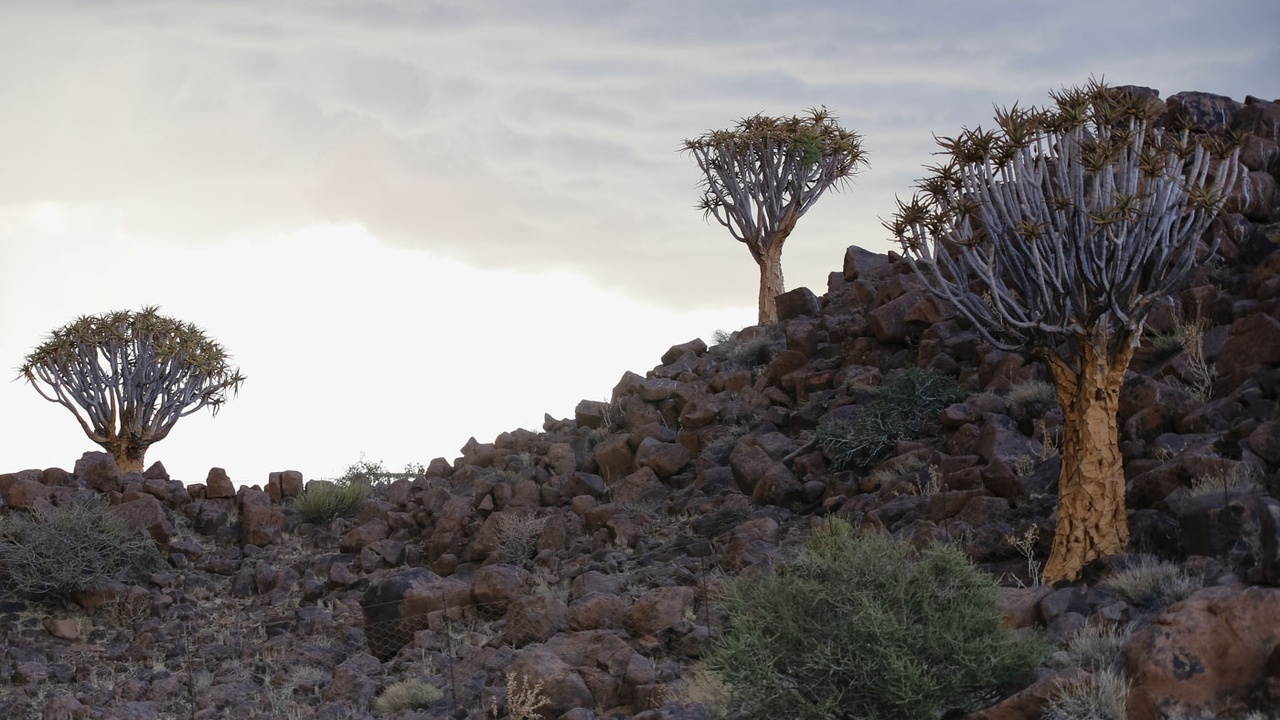
Across savannas and arid zones, drought-tolerant trees and succulents dominate and provide key ecosystem services: food for wildlife, shade for livestock, and materials for people. These species often have deep cultural roots and practical uses, from marula fruit used in food and liqueur to camelthorn trees that shape Kalahari rangelands.
9. Quiver Tree (Aloidendron dichotomum)
The quiver tree is a striking succulent tree of arid Namaqualand and parts of the Northern Cape. Its water-storing trunk and forked branches were used historically by San people to make quivers for arrows, giving the species its common name. Quiver tree forests—such as those near Keetmanshoop—are important ecotourism draws, but the species is sensitive to climate shifts and local declines have prompted conservation concern.
10. Baobab (Adansonia digitata)
The African baobab is an iconic, long-lived savanna tree occurring in northern parts of South Africa and across sub-Saharan Africa. Its massive trunk stores water and its fruit pulp is nutrient-rich; communities process baobab into powders and beverages. Large baobab specimens often serve as community landmarks and appear in folktales, and processed baobab products now enter international specialty-food markets.
11. Camelthorn (Vachellia erioloba)
Camelthorn is a keystone tree of arid savannas and Kalahari rangelands, providing shade, browse for livestock, and nesting sites for birds such as sociable weavers. Its durable wood is used in local crafts and fencing. Camelthorn stands create microhabitats that support wildlife and grazing, making them vital to both ecology and pastoral livelihoods.
12. Marula (Sclerocarya birrea)
Marula is widespread across savanna regions and prized for its flavorful fruit, eaten fresh and fermented. The fruit is an ingredient in traditional foods and in commercial products—Amarula cream liqueur is a well-known example that uses marula fruit. Marula trees also provide food for elephants and birds and support seasonal small-scale trades during harvest time.
Endemics, Rare Species and Conservation Stories
The Cape region’s exceptionally high endemism means many plants have tiny ranges and face threats from habitat loss, invasive species, and altered fire regimes. Conservation combines protected areas, seed banking, and ex‑situ cultivation. Local botanical gardens and NGOs play major roles in recovery work and public education.
13. Erica verticillata (a conservation comeback)
Erica verticillata was once declared extinct in the wild but survived in botanical gardens and private collections. Ex‑situ propagation and seed banking have enabled reintroduction attempts, with Cape Town botanical institutions central to those efforts. This species highlights how cultivation and community engagement can buy time for threatened plants while habitat protection is arranged.
14. Red Disa (Disa uniflora)
The red disa is a showy orchid found on Table Mountain and nearby mountains, often growing beside mountain streams. Its dramatic red flowers make it popular with hikers and botanists, and the species serves as a flagship for conserving mountain stream habitats. Orchids like Disa are sensitive to habitat change, so sightings in protected areas underscore the value of intact catchments.
15. Pincushion Protea (Leucospermum cordifolium) — endangered local forms
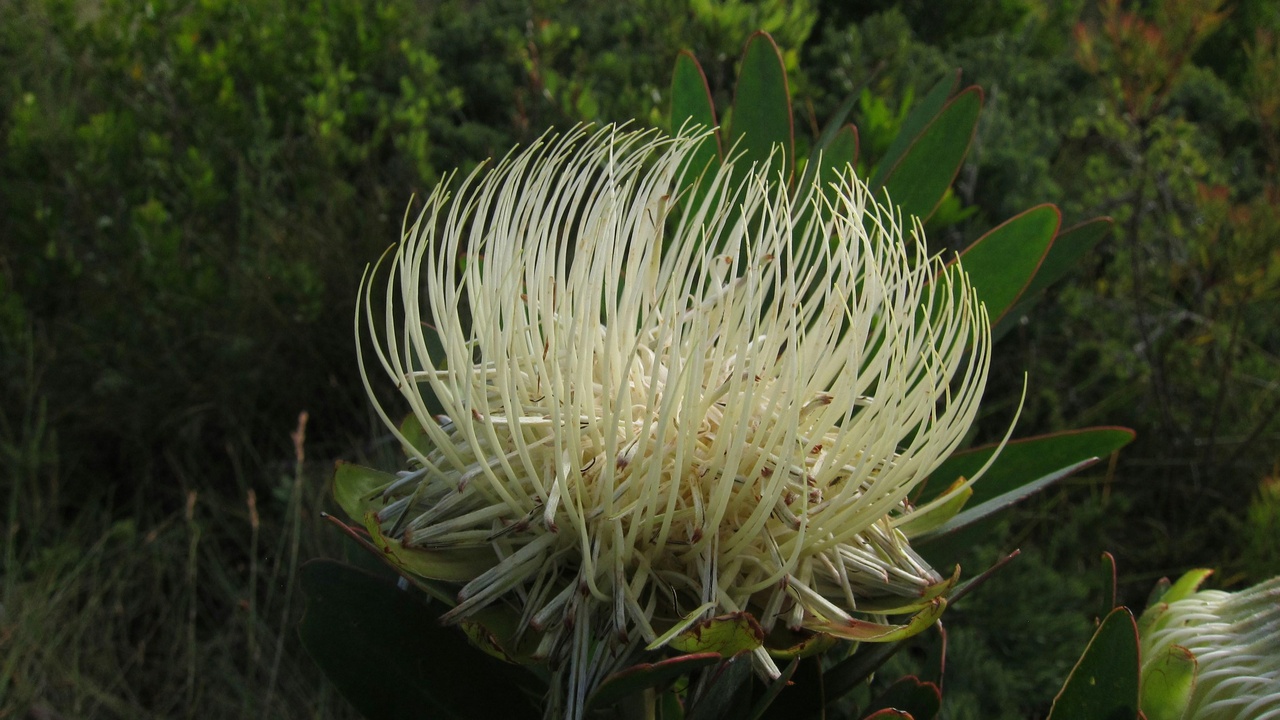
Several Leucospermum species, commonly called pincushions, occur in narrow coastal lowlands and include local forms that are vulnerable to urban expansion and invasive plants. Threatened populations are the focus of seed-saving projects and specialist nurseries that cultivate rare forms to reduce pressure on wild populations. Protected coastal reserves maintain the last strongholds for some of these distinctive proteoids.
Summary
Key takeaways and simple actions to support South African plant diversity.
- South Africa contains over 20,000 vascular plant species, with roughly 9,000 concentrated in the Cape Floristic Region (UNESCO inscribed in 2004).
- Plants such as rooibos, marula, and Cape Aloe link ecology with livelihoods—supporting agriculture, small businesses, and international markets.
- Conservation tools—including seed banks, botanical gardens, and reintroductions (e.g., Erica verticillata)—have produced notable recovery successes.
- To help, support botanical gardens and NGOs, buy sustainably sourced rooibos or aloe products, and visit protected wildflower areas responsibly to learn and contribute to local economies.
The next time you see a protea, a quiver tree, or a cup of rooibos, remember these species are part of a larger network of ecology, culture, and conservation that defines The flora of south africa.