Panama’s narrow land bridge brings together Pacific and Caribbean coasts, lowland rainforest and inland rivers, creating a mix of habitats where reptiles thrive from beaches to forest canopy. That variety makes a simple list a handy way to see who lives where and how big they get.
There are 31 Reptiles of Panama, ranging from American crocodile to Yellow-bellied sea snake. For each entry I list Scientific name,Max length (cm),Range so you can compare species by identity, size and distribution — you’ll find the details below.
Where in Panama am I most likely to see these reptiles?
Coastal mangroves and river mouths are good for crocodiles and sea snakes, while lowland rainforests, agricultural edges and forest trails host many lizards and snakes; protected areas like Darién, Soberanía and Coiba offer higher chances. Visit at dawn or dusk, follow local guidelines, and avoid handling wildlife.
How reliable are the size and range entries, and how should I use them?
The list compiles field guide and museum records, so Max length (cm) indicates typical adult maxima and Range is a general distribution; local populations can vary. Use the table for ID and trip planning, and consult regional guides or experts for precise, up-to-date info.
Reptiles of Panama
| Common name | Scientific name | Max length (cm) | Range |
|---|---|---|---|
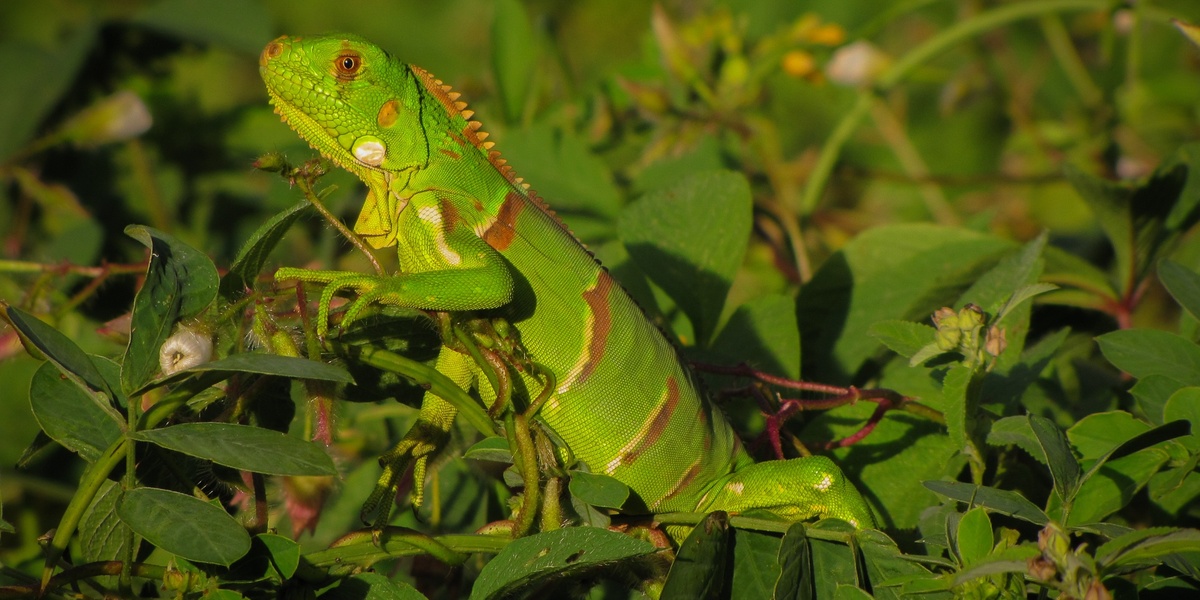
| Green iguana | Iguana iguana | 150 | Widespread lowlands, coasts and riversides |
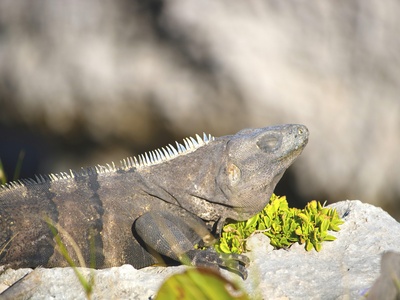
| Black spiny-tailed iguana | Ctenosaura similis | 110 | Pacific lowlands and coastal forests |
| Brown basilisk | Basiliscus vittatus | 75 | Lowland rainforests and riversides, both coasts |
| Green anole | Anolis biporcatus | 45 | Widespread lowland forests and forest edges |
| Panama anole | Anolis limifrons | 12 | Lowland wet forests and gardens across Panama |
| Bark anole | Anolis apletophallus | 8 | Lowland forest understory, Canal Zone forests |
| Rainforest whiptail | Ameiva ameiva | 90 | Open sunny areas, forest edges, Canal Zone |
| Gold tegu | Tupinambis teguixin | 100 | Lowland forests and disturbed areas, Pacific and interior |
| Tropical house gecko | Hemidactylus frenatus | 15 | Urban areas nationwide, introduced |
| Boa constrictor | Boa constrictor | 300 | Widespread in lowland forests and edges |
| Rainbow boa | Epicrates cenchria | 180 | Darién and eastern rainforests |
| Fer-de-lance | Bothrops asper | 200 | Humid lowlands, Pacific and Caribbean slopes |
| Bushmaster | Lachesis stenophrys | 220 | Remote lowland rainforests, Darién and eastern zones |
| Eyelash viper | Bothriechis schlegelii | 75 | Humid lowland and premontane forests, both slopes |
| Central American coral snake | Micrurus nigrocinctus | 90 | Lowland forests and edges on both coasts |
| Blunthead tree snake | Imantodes cenchoa | 80 | Forest canopy and edges nationwide |
| Green vine snake | Oxybelis fulgidus | 120 | Forest edges and secondary growth, lowlands |
| Parrot snake | Leptophis ahaetulla | 120 | Lowland forests and secondary growth throughout |
| Yellow-bellied sea snake | Pelamis platura | 120 | Pelagic waters off both coasts |
| Leatherback sea turtle | Dermochelys coriacea | 170 | Nesting beaches and offshore waters, both coasts |
| Olive ridley | Lepidochelys olivacea | 70 | Pacific nesting beaches, central Pacific coast |
| Green sea turtle | Chelonia mydas | 120 | Coastal waters and nesting beaches, both coasts |
| Hawksbill sea turtle | Eretmochelys imbricata | 90 | Coral reefs, coastal waters and nesting beaches |
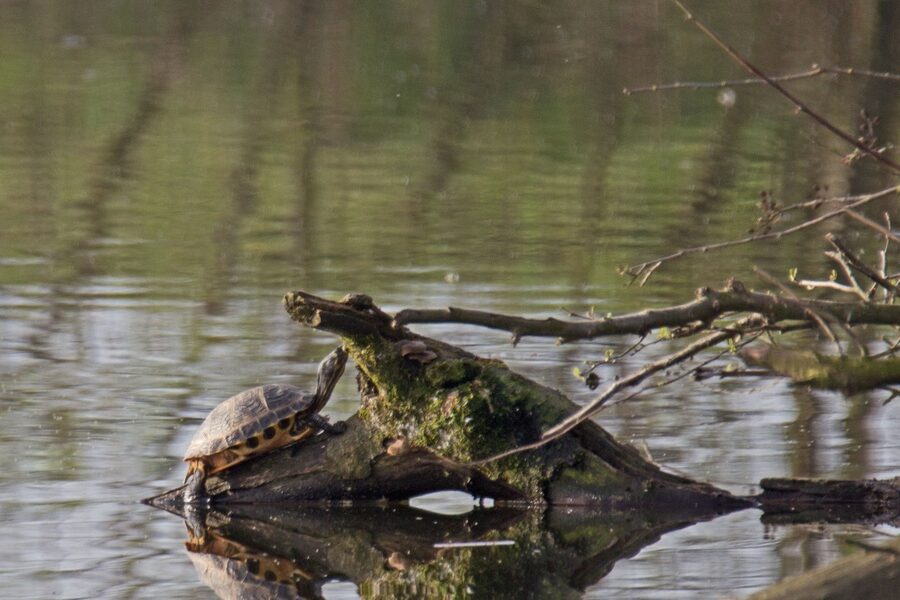
| White-lipped mud turtle | Kinosternon leucostomum | 20 | Slow rivers, ponds and marshes in lowlands |
| Painted wood turtle | Rhinoclemmys pulcherrima | 30 | Wet forests and streams, both coasts |
| Black wood turtle | Rhinoclemmys funerea | 35 | Humid lowland forests, Caribbean and Darién regions |
| American crocodile | Crocodylus acutus | 400 | Coastal rivers, estuaries and mangroves, both coasts |
| Spectacled caiman | Caiman crocodilus | 200 | Freshwater rivers, swamps and lagoons, interior and Darién |
| Panamanian ground anole | Norops oxylophus | 10 | Lowland forests near Canal Zone and Pacific slopes |
| Panamanian poison frog eater (bird snake) | Erythrolamprus bizona | 100 | Forest floor and edges, Atlantic lowlands |
| Central American glass lizard | Ophisaurus attenuatus | 80 | Open areas and edges in northern Panama |
Images and Descriptions
Green iguana
Large arboreal lizard with a dewlap and dorsal crest often seen basking over water. Herbivorous and common in disturbed areas; frequently seen in parks and mangroves. IUCN: Least Concern.
Black spiny-tailed iguana
Robust, fast lizard with a spiny tail and bold patterning; basks on rocks and walls. Often found in dry forests and near farms; primarily herbivorous and wary. IUCN: Least Concern.
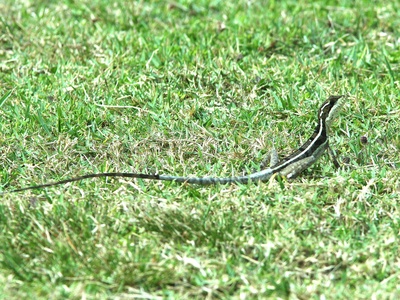
Brown basilisk
“Jesus lizard” famous for running across water on hind feet; has a crest and long tail. Diurnal and often near streams, excellent swimmer and climber. IUCN: Least Concern.
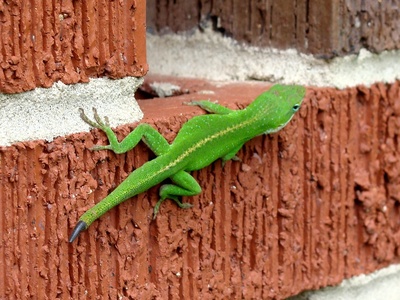
Green anole
Large anole that shifts from green to brown, with a prominent dewlap in males. Perches on trunks and shrubs; a common, conspicuous lizard. IUCN: Least Concern.
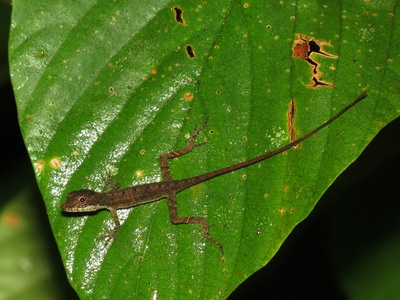
Panama anole
Small, bright-green anole often on tree trunks and shrubs; quick-moving and common in forest understory and gardens. Males display head-bobs and dewlaps. IUCN: Least Concern.
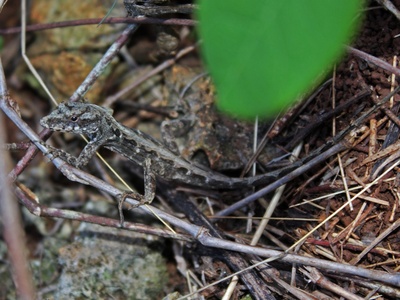
Bark anole
Tiny brown anole active on trunks and leaf litter; territorial and fast. Easy to spot in shaded forest trails and secondary growth. IUCN: Least Concern.
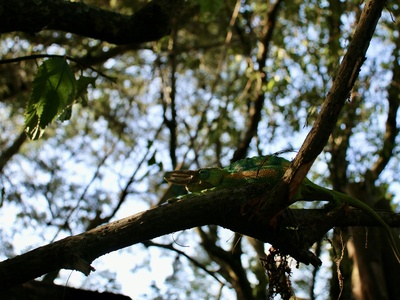
Rainforest whiptail
Active ground-dweller with long tail and mottled pattern; fast and confident in open areas. Omnivorous, frequently seen sunning on trails. IUCN: Least Concern.
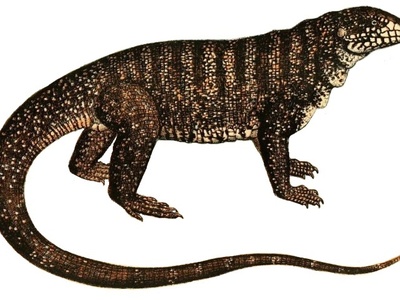
Gold tegu
Large, heavy-bodied lizard foraging on ground for fruit, eggs, and small animals. Bold and terrestrial; often near human settlements. IUCN: Least Concern.
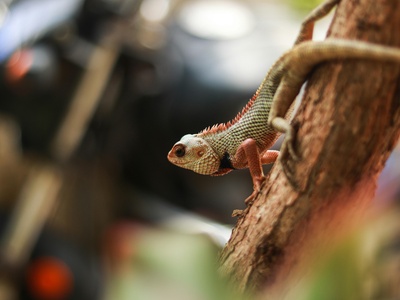
Tropical house gecko
Small nocturnal gecko that perches on walls and lights; common in towns and ports. Introduced and widespread, often displacing natives. IUCN: Not Evaluated (invasive).
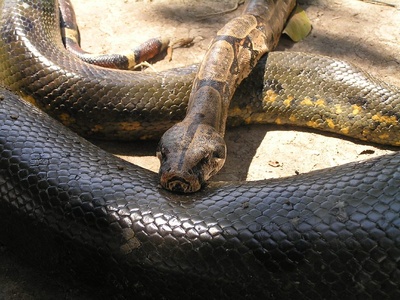
Boa constrictor
Large ambush constrictor with variable patterning; preys on mammals and birds. Secretive but widespread in forested habitats. IUCN: Least Concern.
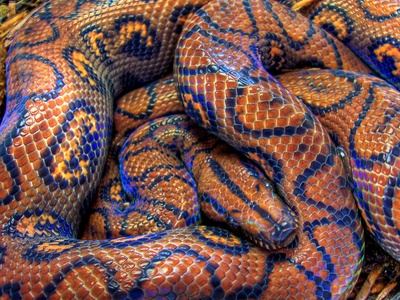
Rainbow boa
Glossy, reddish-brown boa with iridescent sheen and round blotches; nocturnal and arboreal to semi-arboreal in rainforests. IUCN: Least Concern.
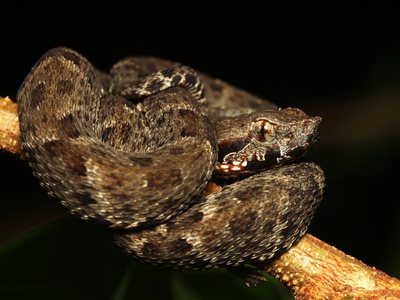
Fer-de-lance
Stout, highly venomous pit viper responsible for most bites; cryptic daytime/resting color and active at night. Found in lowland forests and disturbed areas. IUCN: Least Concern.
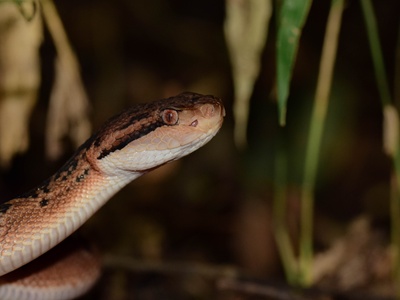
Bushmaster
Largest New World viper, secretive and rare; delivers potent venom and favors deep forest habitats. Seldom seen by people. IUCN: Least Concern.
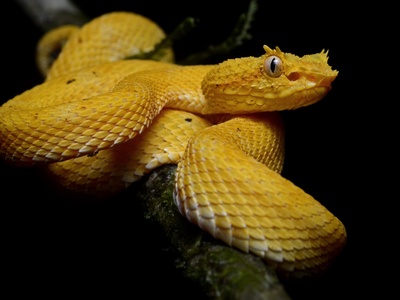
Eyelash viper
Colorful, arboreal pit viper with supraocular “eyelash” scales; sits coiled in vegetation waiting for frogs and birds. IUCN: Least Concern.
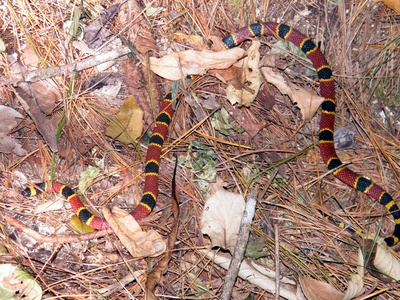
Central American coral snake
Small, vividly banded elapid with potent neurotoxic venom; secretive and rarely aggressive when encountered. Distinctive red/black/yellow rings. IUCN: Least Concern.
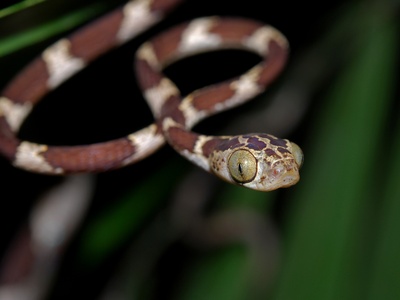
Blunthead tree snake
Extremely slender, big-eyed arboreal snake that feeds on frogs; often seen at night in vegetation. Harmless to humans. IUCN: Least Concern.

Green vine snake
Long, thin green snake perfectly camouflaged in branches; mildly venomous rear-fanged hunter of lizards and frogs. Diurnal and quick-moving. IUCN: Least Concern.
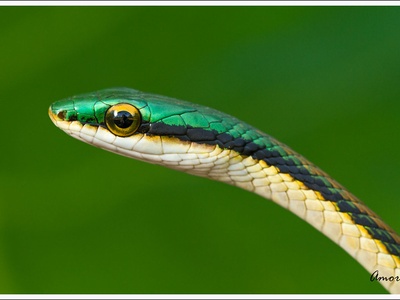
Parrot snake
Slender, bright green arboreal snake commonly seen in shrubs; diurnal and fast, preying on frogs and small birds. Mildly venomous to prey. IUCN: Least Concern.
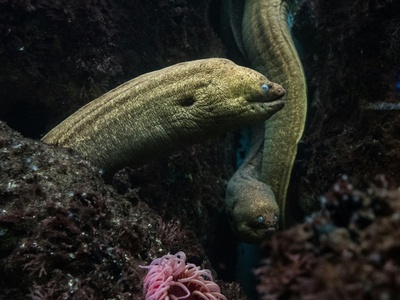
Yellow-bellied sea snake
Fully marine venomous snake that drifts on ocean currents; occasional visitors to Panamanian offshore waters. Rarely encountered by beachgoers. IUCN: Least Concern.
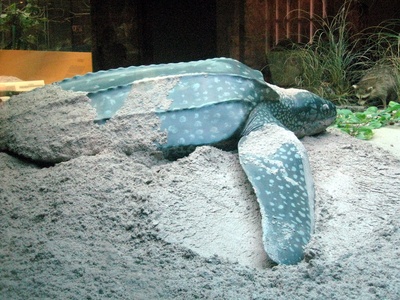
Leatherback sea turtle
World’s largest turtle with a leathery shell, long migrations and deep dives. Nests on Pacific and Caribbean beaches; population declines are a global concern. IUCN: Vulnerable.
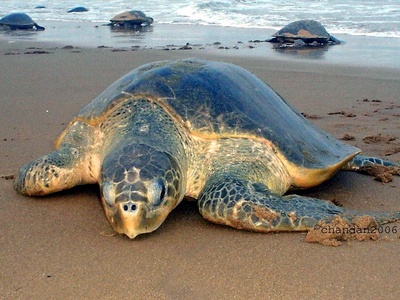
Olive ridley
Small, gregarious sea turtle known for mass arribadas on Pacific beaches; common offshore and nests seasonally. IUCN: Vulnerable.

Green sea turtle
Large, mostly herbivorous marine turtle found in seagrass beds; nests on both coasts and is a frequent conservation focus. IUCN: Endangered.
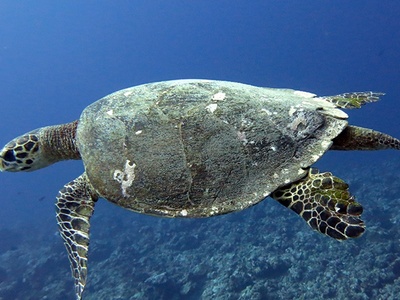
Hawksbill sea turtle
Colorful carapace, specializes on sponges; heavily impacted by shell trade and habitat loss. Nests on both coasts in small numbers. IUCN: Critically Endangered.
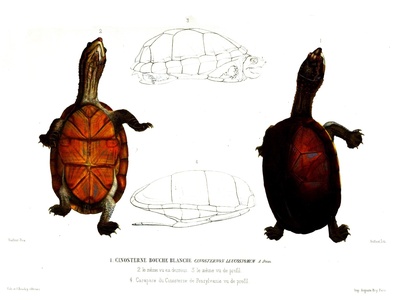
White-lipped mud turtle
Small mud turtle with hinged plastron; secretive and mostly aquatic, omnivorous diet. Often active at night. IUCN: Least Concern.
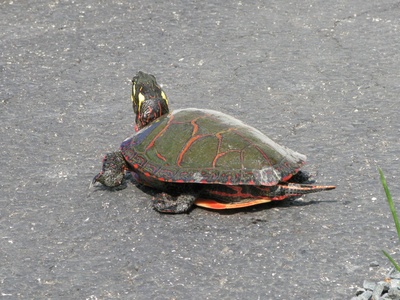
Painted wood turtle
Attractive small wood turtle with patterned carapace; terrestrial habits near water and omnivorous. Often seen crossing forest floors. IUCN: Least Concern.
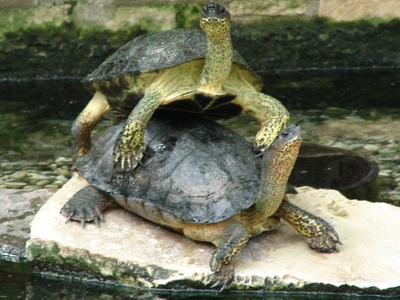
Black wood turtle
Dark-shelled terrestrial turtle of wet forests and stream edges; shy and primarily terrestrial, feeds on plants and invertebrates. IUCN: Near Threatened.
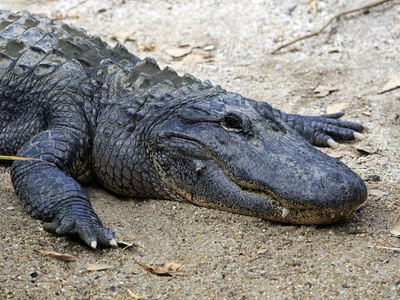
American crocodile
Large salt-tolerant crocodile inhabiting estuaries and mangrove waterways; apex predator and wary of people. Protects nesting sites seasonally. IUCN: Vulnerable.
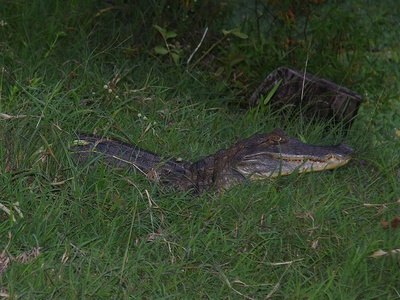
Spectacled caiman
Smaller crocodilian common in inland waters; adaptable and widespread, often found in slow-moving rivers and marshes. IUCN: Least Concern.

Panamanian ground anole
Small ground and trunk anole often seen on low vegetation; rapid movements and territorial displays. IUCN: Least Concern.
Panamanian poison frog eater (bird snake)
Nonvenomous colubrid often mimicking coral patterns; feeds on frogs and small reptiles. Frequently mistaken for venomous species. IUCN: Not Evaluated.
Central American glass lizard
Legless lizard with elongated body and movable eyelids; feeds on insects and small vertebrates. Often mistaken for a snake. IUCN: Not Evaluated