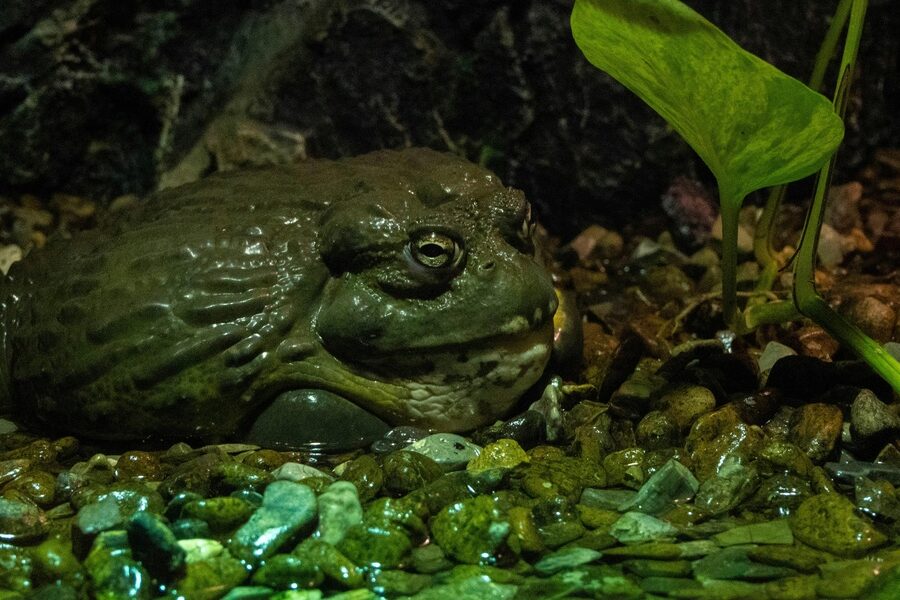
Niger’s varied landscapes—from Sahelian grasslands to rocky massifs and Saharan dunes—support a surprising mix of reptiles adapted to heat, seasonal rains, and scarce water. Observing them offers insight into how species persist across big environmental gradients and human-used areas.
There are 15 Reptiles of Niger, ranging from Agama to Senegal chameleon. For each species you’ll find below the data organized as Scientific name,IUCN status,Range in Niger, and you’ll find these details below.
Which reptiles in Niger are most at risk and how can I check their status?
Check the IUCN status column in the list below for each species; it’s the quickest way to see conservation concerns. Generally, habitat specialists and range-restricted species face higher risk from land use change, grazing, and collection, while widespread species tend to be Least Concern.
Where in Niger am I most likely to see these reptiles and when should I go?
Look in habitat-appropriate places: Sahelian savanna and seasonal floodplains for many lizards, rocky outcrops and the Aïr massif for specialized species, and oases or river margins in drier regions. Early morning or late afternoon in the warmer months increases sightings; always follow local guidelines and avoid disturbing wildlife.
Reptiles of Niger
| Common name | Scientific name | IUCN status | Range in Niger |
|---|---|---|---|
| Agama | Agama agama | LC | Sahel savanna; towns and rocky outcrops |
| Nile monitor | Varanus niloticus | LC | Niger River valley; permanent pools and wetlands |
| Savannah monitor | Varanus exanthematicus | LC | Sahel savanna; near waterholes and cultivated areas |
| House gecko | Hemidactylus frenatus | LC | Urban areas, towns and villages across Niger |
| Ringed wall gecko | Tarentola annularis | LC | Rocky wadis, oasis edges and northern Sahel fringe |
| Fringe‑fingered lizard | Acanthodactylus scutellatus | LC | Sahara dunes, sandy plains and rocky desert |
| Helmeted turtle | Pelomedusa subrufa | LC | Niger River, seasonal pools and irrigation channels |
| Carpet viper | Echis ocellatus | LC | Sahel savanna, farmlands and grazing areas |
| Puff adder | Bitis arietans | LC | Sahel savanna, grassland and peri‑urban areas |
| Black‑necked spitting cobra | Naja nigricollis | LC | Sahel savanna, riverine zones and farmlands |
| Boomslang | Dispholidus typus | LC | Riparian trees, wooded savanna and shrubland |
| Sand racer | Psammophis schokari | LC | Sahara and Sahel sandy plains, dune edges |
| Five‑lined skink | Trachylepis quinquetaeniata | LC | Sahel savanna, gardens, walls and rocky areas |
| Fat‑tailed gecko | Hemitheconyx caudicinctus | LC | Sahel savanna, termite mound and rocky microhabitats |
| Senegal chameleon | Chamaeleo senegalensis | LC | Sahel woodlands, riverine vegetation in southern Niger |
Images and Descriptions
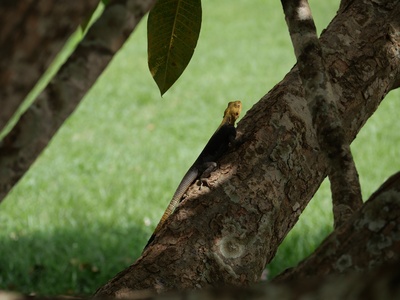
Agama
A diurnal, colorful lizard 20.00–30.00 cm commonly seen on rocks and walls across the Sahel and along the Niger River. Males display bright blue heads in breeding season. Tolerant of disturbed habitats; harmless and not endemic.
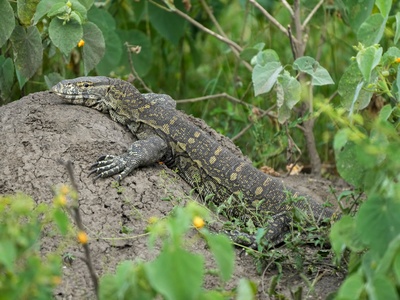
Nile monitor
Large semi‑aquatic monitor 150.00–220.00 cm that frequents rivers, floodplain pools and oases. Opportunistic predator of fish, birds and carrion. Locally reduced by hunting but globally assessed as Least Concern; powerful bite, avoid handling.
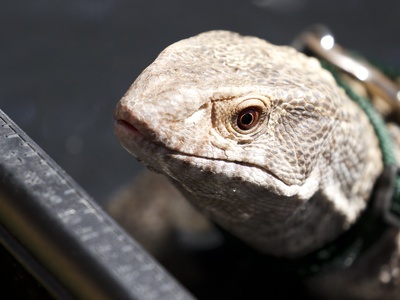
Savannah monitor
Robust ground monitor 60.00–120.00 cm common in Sahel grasslands and near water. Feeds on invertebrates and small vertebrates. Locally collected for trade; globally Least Concern. Strong bite—handle with caution.
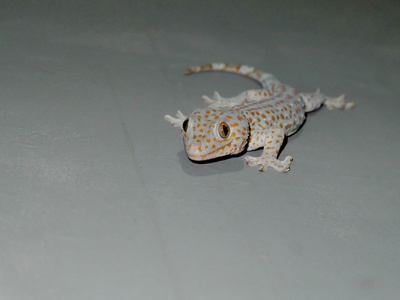
House gecko
Small nocturnal gecko 6.00–12.00 cm frequent on walls and lights in towns. An introduced commensal insectivore that thrives around humans. Harmless and helpful for insect control; common and not threatened.
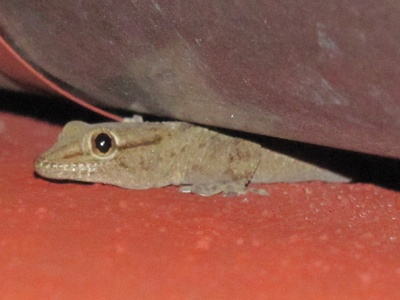
Ringed wall gecko
Stout nocturnal gecko 7.00–15.00 cm found on boulders and cliff faces in the Sahara fringe. Tuberculate skin and stout digits for climbing. Locally common in rocky desert habitats; not harmful to people.
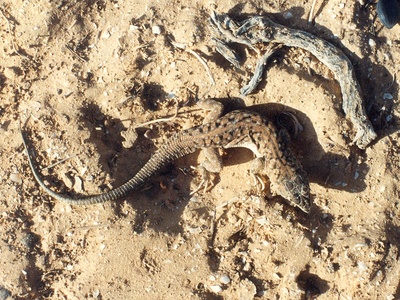
Fringe‑fingered lizard
Slim, fast lacertid 8.00–18.00 cm that races across dunes in the Sahara. Pale coloration and fringed toes help with digging and locomotion on loose sand. Well adapted to aridity; sensitive to major habitat change.
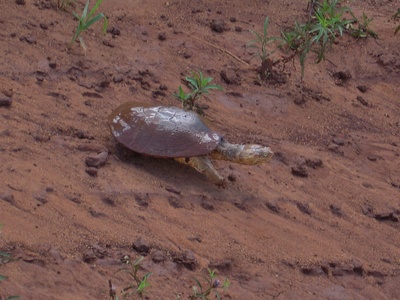
Helmeted turtle
Freshwater helmeted turtle 20.00–35.00 cm common in rivers, ponds and seasonal pools. Omnivorous and resilient, it buries into mud to survive dry spells. Locally harvested but widespread and assessed as Least Concern.
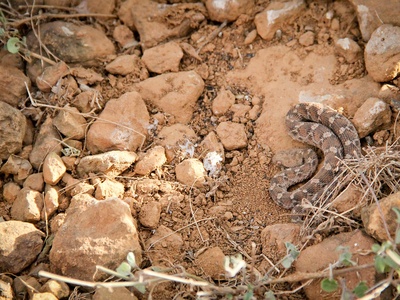
Carpet viper
Venomous viper 30.00–60.00 cm inhabiting dry savanna and agricultural zones. Highly medically important with frequent snakebite incidents in the Sahel. Cryptic coloration and stout body; avoid and seek urgent medical care if bitten.
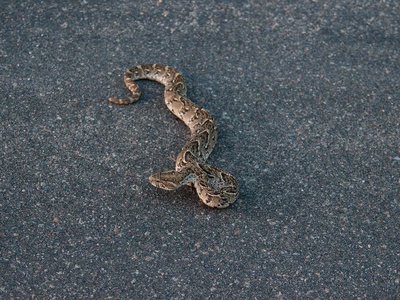
Puff adder
Heavy ambush viper 60.00–125.00 cm well camouflaged in grasses and loose soils. Responsible for medically significant bites; tolerates disturbed habitats and is often found near people in rural areas.
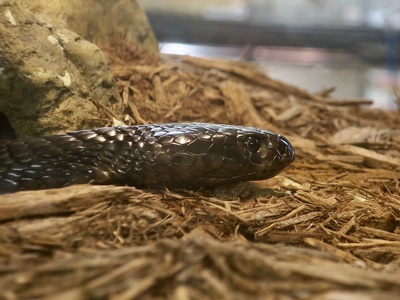
Black‑necked spitting cobra
Spitting cobra 90.00–140.00 cm found in savanna and near settlements. Can eject venom harming eyes and also delivers dangerous bites. Medically important; avoid provoking and treat eye exposure promptly.
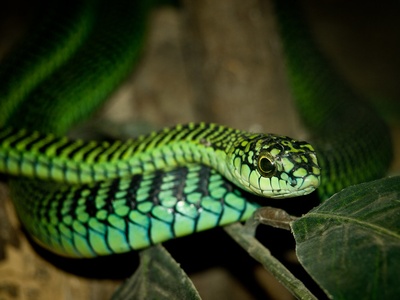
Boomslang
Long, arboreal rear‑fanged snake 60.00–160.00 cm seen in shrubs and trees near watercourses. Highly agile; venom can be dangerous but human bites are rare. Prefers wooded riverine habitat within the Sahel.
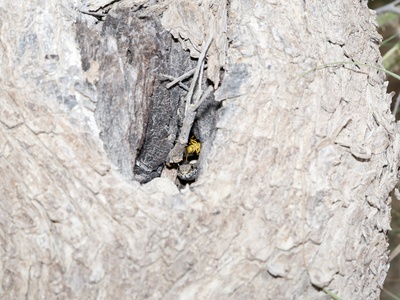
Sand racer
Fast, slender snake 60.00–120.00 cm that hunts lizards and small rodents across desert and semi‑desert. Mild venom for subduing prey but generally not dangerous to humans. Common on sand plains and dune margins.

Five‑lined skink
Striped skink 12.00–20.00 cm common on rocks, walls and low vegetation in towns and savanna. Diurnal insectivore tolerant of human‑modified habitats. Frequently observed and not threatened.
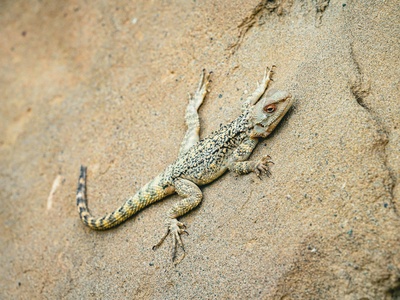
Fat‑tailed gecko
Nocturnal terrestrial gecko 15.00–25.00 cm that stores fat in its tail to survive dry seasons. Secretive, common in Sahelian zones; sometimes collected for the pet trade but generally widespread locally.

Senegal chameleon
Small arboreal chameleon 15.00–25.00 cm found on shrubs and riparian trees near the Niger River. Insectivorous and capable of color change for communication and camouflage. Sensitive to habitat loss locally but not endemic.