Across shifting landscapes—from coastal dunes and prairie remnants to old-growth woodlands—many small species go unnoticed, yet their presence says a lot about local habitat quality. This list gathers species that are rarely seen and often missed by casual observers, with notes to help you narrow identification in the field.
There are 11 rare insects, ranging from Blackburn’s sphinx moth to Rusty patched bumblebee. For each entry the data are organized by Scientific name, Size (mm), Range to make comparisons straightforward and useful for both beginners and experienced naturalists—you’ll find below.
How can I reliably identify these species in the field?
Start with habitat and season, then use size and distinguishing marks listed under Scientific name and Size (mm). Photograph multiple angles, note behavior and flowering plants nearby, and compare your images to range maps before trusting an ID. A small hand lens and a field guide or local expert can resolve tricky markings without handling the insect.
What should I do if I think I’ve found one of these species?
Document the sighting with clear photos, GPS or a precise location, date and habitat notes, and upload to a citizen-science platform (e.g., iNaturalist) or contact a local entomologist. Some species like the rusty patched bumblebee have legal protections, so avoid collecting specimens unless you have permits and expert guidance.
Rare Insects
| Name | Scientific name | Size (mm) | Range |
|---|---|---|---|
| Lord Howe Island stick insect | Dryococelus australis | 90 | Lord Howe Island (Australia) |
| Queen Alexandra’s birdwing | Ornithoptera alexandrae | 90 | Oro Province (Papua New Guinea) |
| Rusty patched bumblebee | Bombus affinis | 20 | Eastern USA, Southern Canada |
| Poweshiek skipperling | Oarisma poweshiek | 18 | Prairie remnants (U.S., Canada) |
| Hine’s emerald dragonfly | Somatochlora hineana | 40 | Great Lakes & Midwest (USA), Ontario (Canada) |
| Jamaican giant swallowtail | Papilio homerus | 80 | Eastern Jamaica |
| Hawaiian picture‑wing fly (Big Island) | Drosophila heteroneura | 4 | Hawaiʻi (Big Island) |
| Franklin’s bumblebee | Bombus franklini | 15 | Southwest Oregon and Northern California (USA) |
| Blackburn’s sphinx moth | Manduca blackburni | 60 | Hawaiian Islands (Oʻahu, Maui, Hawaiʻi) |
| Palos Verdes blue (subspecies) | Glaucopsyche lygdamus palosverdesensis | 20 | Palos Verdes Peninsula (California, USA) |
| Hawaiian yellow‑faced bee | Hylaeus anthracinus | 6 | Hawaiian Islands (Hawaii chain) |
Images and Descriptions
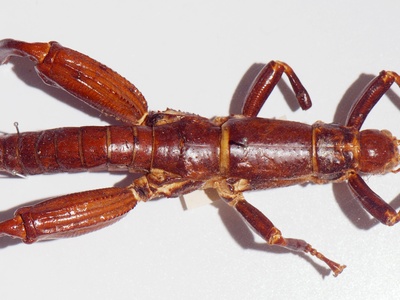
Lord Howe Island stick insect
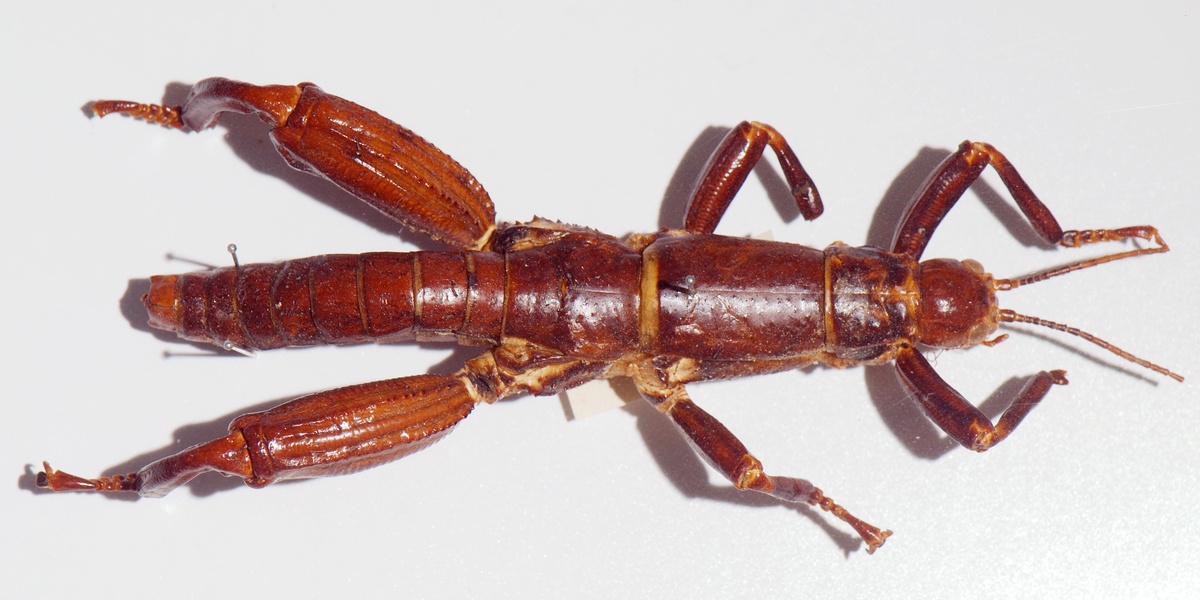
A flightless stick insect once thought extinct on the main island, rediscovered on nearby Ball’s Pyramid. Critically rare from invasive rats and extreme range restriction; notable for its large, heavy body and long, spiny legs used for gripping cliffs.
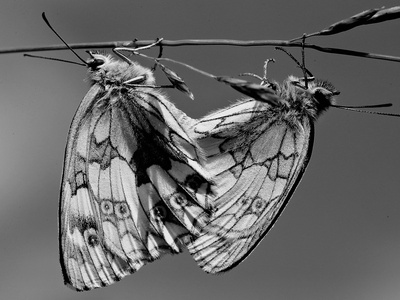
Queen Alexandra’s birdwing
The world’s largest butterfly by wingspan, found only in lowland rainforests of Papua New Guinea. Endangered due to deforestation and collector pressure; notable for dramatic iridescent green and black males and very restricted habitat needs.
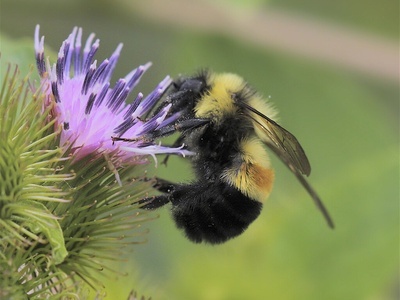
Rusty patched bumblebee
Once common eastern North American pollinator that has crashed across much of its range; now endangered from disease, pesticide exposure, and habitat loss. Notable for a small rusty abdominal patch and important role in wildflower and crop pollination.

Poweshiek skipperling
A tiny prairie butterfly that has lost most of its habitat to agriculture and development; populations collapsed to a handful of sites. Critically rare and notable for its dependence on native prairie plants and short, fragile flight season.

Hine’s emerald dragonfly
A metallic green dragonfly tied to fens and spring-fed wetland complexes. Federally endangered in the U.S. because of wetland drainage and development; notable for its shy behavior and reliance on rare groundwater-fed habitats.
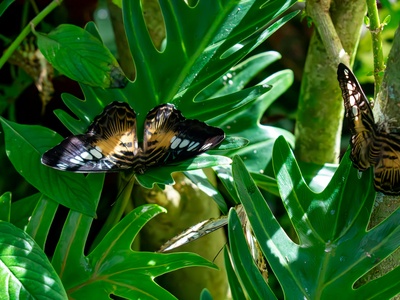
Jamaican giant swallowtail
The largest Caribbean butterfly, now confined to a few protected Jamaican forest valleys. Endangered from habitat loss and small populations; notable for dramatic swallowtail extensions and striking black-and-yellow patterning.

Hawaiian picture‑wing fly (Big Island)
One of Hawaii’s iconic picture‑wing flies with elaborate wing patterns used in courtship. Endangered and extremely range‑restricted due to invasive predators, habitat loss, and introduced plants; notable for its unusual wing shapes used in species recognition.
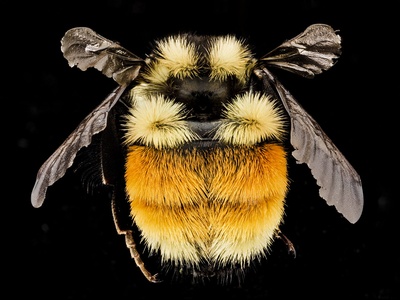
Franklin’s bumblebee
A tiny, extremely range‑restricted bumblebee with precipitous declines; last confirmed records are rare and it is possibly extinct. Notable for its historic confinement to a narrow coastal corridor and sensitivity to disease and habitat change.
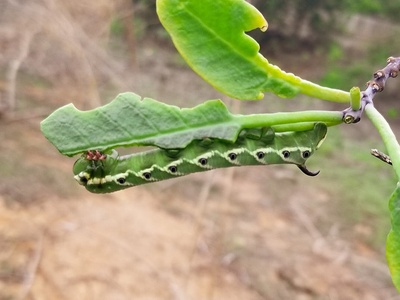
Blackburn’s sphinx moth
A large native Hawaiian hawkmoth now rare from loss of host plants and habitat fragmentation. Listed under U.S. conservation law; notable for robust size and role as a nocturnal pollinator of native flowers.
Palos Verdes blue (subspecies)
An extremely range‑restricted butterfly subspecies surviving in tiny coastal scrub fragments. Federally listed as endangered; notable for tiny, intensely localized populations and conservation efforts to restore coastal habitat and host plants.
Hawaiian yellow‑faced bee
A small, solitary bee unique to Hawaii, endangered from invasive species, habitat loss, and disease. Notable for nearly hairless, mask‑like yellow facial markings and for nesting in stems and tunnels rather than hives.