India’s forests, hills and cities are home to a surprising variety of primates, each adapted to different habitats from Himalayan foothills to coastal plains. Spotting them adds a memorable wildlife layer to travel and nature walks across the subcontinent.
There are 12 types of monkeys in india, ranging from the Arunachal macaque to the Stump-tailed macaque. For each species you’ll find below the basic details organized as: Scientific name,Size (cm) / Weight (kg),Range (Indian states/region). The list highlights differences in size, appearance and distribution to help you identify species in the field — you’ll find below.
How can I tell different monkey species apart when I see them in the wild?
Look for size, tail length and shape, facial markings and coat color, plus behavior and habitat (leaf-eating colobines vs. omnivorous macaques). Note the location and take photos of key features (face, tail, hands) to compare with field guides or the table below.
Which monkey species are most commonly found near towns and temples?
Rhesus macaques and bonnet macaques are the ones you’ll most often see around human settlements; they adapt well to urban food sources and trees. Keep a respectful distance and avoid feeding them to reduce conflict and protect both people and animals.
Types of Monkeys in India
| Common name | Scientific name | Size (cm) / Weight (kg) | Range (Indian states/region) |
|---|---|---|---|
| Rhesus macaque | Macaca mulatta | 40-60 cm / 6.5 kg | Uttar Pradesh, Punjab, Delhi, Rajasthan, Bihar, northern India |
| Bonnet macaque | Macaca radiata | 40-50 cm / 5.5 kg | Tamil Nadu, Karnataka, Kerala, Andhra Pradesh |
| Assamese macaque | Macaca assamensis | 45-65 cm / 8.0 kg | Assam, Arunachal Pradesh, Meghalaya, northeastern India |
| Stump-tailed macaque | Macaca arctoides | 45-65 cm / 9.0 kg | Assam, Arunachal Pradesh, Meghalaya, Mizoram |
| Lion-tailed macaque | Macaca silenus | 45-60 cm / 7.5 kg | Karnataka, Kerala, Tamil Nadu (southern Western Ghats) |
| Arunachal macaque | Macaca munzala | 50-65 cm / 9.0 kg | Western Arunachal Pradesh (Tawang, West Kameng) |
| Hanuman langur | Semnopithecus entellus | 50-80 cm / 15.0 kg | Uttar Pradesh, Rajasthan, Madhya Pradesh, Bihar, widespread |
| Himalayan langur | Semnopithecus schistaceus | 55-75 cm / 12.0 kg | Jammu & Kashmir, Himachal Pradesh, Uttarakhand, Sikkim |
| Nilgiri langur | Semnopithecus johnii | 55-65 cm / 10.5 kg | Kerala, Tamil Nadu, Karnataka (Western Ghats) |
| Capped langur | Trachypithecus pileatus | 50-70 cm / 8.0 kg | Assam, Meghalaya, Arunachal Pradesh, Nagaland |
| Phayre’s langur | Trachypithecus phayrei | 50-70 cm / 9.0 kg | Assam, Arunachal Pradesh, Nagaland |
| Golden langur | Trachypithecus geei | 50-70 cm / 8.5 kg | Assam (Manas, Kokrajhar), Assam–Bhutan border |
Images and Descriptions
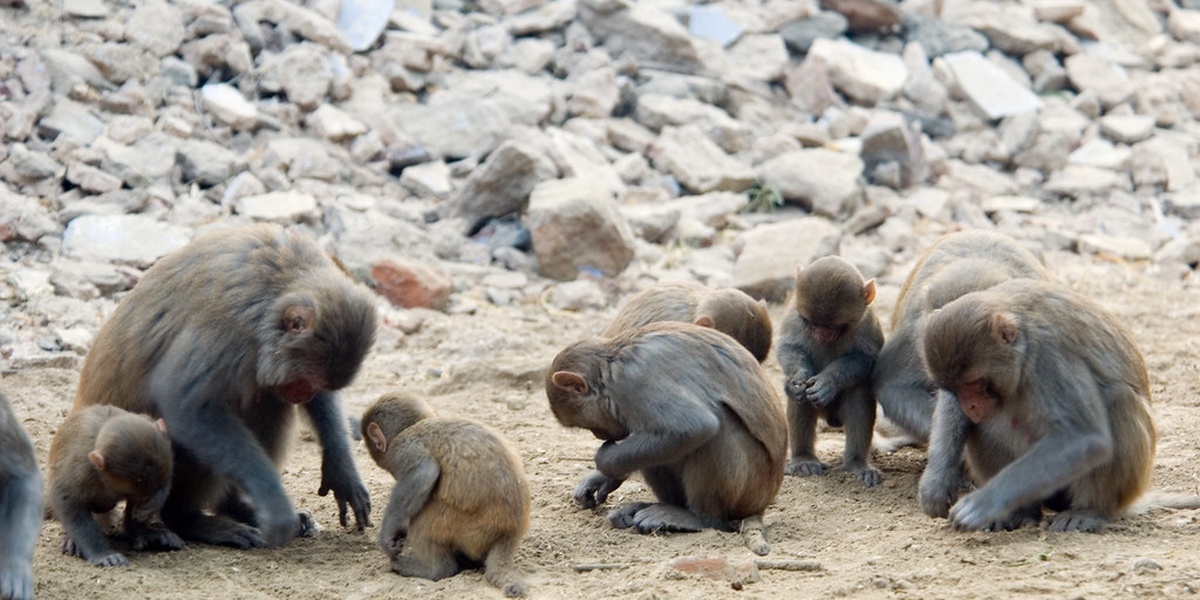
Rhesus macaque
Large, adaptable macaque with brown-grey fur and pink face; often found in cities, forests and temples. Recognizable by cheek pouches and flexible social groups. Very common across India; resilient species important for studies of human-wildlife interaction.
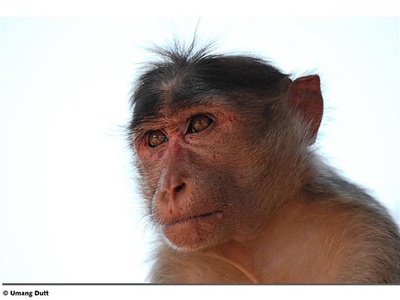
Bonnet macaque
Medium-sized monkey with a distinct bonnet-like hair on its crown; common in southern India. Lives in troops near temples, villages and forests. Often tame around people; faces human-wildlife conflict in urbanized areas.
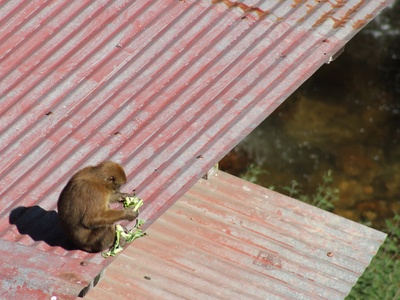
Assamese macaque
Stocky macaque with darker coat and shorter tail; found in hill forests. Lives in Assam and northeastern India, often at higher elevations. Shy and more forest-dependent than rhesus; threatened locally by habitat loss and hunting.
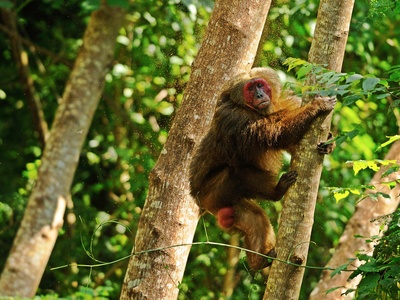
Stump-tailed macaque
Robust, short-tailed macaque with a flat face and dark fur; prefers dense evergreen forests. Lives in groups that forage on ground and in trees. Found in northeastern India; vulnerable to fragmentation and hunting.
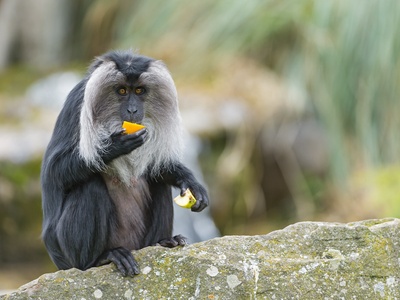
Lion-tailed macaque
Endemic Western Ghats macaque with black fur and silver mane and tufted tail; striking face. Arboreal and shy, inhabits evergreen rainforests. Endangered due to habitat loss and fragmentation; best seen in Karnataka and Kerala protected areas.
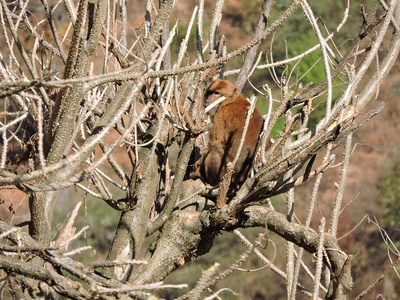
Arunachal macaque
Rare, cold-tolerant macaque with thick fur and pale face; discovered in Arunachal Pradesh. Lives at high elevations in oak-rhododendron forests. Localized distribution makes it vulnerable; sightings mostly in western Arunachal protected areas.
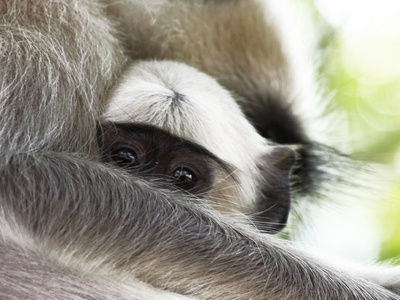
Hanuman langur
Tall, slender langur with long tail and pale face, often seen sitting upright on temple walls. Leaves-based diet; common in forests, scrub and urban areas across much of India. Cultural significance (Hanuman) and adaptable to human presence.
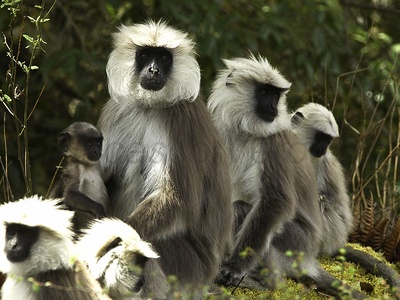
Himalayan langur
Large langur with thick, pale grey coat and bushy tail; adapted to cold Himalayan forests and alpine scrub. Often larger than plains langurs; lives across high Himalayan foothills. Sensitive to disturbance and hunted in some zones.
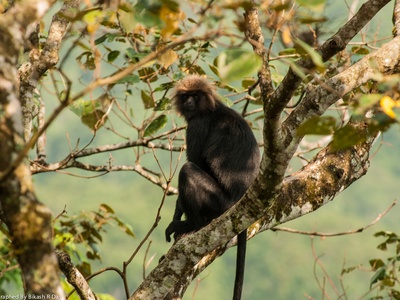
Nilgiri langur
Dark-coated langur with glossy black fur and golden-brown face; endemic to the Western Ghats. Arboreal and folivorous, prefers evergreen and moist deciduous forests. Vulnerable due to habitat loss and hunting; seen in Kerala and Tamil Nadu reserves.
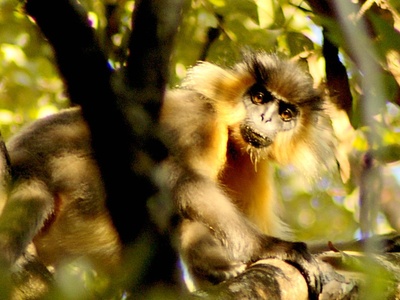
Capped langur
Distinctive with a dark cap and pale cheeks; arboreal and soft-footed. Found in subtropical and tropical forests of northeastern India. Lives in small groups; vulnerable to habitat loss and sometimes hunted for meat.
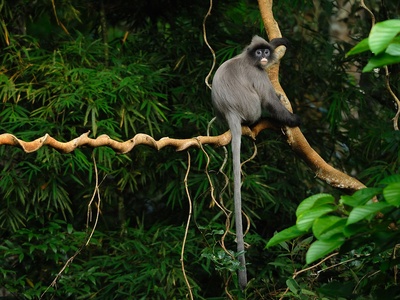
Phayre’s langur
Dark gray langur with pale sideburns and a long tail; prefers dense riverine and hill forests. Occurs in Assam and neighboring states. Sensitive to forest clearance; some populations fragmented and declining.
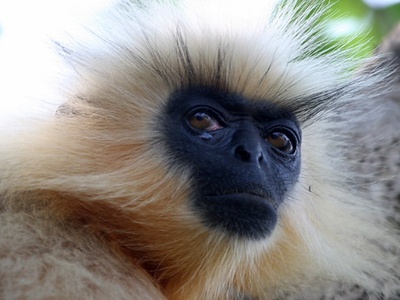
Golden langur
Striking golden-coated langur found in narrow Assam–Bhutan forests; friendly appearance and long tail. Highly range-restricted and endangered due to habitat loss and hybridization; best seen in Manas, Assam and nearby Bhutanese forests.