In 1960, Jane Goodall arrived at Gombe Stream and changed how we think about close relatives in the animal kingdom by documenting tool use and complex social lives among chimpanzees. That single field season opened up a century’s worth of discoveries about behavior, culture and cognition, and it’s one reason primates keep drawing scientific and public attention. These mammals offer direct windows into social learning, evolutionary history and the health of forests and rivers they inhabit. This article profiles ten especially notable species grouped into three sections—Great apes; Monkeys; and Unique/lesser-known primates—and it aims to give concrete facts, emblematic examples, and conservation takeaways you can act on.
Great apes and close relatives
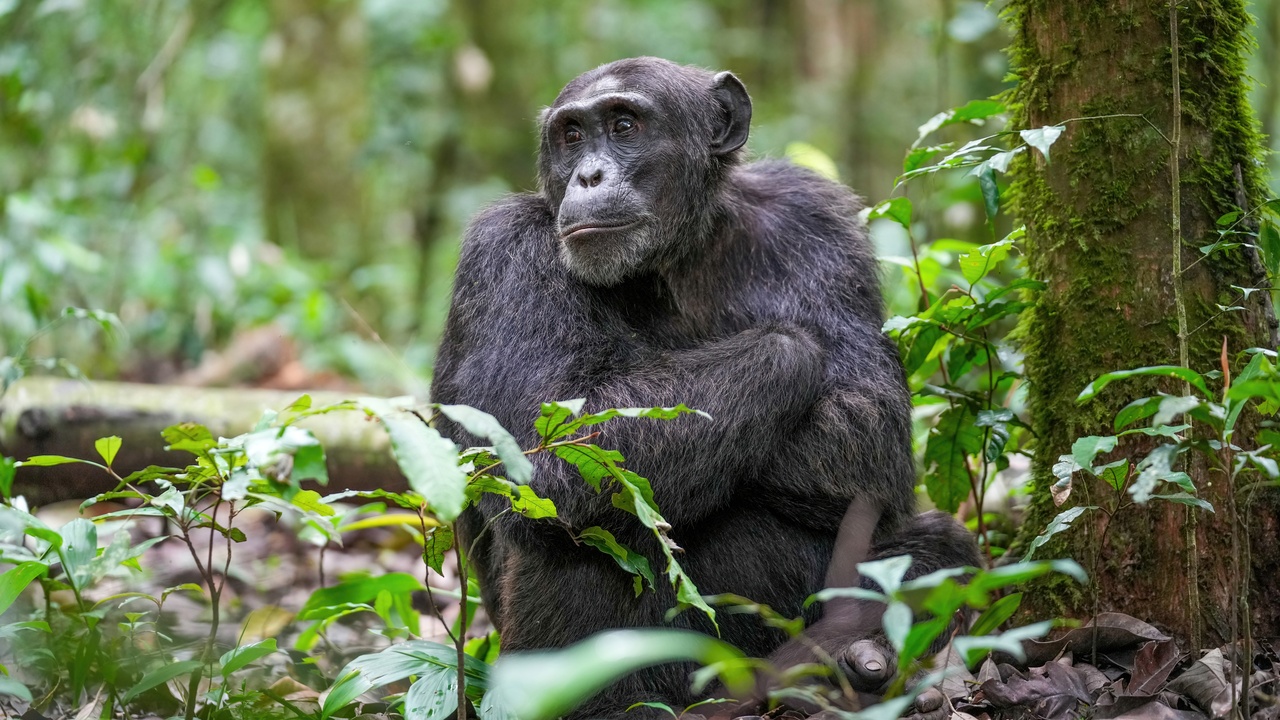
Great apes—chimpanzees, gorillas, orangutans and bonobos—are our closest living relatives and a key lens on cognition and human evolution. Their genomes and behaviors inform everything from neuroscience to conservation policy; for example, chimp and bonobo genomes show roughly 98.7–98.8% similarity to humans. Their conservation status often signals broader habitat and governance problems, and long-term field projects have produced landmark findings since the mid-20th century (Goodall in 1960; Fossey from the 1960s onward).
1. Chimpanzee
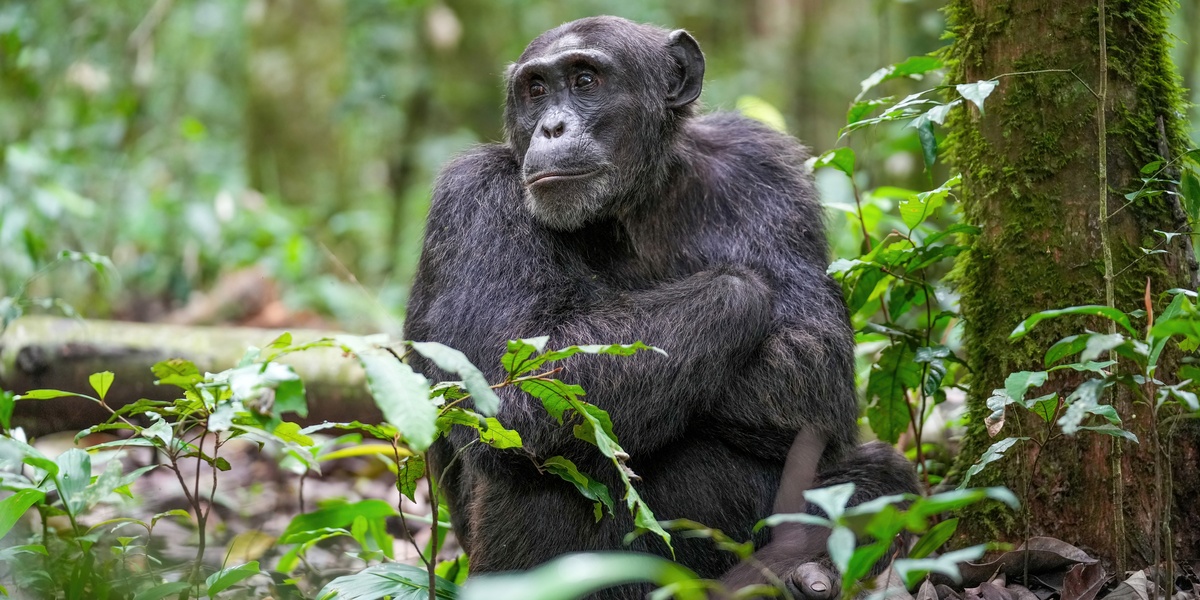
Pan troglodytes, the chimpanzee, ranks high on the list because of its complex tool use, social learning and close genetic ties to humans (about 98.7–98.8% genome similarity). Lifespan varies with environment—up to roughly 50 years in captivity and around 33 years commonly observed in the wild. Jane Goodall’s work at Gombe Stream beginning in 1960 documented termite-fishing, leaf‑sponging and meat-sharing, showing culture-like traditions across groups.
Research on chimps has practical payoffs: neuroscience and social cognition studies use chimp behavior to model aspects of cooperation and empathy, and sanctuaries such as Project Chimps provide rehabilitation and long-term care for rescued animals. Gombe remains a touchstone field site for comparative primatology and conservation outreach.
2. Gorilla
Gorillas (Gorilla spp.) are the largest living primates, with adult males sometimes reaching about 180 kg. They live in tight family groups led by silverbacks and display rich social bonds and tool use—albeit less flashy than in chimps. Mountain gorilla conservation is one of the clearer success stories: counts rose to roughly 1,000+ individuals by the late 2010s thanks to anti‑poaching and tourism-linked protection around Bwindi and Virunga.
Dian Fossey’s Karisoke Research Center laid the groundwork for long-term behavioral data and community-engaged protection. Today, gorilla trekking in Rwanda and Uganda generates vital revenue that helps fund park rangers and local development while illustrating how ecotourism can align with species recovery and disease monitoring.
3. Orangutan
Orangutans (Pongo spp.) are largely arboreal great apes with exceptionally slow life histories: females have long interbirth intervals of about 7–9 years and extended juvenile dependency. Populations in Borneo and Sumatra have fallen dramatically—many subpopulations have declined by more than 50% over recent decades—and the genus is listed as Critically Endangered in several assessments.
Their intelligence—tool use, problem solving and complex social learning—has driven rehabilitation efforts such as the Borneo Orangutan Survival Foundation. Conserving orangutans means protecting large tracts of forest and addressing drivers like oil‑palm expansion; rehabilitation centers also play a key role in returning released individuals to wild landscapes.
4. Bonobo
Bonobos (Pan paniscus), sometimes called the pygmy chimpanzee, are known for relatively peaceful, female-centered social systems and sophisticated social bonds. They are restricted to the central Congo Basin and were first recognized as a distinct species in 1929 (Ernst Schwarz’s description), which led to focused field studies at sites like Wamba and Lomako.
Bonobo research—by scholars including Frans de Waal—has influenced ideas about cooperation and conflict resolution in primatology. Conservation is complicated by habitat loss and regional instability that limit protections and fieldwork access, so long-term monitoring and local engagement remain priorities.
Notable Monkeys: Old World and New World species

Old World and New World monkeys differ in key anatomy and ecology—nostril orientation and the presence of a prehensile tail are classic distinctions (prehensile tails occur mainly in New World species). The monkeys chosen here showcase striking forms and ecological roles, from mangrove specialists to canopy acrobats and acoustic sentinels, and each faces distinct conservation pressures.
5. Proboscis Monkey
The proboscis monkey (Nasalis larvatus) is famous for its large nose and its specialization for Borneo’s mangrove and riverine forests. It’s listed as Endangered and is particularly vulnerable to mangrove loss and conversion for agriculture. Typical group sizes range from about 10 to 30 individuals, and their diet is largely folivorous with seasonal fruit intake.
Viewing along the Kinabatangan River supports local ecotourism but also brings management challenges. Protecting mangroves benefits coastal communities and proboscis monkeys alike, demonstrating how habitat conservation can serve both biodiversity and people.
6. Spider Monkey
Spider monkeys (Ateles spp.) are New World primates noted for acrobatic brachiation and a fully prehensile tail used like a fifth limb. They’re vital seed dispersers in tropical forests and help sustain tree diversity across large areas. Typical group sizes fall in the 20–40 range, though fission–fusion dynamics mean subgroups often split while foraging.
Because they move seeds long distances, spider monkeys contribute directly to forest regeneration—an important consideration for agroforestry and restoration projects. Hunting and fragmentation remain the main threats, making large connected forest tracts and corridors essential for their survival.
7. Howler Monkey
Howler monkeys (Alouatta spp.) are famous for their booming calls, which can carry for up to about 1 kilometer through dense forest and serve to announce territory and coordinate groups. They are primarily folivorous and often occupy home ranges where leaves dominate their diet.
Because their calls are loud and stereotyped, howlers are useful in passive acoustic monitoring programs that track presence and habitat use. Fragmentation and hunting alter calling patterns and social organization, so acoustic studies often double as practical conservation tools.
Unique and lesser-known primates
Many primates are less familiar to global audiences but are crucial for understanding evolutionary diversification. Madagascar alone hosts more than 100 lemur species—estimates today cluster around 100–110 recognized taxa—illustrating high island endemism. Nocturnal specialists and island endemics reveal novel adaptations and acute vulnerability to habitat change.
8. Tarsier
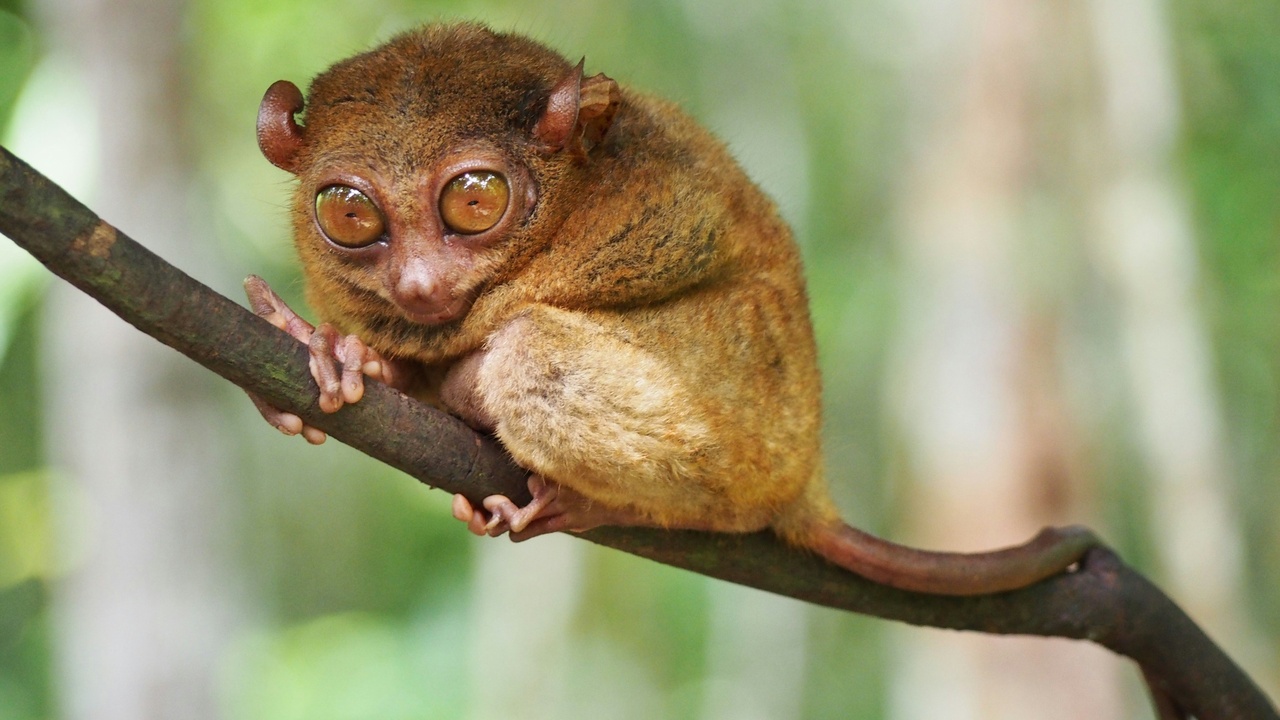
Tarsiers (Tarsius spp.) are small, nocturnal Southeast Asian primates with enormous eyes and exceptional leaping ability. They specialize in vertical clinging and leaping, and their diet is primarily insectivorous. Most species have a body mass under 200 grams, which pairs with powerful hind limbs that let them pounce on prey.
Studying tarsiers sheds light on sensory evolution and niche specialization in nocturnal mammals. Conservation efforts—such as those aimed at the Philippine tarsier—must balance tourism interest with strict habitat protections to prevent population declines from fragmentation.
9. Aye-aye
The aye-aye (Daubentonia madagascariensis) is a nocturnal lemur with a remarkable elongated middle finger used for percussive foraging: it taps wood, listens for cavities, then extracts insect larvae. Typical adult weight is in the 2–3 kg range, and this unique niche makes the aye-aye an ecological specialist on Madagascar.
Despite its ecological role, the aye-aye faces cultural persecution in parts of Madagascar where it is considered an ill omen. Conservation programs emphasize community outreach and education, since protecting this species relies heavily on local attitudes as well as habitat protection.
10. Ring-tailed Lemur
The ring-tailed lemur (Lemur catta) is a diurnal, highly social species from Madagascar often seen in captive collections and a frequent flagship for conservation. Groups typically number from a few individuals up to the low twenties, and in captivity ring‑tailed lemurs commonly live about 16–20 years.
They use conspicuous scent-marking and tail‑flagging in social communication, and reserves like Berenty have provided long-term behavioral data. As a charismatic ambassador species, the ring‑tailed lemur helps raise funds and awareness for broader Malagasy conservation programs.
Summary
Primates—from chimpanzees and gorillas to tarsiers and aye‑ayes—offer a mixture of close evolutionary ties to humans, surprising behaviors, and vital ecosystem roles such as seed dispersal and insect control. Several species show dramatic declines (orangutans and many lemurs), while others—like mountain gorillas—demonstrate that coordinated conservation can raise populations (roughly 1,000+ mountain gorillas by the late 2010s). Field sites and long-term researchers (Goodall, Fossey, de Waal) have been pivotal in translating observations into policy and public support.
- Genetic closeness: some apes share about 98.7–98.8% of their genome with humans.
- Dramatic declines: several species have lost over 50% of populations in recent decades, highlighting urgent habitat threats.
- Ecological roles: monkeys and lemurs are key seed dispersers and ecosystem engineers supporting forest regeneration.
- Proven interventions: long-term research, community engagement and responsible ecotourism can support recovery (see Jane Goodall Institute, IUCN, Borneo Orangutan Survival Foundation).