The African savanna is a shifting mosaic of grassland, acacia and watering holes where food availability changes with the seasons and opportunism shapes who survives. Scavengers—from insects and birds to large carnivores—speed nutrient recycling and influence predator–prey interactions across vast, open landscapes.
There are 30 Savanna Scavengers, ranging from African Lion to Yellow-billed Kite. For each, data are organized as Scientific name,Weight (kg),Range — details you’ll find below.
How can I use this list to identify scavengers in the field?
Start with the Range column to narrow possible species, then match body size using Weight (kg) and confirm with the Scientific name to avoid common-name confusion; observing feeding behavior at carcasses (timing, competition, and what part of the carcass is eaten) also helps separate true scavengers from occasional visitors.
Why include both African Lion and Yellow-billed Kite on the same list?
Scavenging is a feeding strategy, not a size class—lions take large carcasses while kites pick scraps and small remains—so listing both highlights how scavengers of very different sizes and taxa contribute to the same ecological process and often overlap geographically, as you’ll find below.
Savanna Scavengers
| Name | Scientific name | Weight (kg) | Range |
|---|---|---|---|
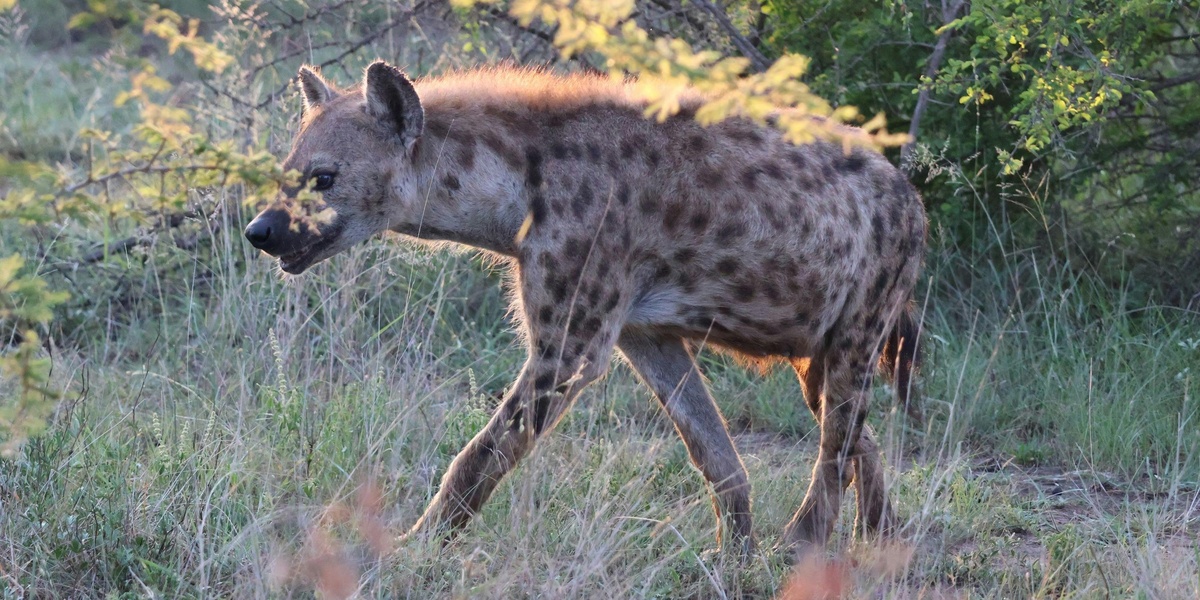
| Spotted Hyena | Crocuta crocuta | 60 | Sub-Saharan African savannas |
| Brown Hyena | Parahyaena brunnea | 40 | Kalahari, Namib and southern African savannas |
| Striped Hyena | Hyaena hyaena | 30 | Horn of Africa and eastern African dry savannas |
| White-backed Vulture | Gyps africanus | 6 | Sub-Saharan African savannas |
| Rüppell’s Vulture | Gyps rueppelli | 8.5 | Sahel, East Africa savannas and woodlands |
| Lappet-faced Vulture | Torgos tracheliotos | 7.5 | Sub-Saharan savannas, open plains |
| Hooded Vulture | Necrosyrtes monachus | 1.3 | West and central African savannas |
| Cape Vulture | Gyps coprotheres | 10 | Southern African grasslands and savannas |
| Egyptian Vulture | Neophron percnopterus | 1.6 | African savannas and migratory ranges |
| White-headed Vulture | Trigonoceps occipitalis | 3.5 | Scattered Sub-Saharan savannas |
| Marabou Stork | Leptoptilos crumenifer | 5 | Sub-Saharan savannas, wetlands and floodplains |
| Yellow-billed Kite | Milvus aegyptius | 0.9 | Widespread African savannas and riverine areas |
| Tawny Eagle | Aquila rapax | 1.8 | African savannas and open woodlands |
| Bateleur | Terathopius ecaudatus | 2 | Sub-Saharan savannas |
| Martial Eagle | Polemaetus bellicosus | 3.5 | Sub-Saharan savannas and woodlands |
| Pied Crow | Corvus albus | 0.6 | African savannas and human-modified landscapes |
| White-necked Raven | Corvus albicollis | 0.7 | Southern African savannas and highland edges |
| Southern Ground Hornbill | Bucorvus leadbeateri | 4 | Southern African savannas and open woodlands |
| Nile Crocodile | Crocodylus niloticus | 200 | Rivers, lakes and waterholes in African savannas |
| Nile Monitor | Varanus niloticus | 7 | Rivers, wetlands and savanna floodplains |
| Honey Badger | Mellivora capensis | 10 | Widespread African savannas and dry woodlands |
| Olive Baboon | Papio anubis | 25 | East and West African savannas and woodlands |
| Chacma Baboon | Papio ursinus | 30 | Southern African savannas and grasslands |
| Black-backed Jackal | Lupulella mesomelas | 8 | Southern and East African savannas |
| Side-striped Jackal | Lupulella adusta | 7 | Central and East African savannas and woodlands |
| Golden Jackal | Canis aureus | 10 | North, Northeast and East African savannas |
| African Lion | Panthera leo | 150 | Sub-Saharan savannas and grasslands |
| Leopard | Panthera pardus | 60 | Sub-Saharan savannas, woodlands and rocky areas |
| African Marsh Harrier | Circus ranivorus | 0.7 | Southern African wetlands and adjacent savannas |
| African White-backed Vulture | Gyps africanus | 6 | Savannas across sub-Saharan Africa |
Images and Descriptions
Spotted Hyena
Powerful social scavenger and hunter that routinely eats carrion, bones and leftover kills; commonly strips carcasses and follows vultures to food. Notable for strong jaws and clan-based cooperative feeding at carcasses.
Brown Hyena
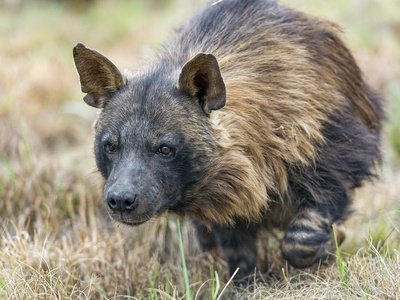
Nocturnal scavenger that feeds on large carcasses, bones and refuse; often follows predators to steal kills. Notable for shaggy coat and solitary or small-group foraging across arid savanna landscapes.
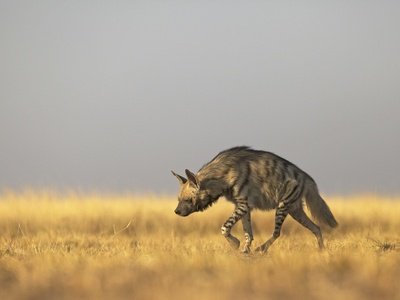
Striped Hyena
Opportunistic scavenger of carrion, bones and abandoned kills, sometimes digs for buried meat. Notable for secretive, mostly nocturnal habits and important role recycling carcasses in dry savannas.
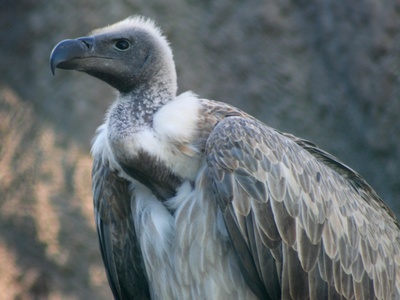
White-backed Vulture
A core scavenger that locates and eats fresh carrion, tearing soft tissues from carcasses and following predators. Notable for flock feeding and vital role in rapidly cleaning carcasses to limit disease spread.
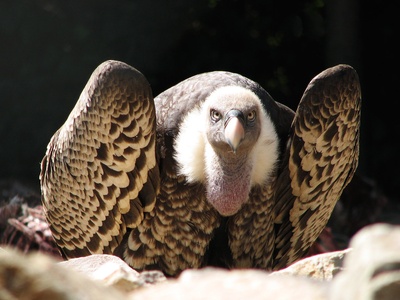
Rüppell’s Vulture
High-flying vultures that spot carrion from great heights and feed on large carcasses; tolerate high-altitude flights. Notable for extreme high-altitude flight and large communal feeding events.
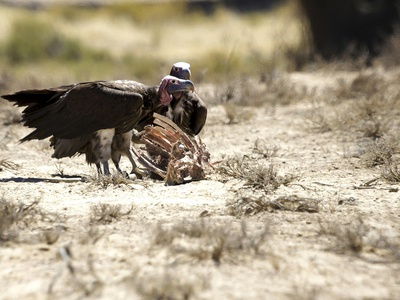
Lappet-faced Vulture
Powerful scavenger that tears through tough hides and picks bones, often dominant at carcasses. Notable for massive bill, aggressive behavior and ability to access deep meat others can’t.
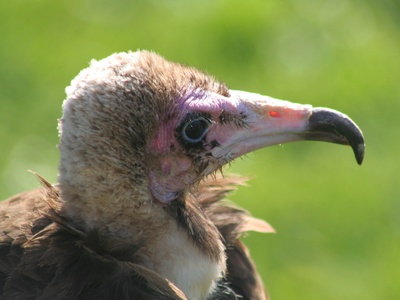
Hooded Vulture
Small but frequent scavenger that specializes on scraps, small carcasses and offal; often follows larger vultures and humans. Notable for maneuverability and close association with human settlements in savanna regions.
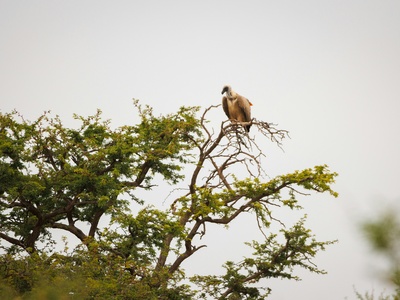
Cape Vulture
Large communal scavenger that feeds on big herbivore carcasses and competes at carcass sites. Notable for cliff nesting and long-distance soaring across open savannas.
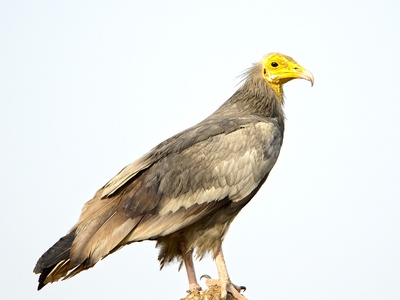
Egyptian Vulture
Small scavenger eating carrion, eggshells and bones; uses tools to break large eggs and access marrow. Notable for intelligence and varied diet including scraps and carcass remains.
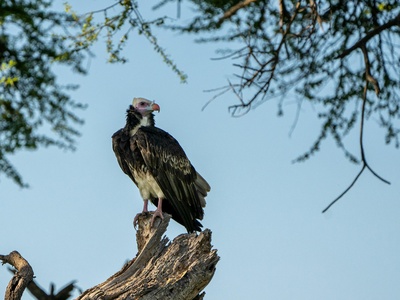
White-headed Vulture
Solitary or small-group scavenger that feeds on fresh carrion and small carcasses, often arrives early at carcasses. Notable for declining numbers and stealthy, low-profile feeding.
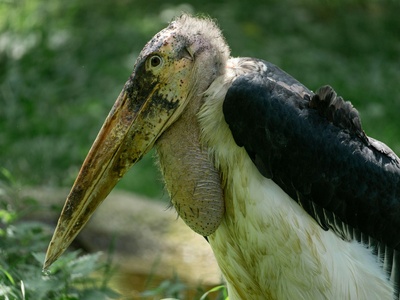
Marabou Stork
Large opportunistic scavenger eating carrion, offal and discarded food; frequents carcasses, dumps and water margins. Notable for huge bill and scavenging alongside vultures at big kills.
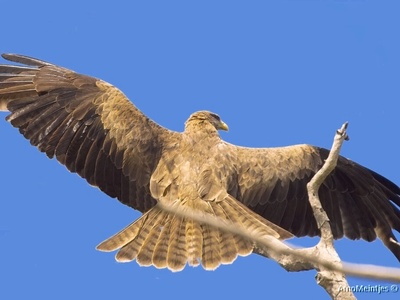
Yellow-billed Kite
Common opportunistic scavenger that feeds on carrion, roadkill and fish remains; often harasses larger predators for scraps. Notable for aerial agility and frequent association with human-modified savanna edges.
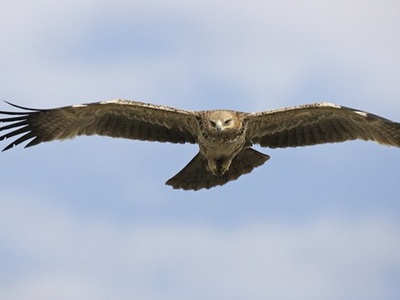
Tawny Eagle
Opportunistic raptor that scavenges carrion, small mammals and birds, often stealing from other raptors. Notable for adaptability and scavenging behavior alongside hunting.
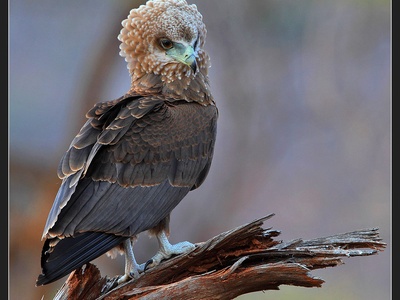
Bateleur
Bold scavenging eagle that takes carrion and plucks meat from carcasses, also hunts small prey. Notable for dramatic aerial displays and striking appearance while patrolling savannas.
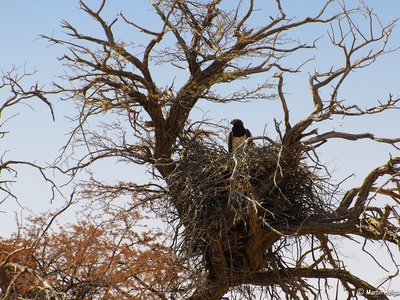
Martial Eagle
Powerful predator that also scavenges carrion and stolen kills; will opportunistically feed on carcasses. Notable for size and ability to take large prey, switching to scavenging when convenient.
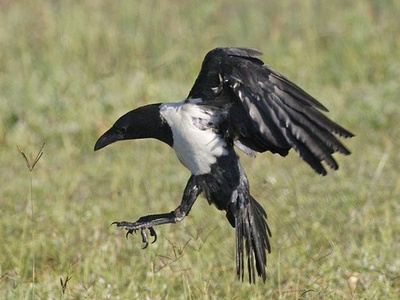
Pied Crow
Versatile scavenger that eats carrion, scraps and small prey; frequently seen at carcasses and farm areas. Notable for intelligence, opportunism and common presence across savanna edges.
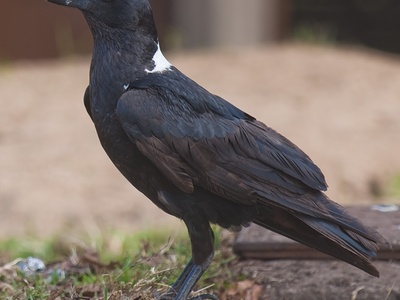
White-necked Raven
Opportunistic scavenger of carrion and leftovers, often follows predators to feed. Notable for loud calls and ability to exploit both wild and human food sources in savannas.
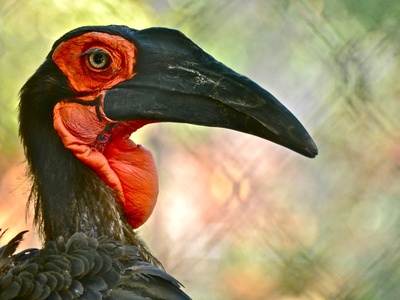
Southern Ground Hornbill
Predatory bird that also scavenges carrion, eating insects, reptiles and carcass scraps on the ground. Notable for cooperative groups, loud booming calls and ground-foraging habits.
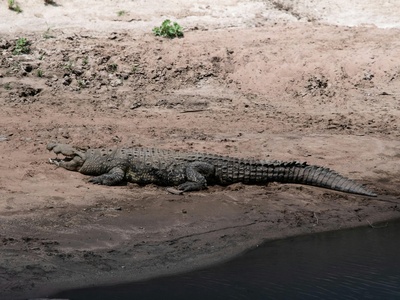
Nile Crocodile
Aquatic apex predator that frequently scavenges carcasses at water margins and steals terrestrial kills. Notable for ambush feeding, powerful bite and ability to drag large carrion into water.
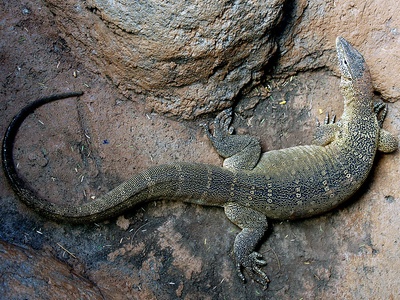
Nile Monitor
Opportunistic scavenging reptile eating fish, eggs and carcass scraps along water edges and pools. Notable for climbing ability and bold scavenging near predator kills at watering holes.
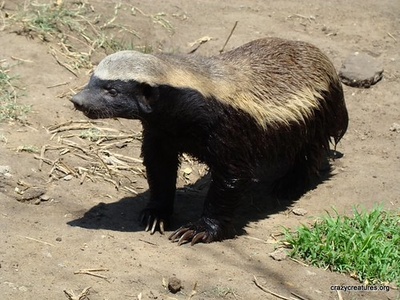
Honey Badger
Bold omnivore that scavenges carrion, bones and abandoned kills, often tearing into hides for meat. Notable for fearless nature and ability to scavenge in presence of larger predators.
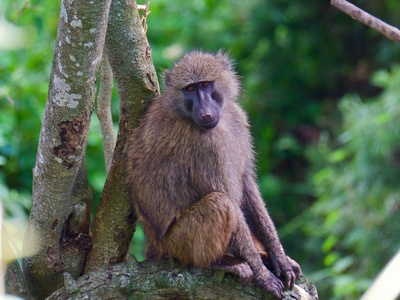
Olive Baboon
Omnivorous primate that scavenges carcasses, steals meat from predators and eats scraps near kills. Notable for social groups that forage cooperatively and bold theft of food.
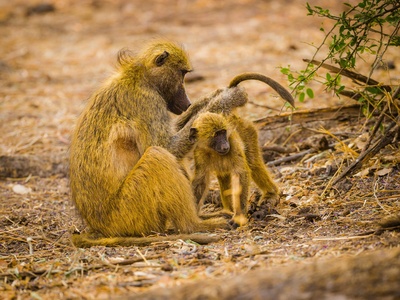
Chacma Baboon
Frequent scavenger and kleptoparasite that takes meat from kills, carrion and human refuse in savannas. Notable for large size, social complexity and willingness to scavenge alongside predators.
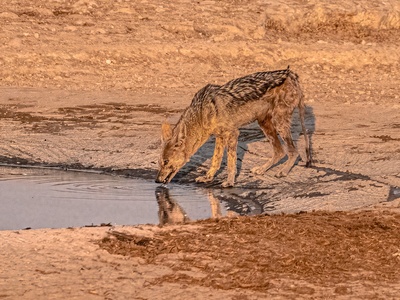
Black-backed Jackal
Small flexible scavenger that eats carrion, insects and stolen carcass pieces; follows larger predators to feed. Notable for opportunism, vocal communication and dusk/dawn activity peaks.
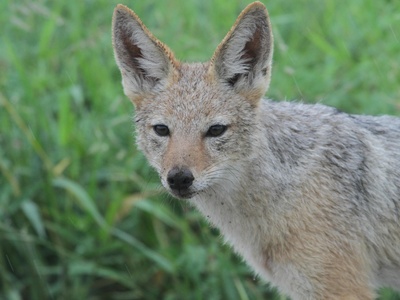
Side-striped Jackal
Shy, omnivorous scavenger taking carrion, fruit and small animals; often eats leftover kills and roadkill. Notable for secretive habits and adaptability to mixed savanna habitats.
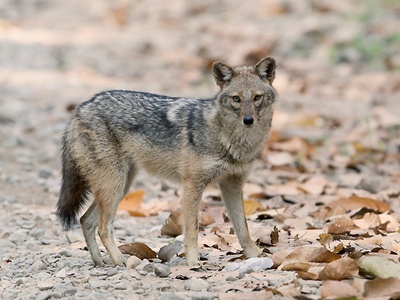
Golden Jackal
Opportunistic scavenger of carrion, small mammals and human scraps; sometimes forms pairs to scavenge together. Notable for adaptability across habitats and willingness to exploit carcasses.
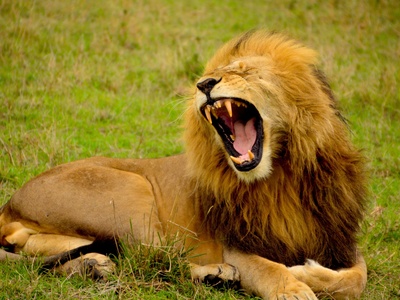
African Lion
Top predator that also scavenges often, stealing kills from other predators and feeding on carrion when available. Notable for pride cooperation, dominance at many carcasses and flexible feeding strategies.
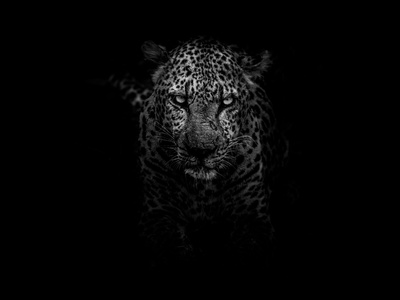
Leopard
Primarily a hunter but will scavenge and steal kills when opportunity arises; often drags prey to trees but also eats leftovers. Notable for stealth and ability to access carcasses others can’t.
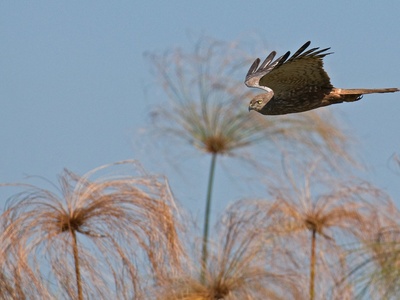
African Marsh Harrier
Raptor that scavenges fish remains and small carcass scraps along marshes in savanna regions, supplementing hunting with carrion. Notable for low, gliding flight over wetlands and opportunistic feeding.
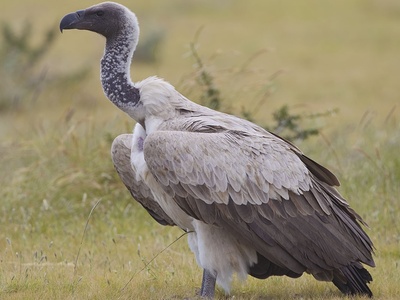
African White-backed Vulture
(Alternate common name entry to emphasize range) Highly social scavenger feeding on fresh carcasses and leading vulture feeding frenzies; notable for rapid carcass removal and important sanitation role in savannas.