When Christopher Columbus reported “mermaids” off the Caribbean coast in 1493, sailors were seeing sirenians — but they weren’t the same animals. For centuries, manatees and dugongs were lumped together in sailor lore, though naturalists later separated them by anatomy, habitat, and behavior.
Distinguishing these gentle marine mammals matters: they occupy different regions, eat different foods, and face different threats, so managers and volunteers need precise identification. This manatee and dugong comparison lays out eight clear differences across three categories — physical/anatomical traits; range and habitat; and diet, behavior, and conservation — with practical ID tips and conservation notes you can act on.
Physical and anatomical differences
These are the easiest differences to spot in photos and specimens. Both animals are members of the order Sirenia, but their bodies evolved to match different feeding strategies and environments.
1. Tail shape: manatees have paddle-like tails; dugongs have flukes
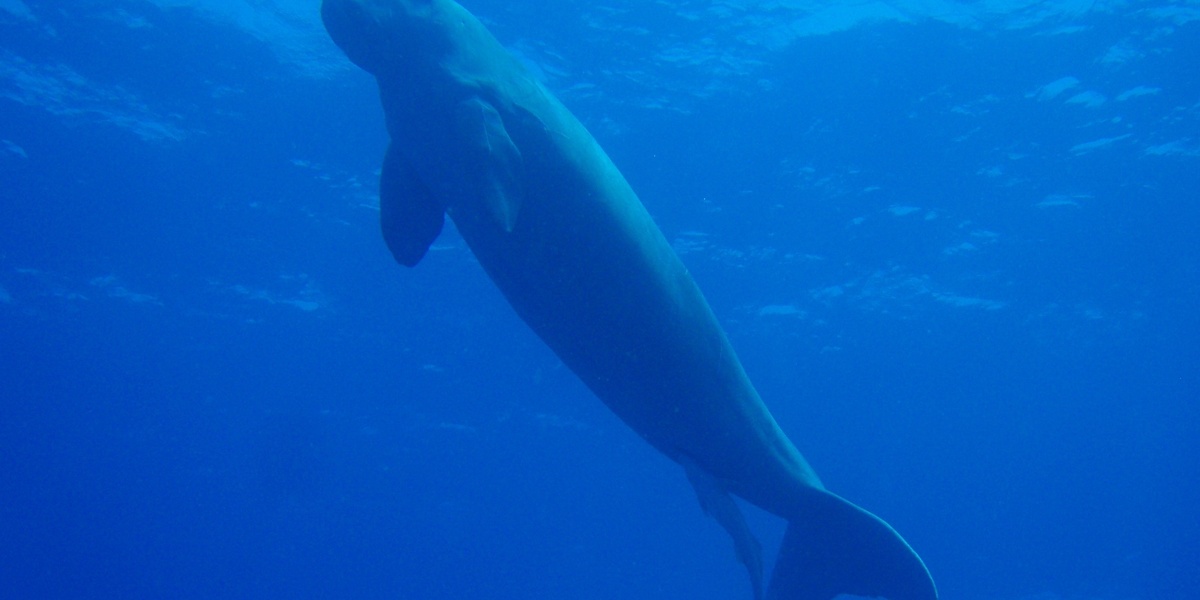
Manatees sport broad, rounded, paddle-shaped tails; dugongs have a horizontally fluked tail much like a dolphin’s. The paddle tail gives manatees strong, slow propulsion suited to rivers, estuaries, and calm coastal waters. The dugong’s fluke supports more continuous, efficient swimming over open seagrass plains.
In size terms, adult manatees can reach roughly 3–4 m (about 8–13 ft) while dugongs are typically 2–3 m (about 6.5–10 ft) long (see NOAA and the Australian Museum). Tail shape is a quick field cue for citizen scientists and influences rescue and handling methods used by responders.
2. Snout and facial structure: flexible, prehensile upper lip in manatees vs downturned snout in dugongs
Manatees have a split, highly flexible upper lip that works like a prehensile tool for grasping a wide variety of aquatic plants. Dugongs have a shorter, downturned snout adapted to cropping seagrass blades close to the substrate.
Those differences leave distinct grazing scars: manatees often pull plants and bite stems in diverse patterns, while dugongs leave neat, cropped seagrass patches. Marine ecologists use those feeding signatures when surveying meadows (see monitoring work cited by the CSIRO and regional researchers).
3. Limbs, nails, and dentition: flipper nails and tusks — clues from anatomy
Manatee fore-flippers commonly bear small nails and are relatively dexterous; they also replace teeth throughout life via a horizontal conveyor-belt pattern. Dugong flippers lack the distinct nail pads seen in many manatees, and mature male dugongs often develop visible, tusk-like upper incisors that erupt and can be used in male–male interactions.
These anatomical traits matter for field sexing and veterinary care. For example, tusk emergence in dugongs helps identify older males, while manatee flipper nails and tooth-wear patterns assist age estimates (see species notes from NOAA and the Australian Museum). Age at sexual maturity and tusk development timelines vary by population and should be checked in regional studies when doing demographic work.
Range, habitat, and saltwater tolerance
Where these animals live is a major practical distinction for conservation, fisheries, and ecotourism. Their ranges rarely overlap, and habitat needs drive different management priorities.
4. Geographic range: Americas and West Africa versus the Indo-Pacific
Manatees occur in the tropical and subtropical Americas and parts of West Africa — examples include Florida and the Everglades (West Indian manatee), the Amazon basin (Amazonian manatee), and coastal West Africa (African manatee). Dugongs are found across the Indo‑Pacific, from the Red Sea and East Africa to eastern Australia and island Southeast Asia (see IUCN range maps).
That geographic split means different jurisdictions, local laws, and conservation frameworks. Managers in Florida follow U.S. Fish and Wildlife Service and NOAA rules, while dugong protections often fall under Australian, Southeast Asian, or Pacific national authorities.
5. Habitat preference: freshwater and estuaries vs shallow seagrass beds
Many manatees tolerate and regularly use freshwater rivers, springs, canals, and estuaries in addition to coastal waters. The Amazonian manatee is effectively a freshwater specialist. Dugongs, by contrast, are obligate marine grazers tightly tied to shallow seagrass meadows and nearby coastal shelf habitats.
That difference affects where volunteers look for animals and how habitat loss impacts populations. For example, Florida manatees rely on warm-water springs and can use altered coastal canals, whereas dugongs decline when seagrass meadows are degraded by development, pollution, or climate-driven dieback (see seagrass restoration work cited by Australian government and research summarized by CSIRO).
6. Temperature and movement: seasonal migrations and site fidelity differences
Some manatee populations show pronounced seasonal movements to warm refuges. In Florida, manatees aggregate each winter at springs and power-plant outflows, and state winter counts are a key management metric (see Florida Fish & Wildlife reports).
Dugongs often show strong site fidelity to seagrass meadows but will travel tens to hundreds of kilometers between meadows when needed; telemetry studies in northern Australia document these longer-scale foraging movements (see CSIRO summaries). Managers use those movement patterns to prioritize protected areas and seagrass corridor conservation.
Diet, behavior, and conservation implications
Differences in diet and behavior translate directly to different conservation priorities. What each species eats and how it uses habitat shapes threats from boats, fisheries, and habitat loss.
7. Diet: manatees are broader feeders; dugongs are seagrass specialists
Manatees are generalist grazers that consume a wide range of aquatic plants, from freshwater river vegetation to coastal algae and seagrasses. Dugongs feed almost exclusively on seagrass and crop blades close to the sediment with their downturned snouts.
Both groups can eat a large amount of vegetation daily—sirenian consumption rates are substantial relative to body mass (see feeding summaries from NOAA and peer-reviewed seagrass studies). Because dugongs are tightly coupled to seagrass health, seagrass die-offs and reduced meadow extent can rapidly reduce local dugong numbers, whereas manatees often persist by shifting to other available vegetation or freshwater systems.
8. Behavior, social structure, and conservation status: different threats, protections, and recovery paths
Both species are often solitary or found in small groups, but mating systems, calf-rearing timing, and social encounters differ regionally. Those behaviors affect recovery: small, slow-growing populations recover slowly from heavy mortality.
Conservation statuses vary. The dugong is listed as Vulnerable by the IUCN, and manatee status differs by species and jurisdiction. In the U.S., the West Indian manatee has been the subject of management actions for decades and the U.S. Fish & Wildlife Service proposed a status change in 2017 (see USFWS).
Human threats also differ in degree. Boat strikes are a leading cause of recorded manatee mortality in Florida (NOAA and state reports), while dugongs face heavy pressure from seagrass loss, entanglement in fishing gear, and coastal development across parts of the Indo‑Pacific. Conservation measures therefore include manatee speed zones and rescue/rehab programs in the Americas, and seagrass protection and community fisheries management for dugongs in many Indo‑Pacific nations.
Summary
- Tail and snout are the quickest visual clues: paddle tail and prehensile lip in manatees; fluked tail and downturned snout in dugongs.
- Ranges don’t overlap: manatees occur in the Americas and West Africa; dugongs occupy the Indo‑Pacific (see IUCN).
- Diet drives vulnerability: dugongs are seagrass specialists, making seagrass health central to their conservation; manatees feed more broadly and use freshwater habitats too.
- Threats and protections differ by region—report injured animals to local authorities, follow posted speed limits in manatee zones, and support seagrass restoration or local marine‑conservation groups.