There are more than 7,000 described frog species worldwide, from microscope-sized island dwellers to hulking river giants.
Imagine a thumb-size jewel so poisonous that indigenous hunters in Colombia once used its toxins on blowgun darts, and beside it a river‑dwelling behemoth that can outweigh a small dog—both are frogs, and that contrast is exactly why these animals fascinate scientists and the public alike.
Frogs matter as ecological indicators, as sources of biochemicals with medical potential, and as charismatic symbols that help rally conservation support.
This list highlights 10 remarkable frog species chosen for their uniqueness, scientific value, ecological role, or conservation story.
Below, the profiles are grouped into clear categories—colorful/toxic, large/unusual, science/medicine, and conservation icons—so you can jump to what interests you most.
Colorful and Toxic Showcases
Some frogs wear neon colors as a warning: aposematism advertises chemical defenses to would‑be predators and, often, to potential mates. These bright patterns evolved because predators learn to associate flashy coloration with bad taste or dangerous toxins, which reduces attacks and benefits both individual survival and, ultimately, population persistence.
Humans have long taken note—indigenous groups in parts of Colombia used Phyllobates toxins on blowgun darts, and modern interest ranges from the pet trade to biomedical research.
Because conspicuous frogs tend to be hunted, collected, or sought after by tourists, their vividness carries conservation trade‑offs worth watching (see IUCN Red List and AmphibiaWeb for species accounts).
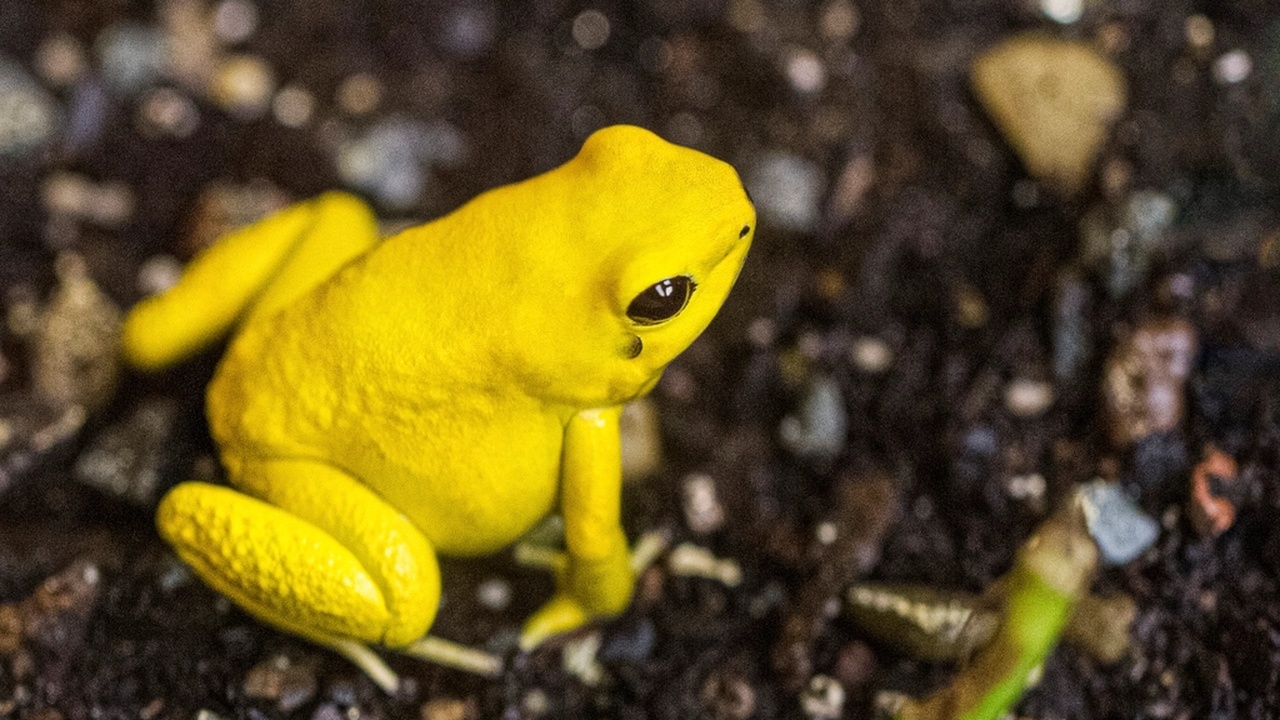
1. Golden poison frog (Phyllobates terribilis)
One of the most notorious amphibians, the golden poison frog is famed for its batrachotoxin-rich skin—among the most potent natural neurotoxins known—and for a bright yellow (or orange) warning coloration that advertises that chemistry.
Adults are small, generally under 6 cm in length, and they occur in the Chocó rainforest of Colombia; the species is listed as Endangered on the IUCN Red List due to habitat loss and collection pressure (IUCN, AmphibiaWeb).
Toxicity is diet-derived: wild individuals sequester alkaloid compounds from certain arthropod prey, a pattern shown in field and chemical analyses; conversely, captive-bred frogs raised on non-native diets lack the same alkaloid load, which is why zoos maintain assurance colonies and captive‑breeding programs to reduce wild collection.
For a readable overview, consult species profiles at IUCN and AmphibiaWeb and captive-breeding notes from accredited zoos that keep assurance populations for conservation and education.
2. Blue poison dart frog (Dendrobates tinctorius “azureus”)
The electric-blue morph often called the blue poison dart frog is a photographic and ecotourism favorite thanks to its intense coloration, which serves as a clear aposematic signal to predators.
Typical adults are about 3–4 cm long, and wild populations are documented in southern Suriname and adjacent Brazil; taxonomic treatments vary, so IUCN listings and local surveys can use slightly different names for closely related populations (AmphibiaWeb).
Blue poison dart frogs are widely bred in captivity and are staples of education programs and responsible ecotourism—yet illegal collection for the pet trade remains a concern for some wild populations, which is why captive‑breeding success at major zoos helps reduce pressure on native habitats.
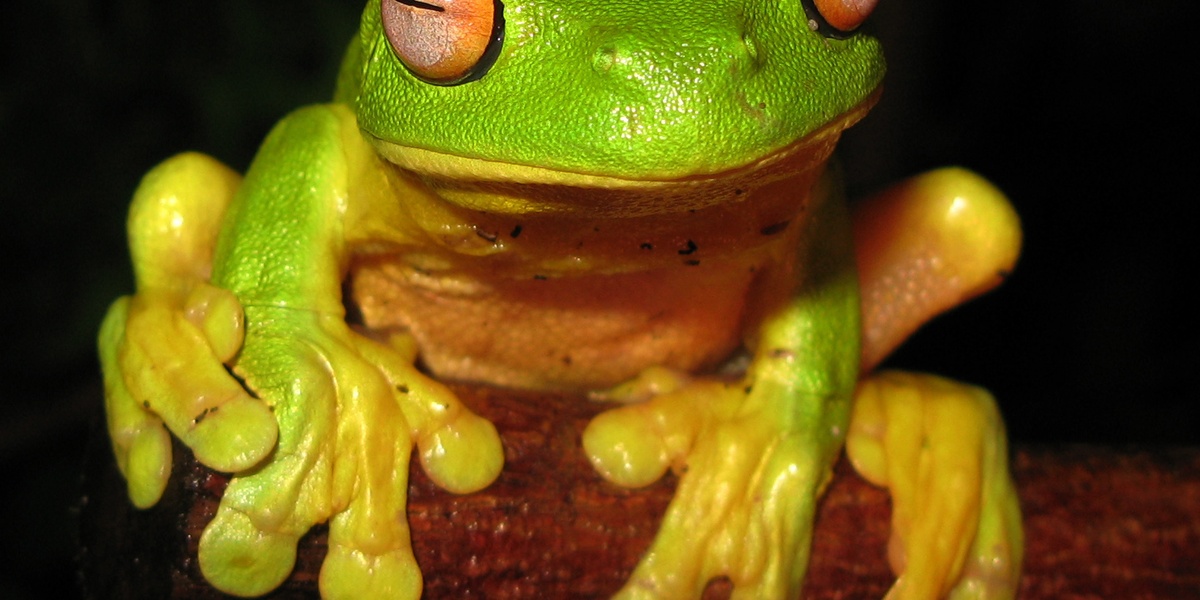
3. Red-eyed tree frog (Agalychnis callidryas)
Instantly recognizable for its bright red eyes, neon-green body, and orange feet, the red‑eyed tree frog is a visual shorthand for tropical rainforests in guides and children’s books.
Adults reach roughly 6 cm, and the species ranges from southern Mexico through much of Central America to northern South America; it’s non‑toxic and relies on camouflage by day and a startle display—flashing eyes and bright flanks—when disturbed.
Because it’s widespread and conspicuous, this frog is a flagship for rainforest education and is commonly seen in reserves such as Monteverde, Costa Rica, where park guides regularly include it in night walks and interpretive materials.
Large and Unusual Frogs
Size and strange life histories create some of the most memorable frog stories: from the river‑giant that can leap like a small deer to species that brood young in their skin or bear live offspring.
These extremes affect how frogs interact with people—larger species may be hunted for food, while bizarre reproductive modes attract scientific and public fascination that can help conservation efforts.
Below are examples that highlight extremes in body size, behavior, and parental care, with measurements and documented observations where possible.
4. Goliath frog (Conraua goliath)
The Goliath frog holds the title for the largest extant frog by mass and length, with snout‑to‑vent measurements approaching 32 cm and reported weights up to about 3.3 kg in large individuals.
It inhabits fast‑flowing rivers in parts of Cameroon and Equatorial Guinea, where it’s adapted to powerful currents and rocky banks; museum records and field measurements from the 20th century document its exceptional size.
Local communities traditionally hunt Goliath frogs for food, and ongoing habitat degradation threatens remaining populations—conservation notes and zoo husbandry reports document both threats and captive‑care practices used by institutions that keep this species for education and research.
5. African bullfrog (Pyxicephalus adspersus)
Bulky and territorial, the African bullfrog is a large, ground‑dwelling species whose males can reach body lengths around 24 cm and show dramatic parental behavior, including guarding tadpole aggregations and protecting water holes.
Found across southern Africa, this species estives during dry seasons and has been the subject of studies on desiccation tolerance and estivation physiology, making it interesting both ecologically and for comparative physiology research.
It’s also present in the pet trade—mostly captive‑bred animals—and remains an occasional food source in parts of its range, so management involves balancing sustainable use with population monitoring and captive‑breeding guidance.
6. Surinam toad (Pipa pipa)
The Surinam toad is famous for its extraordinary reproductive strategy: after mating, eggs become embedded in pockets on the female’s back and embryos develop there until fully formed froglets pop out of the skin.
This flattened, aquatic species inhabits slow‑moving waters across much of northern South America and has reduced tongue and unusual morphology adapted to suction feeding and a bottom‑dwelling life.
Naturalists and museum accounts have long described the back‑brooding behavior as one of amphibian natural history’s most striking phenomena, and that uniqueness helps draw attention to wetland conservation where the species occurs.
Frogs That Changed Science and Medicine
Frogs have played outsized roles in biology: some species are laboratory mainstays for embryology and cell biology, while others have provided skin peptides that inspired antimicrobial and analgesic research.
Below are two classic examples where amphibians advanced diagnostics, fundamental science, and drug discovery—each entry includes historical context and modern implications.
7. African clawed frog (Xenopus laevis)
Xenopus laevis is a cornerstone model organism in developmental biology and cell biology; its large, easily manipulated embryos enabled landmark experiments on neural induction and vertebrate development throughout the 20th century.
Historically, Xenopus were used in a bioassay for pregnancy detection from the 1930s through the 1960s—scientists injected human urine into females and observed egg laying as an indicator—and since then the species has remained central to embryology labs at institutions like the Marine Biological Laboratory and major universities.
Beyond basic science, Xenopus’s widespread laboratory use has led to concerns about invasive populations where the frog has escaped into nonnative waterways, so researchers balance the model’s benefits with biosecurity measures and careful husbandry.
8. Giant leaf frog (Phyllomedusa bicolor) and skin peptides
Phyllomedusa bicolor and related tree frogs secrete complex peptide cocktails from skin glands; researchers have isolated antimicrobial and opioid‑like peptides that sparked interest as potential leads against resistant bacteria and for pain control.
Traditional practices such as Kambo rituals have drawn scientific attention to these secretions, and while ethnobotanical knowledge informed some biochemical studies, clinical translation remains limited and requires rigorous safety testing.
Peer‑reviewed studies continue to screen amphibian peptides for antimicrobial activity, and conservation of these frogs matters because habitat loss can erase biochemical diversity before it’s even studied (see university labs and recent journal articles for experimental details).
Conservation Icons and Threatened Species
Some frogs have become conservation symbols because their declines illustrate broader threats: the chytrid fungus, habitat loss, pollution, and invasive species have all driven catastrophic amphibian losses around the globe.
Conservation responses often include captive‑breeding, disease management research, habitat protection, and community outreach—each approach offers lessons for saving other at‑risk amphibians.
Below are two emblematic cases with concrete numbers and active recovery programs you can learn from and support.
9. Panamanian golden frog (Atelopus zeteki)
The Panamanian golden frog is an emblematic conservation case: wild populations collapsed precipitously in the late 20th century largely due to chytridiomycosis, and the species is now functionally extinct in much of its historic range.
Captive‑breeding programs—such as the Panama Amphibian Rescue and Conservation Project and efforts at the Smithsonian Tropical Research Institute—began in earnest in the 2000s and maintain assurance colonies numbering in the hundreds to preserve genetic diversity for potential reintroduction.
Because the fungal pathogen persists in some habitats, reintroduction remains challenging; these programs nonetheless provide important lessons in ex situ husbandry, community outreach, and disease testing protocols (see IUCN and rescue project pages for updates).
10. Mountain yellow-legged frog (Rana muscosa)
Native to high‑elevation streams and lakes in California, the mountain yellow‑legged frog has experienced severe declines—local population losses of 70–90% were documented across parts of its range since the mid‑20th century—driven by chytrid fungus, introduced trout, and habitat changes.
Conservation responses include captive‑breeding and reintroduction, removal of nonnative trout from breeding lakes, and legal protections coordinated by state and federal agencies and nonprofit partners; these efforts have yielded measurable reintroductions at specific sites over the past two decades.
Researchers cite this species as a case study in how multiple stressors can interact to push amphibians toward extinction, and management provides a blueprint for integrated recovery actions.
Summary
- Frog species span enormous diversity in size, color, and life history, from toxin‑armed micro‑frogs to river giants.
- Some species have reshaped science—Xenopus aided embryology and amphibian skin peptides continue to inspire antimicrobial and analgesic research.
- Chytrid fungus, habitat loss, invasive species, and overcollection combine to threaten many frogs, but captive‑breeding and targeted management have achieved local successes.
- You can help by supporting reputable organizations (IUCN, AmphibiaWeb, Panama Amphibian Rescue), participating in citizen science projects like iNaturalist, and avoiding purchase of wild‑caught amphibians.