Across oceans, forests and island habitats, green coloration crops up in very different animals — from reef fish covered in algae to parrots with pigment-based plumage — and it often says as much about where a species lives as what it eats. Noting the largest green species helps compare ecosystems and how size evolves in different lineages.
There are 10 biggest green animals, ranging from Bumphead parrotfish to Kakapo. For each species I’ve organized the data into the columns Scientific name, Size (kg), and Range so you can compare weight and distribution at a glance — you’ll find below.
How was “biggest” determined for species on this list?
Biggest refers primarily to adult body mass (kg) when reliable data exist; where mass isn’t reported, length estimates were converted to approximate weight using standard species-specific formulas. I used adult averages or typical maximums from field studies and noted cases with wide variation due to sex or life stage.
Do these animals stay green all year, or does their color change?
It varies: some are permanently green thanks to pigments or structural color, others look green only as juveniles, during breeding plumage, or because of algal growth on shells or skin; habitat and diet often influence how and when green appears.
Biggest Green Animals
| Name | Scientific name | Size (kg) | Range |
|---|---|---|---|
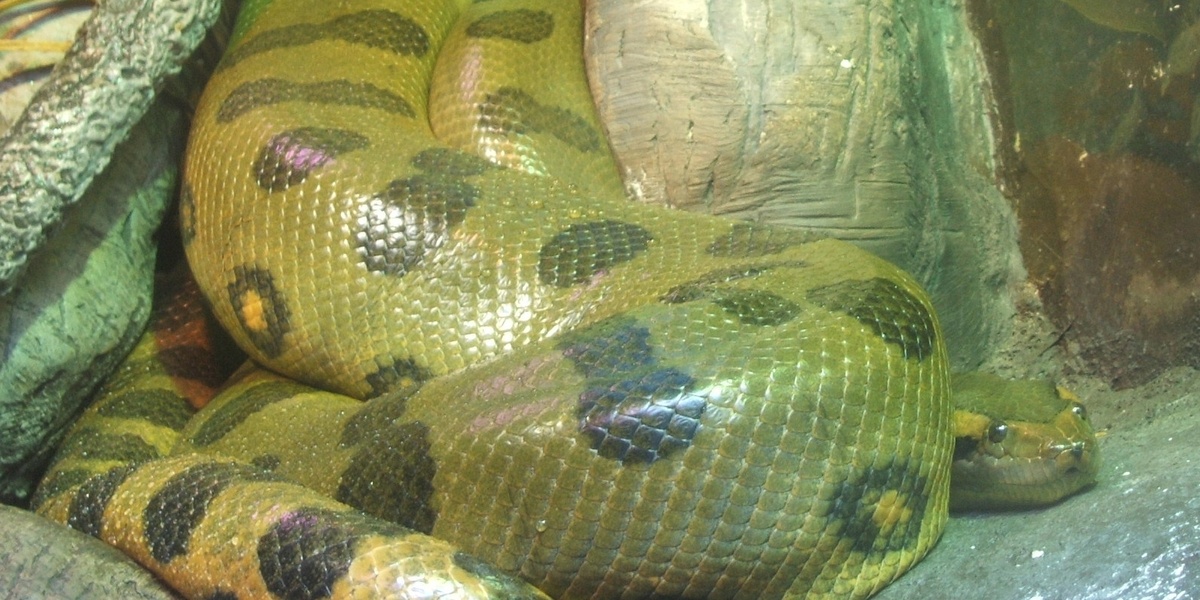
| Green anaconda | Eunectes murinus | 100 | South America (Amazon basin); freshwater swamps, marshes and slow rivers |
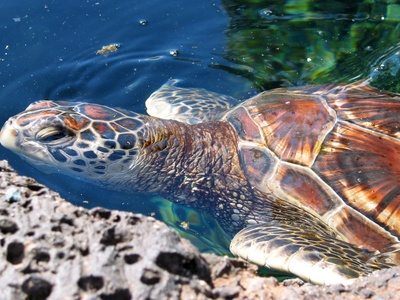
| Green sea turtle | Chelonia mydas | 100 | Tropical and subtropical oceans worldwide; coastal seagrass beds and coral reefs |
| Goliath grouper | Epinephelus itajara | 200 | Western Atlantic, Caribbean and Gulf of Mexico; coastal reefs, wrecks and mangroves |
| Humphead (Napoleon) wrasse | Cheilinus undulatus | 40 | Indo‑Pacific coral reefs from East Africa to the Pacific Islands; lagoon and outer reef slopes |
| Bumphead parrotfish | Bolbometopon muricatum | 75 | Indo‑Pacific reefs; outer reef slopes, channels and lagoons |
| Green moray eel | Gymnothorax funebris | length:3.0 | Western Atlantic from Florida to Brazil; coral and rocky reefs, crevices and wrecks |
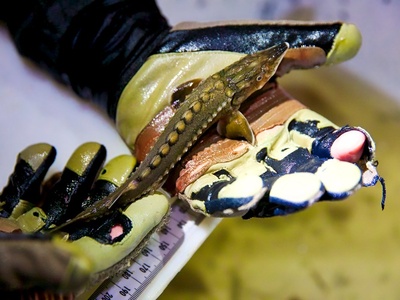
| Green sturgeon | Acipenser medirostris | 60 | Northeast Pacific coast (California to Alaska); coastal waters, estuaries and large rivers |
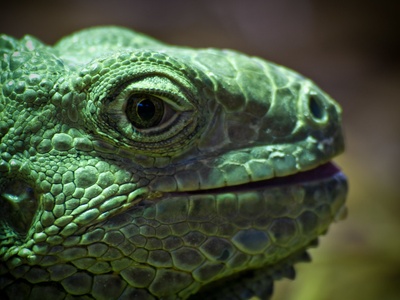
| Green iguana | Iguana iguana | 5 | Central and South America, Caribbean; tropical forest canopy, riverbanks and urban green spaces |
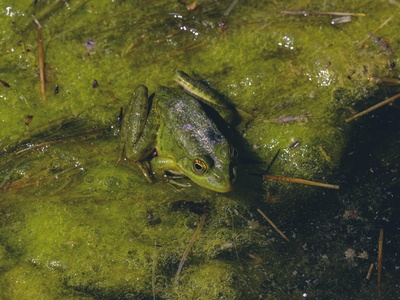
| Goliath frog | Conraua goliath | 3 | West Africa (Cameroon and Equatorial Guinea); fast‑flowing rainforest rivers and pools |
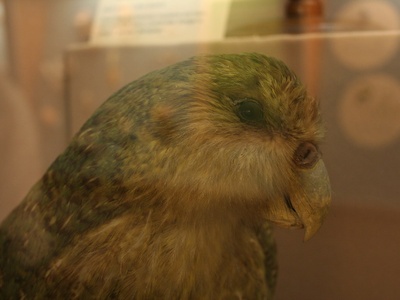
| Kakapo | Strigops habroptilus | 3.5 | New Zealand (endemic); temperate forest and scrublands |
Images and Descriptions
Green anaconda
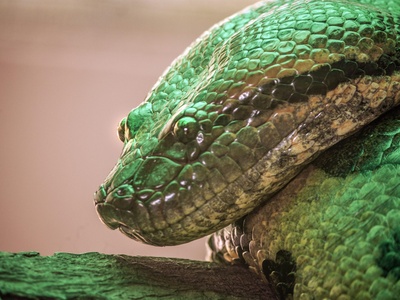
A massive, olive‑green constrictor with black blotches whose coloration camouflages it in river vegetation and murky water. Noted for great girth and aquatic ambush hunting, it’s one of the heaviest snakes and among the largest green-bodied reptiles.
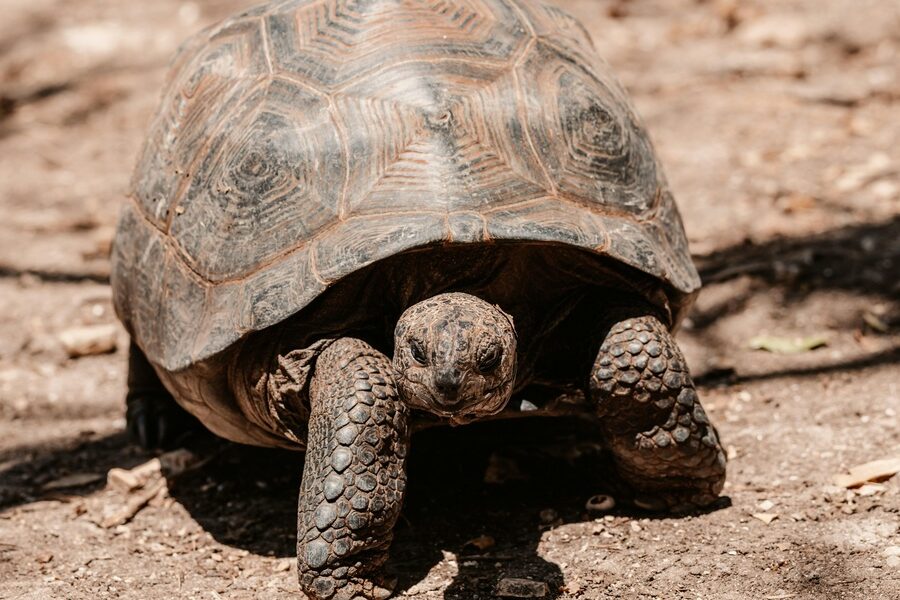
Green sea turtle
Named for the greenish color of its body fat, adults have an olive to dark green carapace that helps blend with seagrass habitats. Green sea turtles are large, heavy marine reptiles that migrate long distances between feeding grounds and nesting beaches.
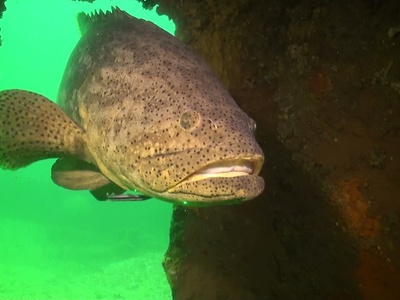
Goliath grouper
A very large, bulky reef fish with a mottled olive‑green body that provides reef camouflage. Goliath grouper are notable for their huge size and mass, frequenting shallow structures where they ambush prey and dominate reef spaces.
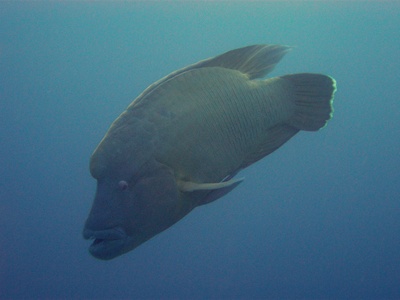
Humphead (Napoleon) wrasse
A striking, often greenish large reef fish with a bulbous forehead in adults. Its green‑blue scales and size make it the largest coral reef fish, feeding on hard‑shelled invertebrates and occupying reef crests and slopes.
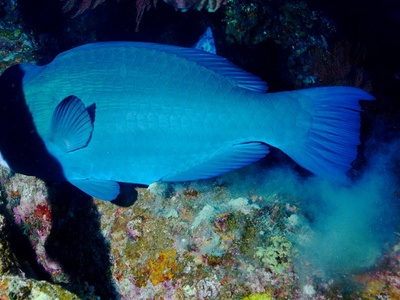
Bumphead parrotfish
A heavy, greenish parrotfish with a pronounced forehead bump and strong beak for biting coral. Its green coloration blends with reef algae, and it’s one of the largest herbivorous reef fishes, shaping reef structure through intense grazing.
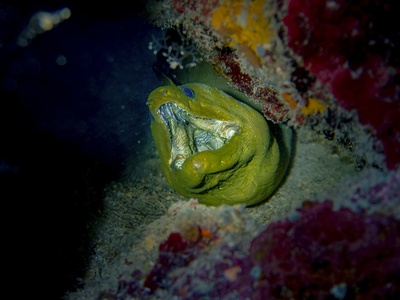
Green moray eel
Long, muscular eel that appears vivid green because a yellowish mucus overlays darker skin. Green morays reach several meters in length, hiding in reef holes to ambush fish, and are among the largest moray species in their range.
Green sturgeon
A large, olive‑green sturgeon with a sturdy body and scutes that give a greenish appearance. Green sturgeon are sizable, long‑lived fish that migrate between ocean feeding grounds and freshwater rivers for spawning.
Green iguana
A large, predominantly green arboreal lizard with bright green to olive scales that help it blend into foliage. Green iguanas are impressive in length and mass for lizards, excellent climbers and common along rivers and forest edges.
Goliath frog
The world’s largest frog with a bulky, often olive‑brown to greenish body that camouflages among river rocks and vegetation. Goliath frogs are notable for their heavy build and powerful legs, enabling them to leap large distances in river habitats.
Kakapo
A flightless, moss‑green parrot with mottled plumage that conceals it on the forest floor. The kakapo is the heaviest parrot species, notable for its stout body, nocturnal habits and unique ground‑dwelling lifestyle.