Guatemala’s waterways—from highland streams and Lake Atitlán to lowland rivers and both Pacific and Caribbean coasts—hold a wide mix of freshwater and coastal species. Local fishing communities, park biologists and periodic surveys all contribute to our understanding of which fish live where and when.
There are 20 Fish of Guatemala, ranging from Aeneus tetra,Tropical gar. For each species the list is organized with these columns: Scientific name,Max size (cm),Habitat & Guatemala range — practical details you’ll find below.
Which parts of Guatemala are best for seeing its native fish species?
Look to distinct habitats: highland lakes and cloud-forest streams for small endemic species, the Río Motagua basin and Caribbean lowlands for diverse freshwater assemblages, and coastal estuaries on both coasts for brackish and marine visitors. Early morning, dry-season conditions and working with local guides or park staff improve your chances.
How current and reliable are the size and range entries in the list?
Entries are based on published surveys, museum records and fisheries reports; sizes reflect reported maximums and ranges reflect documented Guatemalan occurrences. Expect variability with new surveys, introduced species, and seasonal movements—consult recent local studies for the latest updates.
Fish of Guatemala
| Common name | Scientific name | Max size (cm) | Habitat & Guatemala range |
|---|---|---|---|
| Tropical gar | Atractosteus tropicus | 150 | freshwater; lowland rivers and lakes (Motagua basin, Río Dulce, Lake Izabal) |
| Aeneus tetra | Astyanax aeneus | 12 | freshwater; streams and rivers across Guatemala lowlands and highlands |
| Convict cichlid | Amatitlania nigrofasciata | 15 | freshwater; rivers, lakes, and ponds (widespread lowlands and highlands) |
| Mayan cichlid | Mayaheros urophthalmus | 30 | freshwater/estuarine; coastal lagoons, mangroves and rivers on both Caribbean and Pacific sides |
| Nile tilapia | Oreochromis niloticus | 60 | freshwater; introduced in lakes, ponds and rivers widely across Guatemala |
| Mozambique tilapia | Oreochromis mossambicus | 60 | freshwater/estuarine; introduced lowland waters and coastal lagoons |
| Mosquitofish | Gambusia affinis | 6 | freshwater; small streams, ponds and ditches across Guatemala |
| Shortfin molly | Poecilia mexicana | 10 | freshwater/estuarine; coastal rivers, lagoons and wetlands |
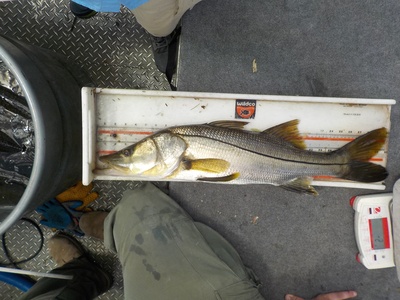
| Common snook | Centropomus undecimalis | 120 | estuarine/marine; mangrove-lined coasts and river mouths on Caribbean and Pacific sides |
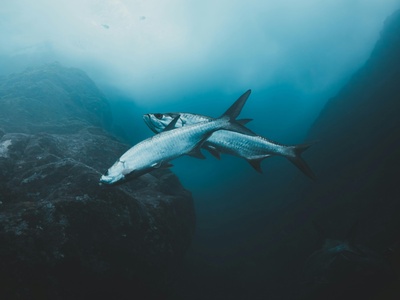
| Tarpon | Megalops atlanticus | 200 | marine/estuarine/riverine; coastal waters and rivers, enters fresh water |
| Crevalle jack | Caranx hippos | 110 | marine/estuarine; coastal waters and estuaries on both coasts |
| Permit | Trachinotus falcatus | 100 | marine; sandy flats and inshore waters, coastal areas on both coasts |
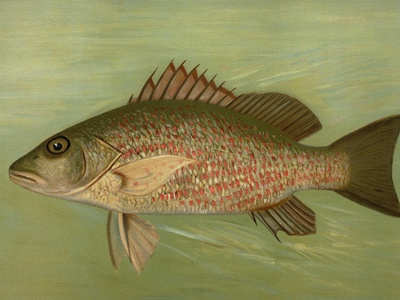
| Mangrove snapper | Lutjanus griseus | 60 | estuarine/marine; mangroves, estuaries and nearshore reefs on both coasts |
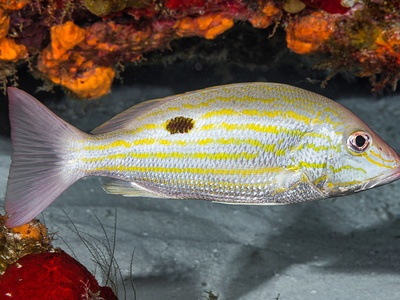
| Lane snapper | Lutjanus synagris | 40 | marine; reef and nearshore waters of Caribbean Guatemala |
| Nassau grouper | Epinephelus striatus | 150 | marine; coral reefs in Caribbean waters off Guatemala |
| King mackerel | Scomberomorus cavalla | 180 | marine; coastal and offshore waters on both coasts |
| Cobia | Rachycentron canadum | 200 | marine; coastal waters, often near structure and buoys on both coasts |
| Mullet | Mugil cephalus | 60 | estuarine/marine; coastal lagoons, rivers and mangroves throughout Guatemala |
| Bull shark | Carcharhinus leucas | 350 | marine/freshwater; coastal seas and rivers, known to enter inland rivers |
| Southern stingray | Hypanus americanus | 120 | marine/estuarine; shallow sandy bottoms and lagoons, Caribbean coast |
Images and Descriptions
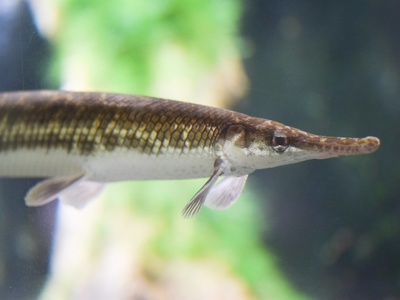
Tropical gar
Long, torpedo-shaped fish with bony ganoid scales and a long snout; ambush predator in slow waters. Seen by anglers and in local markets; valued food in some areas, but sensitive to habitat loss and river modification.

Aeneus tetra
Small, silvery schooling characin with a compressed body and faint lateral stripe. Common in streams and rivers; not targeted by fisheries but important prey for larger fish and birds, tolerant of varied conditions though local populations can be affected by pollution.
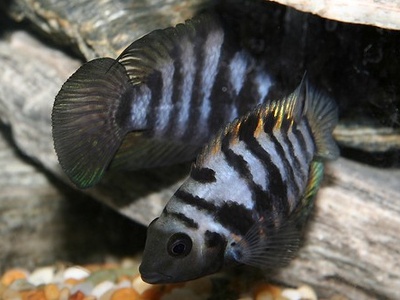
Convict cichlid
Striped, compact cichlid with distinctive black vertical bars; often found in rocky or vegetated shallows. Popular with aquarists and sometimes eaten locally; resilient species but local habitat degradation can reduce numbers.
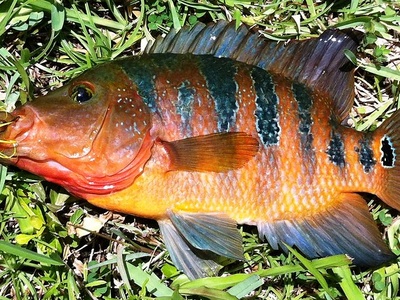
Mayan cichlid
Robust cichlid with a dark eye spot on the flank and orange tones; common in brackish lagoons and mangroves. Eaten locally and sometimes marketed; can be tolerant of degraded habitats and is a key species in estuaries.
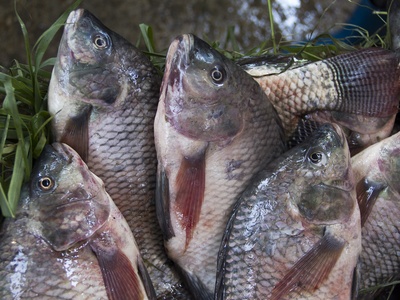
Nile tilapia
Deep-bodied, laterally compressed fish often gray or brownish; farmed and widely introduced for food. Common in aquaculture and wild escapes; can compete with natives and alter ecosystems.
Mozambique tilapia
Similar to other tilapias, stocky and laterally compressed; established in warm waters after introductions. Widely eaten and farmed but invasive tendencies can threaten native fish communities.
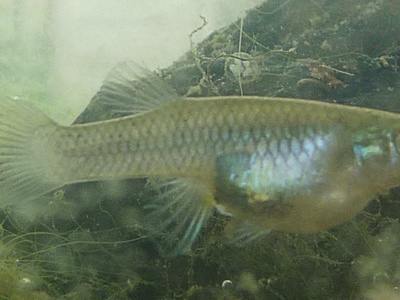
Mosquitofish
Tiny, livebearing fish with a tapered body and upturned mouth; used historically for mosquito control. Extremely hardy and widespread; can outcompete native small fishes in disturbed habitats.
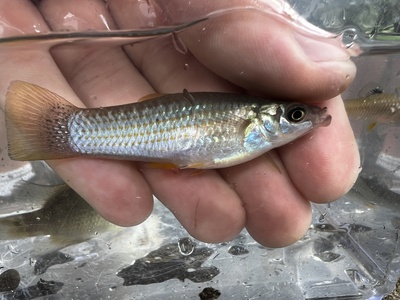
Shortfin molly
Small livebearing fish with varied coloration, often silver or dark; common in brackish and fresh waters. Popular with hobbyists and tolerant of pollution; not a fisheries species but important ecologically.
Common snook
Slender, silvery predatory fish with a pronounced lower jaw and black lateral line. Sought by sport anglers and eaten; populations vulnerable to overfishing and habitat loss, especially mangrove removal.
Tarpon
Large silver fish with upturned mouth and large scales; famous for acrobatic fights on the line. Valued by sport fishermen; protected in some areas and not a primary food fish.
Crevalle jack
Powerful, deep-bodied jack with a forked tail and blunt head; forms feeding schools near shore. Popular for sport and sometimes consumed; resilient but subject to coastal fishing pressure.
Permit
Flat-bodied, silvery fish with a small mouth and deep profile; often seen on sand flats. Prized by sport anglers for fighting ability; not typically targeted for large commercial fisheries.
Mangrove snapper
Reddish-brown snapper with a rounded profile and canine teeth; common around structure and mangroves. Eaten locally and important to small fisheries; juvenile habitat depends on healthy mangrove nurseries.
Lane snapper
Slender pinkish snapper with yellow stripes and a black spot on the side. Valued table fish caught by artisanal fisheries; populations can be reduced by overfishing on reefs.
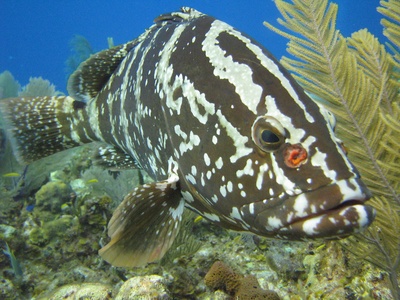
Nassau grouper
Large, stout grouper with a pattern of bands and a robust body. High-value food fish that forms seasonal spawning aggregations; severely overfished in many areas and of conservation concern.
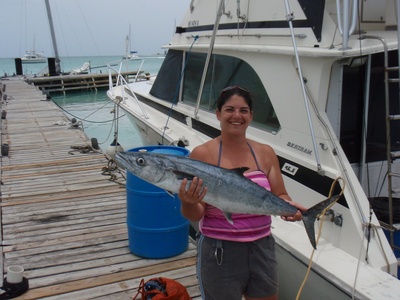
King mackerel
Elongate, fast predatory mackerel with a forked tail and sharp teeth; prized by anglers and fisheries for its strong fight and flesh. Moderately targeted commercially; subject to size and seasonal catches.
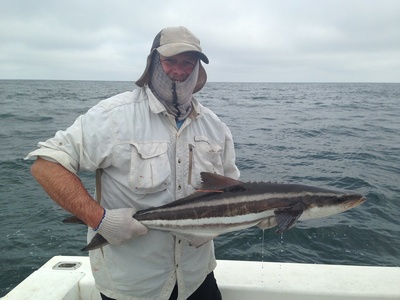
Cobia
Big, dark-bodied fish with a broad head and a single dorsal ridge. Popular with sport and commercial fishermen; good eating and migratory, often found nearshore.
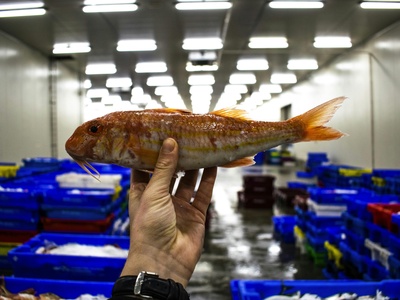
Mullet
Stout, silver fish with a downturned mouth for grazing on detritus and algae. Commonly caught and eaten locally; important in coastal food webs and tolerant of wide salinity ranges.
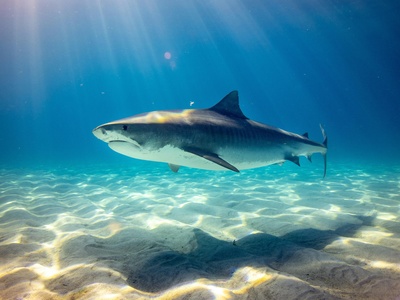
Bull shark
Robust, stocky shark with a blunt snout; notorious for entering fresh water. Occasionally encountered in rivers and estuaries; large and potentially dangerous, also subject to fishing pressure.
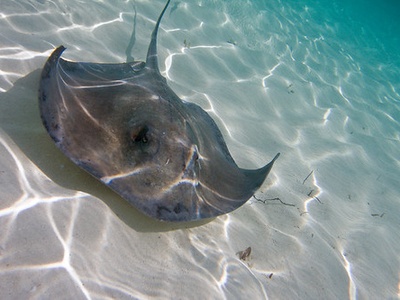
Southern stingray
Flat-bodied ray with a diamond-shaped disc and a whip-like tail with a venomous spine. Common in shallow coastal waters; not usually targeted but sometimes caught incidentally and considered good eating in some localities.