Whether you live in a compact city apartment or a spacious country home, the practicalities of a white, long-coated cat—shedding, grooming, staining—shape daily care and your choice of breed. This list makes it easier to match a cat’s look with the attention it needs.
There are 17 fluffy white cat breeds, ranging from American Bobtail Longhair to Turkish Van; Scientific name,Average weight (kg),Grooming needs are given for each — you’ll find below.
How often do fluffy white cat breeds need brushing and baths?
Grooming varies by coat length and texture: most long-haired white breeds need daily to every-other-day brushing to prevent mats, and occasional baths to reduce staining and keep white fur bright. Shorter fluffy coats may need weekly brushing; professional trims help some breeds with dense undercoats.
Are white coat color and hearing problems linked in these breeds?
A white coat combined with blue eyes can be associated with congenital deafness in some cats due to genetics, though it’s not universal across all white breeds. If you’re considering a specific breed, check the breed notes below and ask breeders or vets about hearing tests and genetic history.
Fluffy White Cat Breeds
| Breed | Scientific name | Average weight (kg) | Grooming needs |
|---|---|---|---|
| Persian | Felis catus | 4.50 | High; daily |
| Turkish Angora | Felis catus | 3.50 | High; daily |
| Turkish Van | Felis catus | 5.00 | Moderate; several times weekly |
| Maine Coon | Felis catus | 6.50 | High; several times weekly to daily |
| Norwegian Forest Cat | Felis catus | 5.50 | High; several times weekly |
| Siberian | Felis catus | 4.50 | High; several times weekly |
| Ragdoll | Felis catus | 6.00 | Moderate; several times weekly |
| Ragamuffin | Felis catus | 6.00 | High; daily to several times weekly |
| British Longhair | Felis catus | 5.00 | Moderate; several times weekly |
| Selkirk Rex Longhair | Felis catus | 4.50 | Moderate; several times weekly |
| Exotic Longhair | Felis catus | 4.50 | High; daily |
| Cymric | Felis catus | 4.50 | High; several times weekly |
| Japanese Bobtail Longhair | Felis catus | 3.50 | Moderate; several times weekly |
| American Bobtail Longhair | Felis catus | 5.00 | Moderate; several times weekly |
| LaPerm Longhair | Felis catus | 4.00 | Moderate; several times weekly |
| Himalayan | Felis catus | 4.50 | High; daily |
| Neva Masquerade | Felis catus | 5.00 | High; several times weekly |
Images and Descriptions
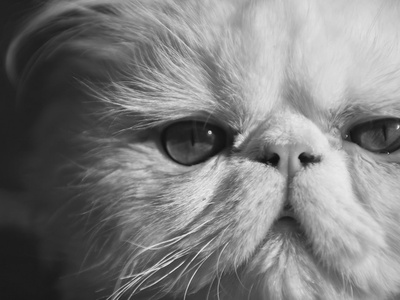
Persian
Classic longhair with a flat face and luxuriant coat, Persians often appear solid white. Originating from Persia (Iran), they are calm and indoor-oriented. Require intensive grooming; white, blue-eyed Persians may have higher deafness risk and tear-staining issues.

Turkish Angora
Elegant, silky single-to-double longcoat, historically and commonly found in pure white. Origin Turkey; playful, agile, and social. High grooming to prevent tangles; white, especially blue-eyed Angoras, can have an elevated risk of congenital deafness.
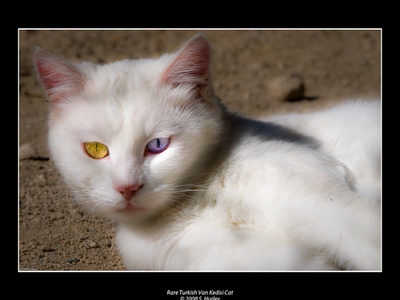
Turkish Van
Semi-long, water-loving breed famous for the “Van” pattern — mostly white with colored head/tail — often appearing predominantly white. From the Lake Van region, Turkey; active and athletic. White skin may need sun care; deafness less common than in all-white blue-eyed cats.
Maine Coon
Large, rugged semi-long coat with tufted ears and bushy tail; white solid and white variants are recognized. Origin USA (Northeast); gentle and dog-like. Heavy seasonal shedding and grooming needs; blue-eyed white individuals can carry deafness risk.
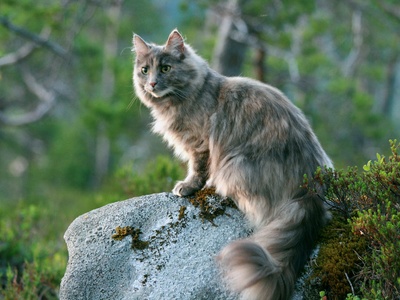
Norwegian Forest Cat
Thick double coat designed for cold climates, long and fluffy; white and white-patterned cats are common. Scandinavian origin, hardy and independent. Requires regular brushing during heavy shedding; white coats benefit from sun protection and monitoring for skin issues.
Siberian
Ancient Russian longhair with a dense triple coat; white and white-variant Siberians exist (including Neva Masquerade colorpoints). Playful, strong and often touted as low-allergen (debated). White, blue-eyed individuals may have increased deafness risk.
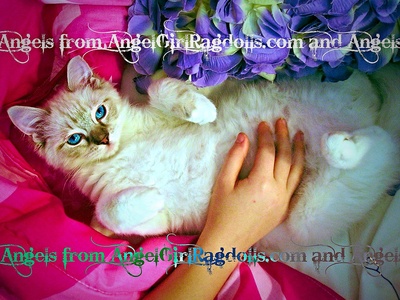
Ragdoll
Large semi-long plush coat; bicolor and mitted patterns create extensive white areas (solid white rare). Origin USA, famously docile and affectionate. White spotting is common and not usually linked to deafness; regular brushing needed to avoid matting.
Ragamuffin
Soft, dense longhair developed from Ragdoll ancestry; comes in many colors including solid white. Extremely affectionate and people-oriented. Requires consistent grooming to prevent mats; white coats need routine skin and sun care.
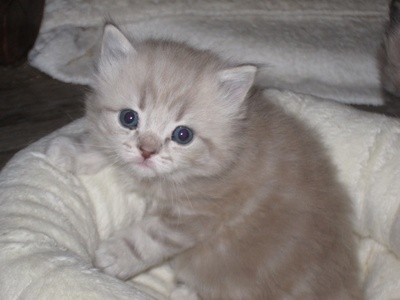
British Longhair
Sturdy semi-long offshoot of the British Shorthair with a dense plush coat; white and white variants are accepted. Calm, easygoing temperament. Regular brushing reduces shedding and staining; white cats may show tear staining and sun sensitivity.
Selkirk Rex Longhair
Curly, plush longcoat gives a teddy-like look; white is an accepted color. Origin USA, relaxed and tolerant. Curls require careful grooming to keep definition and prevent tangles; white coats can be sun-sensitive and show staining.
Exotic Longhair
Long-haired version of the Exotic Shorthair with a thick Persian-type coat; solid white commonly seen. Sweet, calm, and flat-faced; originating from Persian crosses. Heavy grooming is needed; brachycephalic health issues and blue-eyed white individuals can have deafness risk.
Cymric
Longhair Manx variant with variable tail length and a dense fluffy coat; white and white-patterned Cymrics are recognized. From the Isle of Man, playful and sturdy. Coat requires regular grooming; white cats should be monitored for sun sensitivity and blue-eye deafness correlation.
Japanese Bobtail Longhair
Longhaired variety often seen in predominantly white coats with colored patches (mi-ke). Graceful, active, and culturally significant in Japan. Coat needs routine brushing; white-dominant cats may need sun care but are not commonly linked to deafness.
American Bobtail Longhair
Shaggy, semi-long coat with a naturally short “bob” tail; white and white variants are accepted. Friendly, energetic, and adaptable. Regular grooming prevents tangles; white coats may need stain management and skin protection.
LaPerm Longhair
Curly, springy long coat with a soft texture; white is an accepted and attractive color. Origin USA, affectionate and people-oriented. Curls reduce but do not eliminate matting; white coat care includes sun protection and routine cleaning.
Himalayan
Persian-type longhair developed with Siamese points; many have pale or near-white bodies with colored points. Very grooming-intensive and prone to tear staining and brachycephalic issues. Blue-eyed white Himalayans may carry deafness risk; calm, indoor companions.
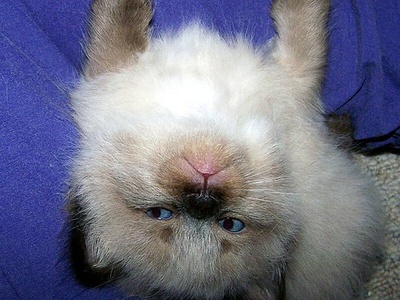
Neva Masquerade
Colorpoint variety of the Siberian with pale body and darker points; often appears light or white-bodied. Russian origin variant, robust and playful. Thick coat needs regular grooming; blue-eyed, predominantly white specimens can have deafness concerns.