Fiji’s islands host a rich mix of coastal shrubs, lowland rainforest species and fragrant ornamentals that shape local landscapes and livelihoods. The plants here play roles in shoreline protection, traditional uses and garden culture across the archipelago.
There are 24 Plants of Fiji, ranging from Beach naupaka to Ylang-ylang. For each entry you’ll find below the data organized under Scientific name,Height (m),Distribution so you can quickly compare species by taxonomy, typical size and where they occur — you’ll find below.
Which of these species are native to Fiji versus introduced?
The list includes both native and introduced species; the Distribution column shows whether a plant is endemic, widespread in the Pacific, or introduced by humans. Beach naupaka is a native coastal species, while Ylang-ylang was brought in for cultivation and perfume. Use the Scientific name and Distribution together to confirm origin.
How can I use the Scientific name, Height (m), and Distribution to identify plants in the field?
Start with the Scientific name to avoid common-name confusion, then check Height (m) for expected size (seedlings vs mature trees) and Distribution to narrow habitat and island range. Combine those data with visible traits—leaf shape, flowers, growth form—to make a confident ID.
Plants of Fiji
| Common name | Scientific name | Height (m) | Distribution |
|---|---|---|---|
| Coconut | Cocos nucifera | 15-30 | All main islands; beaches, coastal fringes |
| Breadfruit | Artocarpus altilis | 8-20 | All islands; village gardens, lowland forests |
| Mango | Mangifera indica | 10-25 | Widespread; gardens, villages, lowland areas |
| Noni | Morinda citrifolia | 2-6 | Disturbed coastal forest, gardens; all main islands |
| Pacific kauri | Agathis macrophylla | 30-45 | Viti Levu, Vanua Levu, Taveuni; lowland rainforest |
| Vesi | Intsia bijuga | 20-30 | Viti Levu, Kadavu, other islands; coastal lowland forest |
| Tamanu | Calophyllum inophyllum | 8-20 | Coastal strands and littoral forest; widespread |
| Sea hibiscus | Hibiscus tiliaceus | 3-8 | All islands; beaches, coastal fringes |
| Pandanus | Pandanus tectorius | 2-10 | Coastal areas, islets; beaches and lowland forest |
| Tropical almond | Terminalia catappa | 10-25 | Beaches, villages across Fiji; coastal forests |
| Milo | Thespesia populnea | 5-12 | Coastal areas and village groves; beach forests |
| Galip nut | Canarium indicum | 15-30 | Lowland forests, village agroforests across main islands |
| Grey mangrove | Avicennia marina | 2-8 | Widespread coasts, estuaries, mangrove forests |
| Stilt mangrove | Rhizophora stylosa | 5-15 | Seaward mangrove zones; many islands |
| Spurred mangrove | Ceriops tagal | 3-8 | Mid-mangrove zones, sheltered bays |
| Large-leafed mangrove | Bruguiera gymnorhiza | 8-20 | River mouths, sheltered bays, mangrove forests |
| Beach naupaka | Scaevola taccada | 0.5-2 | Coastal dunes, rocky shores across islands |
| Sea gardenia | Guettarda speciosa | 3-10 | Beaches and coastal forest on many islands |
| Coral tree | Erythrina variegata | 5-15 | Village gardens, roadsides, coastal areas |
| Giant swamp taro | Cyrtosperma merkusii | 1-3 | Swamps, wet terraces and coastal taro pits |
| Taro | Colocasia esculenta | 0.3-1 | Wet gardens, taro pits and wetlands across islands |
| Malay apple | Syzygium malaccense | 6-12 | Village gardens, lowland areas; widespread |
| Ylang-ylang | Cananga odorata | 8-15 | Gardens, secondary forests, villages |
| Sandalwood | Santalum yasi | 3-8 | Kadavu, Lau group and some islets; coastal forests |
Images and Descriptions
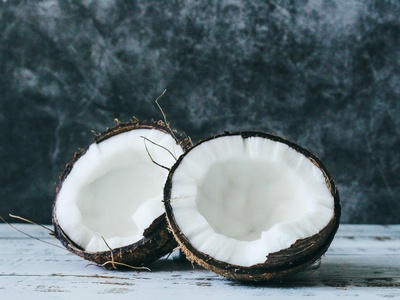
Coconut
Iconic palm of Fiji, lining beaches and villages. Tall, single-trunked tree producing coconut food and drink, fiber, and building materials. Anciently dispersed and naturalized, culturally central and tolerant of salt, wind and sandy soils.
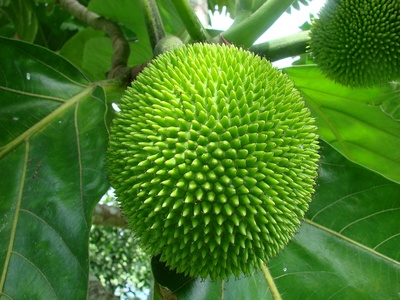
Breadfruit
Large spreading tree valued for starchy fruits staple to Fijian diets. Often planted near villages, breadfruit produces heavy crops and timber; many traditional cultivars exist. A culturally important, reliable food source used fresh or cooked.
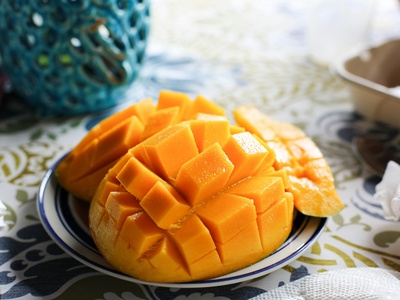
Mango
Introduced fruit tree now common in yards and farms across Fiji. Produces sweet, seasonal fruits that attract birds and people. Native to South Asia but widely naturalized; valued for shade, fruit and timber in rural landscapes.
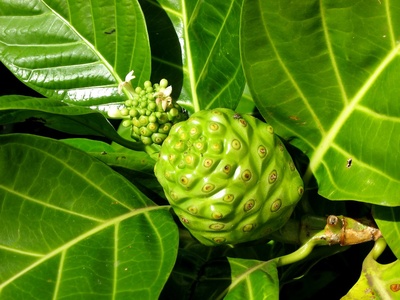
Noni
Tough shrub/small tree with bumpy fruits used in traditional medicine. Grows wild and near villages, tolerant of poor soils and salt spray. Fruit has a strong odor but is valued culturally and commercially for medicinal extracts.

Pacific kauri
Large conifer with straight trunk and broad crown, producing valuable timber. A native Pacific kauri species, it forms part of lowland forest canopy. Populations have been reduced by past logging and are of conservation concern in some areas.
Vesi
Massive hardwood tree locally called vesi, prized for dense, termite-resistant timber. Found in coastal to lowland forests, it has been heavily exploited for furniture and boat parts; many populations are locally reduced and monitored.
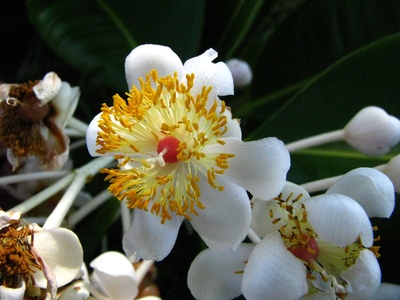
Tamanu
Salt-tolerant coastal tree with fragrant white flowers and oily seeds used for traditional tamanu oil. Often found on beach ridges and near villages, valued for medicine, timber and shoreline stabilization.
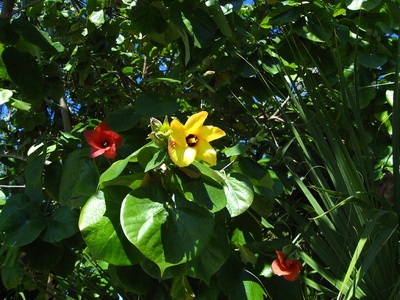
Sea hibiscus
Fast-growing coastal tree with large heart-shaped leaves and yellow flowers. Common on shorelines and used for shade, cordage and traditional crafts. Very salt-tolerant and an everyday part of beach vegetation across Fiji.
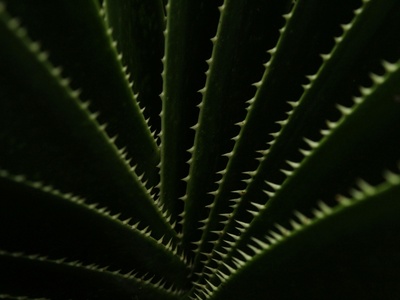
Pandanus
Screw-pine with distinctive prop roots and long spiny leaves used for weaving mats and thatch. Produces pineapple-like fruits eaten locally. Prominent on reef islands and coastal zones, culturally and ecologically important.
Tropical almond
Broadly spreading coastal tree with seasonal red foliage and edible nut. Planted widely for shade and ornament, it stabilizes shorelines and provides food; common throughout island villages and beaches.
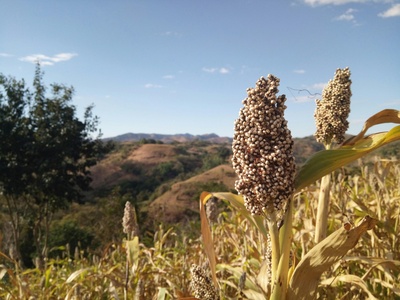
Milo
Small coastal tree with yellow, hibiscus-like flowers. Traditionally prized for timber suitable for canoe parts and carving; very salt-tolerant and commonly seen behind beaches and in village plantings.
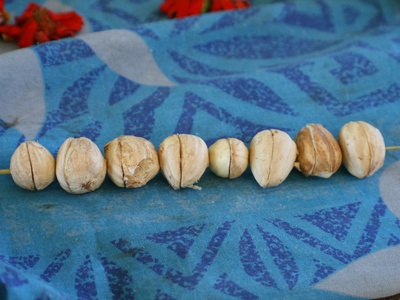
Galip nut
Large canopy tree producing galip nuts, an important local food and cash crop. Nuts are eaten or processed for oil; trees are integral to agroforestry and village economies, with cultural significance.
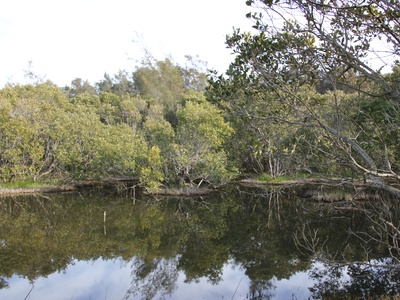
Grey mangrove
Hardy mangrove often in upper intertidal zones, identifiable by pneumatophores and leathery leaves. Stabilizes shores and tolerates high salinity; common throughout Fiji’s estuaries and sheltered bays, supporting fisheries and shoreline protection.
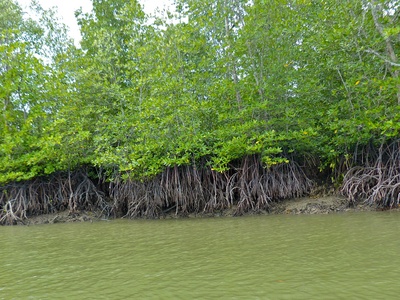
Stilt mangrove
Mangrove with prominent stilt roots forming dense seaward stands. Provides crucial nursery habitat for fish and shellfish and helps reduce coastal erosion. A dominant component of Fiji’s outer mangrove lines.
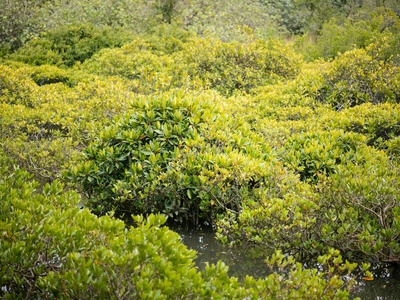
Spurred mangrove
Medium-sized mangrove common in mid-intertidal areas with buttressed roots. Forms dense thickets in protected estuaries and harbors, contributing to sediment trapping and coastal biodiversity.
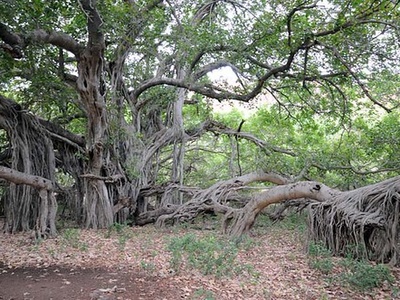
Large-leafed mangrove
Tall mangrove with knee roots and large glossy leaves, often found in protected muddy substrates. Supplies habitat complexity for marine life and stabilizes shorelines in Fiji’s sheltered waterways.
Beach naupaka
Low, sprawling shrub with distinctive half-flowers (fan-shaped) that stabilizes dunes and colonizes windswept forelands. Extremely salt- and wind-tolerant, it’s a familiar sight behind Fiji’s sandy beaches.
Sea gardenia
Fragrant-flowered small tree with hard spherical fruits, typical of sandy shorelines. Often used as a coastal marker species, it’s culturally recognized across the Pacific and tolerant of salt-laden winds.
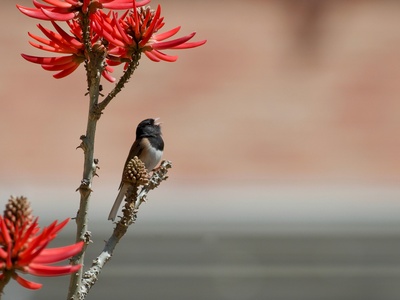
Coral tree
Showy tree with brilliant red flowers that attract birds. Widely planted for shade and ornament in villages, sometimes naturalized. Wood used locally and trees mark roads, open areas and village boundaries.
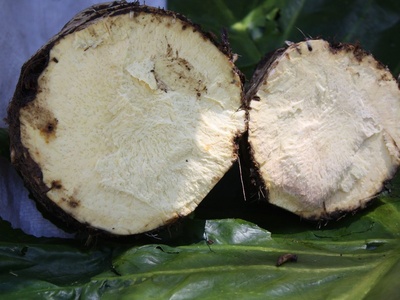
Giant swamp taro
Tall aroid grown in deep wet pits as a traditional staple (sometimes called da’u). Very important culturally, tolerant of brackish water where regular taro struggles; many traditional cultivars maintained by communities.
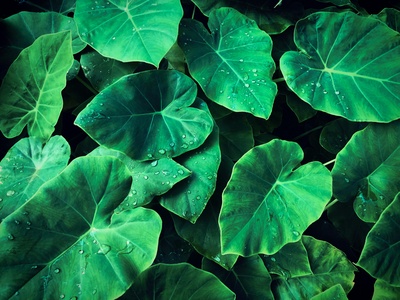
Taro
Broad-leaved herb producing edible corms central to Fijian cuisine and ceremony. Cultivated widely and often escapes into wet margins; many cultivars exist, and the plant shapes garden and wetland management.
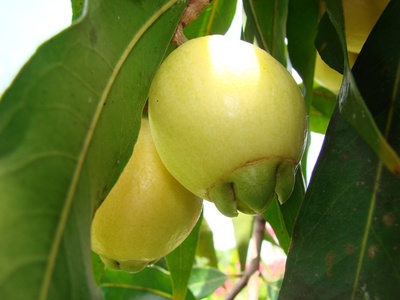
Malay apple
Smooth-barked tree bearing glossy leaves and red or white edible fruits enjoyed fresh. Introduced and commonly grown in village yards and market gardens, often providing shade and seasonal fruit harvests.
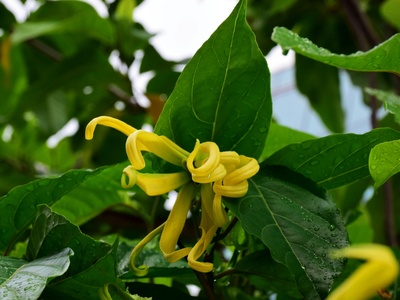
Ylang-ylang
Fragrant tree with drooping, highly aromatic flowers used for perfume and traditional scenting. Widely planted around villages and resorts, prized for its scent and ornamental presence in cultivated landscapes.
Sandalwood
Pacific sandalwood producing fragrant heartwood that was historically traded. A hemi-parasitic small tree, populations were heavily harvested and some are locally depleted; conservation and regeneration efforts are active in parts of Fiji.