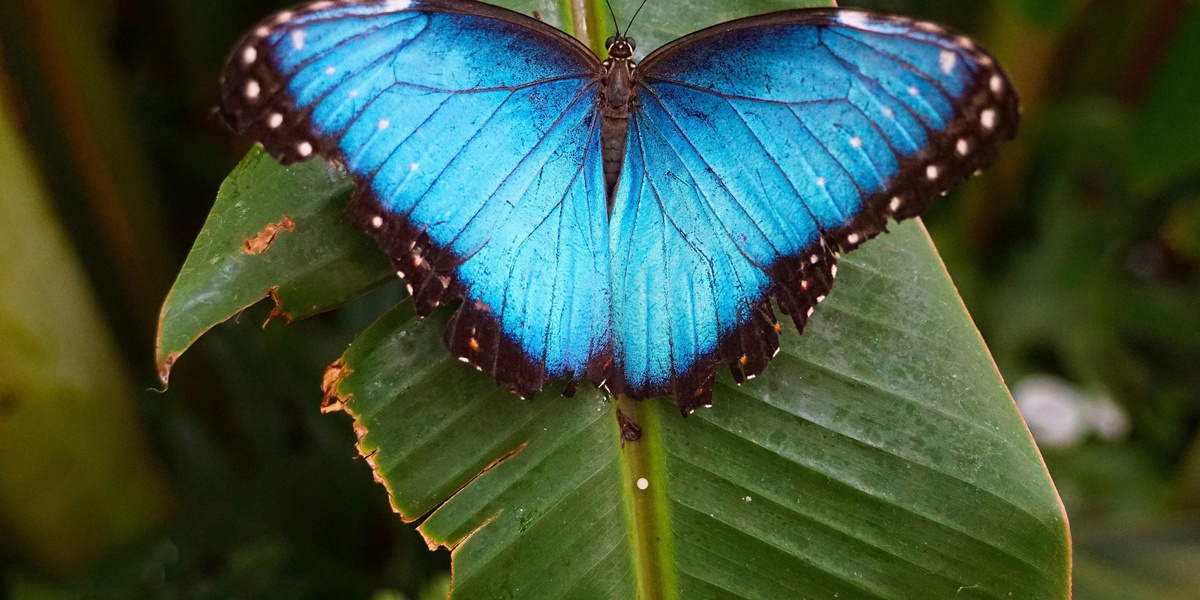
Rainforests are a patchwork of light and shade, where humidity and layered vegetation create homes for an incredible variety of arthropods. Walking a trail you’ll notice differences by height, sound, and microhabitat that hint at each species’ role in the ecosystem.
There are 21 rainforest insects, ranging from Amazon cicada to Titan beetle. For each, the list shows Scientific name, Size (mm), Range; you’ll find below.
How can I tell similar rainforest species apart?
Start by comparing Size (mm) and Range from the list, then look for distinguishing features like wing shape, antennae, color patterns, behavior, and the habitat layer where each was observed. Calls or activity time (day vs. night) and high-quality photos or a local field guide will help confirm identifications.
When is the best time to observe these insects?
Many are easiest to see at dawn or dusk and during the wet season when activity peaks; some (like cicadas) call by day, while large beetles often appear at lights at night. Target host plants, listen for insect calls, and use light or bait traps for better encounters.
Rainforest Insects
| Common name | Scientific name | Size (mm) | Range |
|---|---|---|---|
| Blue morpho | Morpho menelaus | 35 | Amazon Basin, Central America |
| Glasswing butterfly | Greta oto | 20 | Central & South America |
| Atlas moth | Attacus atlas | 60 | Southeast Asian rainforests |
| Hercules beetle | Dynastes hercules | 100 | Neotropical rainforests (Amazon, Central America) |
| Titan beetle | Titanus giganteus | 120 | Amazon Basin |
| Goliath beetle | Goliathus goliatus | 60 | West & Central African rainforests |
| Orchid mantis | Hymenopus coronatus | 45 | Southeast Asian rainforests |
| Chan’s megastick | Phobaeticus chani | 330 | Borneo rainforests |
| Bullet ant | Paraponera clavata | 25 | Central & South American rainforests |
| Leafcutter ant | Atta cephalotes | 10 | Neotropical rainforests |
| Army ant | Eciton burchellii | 8 | Central & South American rainforests |
| Orchid bee | Euglossa dilemma | 12 | Neotropical rainforests |
| Amazon cicada | Zammara smaragdina | 40 | Amazon Basin |
| Nasute termite | Nasutitermes corniger | 5 | Neotropical rainforests |
| Leaf insect | Phyllium giganteum | 70 | Southeast Asian rainforests |
| Rainbow stag beetle | Lamprima adolphinae | 25 | New Guinea rainforests |
| Postman butterfly | Heliconius melpomene | 30 | Neotropical rainforests |
| Hummingbird hawkmoth | Cephonodes kingii | 40 | New Guinea & SE Asian rainforests |
| Green flower chafer | Eudicella smithi | 25 | Central African rainforests |
| Peanut-headed lanternfly | Fulgora laternaria | 50 | Amazon Basin, Central America |
| Malaria mosquito | Anopheles darlingi | 4 | Amazon Basin |
Images and Descriptions
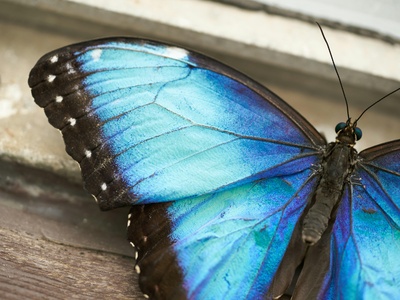
Blue morpho
Lives deep in humid rainforest understory, feeding on fermenting fruit and sap; dazzling blue wings startle predators. Often seen along forest gaps. Populations are sensitive to habitat loss, though some local populations remain common.
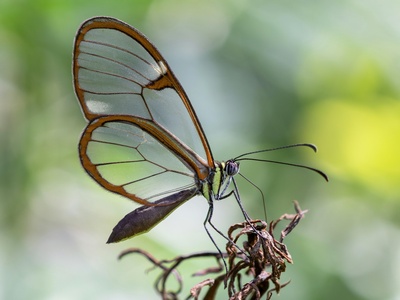
Glasswing butterfly
Found on shaded forest trails and edges, adults feed on nectar and pollen; nearly transparent wings offer camouflage. Long-lived for a butterfly and key pollinator. Threatened locally by deforestation and pesticide use.
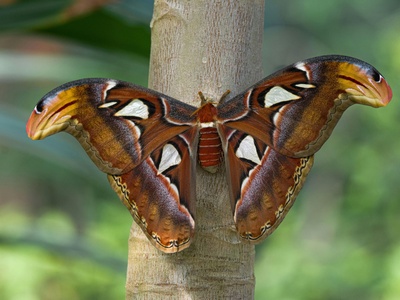
Atlas moth
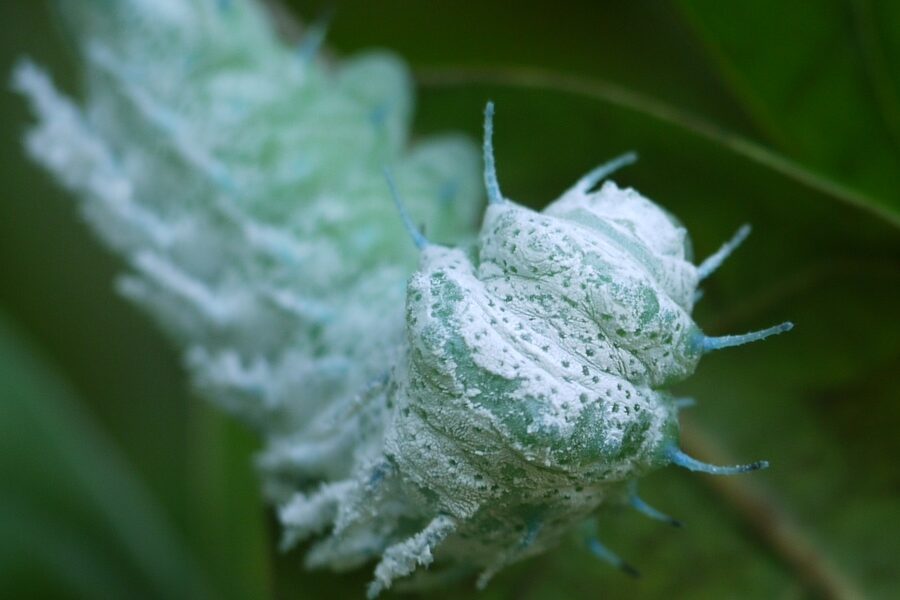
Large saturniid moth whose adults have reduced mouthparts and don’t feed; caterpillars eat rainforest trees and shrubs. Remarkable wing patterns mimic snake heads. Habitat loss affects some populations, though species persists in protected forests.

Hercules beetle
A rhinoceros beetle whose males use huge horns in fights over mates; larvae decompose rotting wood. Spectacular size makes it a rainforest icon. Local collection and forest clearance threaten populations in parts of its range.
Titan beetle
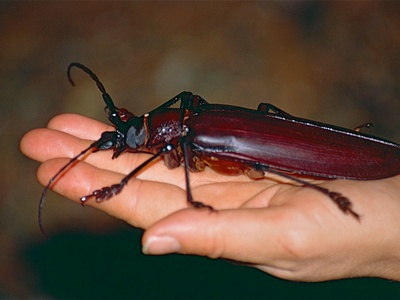
One of the world’s largest longhorn beetles, lives in lowland rainforest and wood debris; larvae likely bore in dead wood. Impressive size sparks fascination, but it remains poorly known and vulnerable to habitat destruction.
Goliath beetle
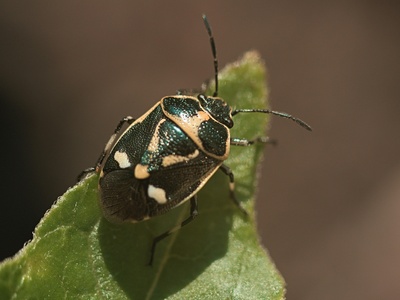
Feeds on fruit and tree sap; larvae develop in rich decaying organic matter. Bright metallic colors and robust form make it notable. Forest loss and collecting pressure affect some populations.

Orchid mantis
A leaf-and-flower mimic that ambushes pollinators on rainforest blossoms; carnivorous and highly camouflaged. Famous for floral disguise, it relies on intact understory flower resources and is sensitive to habitat clearing.
Chan’s megastick
An extreme stick insect that blends with twigs in dense rainforest canopy; herbivorous on leaves and slow-moving. One of the longest insects known, its reliance on intact forest makes it vulnerable to logging.
Bullet ant
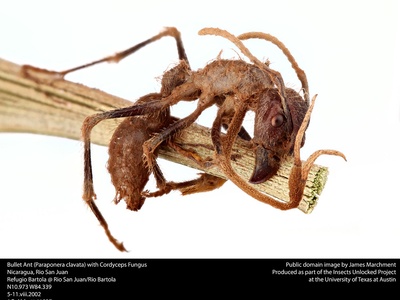
Ground-nesting ant that forages in leaf litter and trees; noted for an extremely painful sting used in local rites. Important predator and scavenger in rainforest ecosystems; habitat destruction reduces colony densities.
Leafcutter ant
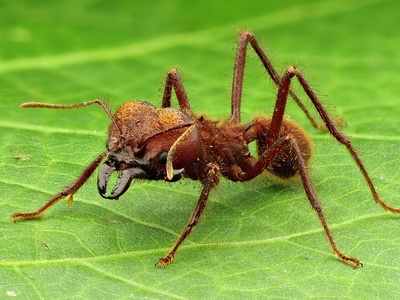
Cuts leaves to cultivate fungus gardens underground; major ecosystem engineers that recycle plant material and alter soil. Remarkable cooperative societies are sensitive to large-scale forest clearing and fragmentation.
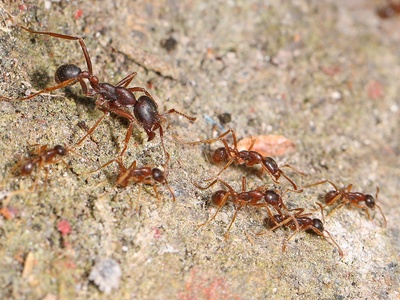
Army ant
Nomadic predator that forms massive foraging swarms, flushing prey and supporting “ant-following” birds. Key in controlling insect populations. Dependent on large continuous forest tracts; fragmentation disrupts their cycles.
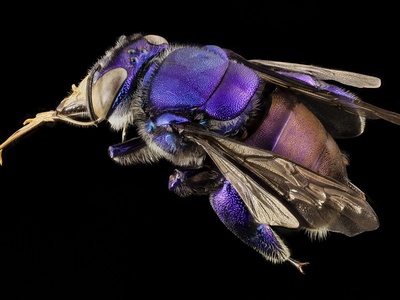
Orchid bee
Solitary male bees collect floral fragrances from orchids and flowers, aiding pollination; they nest in tree cavities. Bright metallic colors and complex behaviors fascinate scientists. Forest degradation reduces floral resources and nesting sites.
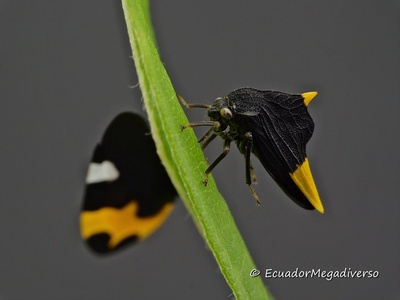
Amazon cicada
Lives in the rainforest canopy where males sing loudly to attract mates; nymphs develop on tree roots feeding on sap. Their loud choruses are iconic. Deforestation reduces breeding trees and local populations.
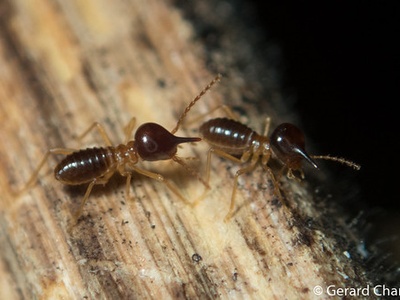
Nasute termite
Constructs large arboreal nests and decomposes dead wood and leaf litter, recycling nutrients. Soldiers use chemical sprays for defense. Important ecosystem engineers; sensitive to removal of large trees and forest fragmentation.
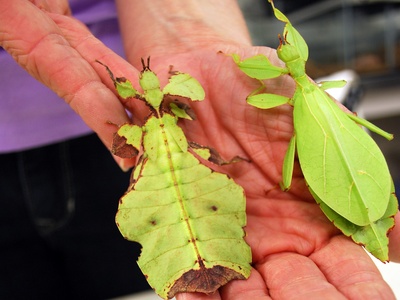
Leaf insect
Masters of leaf mimicry, they feed on understory foliage and move slowly to avoid detection. Adults and nymphs are major herbivores on small trees. Relies on intact understory and declines with habitat loss.
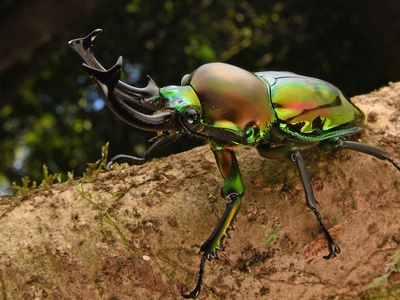
Rainbow stag beetle
Colorful stag beetle feeding on tree sap and decaying wood; males use mandibles in contests. Shiny metallic colors help identify it. Forest clearance threatens populations, though it persists in remote areas.
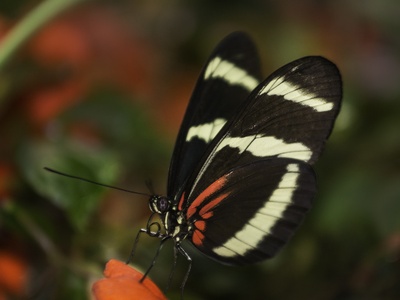
Postman butterfly
Lives in forest clearings and understory, feeding on pollen and nectar; known for mimicry and learning. Long-lived adults are important pollinators. Habitat fragmentation and selective logging can impact local diversity.
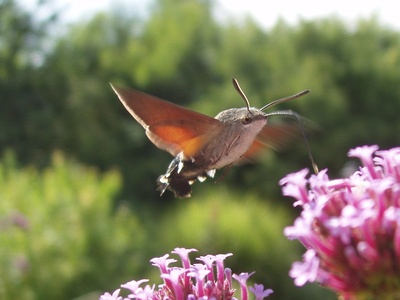
Hummingbird hawkmoth
Day-flying hawkmoth that hovers at flowers like a tiny hummingbird, feeding on nectar with a long proboscis. Important pollinator of rainforest blossoms. Sensitive to loss of floral resources and canopy changes.
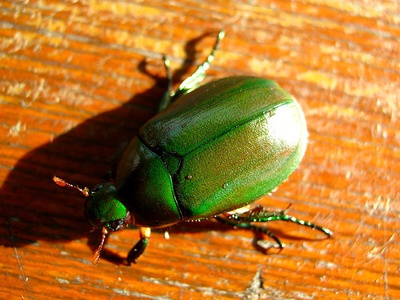
Green flower chafer
Feeds on ripe fruit and tree sap; larvae develop in decaying wood and soil. Bright metallic greens make it conspicuous. Local forest degradation and collection impact some populations.
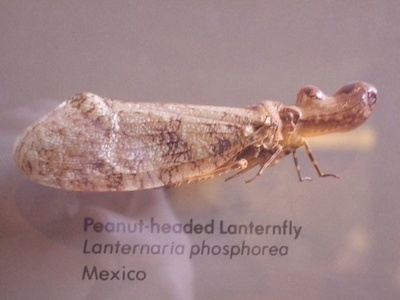
Peanut-headed lanternfly
A large planthopper that rests on tree trunks, using a striking head profile and wing patterns to deter predators; feeds on plant sap. Not endangered but vulnerable to broad habitat loss.
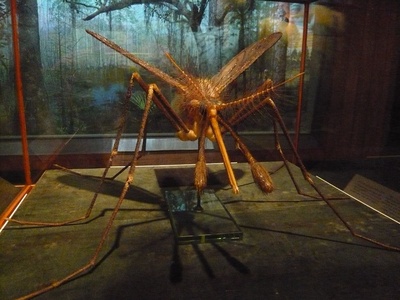
Malaria mosquito
Common rainforest mosquito that breeds in shaded pools and streams; females feed on blood and can transmit malaria. Ecologically part of forest food webs but of public health concern; changes in forest hydrology can alter its populations.