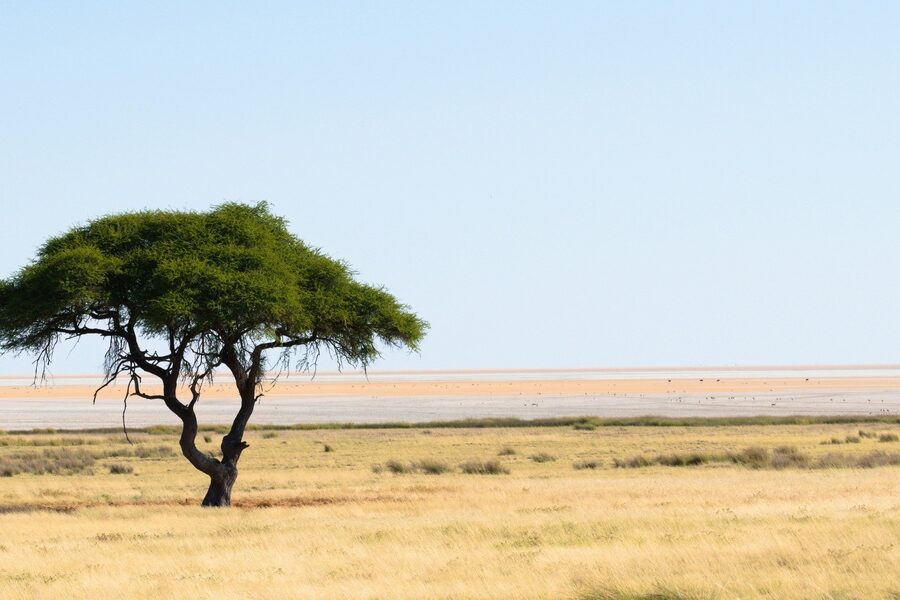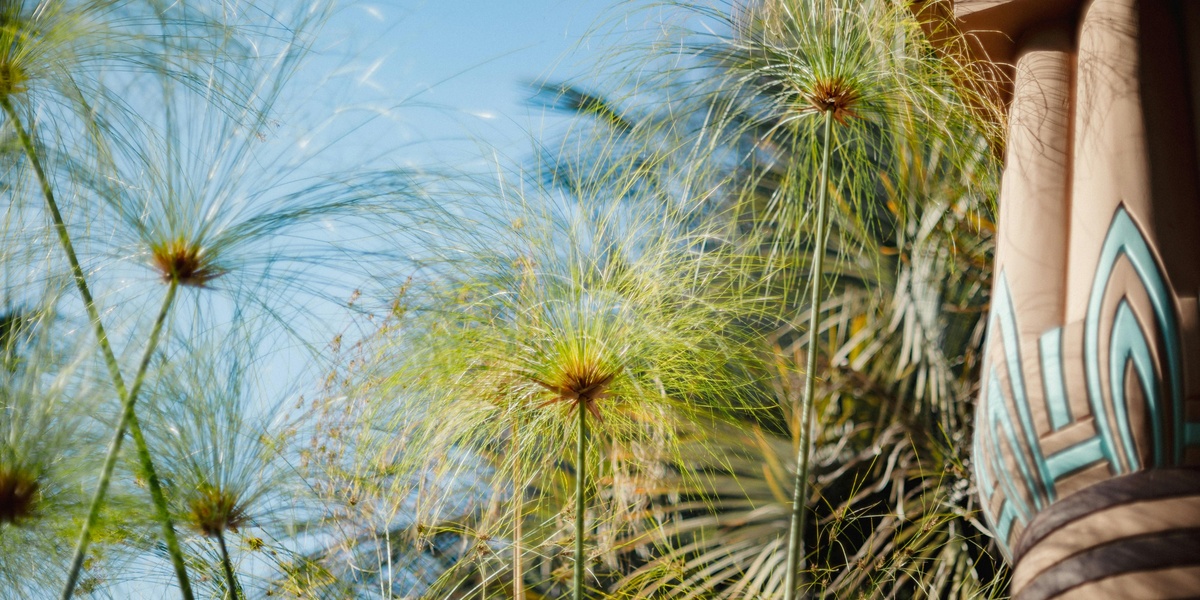
Uganda’s mix of montane forests, wetlands and savanna supports a surprising variety of plant life that shapes landscapes, cultures and local economies. From roadside herbs to large canopy trees, the flora is a practical guide to where you are and what grows there.
There are 59 Plants of Uganda, ranging from African baobab to Zebra grass. For each species, entries are organized by Scientific name,Plant type,Habitat; you’ll find below.
Which plants on the list are native versus introduced?
The list includes both native and introduced species; check the Habitat notes and Scientific name to spot endemics or widespread exotics. For conservation status or origin, cross-reference with national records or the IUCN and consult local herbaria or field guides.
How can I use this list for field identification or research?
Use Plant type and Habitat first to narrow possibilities, then match photos and local descriptions to the Scientific name. For research, export names to herbarium databases or biodiversity tools, record GPS locations, and verify identifications with specimens or expert confirmation.
Plants of Uganda
| Common name | Scientific name | Plant type | Habitat |
|---|---|---|---|
| Fever tree | Vachellia xanthophloea | tree | Swamps, lakeshores; Lake Victoria and Nile regions |
| Sausage tree | Kigelia africana | tree | Savanna, riverbanks; central and northern Uganda |
| Papyrus | Cyperus papyrus | grass | Papyrus swamps, wetlands; Lake Victoria, Murchison Falls |
| Raffia palm | Raphia farinifera | palm | Swamps and riparian zones; Lake Victoria basin, central Uganda |
| Sycamore fig | Ficus sycomorus | tree | Riversides, open woodlands; widespread lowland Uganda |
| Strangler fig | Ficus thonningii | tree | Woodlands, riverine forests; widespread Uganda |
| African baobab | Adansonia digitata | tree | Dry savanna and woodlands; northern and eastern Uganda |
| African cherry | Prunus africana | tree | Montane and submontane forests; Rwenzori, Mt Elgon, western Uganda |
| Mountain redwood | Hagenia abyssinica | tree | Afro-montane forests; Rwenzori and Mt Elgon |
| Iroko | Milicia excelsa | tree | Moist semi-deciduous forests; western and central Uganda |
| Musizi | Maesopsis eminii | tree | Forest edges, disturbed forest; widespread Uganda |
| Coral tree | Erythrina abyssinica | tree | Savanna, woodlands; widespread Uganda |
| Desert date | Balanites aegyptiaca | tree | Dry savanna and scrub; northern and northeastern Uganda |
| Mango | Mangifera indica | tree | Cultivated and naturalized in lowlands; across Uganda |
| Guava | Psidium guajava | shrub | Disturbed ground, gardens, lowland Uganda |
| Cordia | Cordia africana | tree | Riverine and moist forests; central and western Uganda |
| Mugavu | Albizia coriaria | tree | Woodlands and riverine areas; widespread Uganda |
| Babul | Vachellia nilotica | tree | Floodplains and riverbanks; Nile corridor and savanna |
| Lantana | Lantana camara | shrub | Disturbed habitats, roadsides; widespread Uganda |
| Blue gum | Eucalyptus grandis | tree | Plantations, highlands; central and eastern Uganda |
| Robusta coffee | Coffea canephora | shrub | Cultivated and semi-wild; western Uganda, Albertine Rift |
| Giant lobelia | Lobelia wollastonii | herb | Afro-alpine moorland; Rwenzori and Mt Elgon |
| Podocarp | Podocarpus latifolius | tree | Montane and submontane forests; western Uganda |
| Uganda greenheart | Warburgia ugandensis | tree | Moist forests and wetlands; western and central Uganda |
| Waterberry | Syzygium guineense | tree | Riverine, swamp edges; lowland and highland Uganda |
| Wild custard-apple | Annona senegalensis | shrub | Savanna, woodland edges; widespread Uganda |
| Wild date palm | Phoenix reclinata | palm | Riverbanks, wetlands; Lake Victoria and Nile |
| Nile trumpet | Markhamia lutea | tree | Roadsides, woodlands, moist uplands; widespread Uganda |
| Popcorn cassia | Senna didymobotrya | shrub | Disturbed sites, roadsides; widespread Uganda |
| Camel’s foot | Piliostigma thonningii | tree | Savanna and riverine woodlands; across Uganda |
| Velvet bushwillow | Combretum molle | shrub | Woodlands and savanna; widespread Uganda |
| Terminalia | Terminalia brownii | tree | Woodlands and riverine areas; northern and eastern Uganda |
| Doum palm | Hyphaene petersiana | palm | Dry riverbeds and savanna; northern and eastern Uganda |
| African mahogany | Khaya anthotheca | tree | Moist forests and gallery woodland; western Uganda |
| African tulip tree | Spathodea campanulata | tree | Roadsides, disturbed forests; widespread lowland Uganda |
| Paperbark acacia | Vachellia sieberiana | tree | Savanna and woodland; across Uganda |
| Black plum | Vitex doniana | tree | Woodlands, riverine zones; central and northern Uganda |
| Siam weed | Chromolaena odorata | shrub | Disturbed sites, forest edges; widespread Uganda |
| Moringa | Moringa oleifera | tree | Cultivated and naturalized in lowlands; across Uganda |
| Napier grass | Pennisetum purpureum | grass | Grasslands, roadside, farms; widespread Uganda |
| Mexican sunflower | Tithonia diversifolia | shrub | Roadsides, degraded land; across Uganda |
| African locustbean? [excluded] | Parkia biglobosa | tree | — |
| Mangrove? [excluded] | Rhizophora mucronata | tree | — |
| Red stinkwood | Prunus africana var. | tree | montane |
| African violet? [excluded] | Saintpaulia ionantha | herb | — |
| Sisal | Agave sisalana | herb | Dry areas; plantations |
| Sausage tree (alternate) | Kigelia africana var. | tree | — |
| Blue-leaved croton? [excluded] | Croton megalocarpus | tree | — |
| Croton | Croton megalocarpus | tree | Woodlands and disturbed areas; widespread Uganda |
| Wild fig (cluster) | Ficus spp. | tree | Riverine and woodland; widespread Uganda |
| Afromontane heath | Erica spp. | shrub | Afro-alpine edges; Rwenzori and Mt Elgon |
| African blackwood | Dalbergia melanoxylon | tree | Dry woodlands; scattered Uganda |
| Senna italica | Senna italica | shrub | Savanna, roadsides; widespread Uganda |
| Tamarind | Tamarindus indica | tree | Cultivated and semi-natural; lowland Uganda |
| Blackjack | Bidens pilosa | herb | Disturbed ground, gardens; across Uganda |
| Marula | Sclerocarya birrea | tree | Savanna woodlands; northern Uganda |
| Zebra grass | Heteropogon contortus | grass | Open grasslands and slopes; widespread Uganda |
| Olive (African) | Olea europaea subsp. africana | tree | Scattered woodlands, uplands; western Uganda |
| Honey bush | Syzygium cordatum | tree | Riverbanks and wetlands; widespread Uganda |
Images and Descriptions
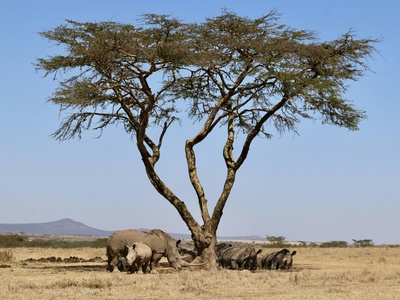
Fever tree
Iconic yellow-barked tree often on wet ground; grows up to 20–25 m. Common along lakes and rivers, provides shade, fuelwood and habitat for birds; easily recognized and culturally important across Uganda.
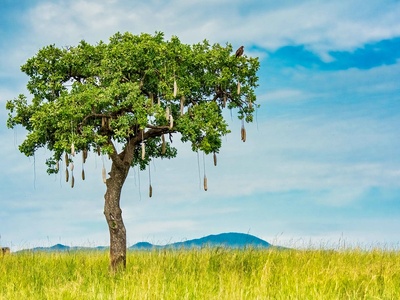
Sausage tree
Large tree with hanging sausage-like fruits and showy red flowers; attracts bats and pollinators. Fruits eaten locally after processing; used medicinally and as a striking roadside or park tree.

Papyrus
Tall sedge forming dense reedbeds on shallow water. Historically used for papermaking and mats; crucial for wetland ecology, fisheries and birdlife, especially around lakes and river deltas.
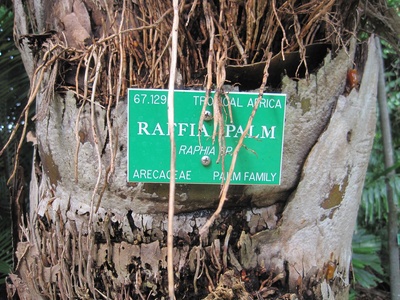
Raffia palm
Large fan-leaved palm with long leaflets used for weaving, thatch and ropes. Forms distinctive swamp groves; economically and culturally valuable to lakeside communities.
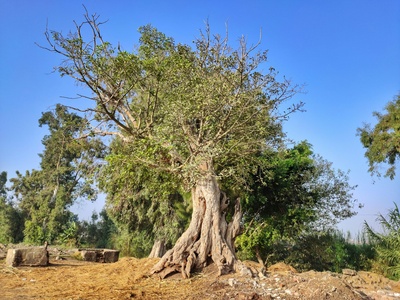
Sycamore fig
Large fig with broad canopy and edible figs that feed wildlife and people. Important shade and cultural tree, often found near settlements and watercourses.
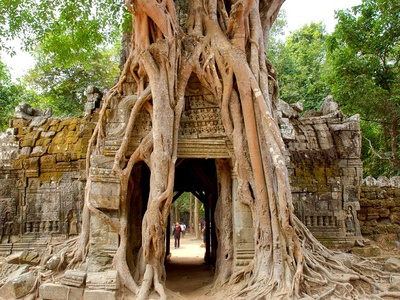
Strangler fig
Versatile fig that begins life as an epiphyte, often becoming a massive spreading tree. Provides year-round figs for animals, used for fodder and traditional medicine.
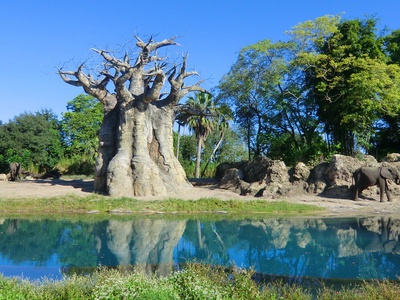
African baobab
Massive, bottle-shaped tree up to many metres wide. Iconic for water storage, edible fruit and cultural uses; scattered survivors in drier regions, often centuries old.

African cherry
Tall evergreen harvested for medicinal bark treating prostate ailments; populations have declined from overharvesting, making it a species of conservation concern in Uganda’s high forests.
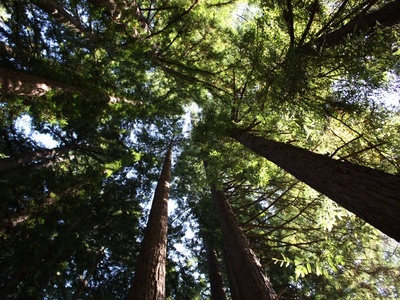
Mountain redwood
Distinctive montane tree with pinnate leaves and drooping flower clusters. Historically used for timber and traditional medicine; characteristic of higher-elevation forest zones.
Iroko
Large canopy tree valued for durable timber often used as a mahogany substitute. Found in lowland forests; important for timber but facing logging pressure in parts of Uganda.
Musizi
Fast-growing pioneer tree that colonizes disturbed forest and plantations; commonly used for timber and shade but considered invasive in some natural forests, altering regeneration.
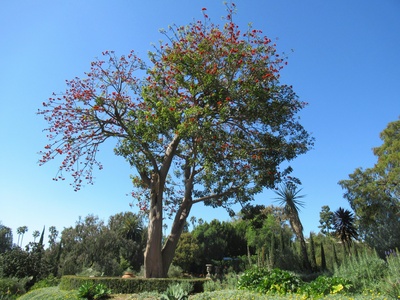
Coral tree
Striking tree with bright red flowers and thorny branches, often used as a living fence. Flowers attract pollinators; roots and bark used in traditional remedies.
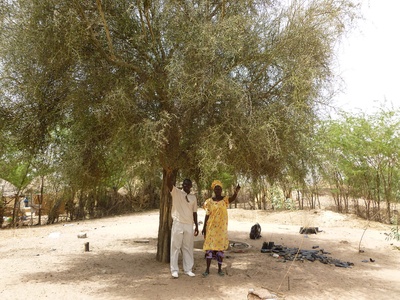
Desert date
Drought-tolerant tree with oily edible fruits and thorny branches. Important for pastoralists as fodder and food source; valued for resilience in arid landscapes.
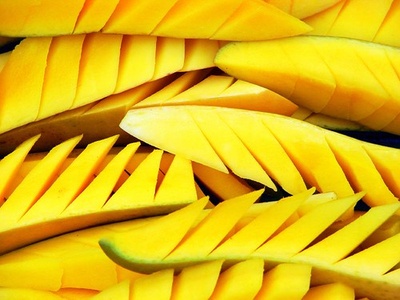
Mango
Widely cultivated fruit tree that has naturalized in many areas. Provides abundant fruit, shade and timber; a common feature of village and urban gardens.
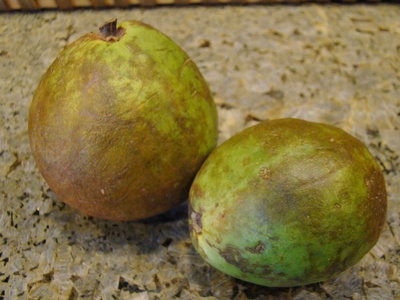
Guava
Introduced fruit shrub now widespread and often naturalized. Produces sweet fruits eaten fresh or processed; common in home gardens and as a weedy species in disturbed sites.
Cordia
Medium to large shade tree with white flowers and edible fruits for wildlife. Valued for timber and traditional uses; often found near streams and homesteads.
Mugavu
Fast-growing acacia-like tree with spreading crown used for shade, fodder and timber. Common in agroforestry and as a roadside tree.
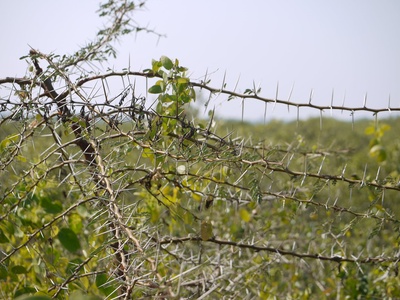
Babul
Tough thorny tree tolerating flooded soils; provides fuelwood, gum and livestock fodder. Common along rivers and in floodplain woodlands.
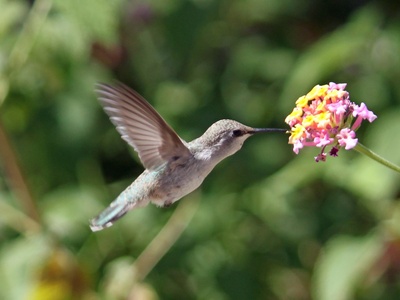
Lantana
Invasive flowering shrub with fragrant clusters of colorful flowers. Invades disturbed areas, reducing biodiversity and hindering pasture, yet used ornamentally and having some medicinal uses.
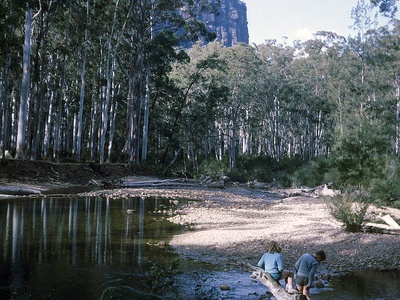
Blue gum
Fast-growing plantation tree widely used for timber, poles and fuelwood. Often naturalizes along plantations and road verges; important in forestry but can alter water balance.
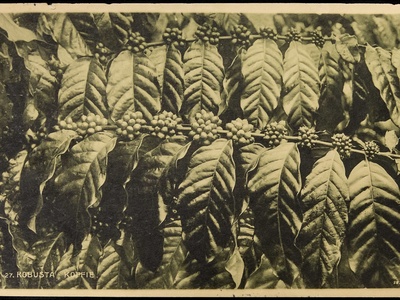
Robusta coffee
Commercial coffee species grown widely in Uganda; important cash crop. Wild or feral populations occur near farms; provides economic backbone to many rural communities.
Giant lobelia
Tall rosette plant forming dramatic towers in high-altitude moorlands. Iconic of Uganda’s mountains and important in alpine ecology; a must-see for high-altitude visitors.
Podocarp
Slow-growing evergreen coniferous tree of moist upland forests. Valued for dense timber and as part of diverse montane forest communities.
Uganda greenheart
Aromatic medicinal tree used to treat infections; bark and leaves are harvested for traditional medicine. Habitat loss threatens local populations.
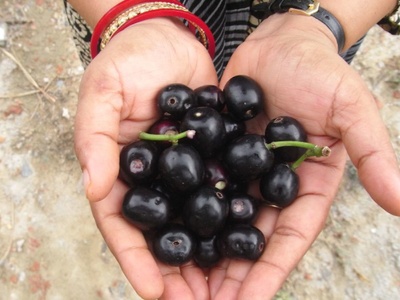
Waterberry
Glossy-leaved tree with edible fruit and attractive flowers. Common along waterways, used for shade, timber and fruit in local diets.
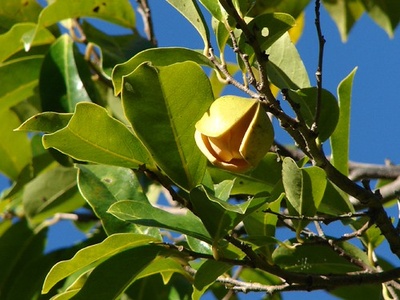
Wild custard-apple
Small aromatic shrub producing edible, custard-like fruits enjoyed locally. Useful in agroforestry and traditional medicine, common in open landscapes.
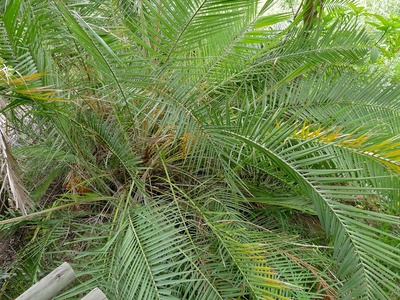
Wild date palm
Clumping palm with edible dates and strong leaf fibers used for weaving. Common in riparian zones and culturally important in lakeside communities.
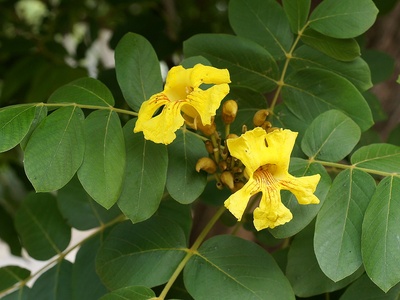
Nile trumpet
Attractive flowering tree with yellow trumpets, often planted as a street tree. Grows quickly, provides shade and nectar for pollinators.
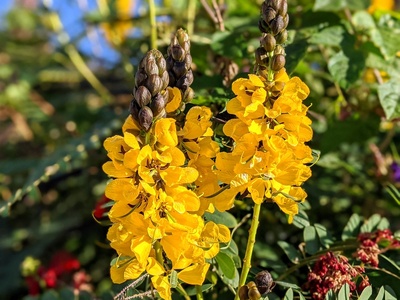
Popcorn cassia
Fragrant yellow-flowered shrub used as ornamental and green manure. Easily naturalized, with traditional medicinal uses and nitrogen-fixing benefits.
Camel’s foot
Fine-textured tree with distinctive compound leaves and small pods. Provides fodder, fuelwood and traditional remedies; common in drier woodlands.
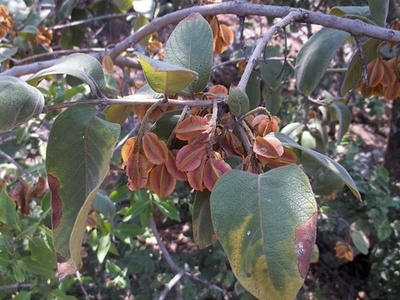
Velvet bushwillow
Multi-stemmed shrub with fuzzy leaves and winged seeds. Common in open country, used for charcoal, livestock browse and traditional medicine.
Terminalia
Medium tree with distinctive layered crown, used for timber and traditional remedies. Common in drier east and north regions.
Doum palm
Branching palm producing edible fibrous fruit and strong leaf fibers used for weaving. Adapted to drier habitats and important for rural livelihoods.
African mahogany
Large, valuable timber tree related to mahogany. Planted and occasionally naturally regenerating; prized for high-quality furniture wood.
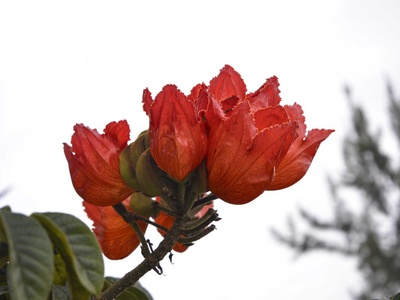
African tulip tree
Showy orange-red flowering ornamental tree, widely planted and sometimes naturalized. Attractive to birds and bees but can be weedy in disturbed habitats.
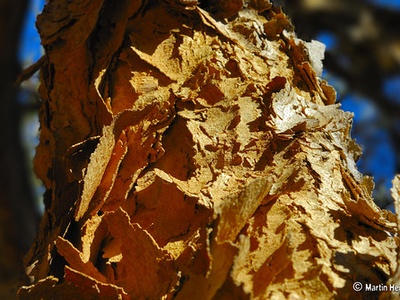
Paperbark acacia
Acacia with flaky bark and broad crown, used for shade, fodder and fuel. Common across savanna landscapes and useful for traditional livestock systems.
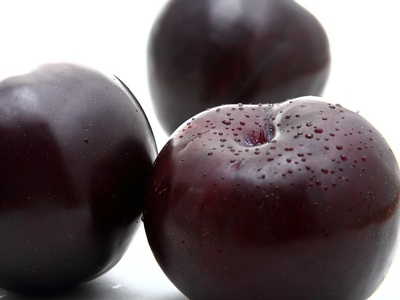
Black plum
Fruit-bearing tree with edible plums popular locally. Provides shade, timber and food; valued in agroforestry and wild food systems.
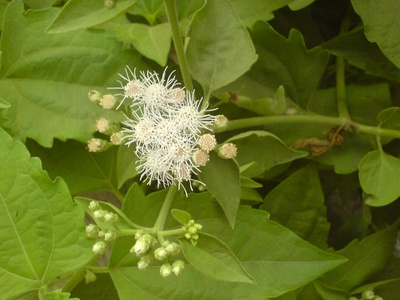
Siam weed
Highly invasive shrub with fragrant white-pink flowers that smother native vegetation. Major threat to forest regeneration and pasture, prompting control efforts.
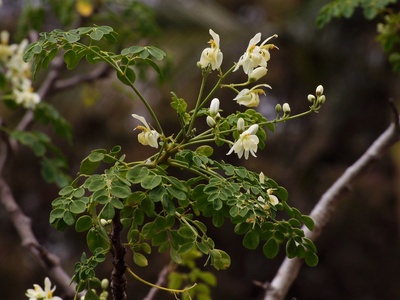
Moringa
Fast-growing multipurpose tree with highly nutritious leaves and seeds used for food, medicine and water purification. Widely planted and sometimes naturalized near homesteads.
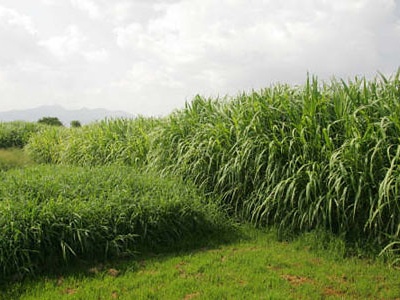
Napier grass
Tall tropical grass widely used as fodder for livestock. Often planted along boundaries and can naturalize; crucial for dairy and livestock systems.
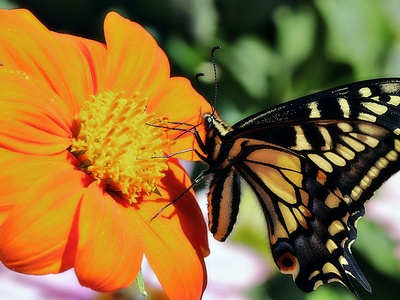
Mexican sunflower
Fast-growing ornamental and green-manure shrub that readily naturalizes. Used for soil improvement and fodder but can become invasive in disturbed areas.
African locustbean? [excluded]
—
Mangrove? [excluded]
—
Red stinkwood
—
African violet? [excluded]
—
Sisal
Stiff-leaved plant grown commercially; fibers used for ropes and mats. In Uganda it’s cultivated in drier regions and sometimes escapes along roadsides.
Sausage tree (alternate)
—
Blue-leaved croton? [excluded]
—
Croton
Fast-growing tree used in agroforestry and as a shade tree for coffee; seeds yield oil and it’s commonly planted on farms.
Wild fig (cluster)
Multiple native fig species dominate riparian forests and support year-round wildlife with abundant figs; culturally significant and critical for forest ecology.
Afromontane heath
Heathland shrubs forming montane ericaceous zones above forest, providing unique high-altitude habitat and striking floral displays in Uganda’s mountain ranges.
African blackwood
Dense hardwood used for musical instruments and fine carving. Scarcity from overexploitation makes it valuable; occurs in drier regions.
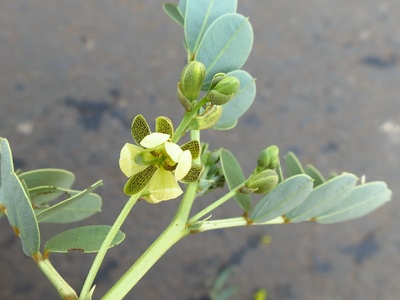
Senna italica
Small shrubby legume with yellow flowers often used in traditional medicine and as a restorative species in disturbed areas.
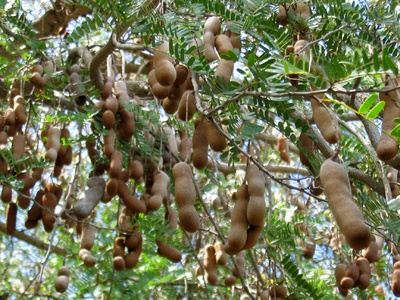
Tamarind
Introduced fruit tree producing sour-sweet pods used in cooking and medicine. Often escapes cultivation and naturalizes near settlements.
Blackjack
Common annual weed with tiny barbed seeds; edible leaves used as a leafy vegetable and in traditional remedies.
Marula
Fruit-bearing tree producing nutritious fruits used fresh, fermented and for oil. Important for wildlife and rural livelihoods in drier zones.
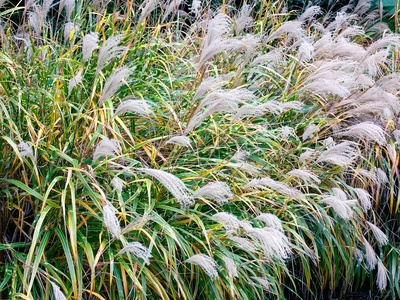
Zebra grass
Native perennial tussock grass important for pasture and soil stabilization in upland and savanna areas.
Olive (African)
Wild olive subspecies forming part of montane and upland woodlands. Provides fruit for wildlife, durable timber and traditional uses.
Honey bush
Scented flowering tree producing edible fruit and nectar-rich flowers; common along waterways and used for local timber and medicine.