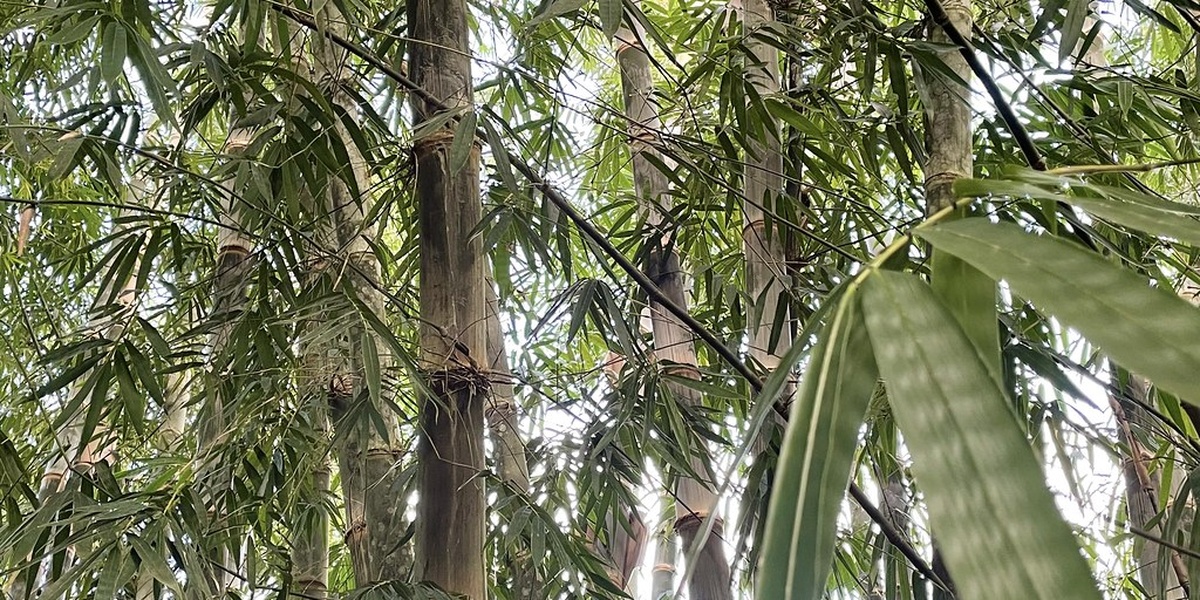
Rainforests and montane cloud forests host a surprising variety of bamboo, shaping understory structure and providing food and shelter for wildlife. From dense clumping stands to tall, cane-like growth, these grasses play important roles in erosion control and local livelihoods.
There are 13 Rainforest Bamboo, ranging from African alpine bamboo to Zollinger bamboo; the data are organized by Scientific name,Native range,Typical height (m), which you’ll find below.
How can I use the Scientific name, Native range and Typical height (m) to choose a species?
Match Native range to your climate and elevation first, then use Typical height (m) to judge space and management needs; the Scientific name lets you look up cultivation notes, pests and legal status so you can make an informed selection.
Are any species on the list subject to protection or invasive-species rules?
Some species may be protected in parts of their native range or regulated for trade—check national red lists, CITES entries and local invasive-species databases using the Scientific name before sourcing or planting.
Rainforest Bamboo
| Common name | Scientific name | Native range | Typical height (m) |
|---|---|---|---|
| Guadua | Guadua angustifolia | Colombia, Ecuador, Peru, Venezuela | 20-30 |
| Giant bamboo | Dendrocalamus giganteus | Myanmar, Thailand, Malaysia, Indonesia | 25-30 |
| Asper bamboo | Dendrocalamus asper | India, Myanmar, Thailand, Philippines, Indonesia | 20-25 |
| Spiny bamboo | Bambusa blumeana | Philippines, Malaysia, Indonesia, Papua New Guinea | 15-20 |
| Apus bamboo | Gigantochloa apus | Indonesia, Malaysia, Philippines | 12-18 |
| Black bamboo | Gigantochloa atroviolacea | Borneo, Sumatra, Malaysia | 10-18 |
| Muli bamboo | Melocanna baccifera | Northeast India, Myanmar, Bangladesh | 15-20 |
| Reed bamboo | Ochlandra travancorica | Western Ghats, India | 5-8 |
| Madagascar bamboo | Cathariostachys madagascariensis | Eastern Madagascar rainforests | 4-8 |
| Schizostachyum bamboo | Schizostachyum brachycladum | Indonesia, Malaysia, Philippines | 8-12 |
| Zollinger bamboo | Schizostachyum zollingeri | Indonesia, Malesia, Philippines | 6-12 |
| African alpine bamboo | Oldeania alpina | Ethiopia, Kenya, Uganda, Tanzania, Rwanda | 6-20 |
| Weberbauer’s guadua | Guadua weberbaueri | Peru, Brazil, Bolivia (Amazon) | 8-15 |
Images and Descriptions

Guadua
Massive clumping rainforest bamboo common in lowland Andean and Amazonian forests. Strong straight culms used for construction, bridges, furniture and carpentry; important in local economies. Faces habitat loss and overharvesting; some populations are managed but conservation of wild stands remains important.
Giant bamboo
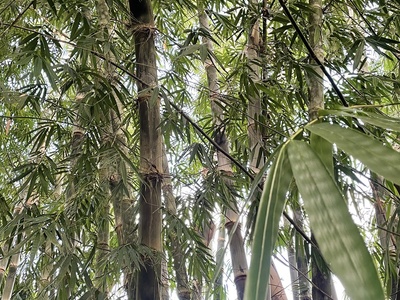
Gigantic clumping bamboo of Southeast Asian lowland rainforests. Exceptionally tall, thick-walled culms used for heavy construction, poles and musical instruments. Widely harvested locally; wild stands are reduced in some areas but species remains widely cultivated and managed.
Asper bamboo
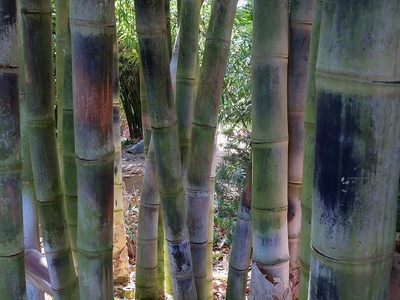
Robust clumping bamboo found in humid lowland forests and secondary regrowth. Thick-walled culms valued for construction, flooring and paper. Cultivated for timber yet wild populations persist; local clearing and selective harvesting can threaten natural populations.
Spiny bamboo
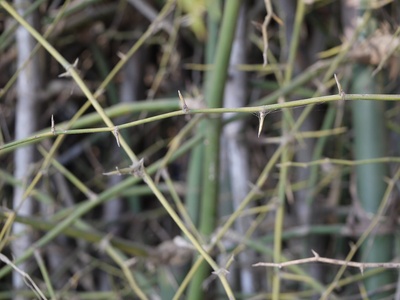
Clumping lowland rainforest bamboo common in Southeast Asia and Philippines. Straight, durable culms used for scaffolding, furniture and weaving. Often coppices after harvest; faces pressure from land conversion but remains locally widespread and cultivated.
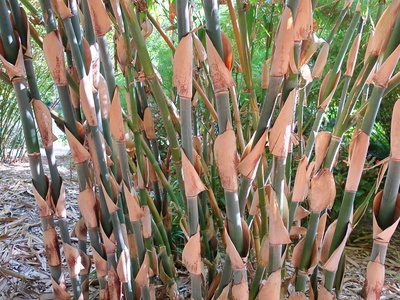
Apus bamboo
Clumping rainforest bamboo of Malesian lowland forests, with smooth straight culms used in local construction, handicrafts and musical instruments. Faces local overharvest in some islands; still common in secondary and disturbed forest edges.
Black bamboo
Striking dark-culmed clumping bamboo from Borneo lowland rainforests. Valued ornamentally and for construction locally; habitat loss from logging and palm oil threatens native stands, though species is cultivated and locally protected in some areas.
Muli bamboo
Tall clumping bamboo of moist tropical forests and riverine areas. Noted for mass flowering events linked to historical rodent outbreaks; culms used for construction and paper. Wild stands have declined in places due to clearing.
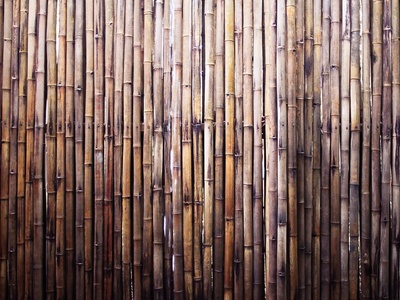
Reed bamboo
Endemic to Western Ghats rainforest understories; slender reed-like culms used locally for mats, baskets and house construction. Restricted range makes it vulnerable; habitat loss and overharvesting have led to conservation concern and protected status in parts of Kerala.
Madagascar bamboo
Small to medium clumping bamboo endemic to humid eastern Malagasy forests; key food source for bamboo lemurs. Used locally for construction and crafts; threatened by habitat loss and hunting affecting dependent wildlife.
Schizostachyum bamboo
Slender, clumping bamboo of moist lowland and hill rainforests, with thin-walled flexible culms used for weaving, baskets and light construction. Often regenerates after disturbance; not widely threatened though local stands face clearing.
Zollinger bamboo
Arborescent clumping bamboo in tropical rainforests used traditionally for house frames, mats and tools. Fast-growing and valued locally; deforestation reduces wild habitat though species persists in secondary forest and village groves.
African alpine bamboo
Dominant in montane and upper montane tropical forests and bamboo zones; forms dense stands important for soil stability and wildlife habitat. Used for poles and fodder; localized overharvest and land conversion threaten some populations.
Weberbauer’s guadua
Amazonian clumping bamboo of flooded and terra firme rainforests; culms used locally for construction and tool making. Plays ecological role in riverine dynamics and wildlife habitat; local extraction and deforestation impact populations.