A single blue whale can weigh as much as 25 adult elephants and reach lengths of up to 30 metres — the largest animal known to have ever lived. Commercial whaling in the early 20th century decimated blue whale populations worldwide, with Antarctic stocks among the hardest hit. That history matters: these giants recover slowly, and changes in the ocean now pose fresh challenges.
Understanding the characteristics of a blue whale helps scientists, conservationists, and nature-based businesses make smarter decisions about protection, monitoring, and responsible whale-watching. Which traits let them grow so large? How do those traits shape migrations, feeding, and vulnerability?
This article explains 10 defining characteristics of the blue whale that together explain how it evolved to become Earth’s largest animal and why those traits matter for ecosystems and conservation.
Below you’ll find ten distinct features grouped into four categories: anatomy, feeding and physiology, behavior and life history, and conservation and human interactions. Along the way are specific numbers and examples—like how Antarctic krill blooms fuel seasonal feeding—that make the biology concrete.
Physical size and anatomy
Balaenoptera musculus—the blue whale—owes nearly every aspect of its life to sheer scale. Size and anatomy determine how it swims, what and how much it eats, how it reproduces, and how exposed it is to human threats. Subspecies include the Antarctic blue whale (often the largest) and smaller forms like the pygmy blue whale; recorded individuals reach almost 30 metres and adults vary widely in mass. Several anatomical oddities stand out: an immense mouth and baleen for bulk feeding, a tongue and heart of extraordinary size, and a streamlined form that trades maneuverability for efficient long-distance travel. The three points below unpack those specializations and why they matter.
1. Record size and mass
Blue whales are the largest animals known to science, with maximum lengths around 30 metres. Adult weight varies by subspecies and individual condition; many sources cite typical ranges from tens of metric tons up to about 100–180 metric tons for the largest Antarctic animals.
That scale has ecological consequences: few predators can threaten a full-grown adult, yet maintaining a huge body demands enormous food intake and energetic efficiency. To visualize it, a very large blue whale weighs roughly the same as 25 adult African elephants—an image that makes the ocean’s enormity feel tangible.
2. Massive organs and specialized anatomy
Certain organs are famously outsized: the heart is often described as being roughly the size of a small car, and the tongue’s mass is commonly compared to that of an elephant—phrased here as “comparable to an elephant.” Those proportions are functional: a large circulatory system supplies oxygen throughout a giant body, while an enormous mouth and throat permit engulfing huge volumes of water and prey.
Instead of teeth, blue whales have baleen—fringed keratin plates that act like a sieve. Baleen allows the species to filter dense swarms of krill efficiently, turning small prey into enough calories to support a massive frame.
3. Streamlined body and fluke-powered locomotion
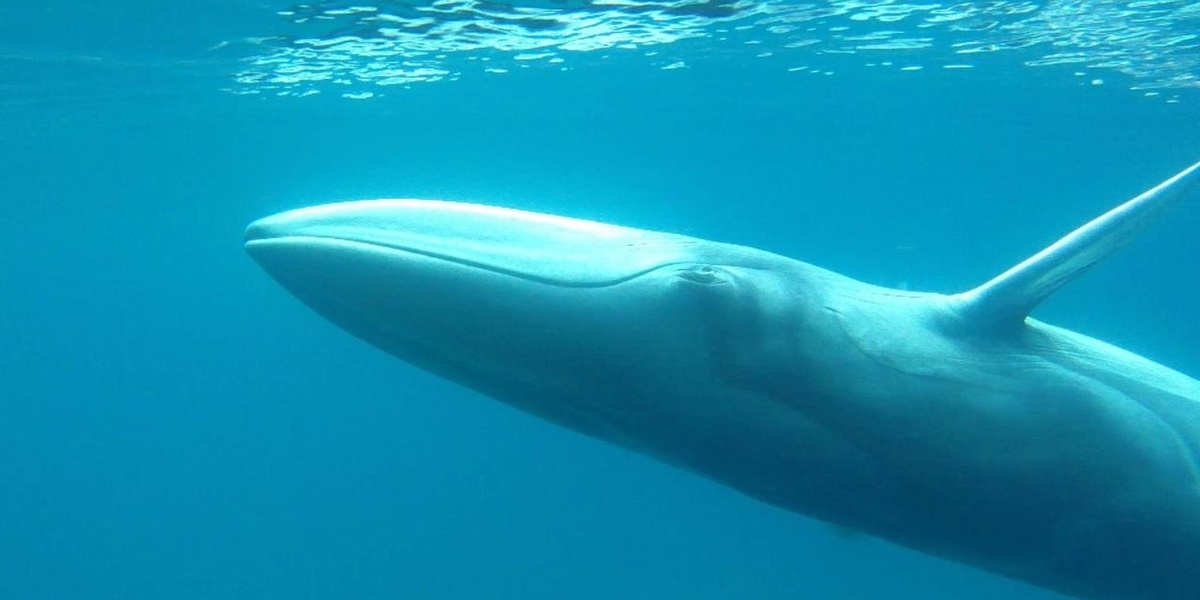
The body is fusiform—streamlined to reduce drag—paired with a relatively small dorsal fin and very powerful tail flukes. Propulsion comes mainly from up-and-down strokes of the flukes, which is efficient for long-distance travel.
Typical cruising speeds are roughly 5–20 km/h, with the capacity for faster short bursts. The trade-off is clear: low drag and high endurance for seasonal migrations, but limited agility in confined spaces.
Feeding, metabolism, and physiology
To sustain such a large body, blue whales rely on extreme specialization. During the feeding season a large individual can eat multiple tonnes of krill per day, and physiology—from oxygen stores to fat deposition—supports long migrations. The next three sections cover diet and filter feeding, how feeding fuels migration, and diving physiology that enables efficient foraging.
4. Bulk filter feeding on krill
Krill are the primary food source. Blue whales feed by engulfing large volumes of water and prey and then squeezing that water out through baleen. In peak feeding, large individuals commonly consume on the order of 3,000–4,000 kg of krill per day.
That strategy depends on prey behaviour: dense swarms or blooms—such as Antarctic krill concentrations—make bulk filter feeding energetically viable. Where krill aggregate, a whale can take a relatively small number of huge mouthfuls to meet daily needs.
5. Energy efficiency and seasonal migration
Blue whales concentrate feeding into relatively short, intense seasons in high-latitude, productive waters and then migrate to lower-latitude areas for breeding. These migrations span thousands of kilometres and rely on fat reserves—especially blubber—accumulated during feeding.
Because they fast or feed little on breeding grounds, timing is critical: shifts in krill availability due to climate or oceanographic change can alter migration schedules and reduce reproductive success.
6. Diving physiology and oxygen management
Blue whales can dive for extended periods but are not among the deepest-diving whales. Typical dive durations range from about 10 to 20 minutes, with many foraging dives around 100 metres and occasional deeper dives recorded.
Physiological adaptations—high myoglobin concentrations in muscles, large blood volume, and the ability to slow heart rate (bradycardia) during dives—allow efficient oxygen storage and use, matching their feeding style and migration pacing.
Behavior and life history
Behavior and life history shape population dynamics and how quickly blue whales can rebound from declines. They produce extremely loud low-frequency calls, invest heavily in each calf, and live long lives with slow reproductive rates. Those features make recovery slow after disturbances and frame how people observe and manage them.
7. Loud, low-frequency vocalizations
Blue whales are among the loudest animals on Earth, producing low-frequency calls often cited near 188 dB re 1 µPa at 1 m. Those low frequencies propagate far underwater and have been detected across distances of hundreds of kilometres in suitable conditions.
These calls likely serve multiple functions: long-range communication, mate attraction or competition, and perhaps coordination during migration. Rising background noise from shipping can mask those signals and interfere with long-distance contact.
8. Slow reproduction and long lifespan
Blue whales invest heavily in each offspring. Gestation lasts about 11–12 months and calves are born around 6–7 metres long, quickly gaining weight on rich maternal milk. Interbirth intervals commonly span 2–3 years or more.
Longevity estimates extend to roughly 80–90 years in some individuals. That slow pace of reproduction means populations rebound slowly after mass removals—an important consideration for management after the severe whaling-era losses.
Conservation and human interactions
Historical commercial whaling in the 20th century removed a large percentage of the global population, and blue whales are now classified as endangered by the IUCN. Their biology—large ranges, slow reproduction, and dependence on dense prey patches—complicates conservation, and current human impacts still limit recovery.
9. Threats and conservation status
Blue whales are classified as endangered by the IUCN following a historic collapse from commercial whaling. Modern global population estimates in scientific literature are commonly presented as a range—roughly 10,000 to 25,000 individuals worldwide—reflecting uncertainty across ocean basins.
Current threats include ship strikes, entanglement in fishing gear, and underwater noise that interferes with long-range calls. Climate-driven shifts in krill distribution also pose a threat by altering feeding opportunities. Management actions used in some regions include seasonal vessel speed restrictions, marine protected areas, and the international ban on commercial whaling.
10. Ecosystem role and benefits to people
Blue whales contribute to ocean nutrient cycling through the so-called “whale pump,” moving nutrients vertically and between regions via feeding, migration and defecation. That process can enhance local primary productivity and indirectly support fisheries.
People also benefit economically and scientifically: whale-watching brings millions in revenue to some coastal communities, and blue whales serve as indicators for long-term ocean change through acoustic and population monitoring. Protecting them supports both ecosystems and coastal livelihoods.
Summary
- Extreme size and specialized anatomy—Balaenoptera musculus grows to ~30 m with massive organs and baleen—allow efficient bulk feeding but create huge energy demands.
- Feeding strategy and physiology—consuming multiple tonnes of krill in peak season and storing energy as blubber—power migrations of thousands of kilometres.
- Behavior and life history—very loud low-frequency calls, long lifespans, and multi-year reproductive intervals—mean populations recover slowly after declines.
- Conservation implications—historical whaling left blue whales endangered, and ongoing threats like ship strikes, noise, and climate-driven prey shifts require targeted measures such as speed limits, protected areas, and continued monitoring.
- You can help: support evidence-based research, choose responsible whale-watching operators, and advocate for policies that reduce ship strikes and ocean noise to give these giants a better chance at recovery.