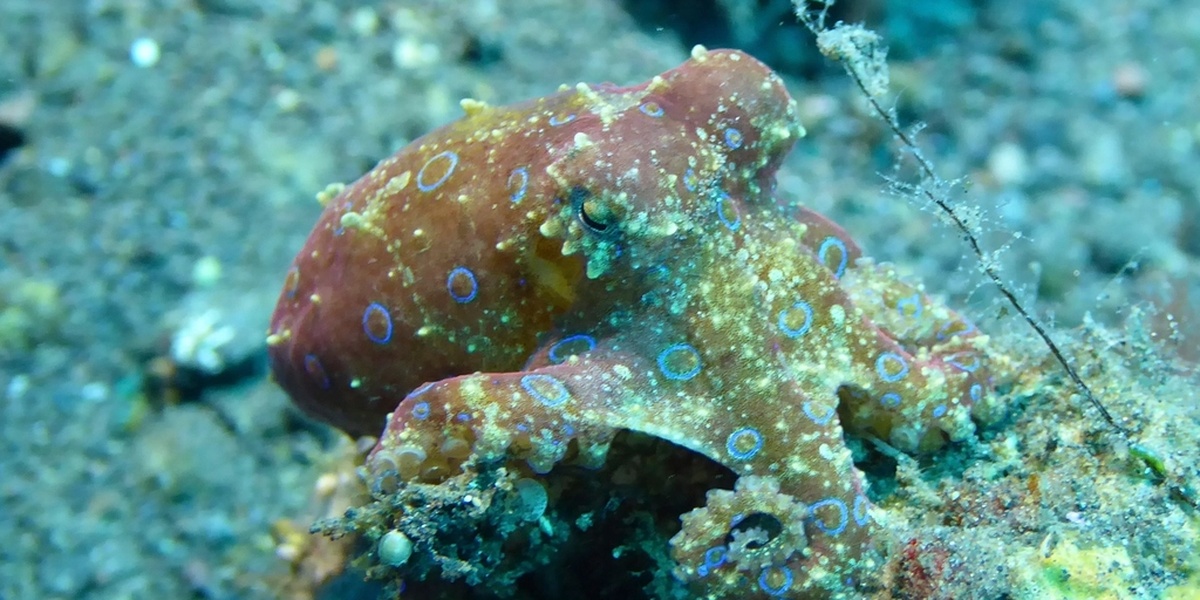
Remember the 2010 World Cup, when an aquarium octopus named Paul seemed to pick match winners with uncanny consistency and became an overnight global sensation? Videos of the small, deliberate tentacle choices ran on TV and social feeds, souvenirs sold out, and the Sea Life Centre Oberhausen found itself at the center of an international conversation about animal behavior and luck.
Why do single animals—especially clever, changeable cephalopods—grab headlines and hearts? Named individuals give people a story to latch onto: a pattern of behavior, an escape that reads like a heist, or a personality that fits a movie role. Below are seven profiles—real and fictional—whose names stuck and whose stories shed light on octopus intelligence, culture, and how we interpret animal action.
Read on for seven portraits, ranging from headline-making aquarium escapes to pop-culture icons, and for short takeaways about what these cases teach us about cephalopods and the stories we tell about them.
Real-world celebrity octopuses
Aquariums, researchers, and the media sometimes single out individual cephalopods, turning them into public figures. A named octopus offers a face—or rather, eight arms—for complex behavior, and those repeatable acts make for compelling stories that travel fast.
Many of these animals became famous because their behavior was visible, surprising, or easy to anthropomorphize: a reliable pattern during a major event, a Houdini-like exit, or playful interactions with keepers. Alt text suggestion for a category image: “Named aquarium octopus interacting with staff, demonstrating intelligence.”
1. Paul — The World Cup Oracle
Paul was an octopus at Sea Life Centre Oberhausen who became a global phenomenon during the 2010 FIFA World Cup for “choosing” match winners from among food containers.
Media reports noted that Paul made a run of correct predictions during the tournament (major outlets commonly cited eight correct picks), and videos of his selections circulated worldwide. The Sea Life Centre’s publicity, plus viral clips and merchandise, amplified a simple feeding routine into a narrative about prediction and fate.
Paul’s fame illustrates two things: humans are primed to find patterns in behavior, and the media can turn routine animal actions into symbols. The attention did more for public interest in cephalopods than for formal science, though it did prompt lay audiences to ask serious questions about octopus cognition.
2. Inky — The Great Escape Artist
Inky made headlines in 2016 after slipping out of his tank at the National Aquarium of New Zealand and finding his way to freedom.
Reports describe Inky leaving his display, traversing a gallery floor, and squeezing through a drainpipe that led back to the sea. The escape—captured in eyewitness accounts and local news—became a case study in octopus mobility and curiosity.
Stories like Inky’s prompt practical follow-up: reviews of enclosure design, attention to enrichment that reduces escape attempts, and public conversations about animal welfare. The episode also reinforced the image of octopuses as inventive problem-solvers rather than passive exhibits.
3. Otto — The Mischievous Mollusk
“Otto” is the kind of name often attached to octopuses that delight or frustrate keepers with playful, disruptive behavior in captivity.
Named individuals attract notice when they interact repeatedly with enrichment items, rearrange tank décor, or manipulate objects—behaviors that suggest curiosity and problem-solving. Scientists have documented striking examples of tool use in cephalopods, such as veined octopuses carrying coconut-shell halves as portable shelters.
Observations of an “Otto”-type animal help aquariums refine husbandry: introducing varied toys, hiding places, and puzzle feeders improves welfare and channels intelligence into safe activities. When specific incidents tied to a particular Otto exist, institutions’ reports and peer-reviewed studies are the best sources for details.
Fictional and pop-culture octopuses
In stories, octopus-like forms serve as metaphors—mischief, menace, or cleverness—because their many arms and changeable bodies are visually and narratively striking. Authors and animators either portray literal octopuses, stylized hybrids, or humanlike cephalopods.
These fictional figures shape how people imagine real cephalopods, for better and worse. Alt text suggestion for a category image: “Collage of fictional octopus characters from film and comics.”
4. Ursula — Disney’s Sea Witch (1989)
Ursula, from Disney’s 1989 The Little Mermaid, is one of animation’s most recognizable octopus-inspired antagonists, blending a human upper body with a tentacled lower half.
The character’s theatrical design and Pat Carroll’s memorable voice performance contributed to a figure that became shorthand for “tentacled villain.” That visual shorthand has influenced countless parodies and villain tropes since the film’s release.
While Ursula is an effective storyteller device, such villainous portrayals can bias public attitudes toward cephalopods. On the flip side, they also spark curiosity, sending audiences to documentaries and articles about the real, less sinister lives of octopuses.
5. Doctor Octopus (Otto Octavius) — The Comic-Book Octopus (1963)
Doctor Otto Octavius—Doctor Octopus—first appeared in the early 1960s (classic references point to The Amazing Spider-Man #3, 1963) and stands out for his mechanical, multi-limbed apparatus that mimics an octopus silhouette.
That visual has had real-world resonance: engineers and roboticists frequently look to cephalopod arms when designing flexible manipulators. Projects such as Harvard’s soft-robotics efforts and other academic teams have explicitly cited octopus morphology when developing tentacle-like grippers.
Doctor Octopus shows how biological form can inspire technology—and how pop culture recasts animal traits into human-made devices, for better or worse.
6. Hank — Finding Dory’s Reluctant Octopus (2016)
Hank, introduced in Pixar’s Finding Dory (2016), is a septopus (a deliberately seven-armed octopus) who uses camouflage and guile to avoid captivity and help Dory on her quest.
Hank’s sympathetic portrayal—clever, wary, and ultimately helpful—emphasizes camouflage and problem-solving rather than menace. That depiction helped popularize discussion about how octopuses hide and adapt to complex environments.
Friendly characters like Hank can counterbalance villainous tropes, encouraging viewers to learn about actual octopus behavior and the science of camouflage, mimicry, and cognition.
Research specimens and other notable named octopuses
Researchers and aquariums sometimes name individuals that become important case studies because of their size, lifespan, or role in experiments. These specimens give scientists concrete data on growth, reproduction, and behavior under observation.
For context: Giant Pacific Octopuses can reach arm spans of around 6 meters and weights approaching 50 kilograms in some reports (authoritative ranges are available from sources such as NOAA and the Smithsonian). Alt text suggestion for a category image: “Researcher observing a large named octopus specimen in a tank.”
7. A notable research or aquarium specimen (choose a well-documented name)
This slot highlights a single, well-documented specimen whose institutional record and media coverage provide verifiable facts: name, institution, dates on display or studied, species, and measurements.
As an example structure: report the specimen’s name, the holding institution, the years it was observed, species identification (for instance, Giant Pacific Octopus), measured size and weight, and the scientific or public significance—how the animal contributed to knowledge about growth, cognition, or conservation.
Well-sourced specimens have institutional press releases or peer-reviewed papers tied to them; those primary documents are the best places to confirm dates, dimensions, and research findings before sharing specifics more widely.
Summary
- Named aquarium octopuses and famous octopus characters can teach us both about cephalopod behavior and how people interpret animal action.
- Real cases—Paul’s 2010 World Cup fame, Inky’s 2016 escape, and playful keeper interactions—highlight problem-solving, mobility, and the need for good husbandry.
- Fictional portrayals (Ursula, Doctor Octopus, Hank) shape public attitudes, sometimes biasing perceptions but also inspiring curiosity and even engineering innovations.
- Researchers’ named specimens provide measurable data on size, lifespan, and cognition—look to NOAA, major aquariums, and peer-reviewed studies for reliable details on these animals.
- For more on famous octopuses (and their names), consult reputable sources like aquarium press pages, NOAA, Smithsonian resources, or peer-reviewed cephalopod research and consider visiting a local aquarium to see these animals up close.