The high Arctic is defined by sea ice, tundra and extreme seasonal light, and those conditions shape a distinct community of birds adapted to short summers and long migrations. Coastal cliffs, meltwater ponds and open leads give each species specific places to feed and breed, so a quick guide helps you know what to expect where and when.
There are 41 arctic birds, ranging from Arctic redpoll (Hoary) to Yellow-billed loon. For each species you’ll find below Scientific name,Range (where/when),Length (cm) to make comparisons of identification, timing and size straightforward — you’ll find those details below.
When is the best time to observe arctic birds in the region?
Most species are easiest to see during the brief breeding season (late spring to mid-summer), when adults are at nesting sites and migrants pass through; shorebirds and terns peak in early summer, while some sea ducks and loons linger into autumn migration. Plan for peak daylight and local access to tundra, coasts or sea-ice leads.
How might climate change affect the birds on this list?
Warming alters habitat timing and distribution: some species are arriving earlier or shifting ranges north, while others face reduced breeding habitat from thawing permafrost and shrinking sea ice. Using the list and range notes below helps track these changes over time.
Arctic Birds
| Name | Scientific name | Range (where/when) | Length (cm) |
|---|---|---|---|
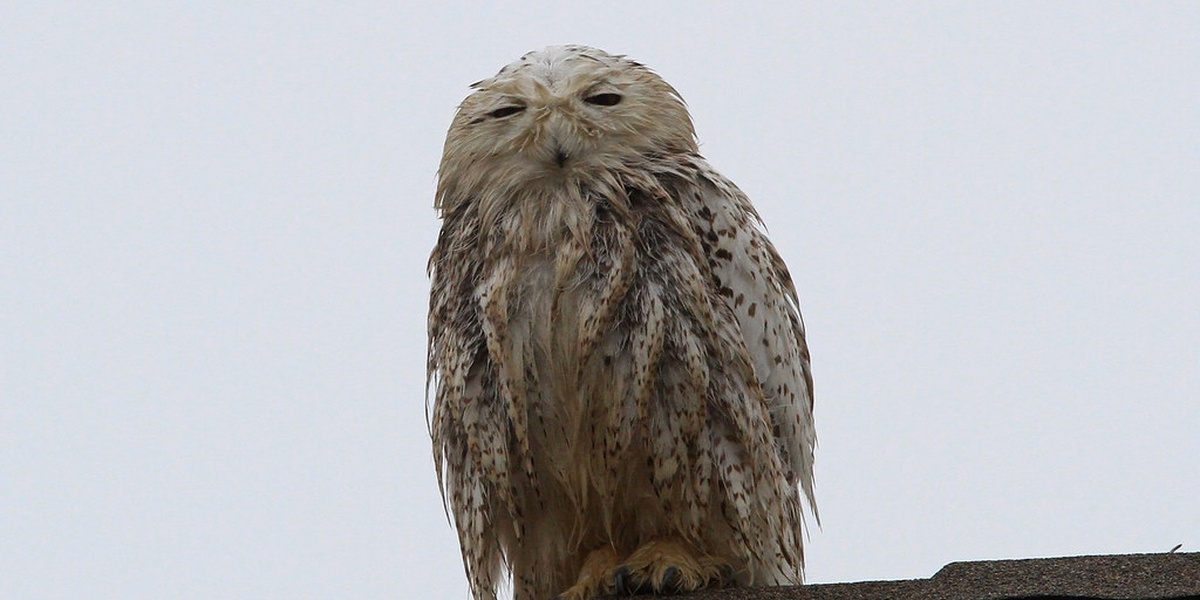
| Snowy owl | Bubo scandiacus | High Arctic tundra of N. America and Eurasia | 52-71 |
| Gyrfalcon | Falco rusticolus | High Arctic coasts and tundra (Greenland, Alaska, Russia) | 48-61 |
| Rough-legged hawk | Buteo lagopus | Breeds across Arctic tundra of N. America and Eurasia | 47-56 |
| Peregrine falcon | Falco peregrinus | Breeds on Arctic cliffs and tundra worldwide | 34-58 |
| Short-eared owl | Asio flammeus | Open Arctic tundra and marshes across Holarctic | 34-41 |
| Rock ptarmigan | Lagopus muta | Arctic tundra and islands from N. America to Eurasia | 34-38 |
| Snow bunting | Plectrophenax nivalis | Breeds Arctic islands and tundra across Northern Hemisphere | 15-18 |
| Lapland longspur | Calcarius lapponicus | Tundra across Eurasia and N. America | 15-18 |
| Shore lark | Eremophila alpestris | Open Arctic tundra and coastal flats across Holarctic | 16-19 |
| Common raven | Corvus corax | Arctic islands, coasts and tundra across Holarctic | 54-67 |
| Arctic redpoll (Hoary) | Acanthis hornemanni | High Arctic islands and tundra (Greenland, Canada) | 11-13 |
| Common redpoll | Acanthis flammea | Tundra and shrub zones across Holarctic | 12-15 |
| Northern wheatear | Oenanthe oenanthe | Breeds across Arctic tundra of Eurasia and N. America | 14-16 |
| Bluethroat | Luscinia svecica | Breeds wet tundra and shrub-marsh across northern Eurasia | 14-16 |
| Tundra swan | Cygnus columbianus | Breeds Arctic wetlands of Eurasia and N. America | 120-150 |
| Snow goose | Anser caerulescens | Breeds Arctic tundra of N. America and Greenland | 66-81 |
| Ross’s goose | Anser rossii | Breeds central Canadian Arctic tundra | 56-64 |
| Barnacle goose | Branta leucopsis | Breeds Svalbard, Greenland and Arctic Russia coasts | 55-70 |
| Brant | Branta bernicla | Breeds Arctic coasts and islands across Holarctic | 55-70 |
| Common eider | Somateria mollissima | Breeds Arctic coasts from N. America to Eurasia | 50-70 |
| King eider | Somateria spectabilis | Breeds Arctic tundra coasts of N. America and Siberia | 50-60 |
| Spectacled eider | Somateria fischeri | Breeds Alaskan and Siberian Arctic coastal tundra | 45-55 |
| Steller’s eider | Polysticta stelleri | Breeds coastal tundra of Russia and Alaska | 36-42 |
| Long-tailed duck | Clangula hyemalis | Breeds Arctic tundra ponds and coastal wetlands | 35-45 |
| Red-throated diver (loon) | Gavia stellata | Breeds Arctic lakes and pools across Holarctic | 55-67 |
| Yellow-billed loon | Gavia adamsii | Breeds Arctic coastal lakes of Eurasia and N. America | 74-91 |
| Thick-billed murre | Uria lomvia | Breeds high Arctic cliffs from N. America to Eurasia | 38-45 |
| Little auk (Dovekie) | Alle alle | High Arctic islands (Svalbard, Greenland, N. Canada) | 15-19 |
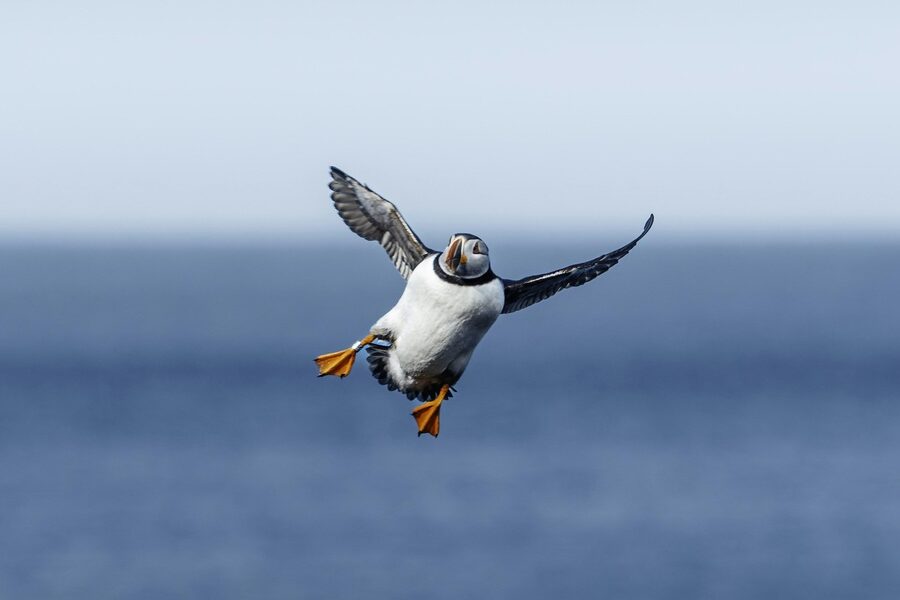
| Atlantic puffin | Fratercula arctica | Breeds North Atlantic islands and Arctic coasts | 28-30 |
| Northern fulmar | Fulmarus glacialis | Breeds Arctic and subarctic cliffs across N. Atlantic/Pacific | 43-52 |
| Black-legged kittiwake | Rissa tridactyla | Breeds Arctic and temperate sea cliffs worldwide | 33-39 |
| Ivory gull | Pagophila eburnea | Breeds high Arctic pack-ice edges and coastal cliffs | 42-48 |
| Arctic tern | Sterna paradisaea | Breeds Arctic coasts and islands across Holarctic | 28-34 |
| Pomarine jaeger | Stercorarius pomarinus | Breeds Arctic tundra and coastal areas across Holarctic | 40-58 |
| Parasitic jaeger (Arctic skua) | Stercorarius parasiticus | Breeds Arctic tundra and islands across Holarctic | 36-50 |
| Red knot | Calidris canutus | Breeds High Arctic tundra across Eurasia and N. America | 23-27 |
| Sanderling | Calidris alba | Breeds High Arctic sandy shores and tundra | 18-20 |
| Dunlin | Calidris alpina | Breeds Arctic and subarctic tundra across Holarctic | 17-21 |
| Semipalmated sandpiper | Calidris pusilla | Breeds Canadian Arctic tundra and Alaska | 13-17 |
| Baird’s sandpiper | Calidris bairdii | Breeds Arctic tundra of N. America | 16-21 |
| Bar-tailed godwit | Limosa lapponica | Breeds Arctic tundra across Eurasia and Alaska | 37-45 |
Images and Descriptions
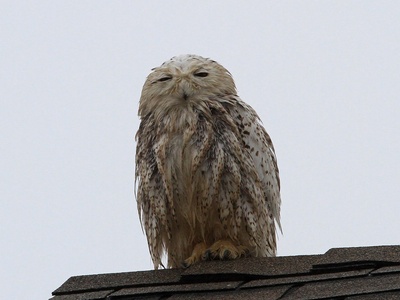
Snowy owl
Large, pale owl with heavy dark barring on females; males often almost white. Hunts lemmings and birds across open tundra, nests on ground, and shows irruptive winter movements. Iconic Arctic predator facing prey-cycle and climate threats. IUCN: Vulnerable.
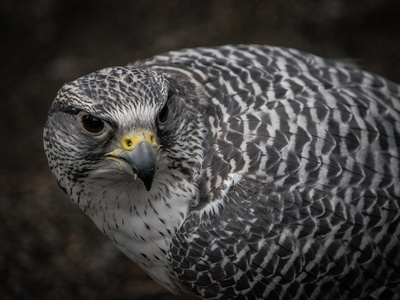
Gyrfalcon
Powerful, stocky falcon with plumage variants from white to dark grey-brown. Nests on cliffs and hunts seabirds and ptarmigan over tundra; prized in falconry. Adapted to Arctic life but sensitive to prey shifts and disturbance. IUCN: Least Concern.
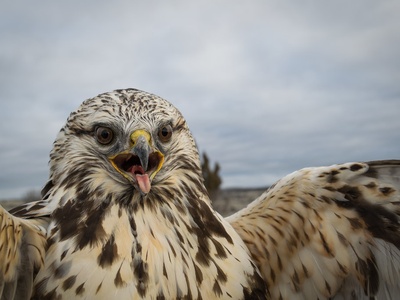
Rough-legged hawk
Medium buteo with feathered legs and variable plumage. Soars above tundra hunting voles and lemmings; migrates south in winter. Ground-nesting habits and strong Arctic ties make it a seasonal tundra specialist. IUCN: Least Concern.
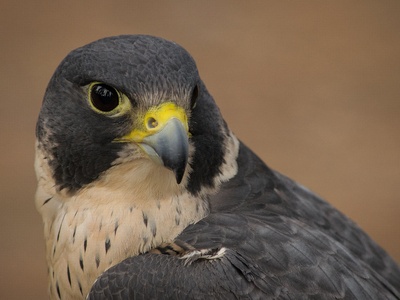
Peregrine falcon
Streamlined falcon with dark malar stripe and barred underparts. Nests on high cliffs, preys on migratory birds including seabirds; recovered from past pesticides and remains a top Arctic aerial predator. IUCN: Least Concern.
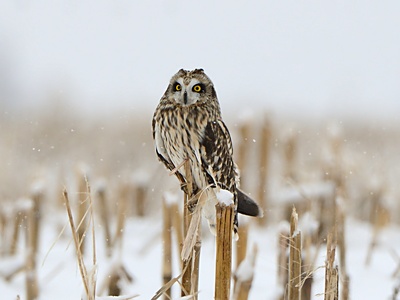
Short-eared owl
Mottled brown owl with short ear tufts and buoyant, low flight. Diurnal and crepuscular, hunts small mammals on tundra and nests on ground; populations track rodent cycles and open-habitat availability. IUCN: Least Concern.
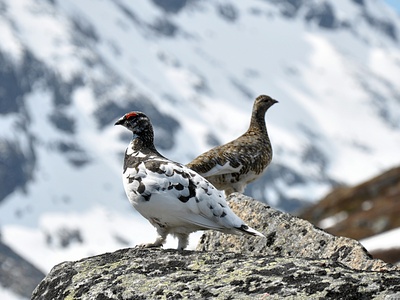
Rock ptarmigan
Cryptic grouse turning white in winter, mottled brown in summer. Ground-nester in tundra, feeds on buds and buds of willow; culturally and ecologically important with local population sensitivity to warming. IUCN: Least Concern.
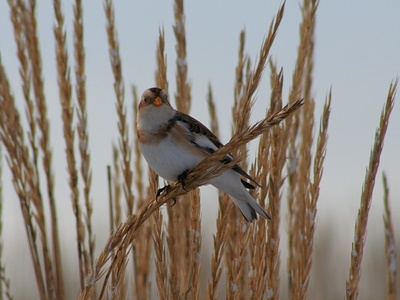
Snow bunting
White-and-black plumaged songbird in breeding season, with warm buff tones. Forages on open rocky tundra and coasts, nests in crevices; hardy and gregarious, often seen in flocks on migration. IUCN: Least Concern.
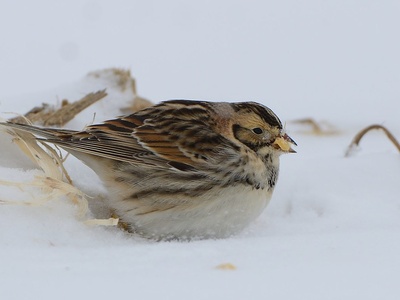
Lapland longspur
Streaked brown passerine with black face in breeding males and a long hind claw. Forages seeds and insects on tundra, forms flocks, and performs conspicuous flight songs. Classic Arctic specialist and long-distance migrant. IUCN: Least Concern.
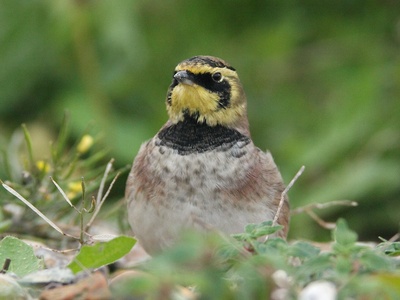
Shore lark
Ground-adapted songbird with crest and variable coloration; often sings from low perches. Nests on bare tundra or gravel, forages seeds and insects, and tolerates extreme winds and cold. IUCN: Least Concern.
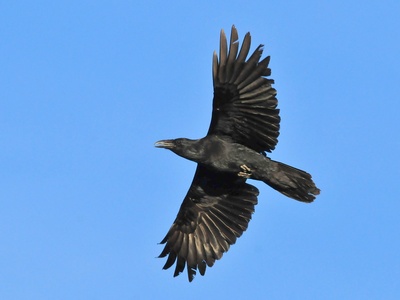
Common raven
Large glossy black corvid with deep croak and bold behavior. Opportunistic omnivore and scavenger, often near colonies or human sites; intelligent and widespread, nesting on cliffs and in trees where available. IUCN: Least Concern.
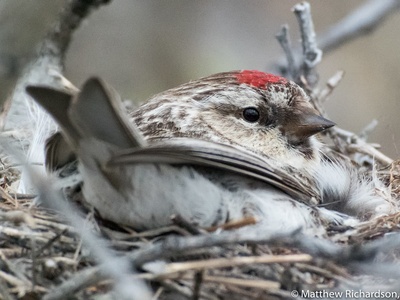
Arctic redpoll (Hoary)
Very pale, small finch with streaks and a red forehead spot. Feeds mainly on seeds of tundra plants, forms flocks, and breeds in exposed high-Arctic habitats; specialized and hardy. IUCN: Least Concern.
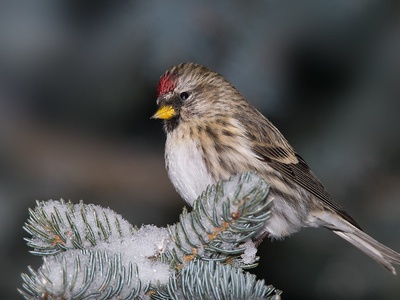
Common redpoll
Small streaked finch with red forehead and sometimes rosy breast in males. Feeds on birch and alder seeds, irruptive in winter when seeds are scarce; nests in shrubs on tundra and treeline. IUCN: Least Concern.
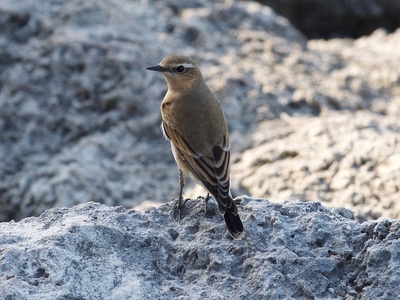
Northern wheatear
Compact insectivore with pale underparts and distinctive tail pattern; nests in rock crevices and boulder fields. Undertakes extraordinary migrations to Africa or Pacific islands; a charismatic tundra breeder. IUCN: Least Concern.
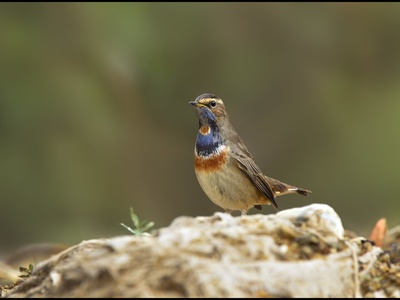
Bluethroat
Colorful songbird with brilliant throat patch (blue/orange) in males. Prefers wet tundra and willow scrub, sings energetically from perches, and migrates long distances to wintering areas. IUCN: Least Concern.
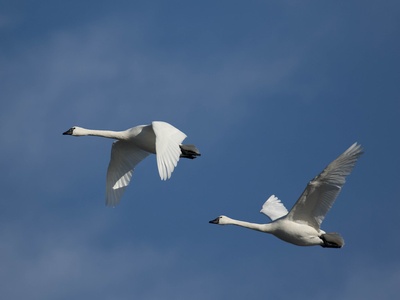
Tundra swan
Large white swan with black bill; nests on tundra ponds and marshes. Forms family groups and long migratory flocks to coastal wintering sites. Sensitive to wetland changes along migration routes. IUCN: Least Concern.
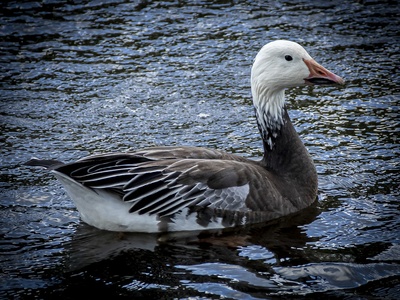
Snow goose
White-plumaged goose (blue morph exists) with black wing tips; nests in dense tundra colonies. Numbers have surged in some areas, altering tundra vegetation; notable long-distance migrant in huge flocks. IUCN: Least Concern.
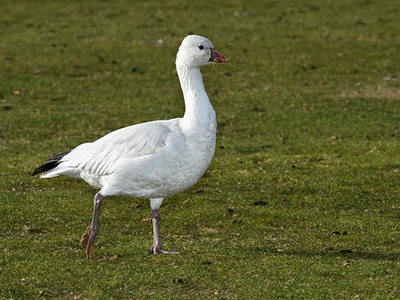
Ross’s goose
Small white goose with compact head and short bill. Breeds in dense tundra colonies and migrates in flocks; historically scarce but more abundant now due to expansion and changing habitats. IUCN: Least Concern.
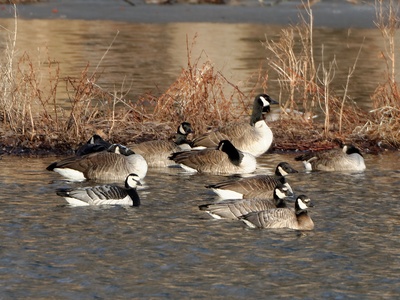
Barnacle goose
Black head and white face with grey body; nests on cliffs and islands, grazing coastal tundra. Iconic in Svalbard colonies and migratory to temperate wintering grounds. IUCN: Least Concern.

Brant
Dark-bellied, short-necked goose that nests on coastal tundra and islands. Feeds on eelgrass and coastal vegetation, migrates to temperate coasts in large flocks; site-faithful to colonies. IUCN: Least Concern.
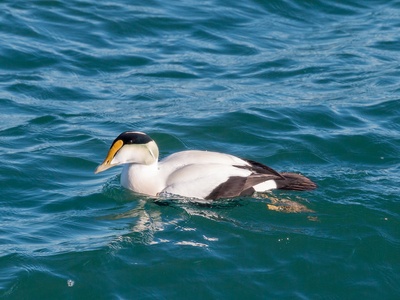
Common eider
Large sea duck; males black-and-white, females brown and cryptic. Nests in dense coastal colonies, females pluck down for nest lining. Vulnerable to oil pollution and disturbance at colonies. IUCN: Least Concern.
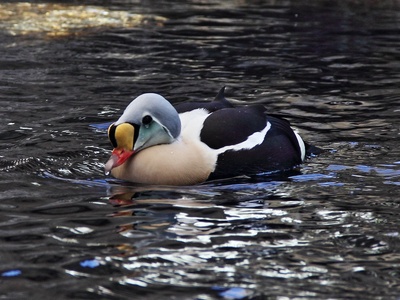
King eider
Striking male with colorful bill plate; dives for mollusks and crustaceans. Nests on tundra near coasts and forms large wintering flocks. Spectacular in spring migration staging areas. IUCN: Least Concern.
Spectacled eider
Distinctive sea duck with spectacled facial pattern; males and females are patterned. Specializes on icy coastal waters and nests on tundra; populations declined historically and remain conservation focal. IUCN: Vulnerable.
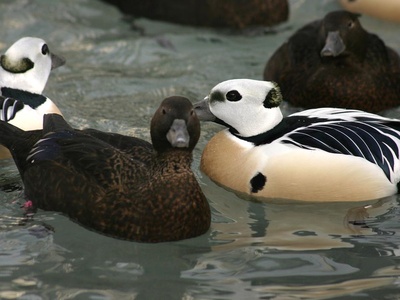
Steller’s eider
Small, colorful eider with ornate male plumage; nests near coastal wetlands and winters in shallow sheltered bays. Populations fragmented and sensitive to disturbance and habitat change. IUCN: Vulnerable.
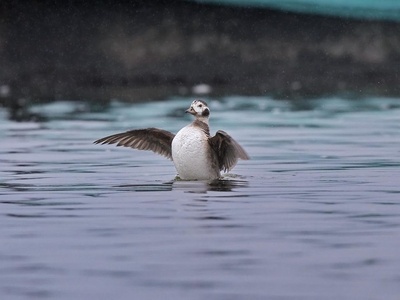
Long-tailed duck
Diving sea duck with long male tail in winter and striking breeding plumage. Dives for benthic invertebrates, nests on tundra ponds; winters in offshore marine waters. IUCN: Least Concern.
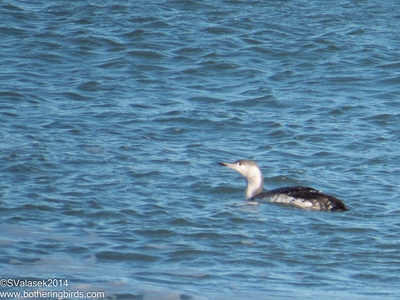
Red-throated diver (loon)
Slender, long-necked diver with fine bill and red throat in breeding males. Nests at remote tundra ponds, wary and expert underwater hunter. Migrates to coastal waters in winter. IUCN: Least Concern.
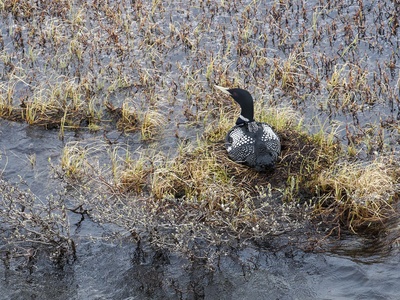
Yellow-billed loon
Largest loon, pale bill and bold black-and-white breeding pattern. Prefers remote tundra lakes near coasts; sensitive to disturbance and pollution; uncommon but characteristic of high Arctic waters. IUCN: Near Threatened.
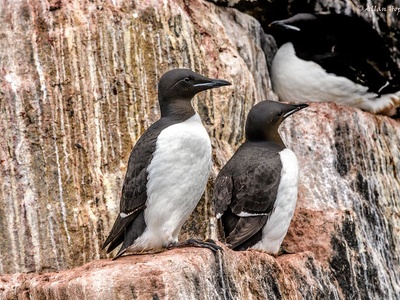
Thick-billed murre
Black-and-white auk nesting densely on cliff ledges; dives for fish and invertebrates. Colonies are noisy, long-lived, and key to Arctic marine food webs; sensitive to prey shifts. IUCN: Least Concern.
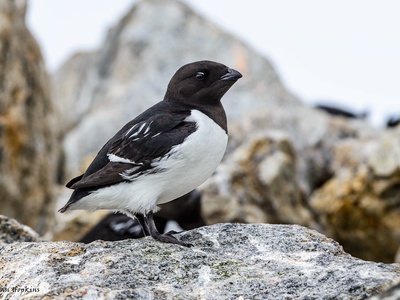
Little auk (Dovekie)
Tiny, stout alcid that breeds in enormous cliff colonies and feeds on zooplankton near ice edges. Highly social and numerous where present; an emblematic High Arctic seabird. IUCN: Least Concern.
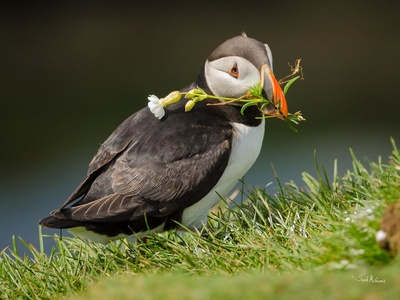
Atlantic puffin
Colorful-beaked seabird nesting in burrows on grassy cliffs. Feeds on small fish, brings provisioning flights to chicks, and forms dense colonies; declines in some areas linked to food changes. IUCN: Vulnerable.
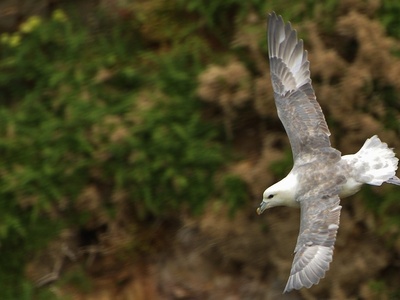
Northern fulmar
Stout, tube-nosed seabird with pale and dark morphs; glides on strong winds and scavenges marine food. Nests on cliffs in large colonies and follows ships; widespread and hardy. IUCN: Least Concern.
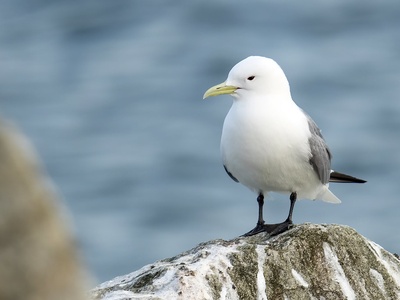
Black-legged kittiwake
Slender gull with black wingtips and buoyant flight; nests on narrow cliff ledges in dense colonies. Highly dependent on fish availability; several populations declining with marine change. IUCN: Vulnerable.
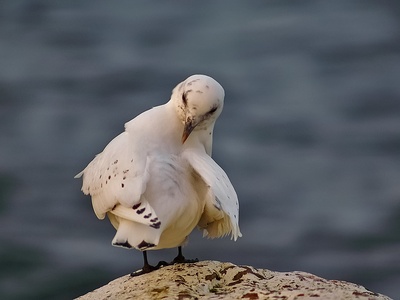
Ivory gull
Small, pure-white gull tied to sea-ice, often found near polar bears and ice floes. Specialized scavenger of ice-edge ecosystems; severe declines linked to sea-ice loss and contaminants. IUCN: Near Threatened.
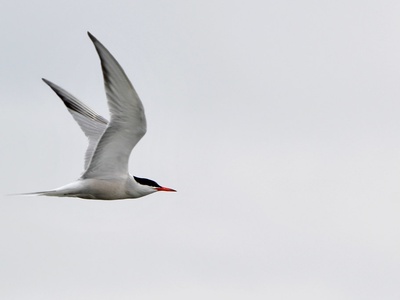
Arctic tern
Elegant tern with long forked tail and translucent wings; performs the longest migrations of any bird. Nests on tundra and beaches; fiercely defends nesting sites and ranges widely at sea. IUCN: Least Concern.
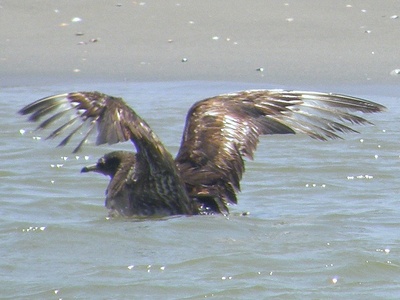
Pomarine jaeger
Large, robust jaeger with heavy bill and variable plumage; piratical at sea, stealing food from gulls and terns. Nests on tundra and migrates to tropical oceans in winter. IUCN: Least Concern.
Parasitic jaeger (Arctic skua)
Agile dark jaeger that harasses other seabirds to steal prey; nests on tundra and islands. Highly aerial, aggressive defender of nests, and a familiar Arctic summer predator. IUCN: Least Concern.
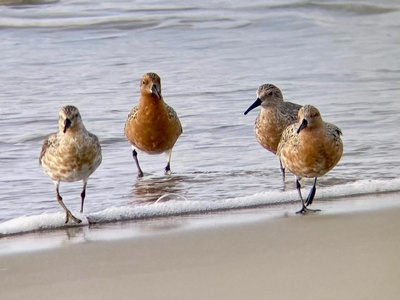
Red knot
Robust migratory sandpiper with reddish breeding plumage; nests on open tundra and relies on critical stopover sites to refuel on migration. Some populations have declined sharply. IUCN: Near Threatened.
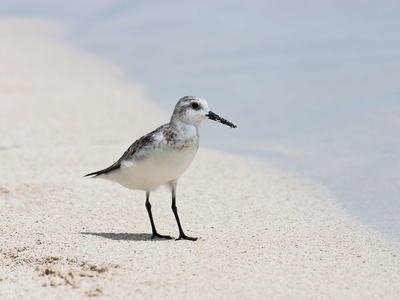
Sanderling
Active little pale sandpiper commonly seen running on beaches. Breeds on open tundra or sandy islands, migrates widely to global coastlines, and forages on surf-battered shorelines in winter. IUCN: Least Concern.
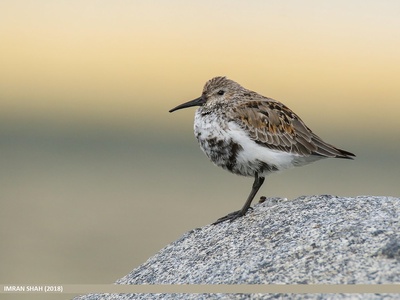
Dunlin
Variable small sandpiper with drooping bill and dramatic black belly patch in breeding adults. Nests in tundra and forages mudflats; many distinct populations with varied conservation status. IUCN: Least Concern.
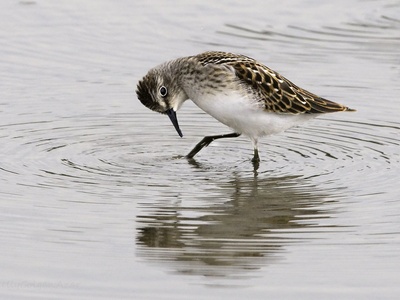
Semipalmated sandpiper
Tiny sandpiper that nests in tussock and wet tundra; forms enormous migration flocks to South America. Vulnerable to habitat loss at stopovers and hunting pressure on migration. IUCN: Near Threatened.
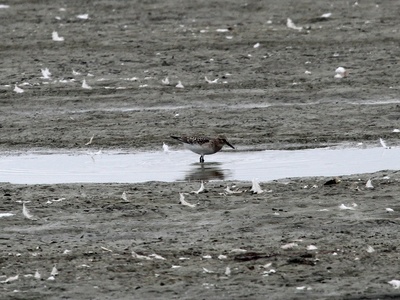
Baird’s sandpiper
Long-winged, elegant sandpiper with fine bill and swift flight. Nests on open tundra and undertakes long migrations to South America; males perform rapid aerial displays near breeding sites. IUCN: Least Concern.
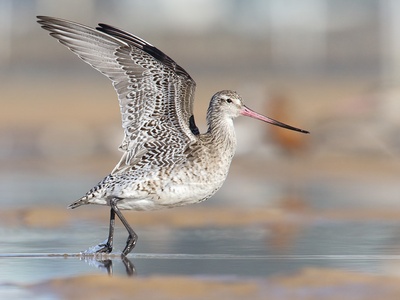
Bar-tailed godwit
Large godwit with slightly upturned bill famous for record non-stop migrations. Nests on tundra, feeds on invertebrates in intertidal mudflats during migration and winter. Some populations declining. IUCN: Near Threatened