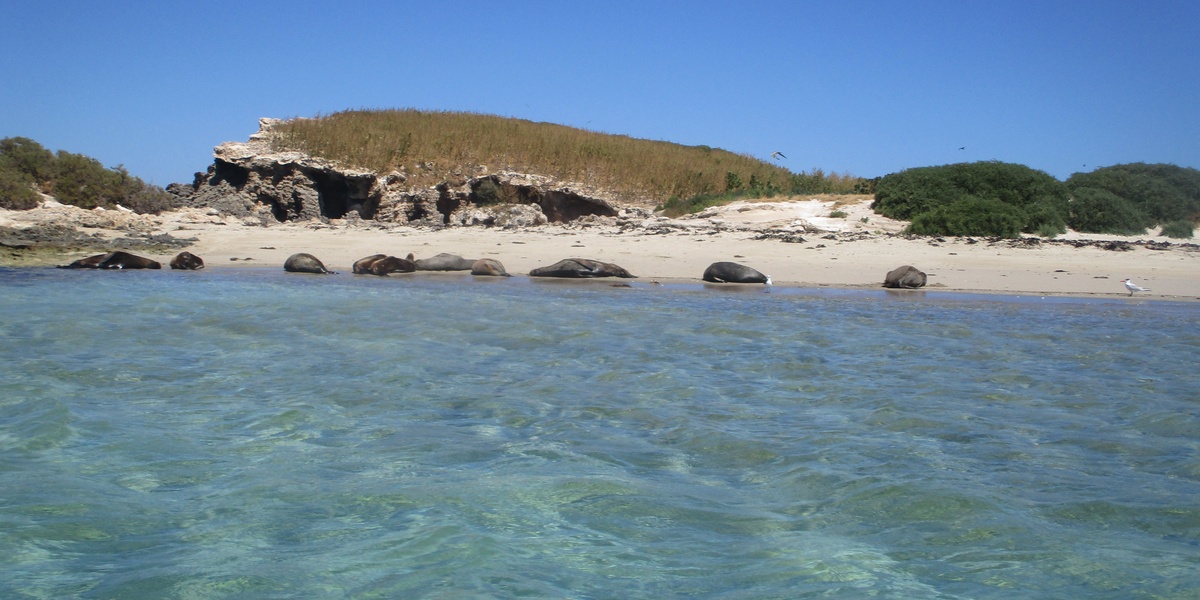
Have you ever watched a “seal” flop awkwardly across a rocky beach and wondered why a nearby sea lion moved upright and fast? Picture a crowded harbor rookery: pups whining, a territorial male barking, kayakers gawking from a respectful distance. That quick contrast—one animal that looks streamlined in water but clumsy on land, another that runs and barks—raises a practical question: can you tell which is which at a glance?
Being able to distinguish between similar marine mammals matters. It keeps people safe at haul-outs, improves the accuracy of citizen science sightings, and helps direct support toward the right conservation actions. For example, the California sea lion (Zalophus californianus) often basks on docks and swims boldly around boats, while the harbor seal (Phoca vitulina) prefers quiet ledges and kelp beds.
Below are eight clear, evidence-backed differences between seals and sea lions grouped into four practical categories—appearance, movement, social behavior, and ecology & human interaction—to help you identify animals in the field and understand why those differences matter.
Anatomy & Appearance
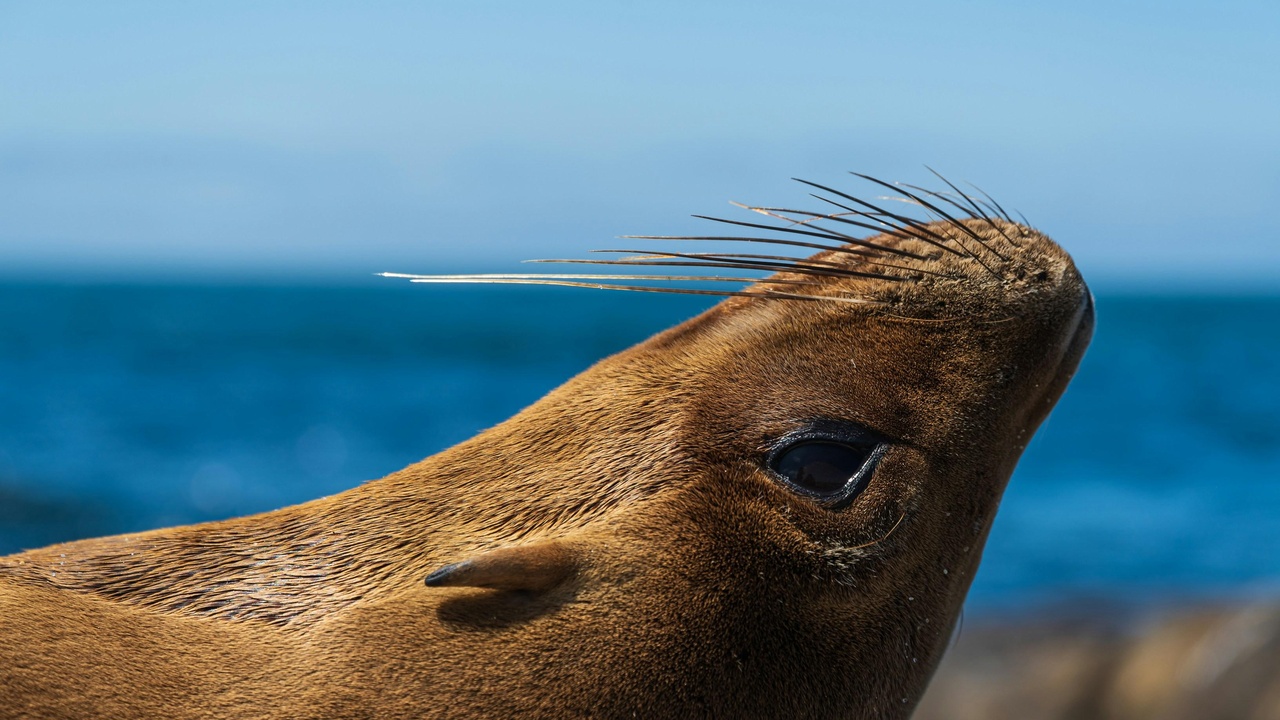
External anatomy gives the fastest cues for identification. Look for ear flaps, flipper proportions, and overall body profile—these features reflect different families of pinnipeds and how they evolved to move and hunt.
1. External ears: visible pinnae versus hidden ears
Sea lions (family Otariidae) have tiny external ear flaps, or pinnae, just behind the eye. True seals (family Phocidae) lack those flaps and show only a smooth ear opening set into the head.
The difference is practical: visible pinnae help eared seals with sound localization on land and are a quick field mark for observers. Remember that pinnipeds are split into three families—Otariidae (eared seals), Phocidae (true seals), and Odobenidae (walruses)—so that external-ear trait maps neatly to family-level ID.
Example: the California sea lion shows the little ear flap clearly when it barks on a pier, while a harbor seal has a rounded head with no visible external ear, making it look smoother and more streamlined.
2. Flipper and body shape: long foreflippers vs torpedo-shaped bodies
Otariids have proportionally long, wing-like foreflippers; they’re muscular and used for powerful strokes. Phocids have shorter foreflippers and a more fusiform, torpedo-shaped body that favors undulatory swimming.
Functionally, longer foreflippers let sea lions “fly” through water with repeated strokes and also act as support when they move on land. True seals rely on body waves and hind-flipper kicks to propel themselves, so their silhouette in the water looks smoother and rounder.
Size comparisons help: an adult male Steller sea lion can have visibly broad, long flippers and reach large body lengths, while a harbor seal typically appears shorter and stouter in the water. Photographers and kayakers can use the animal’s silhouette—long, paddle-like foreflippers versus a rounded, porpoise-like profile—to tell them apart.
Movement & Locomotion
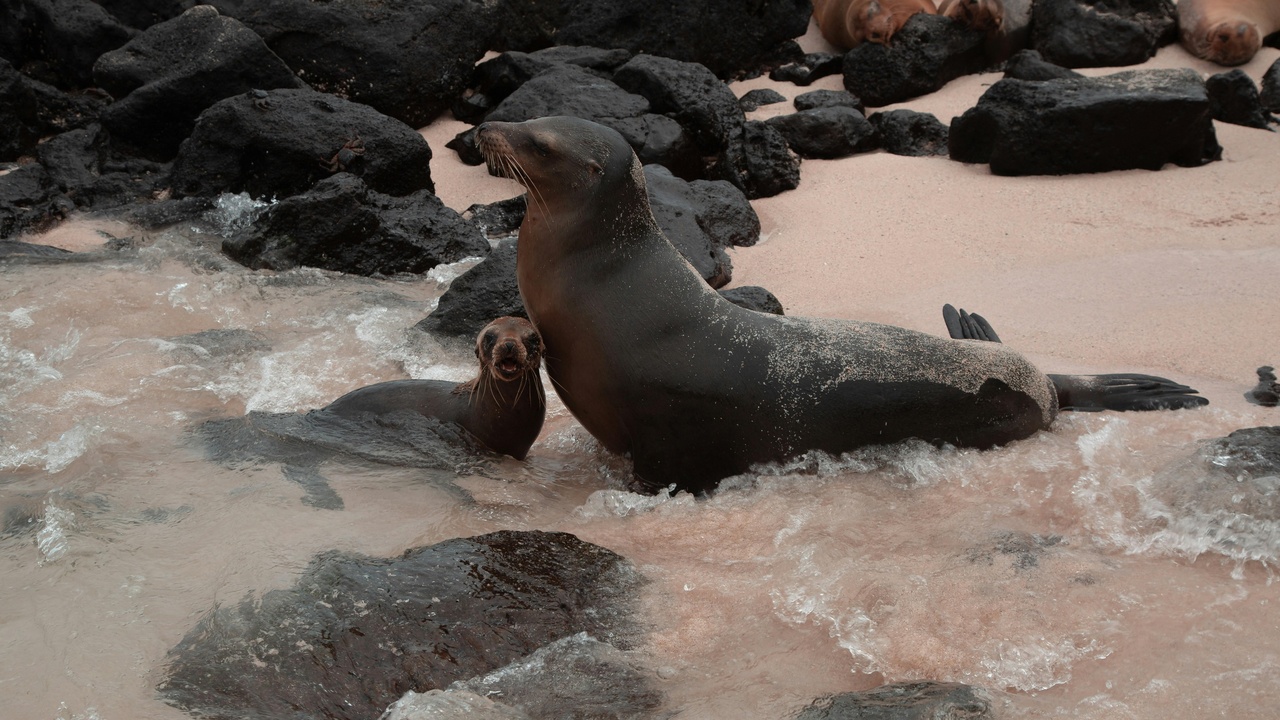
How these animals move on land and in water is often the most obvious difference once you spend time watching haul-outs. The arrangement of limb joints and the relative length of flippers produce very different locomotion styles and behaviors.
3. On land: upright walking vs wriggling
Sea lions can rotate their hind flippers under their bodies and support weight on their long foreflippers and chest, allowing a semi-erect, dog-like gait. They can run short distances over rocks or sand.
True seals cannot bring their hind flippers forward under the body. On land they move by undulating the spine and wriggling on their bellies—effective for short hauls but slower and more awkward on rugged terrain.
Field tip: if it “walks” like a dog, it’s probably a sea lion. Keep distance from fast-moving bulls on breeding beaches; an agitated male sea lion can cover ground quickly when defending territory.
4. In water: propulsion style and speed differences
Sea lions use powerful foreflipper strokes for propulsion and can produce quick surface bursts—handy for chasing schooling fish and dodging boats. True seals use sinuous body undulations and hind-flipper kicks that are efficient for deeper dives and stealthy approaches.
That difference changes hunting tactics: eared seals often perform agile, midwater pursuits while many phocids are better at sudden vertical dives or benthic foraging. Observers note sea lions making dramatic surface chases, whereas harbor seals may slip quietly into the water and vanish from view.
Behavior & Social Structure
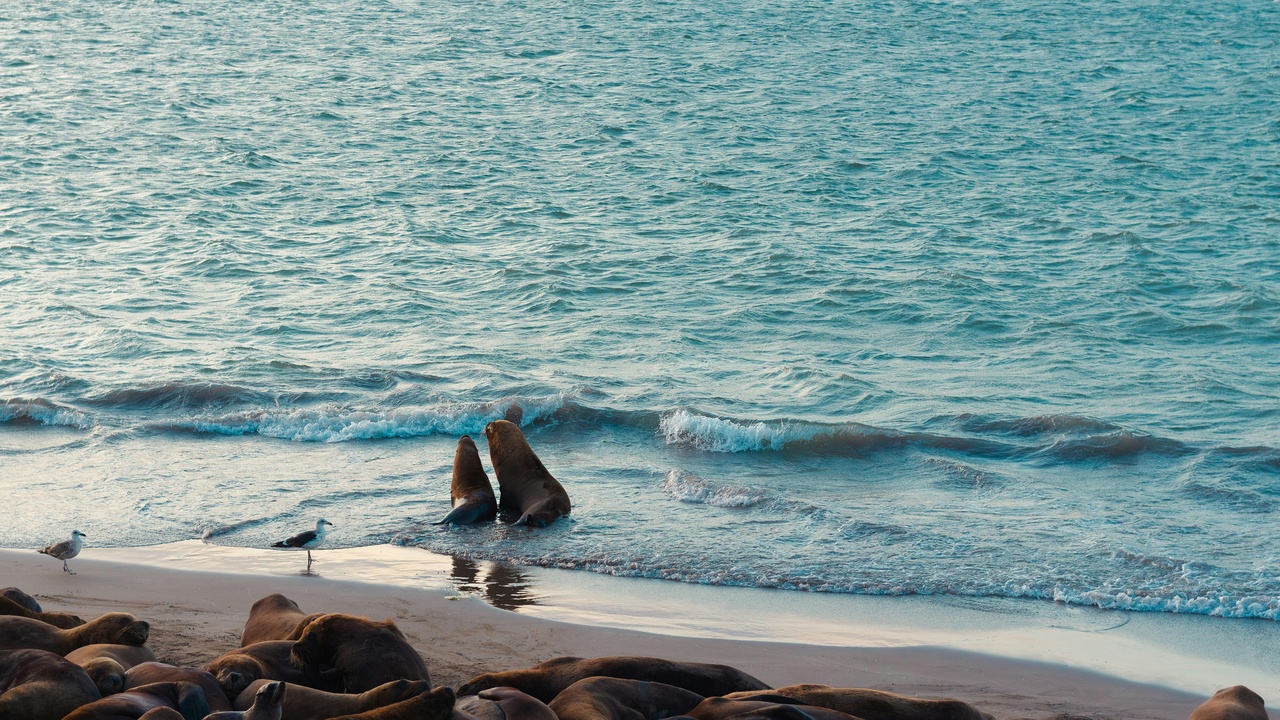
Social systems and vocal behavior differ sharply between many otariids and phocids. These differences affect everything from how large colonies form to how tolerant animals are of human disturbance.
5. Vocalizations and displays: barks and roars vs softer calls
Sea lions are loud and conspicuous. Males bark, roar, and use visual displays to advertise territory and attract females—especially during breeding when colonies can be noisy and chaotic.
True seals are generally quieter on land, relying on softer grunts, moans, or low-frequency calls—particularly between mothers and pups. Where sea lion rookeries can number in the hundreds or thousands, many seal species haul out in much smaller groups.
To quantify: dominant sea lion males may control harems of a conservative range like five to twenty females at busy rookeries, and some rookeries reach into the thousands of animals. Tour guides often use the loud barking of sea lions as a cue to enforce larger buffer zones for visitors.
6. Social organization: colonial harems vs dispersed haul-outs
Many sea lions form dense breeding rookeries where males establish territories and females gather to mate and nurse pups. Those colonies are socially complex and predictable in space and season.
Seals tend to form looser, more variable haul-outs. Some species are relatively solitary or aggregate in small groups that shift with tides and prey availability. That fluidity affects disease spread and how sensitive a population is to human disturbance.
Example: male California sea lions defending access to multiple females on a rocky headland, versus gray seals that may form seasonal breeding colonies with sizes that vary year to year.
Ecology, Diet & Human Interaction
Feeding strategy and habitat use shape how these animals interact with fisheries, boats, and people. Those behavioral tendencies drive different conservation priorities and management tools.
7. Diet and hunting: pelagic chases vs benthic foraging
Sea lions commonly target pelagic, schooling fish such as sardines, anchovies, and mackerel, often hunting near the surface in energetic chases. They’re opportunistic and will take whatever schooling prey is available nearshore, including fish attracted to docks.
Many seals have a broader diet that includes midwater prey and benthic species like flatfish, squid, and crustaceans. Some species—elephant seals included—are known for very deep dives; conservative estimates put deep-diving phocids in the hundreds of meters, with a few species recorded at over a thousand meters on scientific tags.
Implications: sea lions often conflict with commercial fishermen around ports and fish pens because of surface-feeding habits, while seals are more at risk of entanglement in bottom-set nets and traps during benthic foraging.
8. Conservation and human encounters: risk profiles and management
Behavioral and habitat differences lead to distinct management challenges. Bold sea lions that frequent docks may need hazing or exclusion measures, whereas seals suffering entanglement require rescue and rehabilitation efforts.
Pinnipeds belong to three families, and their ancestral lineages split roughly 20–25 million years ago, giving rise to life histories we see today. Management tools include exclusion devices, targeted hazing programs at ports, protected haul-outs, and rescue centers such as The Marine Mammal Center that rehabilitate entangled or injured animals.
Practical recommendations: keep a wide buffer around hauled-out animals, never feed marine mammals, report injured or entangled animals to local stranding networks, and support monitored wildlife viewing tours that follow regional guidelines.
Summary
- Ear flaps and head profile: visible pinnae point to an otariid; a smooth head opening suggests a true seal.
- Land mobility is telling: sea lions can move upright and fast; seals wriggle on their bellies.
- Vocal and social differences: sea lions are loud and colonial; many seals are quieter and haul out in smaller, looser groups.
- Diet and human interactions diverge: sea lions often chase pelagic fish near ports, while seals may forage benthically and face entanglement risks.
- When you report sightings or injured animals, use local marine mammal networks and join responsible tours—your photos and observations help track population trends and inform conservation.