Dominica’s forests, rivers and coastal marshes concentrate a surprising range of wildlife into a small island setting, so a short hike or a guided boat trip can put you face-to-face with species you might otherwise expect to find only on larger islands.
There are 14 Dominica’s native animals, ranging from Antillean fruit bat to Zenaida Dove. For each species you’ll find below Scientific name,Endemic,Habitat & where to see, so you can quickly match animals to likely locations and plan your outings accordingly.
How can I increase my chances of seeing these species in the wild?
Visit different habitats at the right times (dawn and dusk for many birds and bats, low tide for shorebirds), bring binoculars and a headlamp for cave or night spotting, and consider a local naturalist—guides know seasonal hotspots and quieter trails where sightings are more likely.
Where can I check which species are endemic or protected?
The list below marks endemism and typical protections, but for legal status and recent updates check Dominica’s government wildlife pages or contact local conservation groups and park offices (e.g., Morne Trois Pitons National Park) before planning any close approach.
Dominica’s Native Animals
| Name | Scientific name | Endemic | Habitat & where to see |
|---|---|---|---|
| Imperial Amazon | Amazona imperialis | Dominica endemic | Montane rainforest; Morne Diablotin, Morne Trois Pitons |
| Mountain chicken frog | Leptodactylus fallax | Lesser Antilles endemic | Moist forest floors and streamside; Roseau Valley, Morne Trois Pitons |
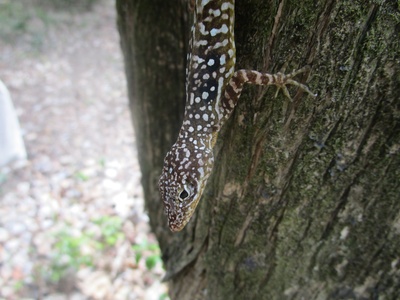
| Dominica anole | Anolis oculatus | Dominica endemic | Forests, edges and gardens; Cabrits, Morne Diablotin |
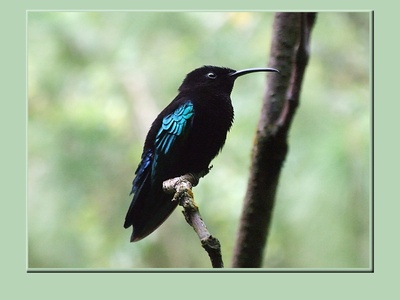
| Purple-throated Carib | Eulampis jugularis | Native widespread | Gardens and forest edges; Morne Trois Pitons, ridge flowers |
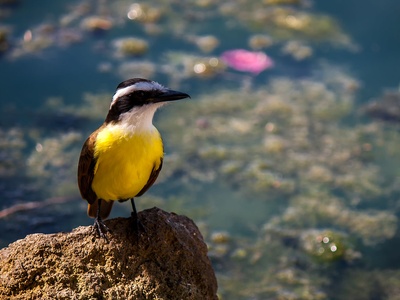
| Bananaquit | Coereba flaveola | Native widespread | Gardens and secondary growth; Roseau and coastal areas |
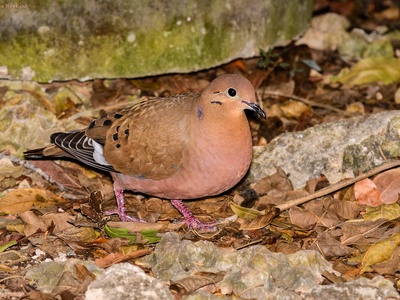
| Zenaida Dove | Zenaida aurita | Native widespread | Woodlands and coastal scrub; lowland trails and coastal plains |
| Scaly-naped Pigeon | Patagioenas squamosa | Native widespread | Mature forest and mountain slopes; Morne Trois Pitons |
| Rufous-throated Solitaire | Myadestes genibarbis | Native widespread | Montane and cloud forest; Morne Trois Pitons, higher ridges |
| Leatherback turtle | Dermochelys coriacea | Native widespread | Offshore waters and nesting beaches; Grand Bay, Pointe Ronde beaches |
| Hawksbill turtle | Eretmochelys imbricata | Native widespread | Coral reefs and sheltered beaches; Scotts Head, Cabrits |
| Green turtle | Chelonia mydas | Native widespread | Seagrass beds and bays; Soufrière Bay, Scotts Head |
| Jamaican fruit bat | Artibeus jamaicensis | Native widespread | Forest edges, roosts in trees and caves; near Roseau and valleys |
| Antillean fruit bat | Brachyphylla cavernarum | Native widespread | Caves and forested hills; Cabrits, Morne Diablotin |
| Bridled Quail-dove | Geotrygon mystacea | Lesser Antilles endemic | Dense understory of mature forest; Morne Diablotin, Morne Trois Pitons |
Images and Descriptions
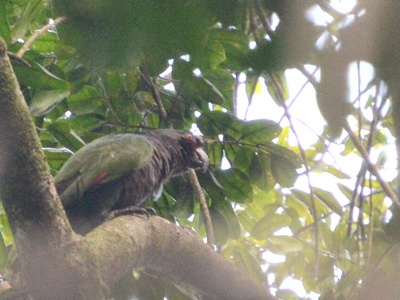
Imperial Amazon
Large parrot about 40–45 cm with bright green plumage and purple throat; Dominica’s national bird. Shy and canopy-dwelling in montane rainforest around Morne Diablotin and Morne Trois Pitons. IUCN: Critically Endangered, very small protected population.
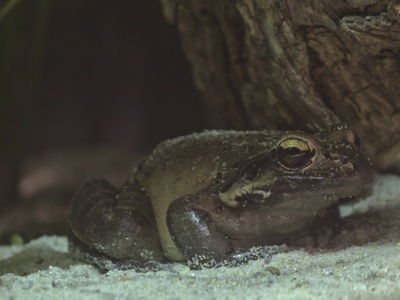
Mountain chicken frog
Huge ground frog reaching about 20–30 cm snout–vent length with mottled brown skin and powerful legs. Lives near streams and clearings in interior valleys. IUCN: Critically Endangered from chytrid fungus and historical hunting pressures.
Dominica anole
Anole lizard about 10–20 cm with striking island-wide color variation from green to brown morphs. Common on trunks and shrubs in forest and gardens across Dominica. IUCN: Least Concern and locally common.
Purple-throated Carib
Small hummingbird about 10 cm with metallic green body and purple throat in males; females differ in bill and coloration. Frequent at flowering trees and feeders. IUCN: Least Concern and fairly common.
Bananaquit
Tiny 9–12 g bird with bright yellow underparts and a curved bill, energetic feeder on nectar and insects. Ubiquitous in gardens, plantations and forest edges across the island. IUCN: Least Concern and very common.
Zenaida Dove
Medium dove about 25–29 cm with soft gray-brown plumage and subtle neck spot. Found in woodlands, scrub and edges near coasts and lowlands. IUCN: Least Concern, locally common.
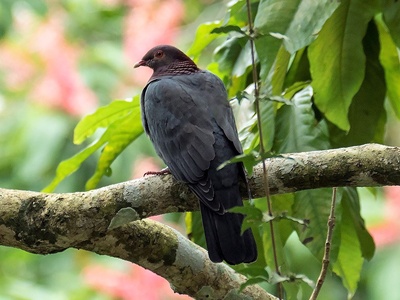
Scaly-naped Pigeon
Large pigeon about 35–38 cm with scaly neck pattern and iridescent neck sheen, feeding mainly on fruit. Prefers mature forest and mountain slopes. IUCN: Least Concern, locally common in good habitat.
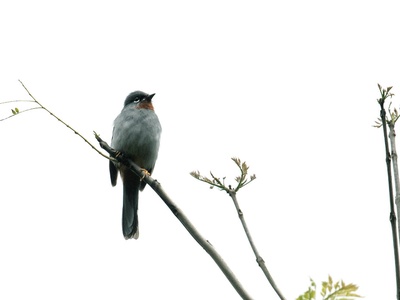
Rufous-throated Solitaire
Songbird about 20 cm with gray body and rufous throat, famous for a flute-like, melodious song. Common in upland forests and ridgelines. IUCN: Least Concern and widespread in high elevations.
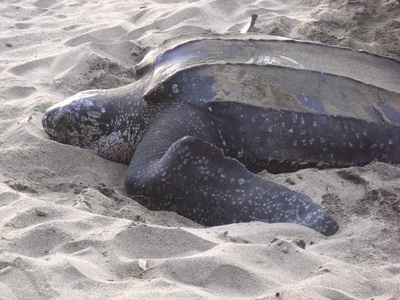
Leatherback turtle
World’s largest sea turtle with a leathery carapace up to about 1.5–2.0 m, deep-diving and migratory. Regularly nests on Dominica’s beaches. IUCN: Vulnerable globally; Dominica is an important nesting site.
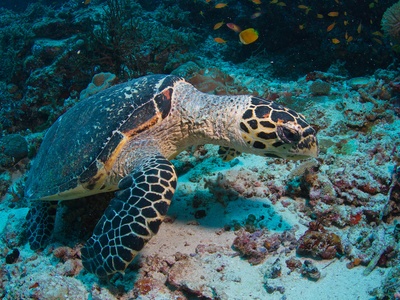
Hawksbill turtle
Medium turtle about 70–100 cm with a hawk-like beak and patterned shell, foraging on reefs and nesting on sheltered beaches. IUCN: Critically Endangered, threatened by harvest and habitat loss.
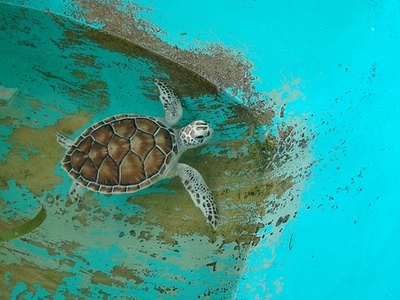
Green turtle
Large herbivorous turtle to about 1 m carapace that feeds on seagrass and algae. Forages in local bays and occasionally nests. IUCN: Endangered, regular foraging presence around Dominica.
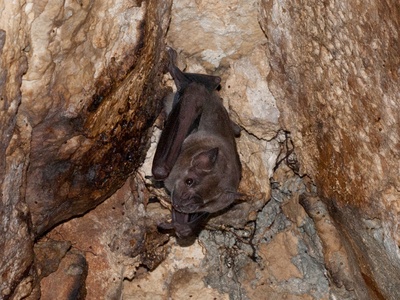
Jamaican fruit bat
Medium fruit bat weighing roughly 40–80 g with broad wings and short muzzle; feeds on figs and fruit at dusk. Roosts in trees and caves. IUCN: Least Concern and fairly common.

Antillean fruit bat
Stout short-snouted bat important for pollination and seed dispersal; roosts in caves and rock shelters. Found in forested hills and coastal caves. IUCN: Least Concern and locally common.
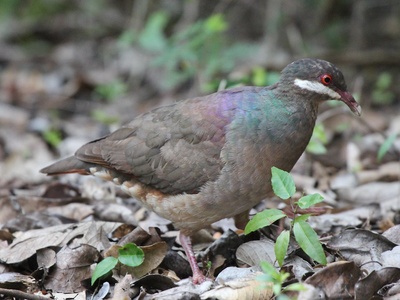
Bridled Quail-dove
Ground-dwelling dove about 24–27 cm with distinctive facial markings and rufous tones. Prefers dense understory in mature forest and is best seen on quiet forest trails. IUCN: Near Threatened due to habitat loss and hunting.